In this guide
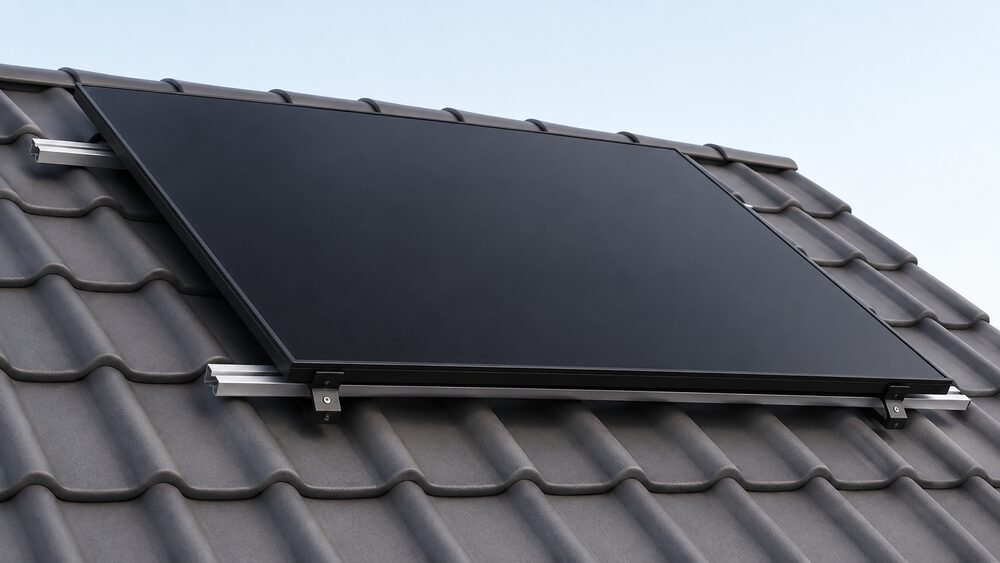
Eurener is a Spanish photovoltaic module manufacturer that has been building panels since 1997, and it sells into the European residential market rather than the utility-scale one1. Its MEPV Ultra series introduces back contact and N-type technology into a full-black solar panel designed for architectural integration, and the series carries a 30 year performance warranty2. The company holds an EcoVadis Platinum Medal, awarded for three consecutive years, and states that its modules hold the world's leading certifications1.
For a UK household, the practical questions are narrower than the corporate story. Eurener is not a brand most British installers stock as standard, it has no published UK list price, and its warranty terms are set by a manufacturer based in Valencia rather than by a UK entity. What it does offer is a European supply chain, a long manufacturing history, and a warranty ladder that runs to 30 years on performance, which is at the top of what the market generally offers3.
This page sets out who Eurener is, where its panels are made, what technologies it uses, what the warranty actually covers, and what the brand means for a household trying to reduce its reliance on the grid. It also states plainly where the evidence runs out.
Who Eurener is: a Spanish module maker since 1997
Eurener dates its own founding to 1997, and describes its purpose since then as supplying "quality and long-lasting photovoltaic modules"1. The company states that it has over 27 years of experience in photovoltaic panel manufacturing, which places it among the older European module makers still trading under their own name1. Its manufacturing origin is Spain, and it describes its commercial focus as the European residential market1.
That residential focus matters for a UK buyer. A maker that sells into domestic rooftops across Europe is building modules for the constraints a household actually has: roof area, weight, aesthetics, and a warranty that has to survive two or three decades of British weather. It is a different design brief from a utility-scale module optimised for cost per watt on a solar farm.
The company's head office address is Calle Colón, 1-23, 46004, Valencia, Spain, as published on its own datasheet2. It is also a member of Swissolar, the Swiss solar industry association, which reflects a European market presence beyond Spain1.
Eurener is not a UK manufacturer and does not claim to be. There is no British assembly plant, no UK-registered warranty entity named in the available documents, and no UK consumer sales channel. A household buying Eurener modules is buying a European product through a UK distributor or installer, and the warranty relationship runs back to Spain. That is a normal arrangement for imported modules, but it is worth understanding before specifying the brand.
Made in Spain: two factories and European warehouses
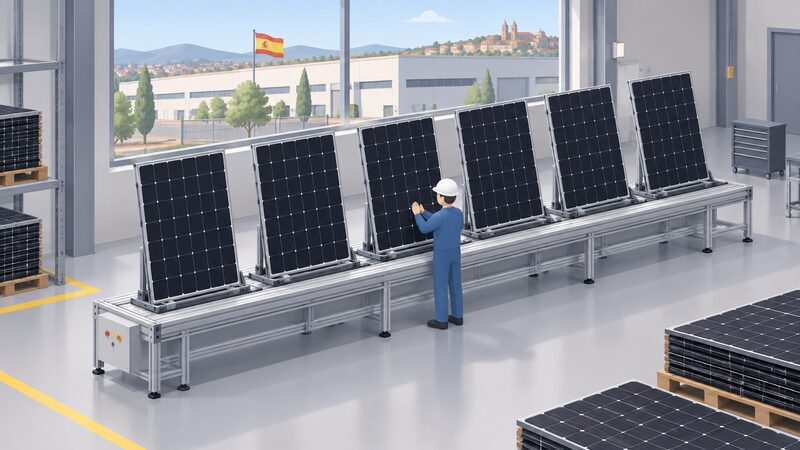
Eurener manufactures in Spain and supports that manufacturing with warehouses in Europe, which the company cites as the reason it can serve its residential markets1. The Spanish base keeps the module supply chain inside the EU, which is a different proposition from a module shipped from Asia, though the cells and other components inside a European-assembled panel may still originate elsewhere. The available documents do not break down the bill of materials.
The practical effect of European warehousing is on lead time and replacement. A module that can be drawn from a European warehouse is easier to replace after breakage or a warranty claim than one that has to be shipped from a distant factory. For a household, that matters most in the years after installation, when a single failed panel in a string needs a matching replacement rather than a whole new array.
"From Spain"
What the documents do not give is a factory count, a production capacity figure, or a list of which specific models are built where. The claim is a Spanish manufacturing origin plus European warehousing, and that is the extent of what can be stated.
Panel technologies: TOPCon, N-type, back contact and PERC
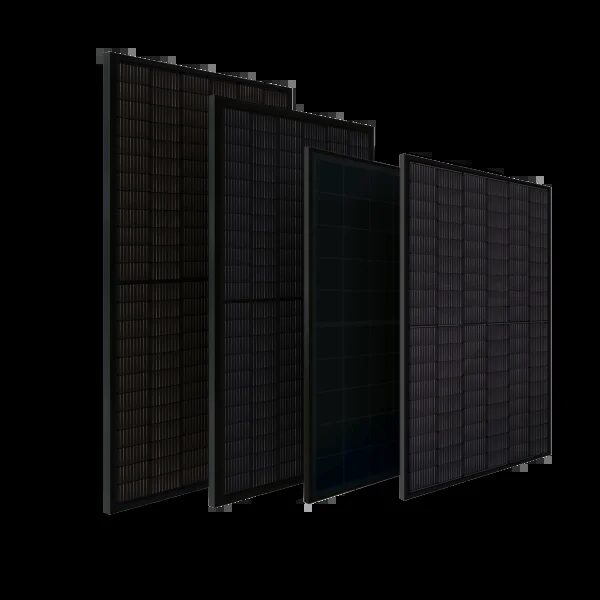
Eurener's published module range covers several cell technologies, and the wider market context helps explain what each one is. TOPCon, or tunnel oxide passivated contact, is an N-type cell technology; independent product listings for other makers describe their modules as "Mono N-type (TOPCON)" and "Mono N-type TOPCon"4. N-type cells are the generation that followed PERC, and the distinction between N-type and P-type is the main fault line in module technology at the moment.
PERC, passivated emitter and rear contact, was the dominant technology of the previous decade and remains widely installed. Back contact cells move the metallisation to the rear of the cell, which removes shading from the front face. Eurener's own materials describe a range spanning these technologies rather than a single platform.
The MEPV Ultra is the module with the fullest published specification in the available documents. The series introduces back contact and N-type technology into a full-black solar panel designed for architectural integration, and carries a 30 year performance warranty2. Eurener's manufacturing covers several cell technologies: TOPCon, N-type, back contact and PERC (Passivated Emitter Rear Cell)3. TOPCon is described as a direct evolution of PERC, so the two sit on the same development line rather than being alternatives4.
| Attribute | Eurener MEPV Ultra |
|---|---|
| Cell technology | Back contact and N-type, full-black bifacial double glass2 |
| Performance warranty | 30 years2 |
| Chemistry | Back contact and N-type technology3 |
| Cell technology (series) | Back Contact and N-type, full-black bifacial double glass2 |
For a fuller explanation of how these technologies differ, see solar cell technology and types of solar panel sold in the UK. Reading the datasheet figures properly is covered in solar panel specifications and efficiency.
Warranty: up to 30 years of cover
Eurener advertises "up to 30 years warranties" across its range, and the MEPV Ultra series carries a 30 year performance warranty1. The terms split into two distinct lengths across the range: the MEPV Icon PERC is listed with a 20 year product warranty and a 30 year performance warranty3. The two cover different things. The product warranty covers the physical module, including manufacturing defects and materials. The performance warranty covers output, guaranteeing that the module will still produce a stated proportion of its rated power after a set number of years.
That split is normal, and the 30 year performance term sits at the top of the market. Independent guidance notes that the most well-known manufacturers often offer warranties of 25 to 30 years, which it reads as a sign of confidence in longevity3. Other independent sources put typical panel warranties lower: one gives a typical warranty of 25 years for rooftop panels5, and another states that solar panels can have warranties of up to 20 or 25 years, while noting that inverters are not expected to last as long6.
One maker page gives a 30 year performance warranty, while another gives a 25 year product warranty for the same MEPV Ultra family, and that conflict is unresolved. The datasheet figure of 20 years product and 30 years performance is the one tied to a specific model, so it is the safer basis for comparison.
Warranty terms and degradation rates are covered in more depth in solar panel warranties and degradation.
Sustainability credentials: EcoVadis Platinum, top 1% worldwide
Eurener holds an EcoVadis Platinum Medal, and states that it has held it for three consecutive years1. EcoVadis is a sustainability rating platform used across supply chains, and the Platinum tier is its highest. The company also describes itself as holding the world's leading certifications, which in practice refers to the IEC set listed on its datasheet1.
Sustainability claims in the module market need reading carefully. A rating like EcoVadis assesses a company's environmental, labour, ethics and procurement practices; it is not a statement about the recycled content of a specific panel. No document in the available material states that Eurener uses recycled materials in its modules.
On end-of-life, the position across the industry is difficult. Official guidance on the UK solar roadmap notes that current crushing techniques recover "materials which mostly can't be used in a new panel without further purification"7. That is a statement about UK recycling practice generally, not about Eurener, but it sets the context for any manufacturer's circularity claim. Solar panels are covered as energy-saving materials under the relevant legislation8.
For the household, the sustainability angle is secondary to the practical one. A panel that lasts 30 years and is properly recycled at the end of its life is a better environmental proposition than one that fails early, and the warranty term is the closest published proxy for expected life. Recycling routes are covered in solar panel recycling.
Certifications and memberships: ISO 9001, ISO 14001, Top Brand PV
Eurener states that its photovoltaic modules hold the world's leading certifications, and the MEPV Icon PERC datasheet names the specific standards: IEC 61215, IEC 61730, IEC 61701, IEC 62716 and IEC TS 628041. These are the international benchmarks for module design qualification, electrical safety, salt mist resistance, ammonia resistance and PID resistance respectively. The company also holds ISO9001:2015 for quality management and ISO14001:2015 for environmental management, and has been awarded Top Brand PV3.
The company has also been awarded Top Brand PV status, and is a member of Swissolar1. Top Brand PV is an industry recognition programme; Swissolar is the Swiss solar trade association. Both are membership and recognition facts rather than performance claims.
What is not in the available documents is a stated ISO 9001 or ISO 14001 certificate number, an issuing body, or a certificate date for Eurener specifically. Quality and environmental management certification is common among European module makers, but the documents here do not evidence it for this company, so it is not asserted.
For a UK buyer, the certification that carries the most practical weight is IEC 61215, because it is the design qualification standard that MCS and UK installers expect to see evidenced. The standards themselves are explained in solar panel standards and testing, and the installer certification route is set out in MCS certification for solar PV.
What Eurener panels mean for household energy independence
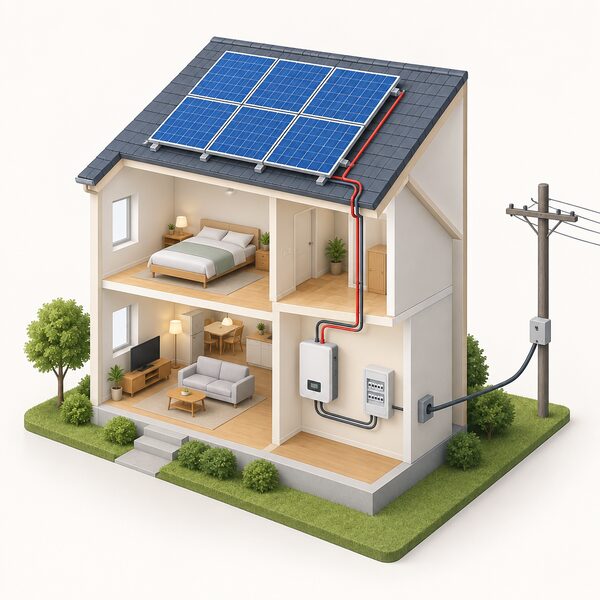
A solar array changes where a household's electricity comes from, and the effect on independence is real but partial. Independent guidance states that home solar panels can reduce reliance on the grid and can improve a home's Energy Performance Certificate10. The same source notes that solar panels lower electric bills by providing an additional source of electricity, which can power appliances without taking electricity from the grid10. Another independent source puts it simply: solar panels generate clean energy for the home and can cut down on energy bills11.
The mechanism is that panels capture the sun's energy and convert it into electricity for use in the home, or export it to the grid in return for a payment known as the Smart Export Guarantee12. Official guidance confirms that the electricity generated can be used in the building13. The industry body's own framing is that more homegrown energy means greater energy independence14.
What remains is the dependence that a grid-connected array does not remove. A Eurener panel is a component, not a system: it needs an inverter, mounting, cabling, and a grid connection to be useful, and it produces nothing at night. The household stays on the grid, on a supplier, and on an export arrangement. The module brand does not change any of that. What it changes is the durability of one part of the chain, and the warranty behind it.
"More homegrown energy means greater energy independence"
For households in Northern Ireland, the advice route differs: homeowners should seek independent advice on solar panels, heat pumps and other energy efficiency measures from organisations such as the NI Energy Advice service15. The wider picture is set out in solar panels and household energy independence and in the pillar guide, Solar PV for UK Homes.
Availability in the UK and who to contact
Eurener names Tiago Cruz as its contact for Portugal and the UK, which is the route the company itself publishes for UK enquiries1. Beyond that, Eurener sells through distributors and installers rather than direct to householders, and no UK consumer sales channel is published in the available documents. There is no UK list price for a Eurener module, so prices are installer-quoted.
The distributor position is complicated by a discontinued model. A distributor product page states that the Eurener MEPV430 has been discontinued, with no date given for that statement. That is a distributor claim rather than a manufacturer announcement, and it sits alongside Eurener's own current datasheet for the MEPV Ultra series2. A household specifying Eurener should confirm which models a distributor can actually supply before committing.
Eurener also states that it offers the possibility of producing ad hoc modules, meaning modules built to a customer's specification1. That is a maker claim, and it is more relevant to larger or specialist projects than to a single domestic roof, since minimum quantities and lead times are not published.
For a UK installation, the consumer protections that matter are the ones attached to the installer rather than the module brand. MCS certification is the route by which an installation qualifies for export payments, and the consumer protection scheme attached to it is explained at MCS certified consumers16. The Renewable Energy Consumer Code operates a non-compliance panel whose majority, including the chair, must be independent of the renewable sector17. Those protections apply to the installer, not to Eurener.
Sources17 cited
- Eurener product and company pages, Eurener, 2026-09-17
- Eurener MEPV Ultra 400W datasheet, Eurener, 2026-09-17
- How long do solar panels last?, Uswitch, 2026-07-13
- Trina Solar solar panels review, Which?, 2026-08-12
- Plug-in solar panels vs rooftop systems, Which?, 2026-04-27
- Solar panel problems and how to solve them, Which?, 2026-03-26
- UK Solar Roadmap, DESNZ, 2025-06
- Energy-saving materials, Schedule 7A, legislation.gov.uk, 2019-10-01
- Energy-saving materials, Schedule 8, legislation.gov.uk, 2023-05-01
- How do solar panels work?, Smart Energy GB, 2026-03-16
- What is global warming and what can I do about it?, Smart Energy GB, 2026-03-16
- Solar panels, Oxfordshire County Council, 2026-09-17
- Solar panels, East Herts Council, 2026-09-17
- Solar Energy Scotland manifesto, Solar Energy UK, 2026-09-17
- Support to generate your own electricity, nidirect, 2025-09-22
- MCS certified consumers, MCS, 2026-06-23
- RECC non-compliance panel, RECC, 2026-09-17