In this guide
Schletter Group is a German manufacturer of photovoltaic mounting systems, and its pitched-roof range is sold into the UK for both pitched and flat roofs. The maker states that its systems are snow load tested and wind tunnel tested, that they suit a roof "no matter the size, pitch or material", and that static verification is provided for every system1. The pitched-roof range carries a 25 year warranty1.
For a household, the mounting system is the part of a solar installation that decides whether the panels stay on the roof for the life of the array. It is also the part that carries the structural risk: official guidance across England, Wales and Scotland requires the existing roof to be checked and proven able to carry the additional wind, snow and static load imposed by the panels, and some strengthening work may be needed2. Where the installation increases the load on the roof by 15% or more, Part A of the Building Regulations requires the supporting structure to be checked5.
Schletter's position in the UK market is as a component supplier rather than an installer. The company does not sell a complete household energy system: it sells the rails, hooks, screws and clamps that hold modules to a roof, and the structural documentation that goes with them. That makes it a dependence on the installer and the distributor rather than on the manufacturer's own service network, and it means the household's energy independence rests on the array and the inverter, not on the mounting brand.
A German mounting maker, and what it supplies
Schletter Group designs and manufactures photovoltaic mounting systems, and its pitched-roof product page sets out the scope of the range in the maker's own terms: modular structures, simple mounting, impressive load capacities, and a catalogue that runs "from the smallest screws to complete systems"1. The company is German, and its products reach UK roofs through the distribution and installer chain rather than through a UK manufacturing operation.
That matters for how a householder encounters the brand. Schletter is not a name on a quote in the way a panel or inverter brand is. It appears in the bill of materials as the rail system, the roof hooks and the clamps, and in the structural pack as the static verification that a building control officer or a structural engineer may ask to see. The maker states that static verification is provided for every system, which is the document that ties a specific mounting layout to a specific roof1.
The wider UK context is a market that has already scaled. Government figures put domestic solar installations in the UK at over 1.5 million, and the solar supply chain must manage a significant increase in turnover if it is to deliver 45 to 47GW by 20307. Mounting is a small share of an installation's cost but a large share of its structural risk, which is why the certification and testing regime around it has tightened.
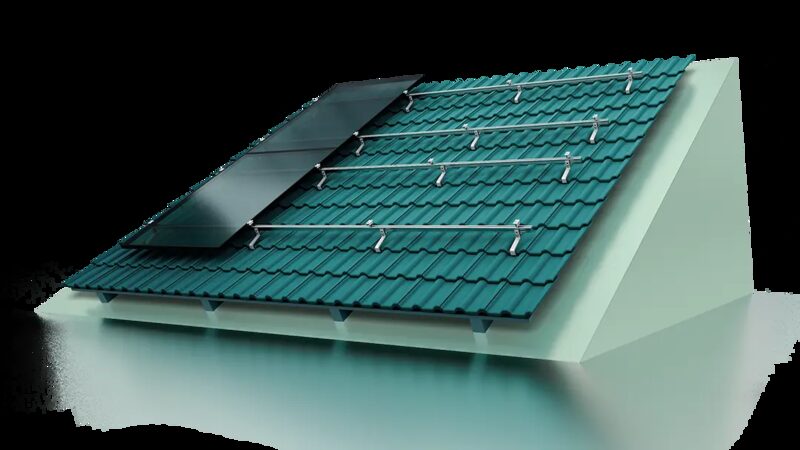
What the range covers: pitched roofs, flat roofs and modular structures
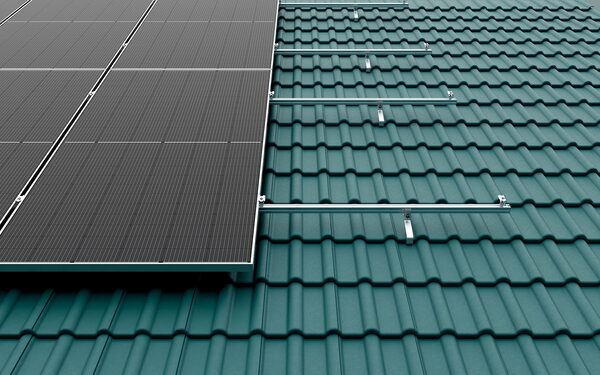
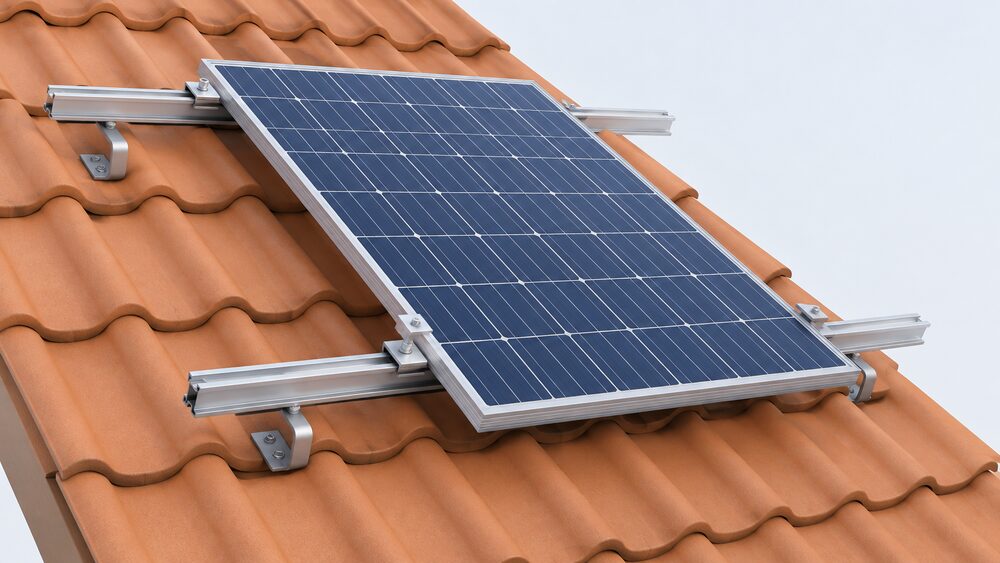
Schletter's pitched-roof range is described as covering all pitched and flat roofs, with modular structures and simple mounting as its design aims1. The catalogue is presented as a complete bill of materials: screws, nuts, washers, rails, hooks and clamps, up to complete systems1.
The breadth of mounting options across the UK market is wider than pitched roofs alone. One independent installer lists roof-integrated mounting systems, on-roof systems, ground-mounted systems, solar car ports and floating solar PV among the mounting types it works with, describing integration into all settings8. Official guidance on energy-saving materials treats solar panels as including both roof-mounted panels and ground-mounted panels within the curtilage of residential accommodation, which is the boundary that matters for VAT treatment9.
For a household, the practical question is which of those categories the property falls into. A pitched roof with a conventional covering takes an on-roof rail system. A flat roof takes either a mechanically fixed system or a weighted, non-mechanically attached one, and the certification scope for flat roof mounting has been expanded to include non-mechanically attached systems designed for installation on flat roofs at 10 degrees or less10. Ground-mounted arrays within the curtilage are a separate category again, and are covered in more detail on ground-mounted solar.
| Mounting type | Typical application | What it depends on |
|---|---|---|
| On-roof rail system | Pitched roof, any covering | Roof structure check and proven load capacity2 |
| Roof-integrated | Pitched roof, replacing covering | Roof covering and weathertightness8 |
| Flat roof, mechanically fixed | Flat roof up to 10 degrees | Fixing into structure, certification scope10 |
| Flat roof, weighted | Flat roof where penetration is avoided | Ballast weight and wind uplift10 |
| Ground-mounted | Within the curtilage | Separate structure and planning position9 |
Fastening almost any module to almost any roof
The maker's claim for the pitched-roof range is broad: suitable "no matter the size, pitch or material of the roof you're installing on", and covering all pitched and flat roofs1. Read alongside the catalogue description, that is a statement about the range's coverage rather than a statement that any given roof will take an array without work.
The condition that sits underneath it is structural. Official guidance in Wales states that the ability of the existing roof to carry the load of the panel will need to be checked and proven2. Guidance for East Hertfordshire goes further and sets out that the roof must be checked for the additional wind, snow and static load imposed by the panels, and that it must comply with Part A on structure3. Welsh guidance on extensions repeats the same requirement and adds that some strengthening work may be needed4, and the Planning Portal's building regulations guidance uses the same wording5.
The threshold that turns this from advice into a requirement is set out in technical guidance for residential buildings: where installing solar panels will increase the load on the roof by 15% or more, Part A requires the supporting structure to be checked to ensure it can support the additional weight5. Below that threshold the check may still be prudent, but the regulation bites at 15%.
"When the installation of solar panels will increase the load upon the roof by 15% or more, Part A requires that the supporting structure is checked to ensure it can support the additional weight"
For a household, this is the point at which the mounting brand stops being a specification detail and becomes part of a building control process. The roof check is not something a mounting manufacturer can perform remotely, and no catalogue claim about roof coverage substitutes for it. Roof pitch, orientation and shading affect output as well as mounting, and are covered on roof orientation, pitch and shading.
Strength and durability: snow load testing and load capacity
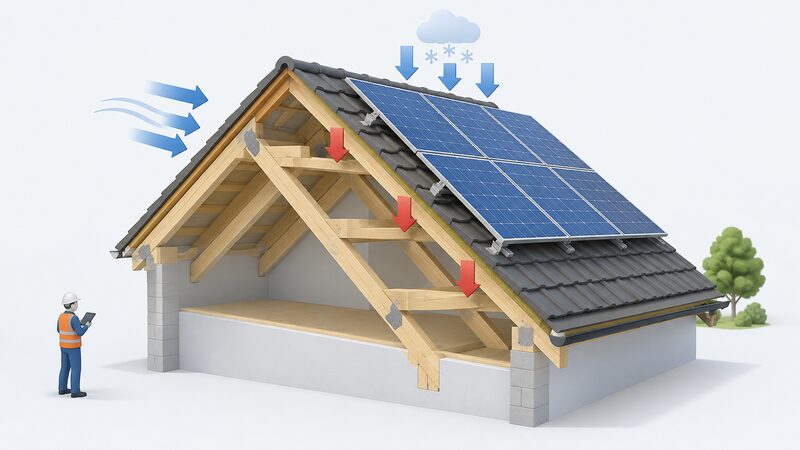
Schletter states that its pitched-roof mounting systems are snow load tested and wind tunnel tested, and describes the range as offering impressive load capacities1. Those are the two load cases that matter in the UK: snow sitting on the array, and wind lifting or pushing against it.
The testing claim is the maker's own, and it is the kind of claim that a structural engineer will want to see evidenced for a specific project rather than accepted at range level. The static verification that Schletter provides for every system is the document that carries the project-specific figures1. Where a roof is exposed, at height, or in a snow-loading area, the verification is what a building control body will look at.
The regulatory backdrop is consistent across the UK's four nations, with different documents doing the work. In Wales, the roof load check is stated in building regulations guidance for solar panels2 and repeated for extensions4. In England, the Planning Portal sets out the same requirement5, and district-level guidance such as East Hertfordshire's adds the Part A compliance point3. In Northern Ireland, the equivalent building regulations are made under separate legislation11, and in Scotland the position is governed by Scottish building standards rather than the English Approved Documents.
What this means in practice is that a household should expect the installer or the structural engineer to produce a load calculation before fixing anything to the roof. The mounting system's own test data feeds that calculation, but it does not replace it. Building control notification is required for solar photovoltaic power supply systems as electrical work, which brings the installation into the building control process independently of the mounting12.
Sustainable materials, durability and maintenance
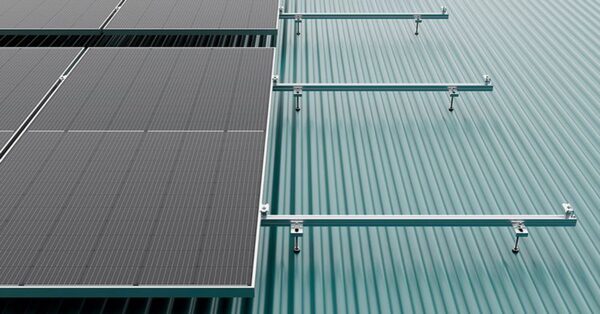
Schletter's pitched-roof mounting systems carry a 25 year warranty1. That is a long term by the standards of the components around them, and it reflects the fact that a rail system has no moving parts and no electronics.
Material choice is where durability and recyclability meet. The specification for the Barcud Solar Panel Installation Scheme requires all mounting to be manufactured in stainless steel or aluminium for all installations, because of the high exposure nature of the environment13. Both metals are routinely recycled at end of life, and both resist corrosion without a coating that can fail. The clearest recyclability statement in the evidence base comes from a module maker rather than a mounting maker: REC states that "practically every component of our solar modules can be recycled on a daily basis on an industrial scale"14. That is a claim about modules, not about mounting, and it should be read as such.
Maintenance of a mounting system is largely inspection rather than servicing. The array has to be checked for loose fixings, corrosion at cut edges and movement after storm events, and panels themselves need occasional cleaning. The wider maintenance picture is set out on solar panel maintenance and cleaning, and the end-of-life position on solar panel recycling.
Solar PV is described in independent guidance as affordable, reliable, low-impact and popular15, and the mounting system is the part of the installation that carries the "low-impact" claim on the roof itself. A rail system that outlasts the modules is the difference between one roof intervention and two.
Discontinued items and availability while stocks last
Schletter's 2023 catalogue marks certain screws, nuts and washers as discontinued and available while stocks last, and lists other items as expected to become available from Q3 or Q4 of 2023. That is a normal pattern in a component catalogue: individual fasteners and small parts turn over faster than rail profiles, and a discontinued washer is not a discontinued system.
The more significant availability event is at certification level. Certification was withdrawn from a number of solar mounting products on 10 May 2025, and a grace period followed during which installers may continue to use solar mounting products that previously held certification6. The scope of the flat roof mounting standard was also expanded to include non-mechanically attached mounting systems alongside mechanically attached ones, designed for installation on flat roofs at 10 degrees or less10.
For a household, the practical consequence is that the mounting product named on a quote should be checked against the current certification list rather than against a catalogue from an earlier year. The general certification position for products and installations is covered on MCS certification for solar PV.
New solutions at Intersolar and the new logistics centre
Schletter Group and Enstall Group presented new solutions at Intersolar, described in a news item dated 19 May 2026 as an expanded system portfolio1. Schletter published its own recap of the show on 2 July 2026, under the heading that fast installation times are what matter most in practice1. On 9 September 2026 the company announced that it had opened a new logistics centre1.
The emphasis on installation time is consistent with where the mounting market has moved. Labour is a large share of an installation's cost, and a rail system that assembles faster reduces the time a roofer or installer spends on the roof. That is a commercial argument rather than a household one, but it feeds through to the price a household pays.
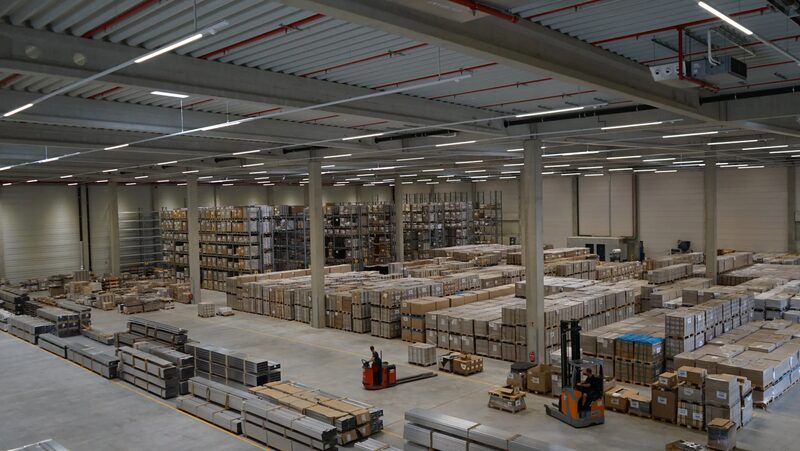
The logistics centre matters for supply rather than for specification. A UK installation depends on mounting components being available when the installer arrives, and a distribution and warehousing footprint is what determines whether a job is delayed. The scale of what the UK supply chain has to support is set out in government figures: the solar supply chain must manage a significant increase in turnover if it is to deliver 45 to 47GW by 20307.
Where the mounting system sits in a household's independence
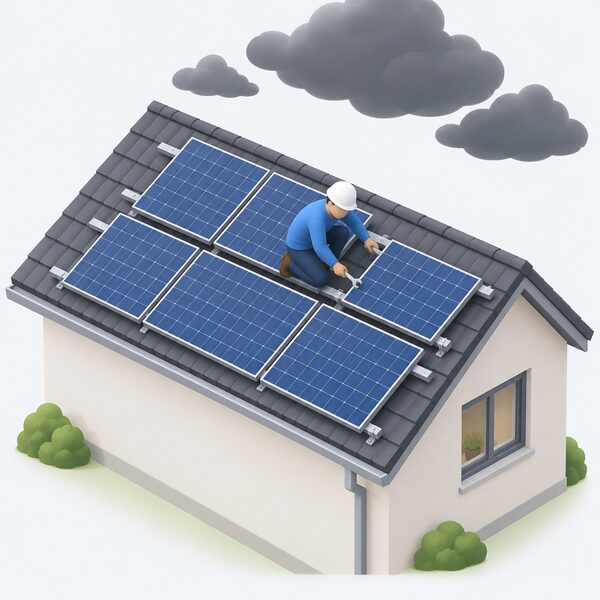
A mounting system does not generate anything. It holds the modules that do, and its contribution to a household's energy independence is indirect but structural: an array that stays fixed and weathertight for 25 years is an array that keeps producing, and one that has to be removed for roof repairs or re-fixed after a storm is a cost and an interruption.
The dependence that remains is on the roof itself and on the grid connection behind the inverter. A mounting system cannot make a roof stronger than it is, and the 15% load threshold means that some properties will need strengthening work before any array goes on5. Where the array is roof-mounted, the household remains connected to the grid for export and import, and the mounting brand has no bearing on that relationship. The wider picture is set out on solar panels and household energy independence and on the pillar guide to solar PV for UK homes.
There is also a removal condition that attaches to permitted development. Guidance in Wales states that when roof or wall-mounted solar panels are no longer needed for microgeneration they should be removed as soon as possible16, and that when equipment is no longer needed it must be removed as soon as is practicable17. The same condition appears in the legislation: Class K requires that stand-alone solar is removed as soon as reasonably practicable when no longer needed18, and Class A for roof-mounted solar PV or solar thermal equipment requires that equipment no longer used to provide heat or energy shall be removed as soon as reasonably practicable19. York's guidance uses the same wording for any solar panels no longer needed for micro-generation20.
That condition is worth understanding at the specification stage, because it means the mounting system has a defined end as well as a defined life. A rail system designed for straightforward removal and recycling is easier to take off a roof than one that has been bonded or integrated into the covering. Roof-integrated and on-roof approaches differ here, and the trade-offs are compared on roof-integrated vs on-roof solar.
Sources20 cited
- Pitched roof mounting systems, Schletter Group, 2026
- Building regulations: solar panels, Welsh Government, 2026
- Solar panels: planning and building, East Hertfordshire District Council, 2026
- Building regulations: extensions and energy efficiency, Welsh Government, 2026
- Building regulations: energy efficiency, Planning Portal, 2026
- Update on investigations into solar mounting certification and flat roof solar PV mounting issues, MCS Certified, 2025
- UK Solar Roadmap, Department for Energy Security and Net Zero, 2025
- Residential solar PV, Renewables First, 2026
- VAT on energy-saving materials: solar panels, HM Revenue and Customs, 2026
- MCS provides an update for solar PV flat roof mounting systems, MCS Certified, 2025
- Planning (General Permitted Development) Order (Northern Ireland) 2015, legislation.gov.uk, 2015
- Building control application guidance notes, London Borough of Bromley, 2026
- Barcud Solar Panel Installation Scheme Specification, Sell2Wales, 2026
- Recycling of solar modules, REC Group, 2026
- Everything under the sun: the facts about solar energy, Solar Energy UK, 2026
- Planning permission: solar panels, Welsh Government, 2026
- Solar Together, Swindon Borough Council, 2026
- Town and Country Planning Act 1990, Schedule 8, Part II, Chapter 23, legislation.gov.uk, 1994
- Town and Country Planning (General Permitted Development) Order 2015, Schedule 2, Part 14, legislation.gov.uk, 2015
- Solar panels, City of York Council, 2026