In this guide
Astronergy is a solar module manufacturer whose Astro N series is now sold into the UK through a distribution partnership announced in May 2026, under which ASTRO N7s 2.0 Series modules are distributed across Britain1. The company reported total global shipments exceeding 170 GW up to December 2025, which places it among the larger module makers by volume2.
For a UK household, the practical questions are narrower than the company's global footprint. What matters is which series an installer can actually obtain, what the module does on a roof, what the warranty document says, and what happens to that warranty if the manufacturer's circumstances change. On the last point, Astronergy is an active manufacturer launching new products and signing new agreements, not a failed business, and the material available here gives no warranty period for its modules at all.
What Astronergy offers in the UK
The UK presence rests on a single dated commercial event. In May 2026 Astronergy announced a strategic partnership with Midsummer under which ASTRO N7s 2.0 Series photovoltaic modules will be distributed across the UK1. That is a distribution agreement rather than a direct sales operation, which means a household will meet the brand through an installer or merchant rather than buying from Astronergy itself.
The wider company picture is one of continuing product launches. Astronergy published a technology article on the ASTRO N7 2.0 module series in September 20256, launched the ASTRO N7 Pro series in January 20267, and introduced ASTRO N7 3.0 and ASTRO N7s 3.0 during SNEC 2026 in June4. The ASTRO N7s 3.0 was unveiled globally at Intersolar Europe 2026 in the same month8. In September 2026 the company presented ASTRO N7 3.0, ASTRO N7 Pro and ASTRO N8 Pro modules at Intersolar South America 20262.
The gap between the newest series and the series named in the UK agreement is worth noting. The UK distribution deal covers ASTRO N7s 2.0, while the 3.0 generation was introduced a month later. A household specifying Astronergy should therefore ask which generation is being quoted, because the answer determines the datasheet that applies.
Astronergy also works beyond the residential market. Its team attended the opening ceremony for the Parma I PV plant in Italy after Stern Energy completed revamping and repowering works, a project the company links to powering 3,000 Italian households9. In April 2026 Astronergy hosted Meridien Energy at its headquarters, with the two companies committing to deploy 12MW of residential solar capacity by 202710. These are commercial facts about the manufacturer's activity, not evidence about any individual module's performance.
Specifications: what the datasheets cover

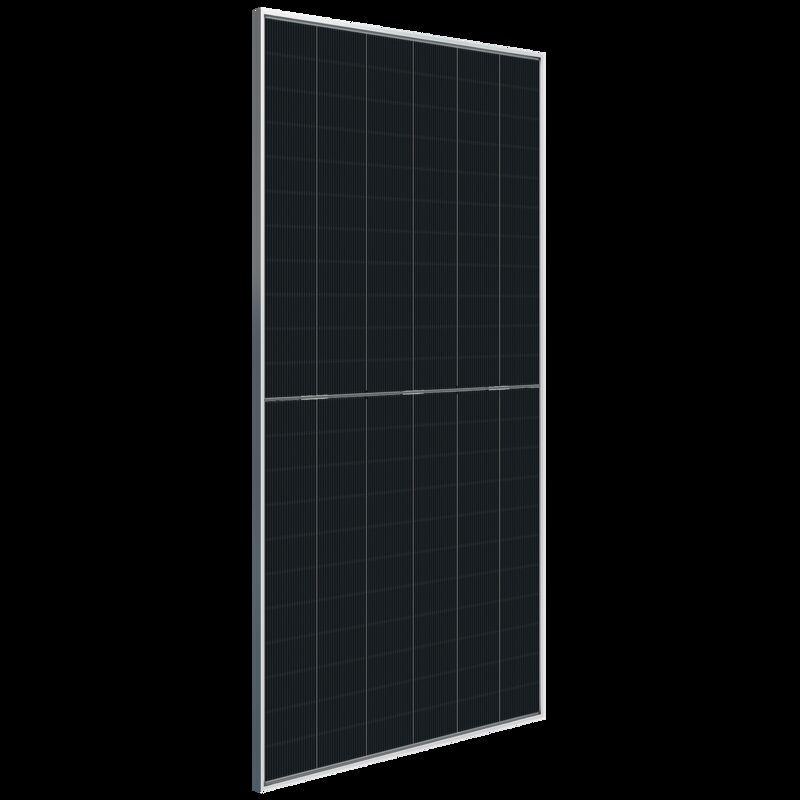
The material available here does not give Astronergy's own efficiency, power output, temperature coefficient or degradation figures for any specific model. What it does establish is the cell technology the company works in and the direction of travel on power output.
Astronergy published a technical deep dive on TOPCon in June 2026, examining the technology's efficiency, degradation and manufacturing performance3. In August 2026 the company announced it would showcase TOPCon 5.0+ and solutions exceeding 750 W of power output at Intersolar South America 202611. Those 750 W figures relate to modules shown at an international trade event, not to a product confirmed for UK residential roofs, and the two should not be conflated.
For context on what a UK roof can carry, official guidance uses a reference photovoltaic array sized at 0.22kWp per square metre12. That is a planning and building reference figure rather than a statement about any Astronergy product, but it is the basis on which roof area is assessed in Approved Document L questions. A household comparing a quoted Astronergy array against roof space should work from the actual module datasheet supplied with the quote, not from a trade-show headline.
Two further points bear on specification. First, TOPCon is an n-type cell architecture, and its behaviour relative to p-type cells is covered in our guide to solar cell technology. Second, reading any module datasheet properly means understanding what STC figures do and do not represent, which is set out in reading a solar panel datasheet.
Astronergy has also pursued independent testing. The company cooperated with TÜV Rheinland on an IEC TR 63279 module derisking qualification, with the full testing campaign expected to conclude in the fourth quarter of 202513. IEC TR 63279 is a technical report rather than a product standard, and the wider framework of module standards is explained in solar panel standards and testing.
Warranty: what can and cannot be stated
No product warranty period, power output warranty period or degradation guarantee for Astronergy modules appears in the material available here. That is a gap, and it should be treated as one rather than filled with an assumption.
What can be said is how module warranties generally work and where the risk sits. A solar panel warranty normally has two parts: a product warranty covering manufacturing defects in the panel itself, and a power warranty guaranteeing that output stays above a stated percentage over a stated number of years. Both are contractual promises from the manufacturer, and both depend on that manufacturer remaining in business and willing to honour them.
For comparison, an independent review of a plug-in solar kit published in September 2026 describes panels carrying a 12-year product guarantee and a 30-year power warranty, with a 12-year inverter warranty14. That is a different product from a different maker and is given only to show the shape of a typical offer, not as a benchmark Astronergy meets.
The counterparty question matters more with a brand that reaches the UK through a distributor. If the warranty is offered by the manufacturer, the claim runs to a company headquartered outside the UK. If it is offered by the installer as a workmanship guarantee, it runs to that business. These are different promises with different enforcement routes, and the general position is set out in solar panel warranties and degradation.
Cost: installer-quoted, with no published list price
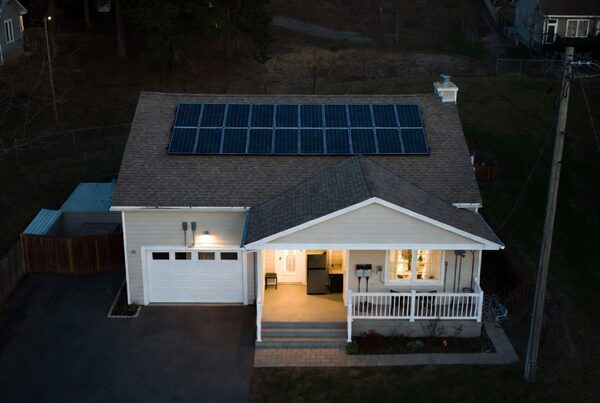
There is no published UK price for Astronergy modules. Panel prices are quoted by installers as part of a complete system, and no manufacturer list price exists to compare against.
The independent benchmark for a whole installation is a typical 4.5kWp system at around £7,600, according to estimates published in August 20265. The same guidance works through an example in which a £7,600 installation for a 4.5kWp system gives solar panel installation costs of around £6845. Those figures cover the system, not the modules alone, and they are estimates rather than quotes.
| Item | Figure | Date |
|---|---|---|
| Typical 4.5kWp system, installed | around £7,6005 | August 2026 |
| Installation cost element, example | around £6845 | August 2026 |
| Astronergy module list price | not published |
One dated market factor applies to the brand specifically. In the first quarter of 2026, Trina Solar, Jinko Solar, JA Solar and Astronergy all increased their prices14. That is a reported movement across several manufacturers rather than a figure for any one module, and it means a quote obtained before that period is not a reliable guide to a quote obtained after it.
VAT treatment is not stated in the figures above, so they should be read as quoted rather than as confirmed VAT-inclusive prices. Solar panels are listed as included material in HMRC's guidance on the reduced rate for energy-saving materials15, and the general cost picture across system sizes is covered in how much do solar panels cost in the UK.
Company status and manufacturing scale
Astronergy is an operating manufacturer, not a business in administration. The clearest indicator of scale is the shipment figure: total global shipments exceeded 170 GW up to December 20252. For a household, that figure says the company has supplied a very large volume of modules worldwide, which is relevant to whether spare units and documentation exist, though it says nothing about the terms of any individual warranty.
The company's recent activity is consistent with a manufacturer investing in its product line. It launched the ASTRO N7 Pro in January 20267, introduced two new series in June 20264, unveiled the ASTRO N7s 3.0 at Intersolar Europe 20268, and presented three module families at Intersolar South America 2026 in September2. It also deepened a residential partnership in April 2026 with a commitment to deploy 12MW of residential solar capacity by 202710.
None of this is a warranty guarantee. A manufacturer's scale and its willingness to honour a claim fifteen years later are different things, and the second cannot be established from a shipment total. What the record does show is a company that was actively trading and launching products through 2026, which is the most that can be said from the material available.
What it means for household energy independence
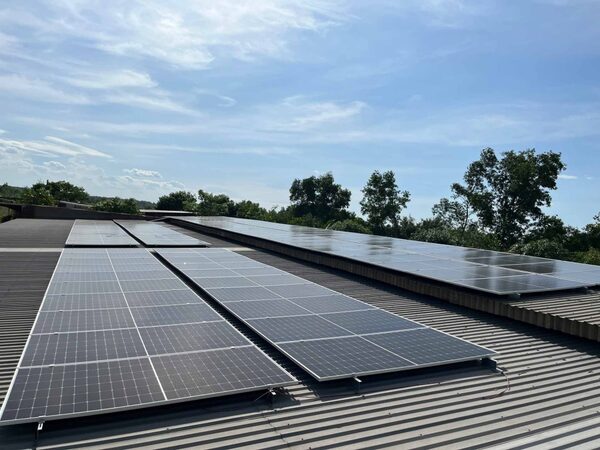
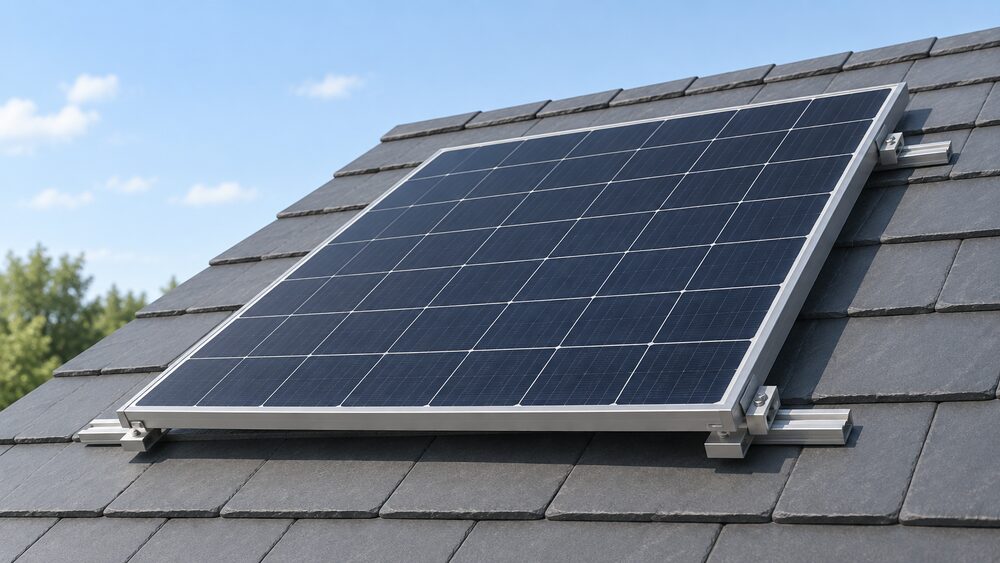
Solar panels convert sunlight into clean, renewable electricity16, and the electricity generated from the sun is completely free and 100% renewable17. The function is straightforward: panels capture the sun's energy and convert it into electricity that can be used in the home, or sent back to the electricity grid in return for a payment known as the Smart Export Guarantee17. Solar energy involves the use of the sun's free energy to provide electricity using solar photovoltaic panels15.
That is the independence a rooftop array delivers. It reduces the amount of electricity bought from a supplier during daylight hours, and it does so without fuel, without a delivery, and without a standing charge on the generated units.
What remains is substantial. The household stays connected to the grid, because a solar array without storage generates nothing at night and little in winter. It still needs a supplier for the hours it cannot generate, and it still pays for that connection. The inverter, the mounting system and the cabling are all bought equipment with their own lifespans. And the module warranty depends on a manufacturer based outside the UK, reached through a distributor.
The honest position is that Astronergy panels, like any module, shift part of a household's electricity supply onto its own roof. They do not remove the grid, the supplier or the manufacturer from the picture. The wider trade-offs are set out in solar panels and household energy independence, and the process from survey to handover is covered in solar panel installation.
Sources17 cited
- Astronergy announces strategic partnership with Midsummer to expand UK market presence, Astronergy, 2026-05-08
- Astronergy homepage, Astronergy, 2026-09-04
- N-type technology deep dive: TOPCon's role in the efficiency race, Astronergy, 2026-06-12
- Astronergy introduces ASTRO N7 3.0 and ASTRO N7s 3.0 series, Astronergy, 2026-06
- Solar panel costs, Which?, 2026-08-03
- ASTRO N7 2.0: reshaping efficiency and customer value, Astronergy, 2025-09-19
- Astronergy launches ASTRO N7 Pro to unleash pro performance, Astronergy, 2026-01-07
- Elevate for more: Astronergy unveils ASTRO N7s 3.0 at Intersolar Europe 2026, Astronergy, 2026-06-25
- Astronergy contributes to powering 3,000 Italian households with the supply of its ASTRO N5, Astronergy, 2025-09-30
- Astronergy and Meridien Energy deepen partnership to power local communities with 12MW of residential solar by 2027, Astronergy, 2026-04-17
- Astronergy unveils new location and product launches at Intersolar South America 2026, Astronergy, 2026-08
- Approved Document L: energy and greenhouse gas emissions, frequently asked questions, GOV.UK, 2026-09-08
- Astronergy cooperates with TÜV Rheinland for IEC TR 63279 module derisking qualification, Astronergy, 2025-Q4
- Why solar panel prices are rising in the UK in 2026, Spirit Energy, 2026
- VAT energy saving materials and grant funded heating supplies, HMRC, 2019-09-30
- How do I retrofit my home: solar panels, Oxfordshire County Council, 2026-07-06
- Generating your own energy: solar electricity, Welsh Government, 2026-09-17