In this guide
Viridian Solar is a UK-based manufacturer of roof-integrated solar modules, the company behind the Clearline Fusion system that replaces the roof covering rather than sitting on top of it1. The Clearline Fusion roof integrated solar PV system launched in 2015 and is described as a system for house builders, individual property owners and installers2. The company's technical leadership is visible in the sector: Dr KT Tan is the Chief Technical Officer at Viridian Solar1.
The product is an in-roof system, listed as an in-roof system for pitched roofs only, and the roofing kit works universally with both slate and tile roofs3. That is the central fact for a householder weighing it against conventional on-roof panels: the array becomes part of the roof, and the roofing kit, not a rail and bracket set, is what makes it weathertight.
Cost is the other headline. Independent guidance puts typical solar PV costs at £2,000 per kWp4, and a separate consumer guide puts a full solar panel installation at between £6,100 and £11,000 depending on the size of the property5. Viridian does not publish a list price for a supplied and fitted Clearline system, so quotes come from installers.
Who Viridian Solar is: a Cambridge-based roof-integrated PV specialist
Viridian Solar is described in the trade press as a UK-based manufacturer of roof-integrated solar modules1. That description matters because the UK solar market is dominated by imported product: around 80% of the panels sold in the UK are made in China7. A British company designing specifically for British roof construction occupies a narrow but distinct position, and the Clearline Fusion system is the product that defines it.
The company's reach is visible in certification data. In South Cambridgeshire, more than 11,000 certified solar PV installations have been recorded since 2008, and one in five households in the district has a renewable energy installation8. Viridian's home county is one of the denser solar areas in the country, which is a useful backdrop for a manufacturer selling into new build and retrofit alike.
Viridian's technology sits within the building-integrated solar category. Certification bodies list BIPV (building-integrated solar PV) as a distinct technology alongside solar PV, heat pumps, solar heating and solar mounting, which reflects that in-roof systems are assessed differently from panels mounted on top of a roof9. The company also works in solar thermal as well as PV, and its panels have been specified on publicly funded Welsh retrofit work: the Caredig project in Swansea and Pembrokeshire funded PV, an intelligent energy system and environmental sensors10.
For a household, the significance is straightforward. Buying from a UK-based manufacturer shortens the route to technical support and to replacement parts, and it means the company's design assumptions are British roof pitches, British slates and tiles, and British weather. It does not change the physics: the array still depends on the grid for export and on an inverter to make usable power.
Clearline Fusion: the interlocking in-roof system
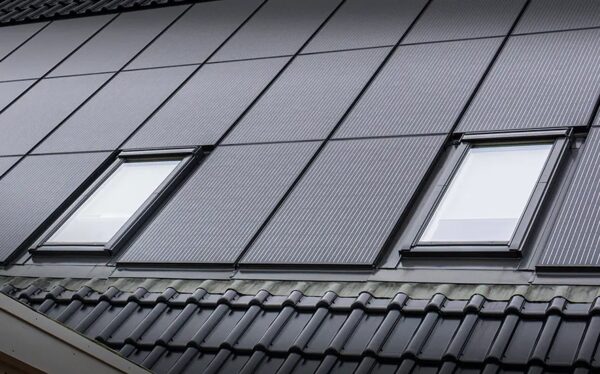
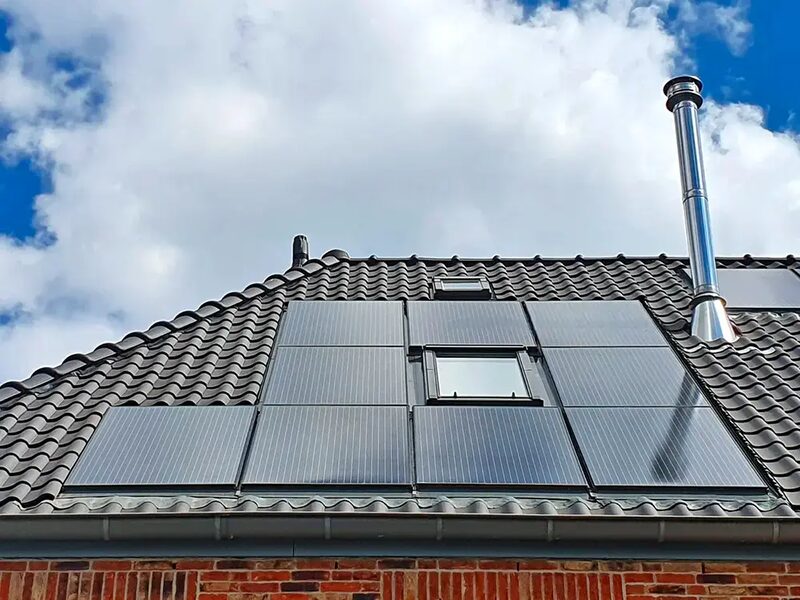
Clearline Fusion is a roof integrated solar PV system for house builders, individual property owners and installers2. The roofing kit is the component that does the integrating: the Viridian Clearline Fusion M10 landscape roofing kit is listed as an in-roof system, works universally with both slate and tile roofs, and sits in the sub-category of in-roof systems for pitched roofs only3.
That universality is the practical selling point. A conventional on-roof array needs roof hooks fixed through the covering, with the covering made good around each fixing. An in-roof system replaces the covering across the array area, and the kit is designed to marry up with both slate and tile so the same product can be specified across a mixed development or a single house without a bespoke flashing detail.
The trade-offs are real. An in-roof array is installed as part of the roof, so it is best planned before or alongside roofing work rather than added afterwards. It also commits the roof area: the panels are the weatherproof layer, so removing them for roof repairs is a different job from lifting panels off a rail system. The advantage is visual and, for new build, practical, since the array counts as part of the roof rather than an addition to it.
"Clearline Fusion is a roof integrated solar PV system for house builders, individual property owners and installers."
For a fuller comparison of the two approaches, roof-integrated vs on-roof solar panels sets out where each suits, and roof-integrated solar covers the wider category of in-roof systems and solar tiles.
Panel design: orientation, pitch and the 5mm gap between panels
Roof-integrated systems are less forgiving of a poor roof than on-roof panels, because the array is designed into the covering rather than angled on top of it. The standard modelling assumptions used in UK building energy calculations are a roof facing south at a pitch of 30 degrees with modest overshading11. Independent advice for the Eryri area puts the efficient band at a pitch of 30 to 40 degrees12.
That gives a householder a simple test. A south-facing roof in the 30 to 40 degree band is the straightforward case. East and west roofs still generate, but the array spends its day at a lower output rather than peaking at midday. A roof below 20 degrees is a different proposition again: the Clearline Fusion roofing kit is listed as an in-roof system for pitched roofs only3, so a low-pitch or flat roof is a design question for the installer rather than a standard installation.
The interlocking detail matters more than it sounds. In-roof panels sit side by side with a small gap between them, and the roofing kit provides the weatherproof joint between adjacent panels and between the array and the surrounding covering. That is why the kit is sold as a system component rather than as a bracket: the panel and the kit together form the roof.
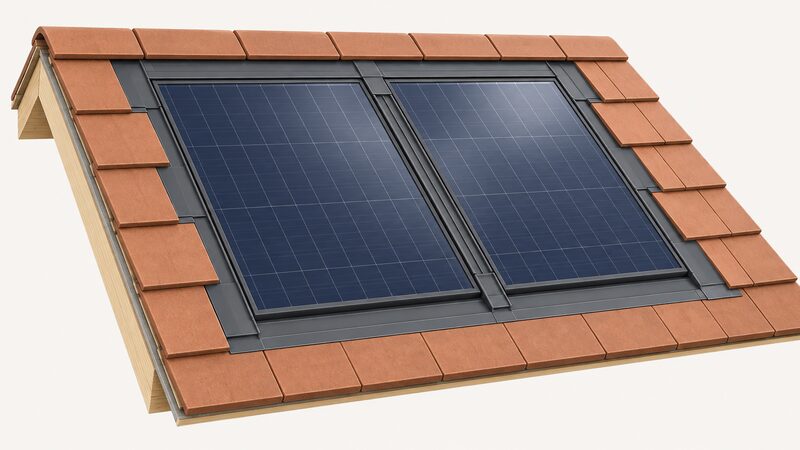
Planning rules bear on the design too. On a pitched roof, panels should not be installed above the highest part of the roof, excluding the chimney, and should project no more than 200mm from the roof slope13. In Wales the same limit applies: panels should not be installed above the ridgeline and should project no more than 200mm from the roof or wall surface14. An in-roof system sits within the roof plane, so it meets those limits by construction. The rules for England, Scotland, Wales and Northern Ireland differ in detail, and orientation, shading and roof suitability covers the assessment in full.
Cost: from around £1,600 per kWp
Viridian does not publish a list price for a supplied and fitted Clearline system, so the figures that exist are market benchmarks rather than product prices. Independent guidance puts typical solar PV costs at £2,000 per kWp4. A consumer guide puts a full solar panel installation at between £6,100 and £11,000 depending on the size of the property5.
| Benchmark | Figure | Basis |
|---|---|---|
| Typical PV cost | £2,000 per kWp4 | Independent guidance, November 2025 |
| Full installation | £6,100 to £11,0005 | Depending on property size, July 2026 |
| Viridian Clearline list price | Not published | Installer-quoted |
Three things move a Clearline quote relative to an on-roof one. First, the roofing kit is a component cost in its own right, and it is priced per panel. Second, an in-roof installation is normally done as part of roofing work, so the labour overlaps with the roofer's rather than sitting alongside it. Third, scaffolding and access are shared with the roof work rather than added to it, which can offset part of the kit cost on a project that was already re-roofing.
VAT treatment is not stated in the figures above, so they should be read as quoted rather than as confirmed VAT-inclusive prices. For the wider cost picture, including how system size drives the total, how much do solar panels cost in the UK and what size solar system does a home need set out the benchmarks.
Ownership: from independent maker to Marley and Marshalls Plc
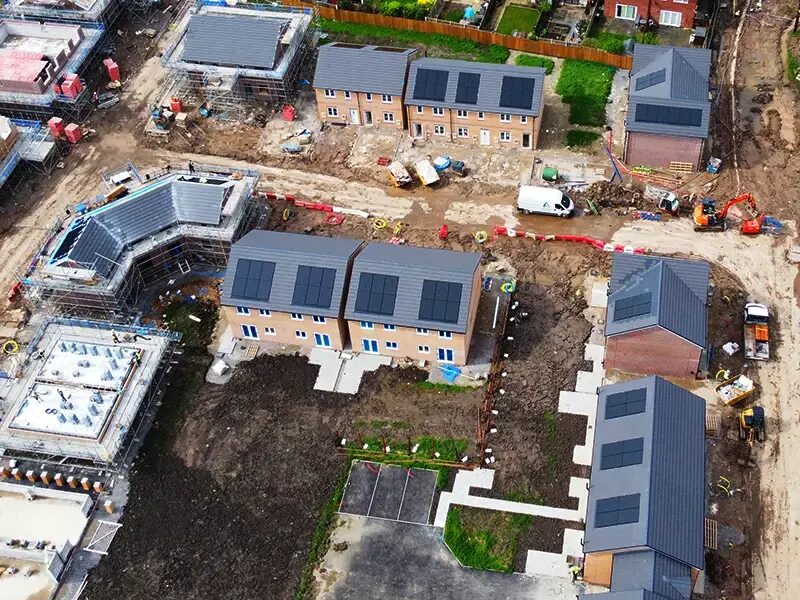
The ownership history is the part of the Viridian story a buyer should understand, because it determines who stands behind the product over a 25-year life. The company began as an independent UK manufacturer of roof-integrated modules1, and the Clearline Fusion system launched in 20152. Roof-integrated solar has since consolidated into the larger building materials groups, and the brands now selling in-roof systems in the UK sit within those groups.
That matters for two reasons. A manufacturer owned by a building products group has a distribution route through merchants and house builders that an independent does not, which is why in-roof systems appear on new build developments. It also means the warranty sits with a corporate entity that can change hands. The relevant comparison in the UK market is Marley SolarTile, which is the other roof-integrated system widely specified on British roofs.
For a household, the practical question is not who owns the brand but what the paperwork says. The RECC guidance on solar contracts advises checking legal ownership of the system, who will be responsible for removing the system at the end of its useful life, and the arrangements for terminating the agreement15. Those three points apply to any roof-integrated purchase, and they are the ones that survive a change of ownership at the manufacturer.
Where the panels are made: British design, Far East manufacture
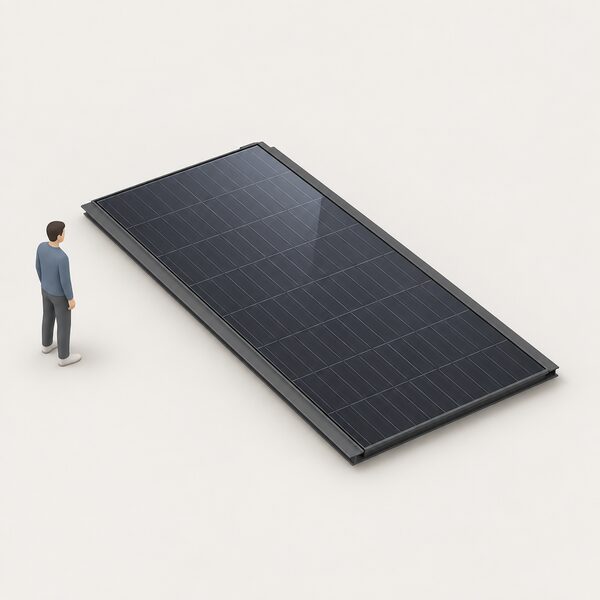
The design and the manufacture are not in the same place. Viridian Solar is a UK-based manufacturer of roof-integrated solar modules in the sense that the product is designed and specified in Britain1, but the wider UK market context is that around 80% of the panels sold in the UK are made in China7. A British-designed in-roof system is therefore likely to use cells and modules from established overseas supply chains, with the roofing kit and the system design as the British contribution.
That is not unusual, and it is not a criticism. The comparison in the UK market is with companies such as UKSOL, described as a British solar PV module producer based in Gerrards Cross, Buckinghamshire16, which positions itself on British specification rather than on British fabrication. The distinction a householder should hold onto is between a company that designs and supports a product in the UK and one that assembles it here.
What it means in practice is that spares and replacements depend on the manufacturer's supply chain rather than on a domestic factory. For an in-roof system that is a more significant point than for an on-roof array, because the roofing kit is matched to the panel dimensions. If a panel needs replacing years later, the replacement has to fit the kit already on the roof. That is an argument for keeping the system documentation, including the kit specification, with the property.
Buying and installing: supply only or with a professional
Clearline components are sold through distributors and merchants, and the roofing kit appears in distributor catalogues as a single-panel item3. That does not mean a householder should fit it. Independent guidance is explicit: householders should not try to install solar panels themselves, and should get a qualified electrician to connect the panels to the electrical system17. Domestic customers are expected to buy solar panels through an installation company7.
The electrical side is the firm line. Any necessary testing and modifications of a building's electrical system shall only be performed by professional electricians18. Local authority guidance adds that a qualified installer should always be used19. For an in-roof system there is a second trade involved, because the array is part of the roof covering, so the work sits between a roofer and an electrician and is normally managed by one contractor.
The sequence for a household is:
- Survey of the roof structure, pitch, covering and existing electrical installation.
- Design of the array and the roofing kit layout, matched to the slate or tile.
- Roofing work and panel installation as a single weathertight operation.
- Electrical connection, testing and commissioning by a qualified electrician.
- Registration of the warranty and handover of the documentation.
Fault finding and maintenance of solar PV systems are covered in the NAPIT practical guide used by electricians and renewable contractors, which sets out design, selection, installation and commissioning alongside maintenance and fault finding20. If a problem concerns metering, billing or export payments rather than the panels, the route is the energy supplier or the network operator22. Export payments themselves sit under the Smart Export Guarantee, which obliges licensed suppliers to pay for exported electricity23. Solar panel installation covers the process in full, and can you install solar panels yourself in the UK sets out where the limits fall.
What roof-integrated PV means for household energy independence
A Clearline array does what any solar array does for independence: it generates electricity at the point of use, so a share of the household's demand never comes from the grid. Most solar PV installations are domestic roof top installations in the 0 to 4kW capacity range24, which is the scale a Clearline system on a family house occupies. The permitted development rules recognise the purpose directly: the primary purpose of roof-mounted solar PV or solar thermal equipment must be to provide heat or energy for use within the curtilage of the dwellinghouse25.
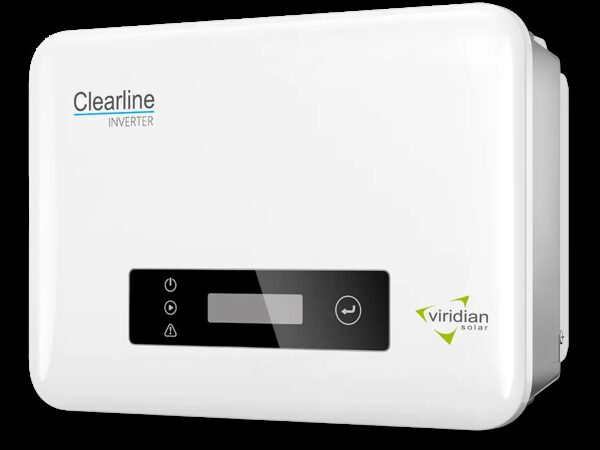
What remains is the dependence. The array is grid-tied, so it needs the network to export and to supply power when the sun is not shining. It needs an inverter, and Viridian's own Clearline Inverter range is described as perfectly complementing Clearline Fusion roof integrated solar panels, with single-phase units for residential solar applications in single and dual MPPT versions27. It needs a supplier to pay for exports. And because the panels are the roof covering, it needs the manufacturer's kit to remain available for any future repair.
The 2016 Goring installation shows the model working in practice: a five panel, 1.25 kWp Clearline Fusion system with Enphase microinverters, recommended by Viridian Solar, generating 1,221 kWh a year28. That is a small array by current standards, and it illustrates both the benefit and the limit. The household generated its own power for a defined period each year, and remained connected to the grid for everything else.
For the wider picture, solar panels and household energy independence sets out what a grid-tied array can and cannot do, and adding battery storage to a solar system covers shifting generation into the evening. The UK solar strategy has long framed the ambition in terms of one million roof installations29, and roof-integrated systems are one route to that scale.
Sources29 cited
- From anecdotes to evidence: why the UK solar industry must own its safety narrative, Solar Energy UK, 2026-04-22
- Roof-integrated solar PV system, UK Green Building Council, 2024-07-08
- Viridian Clearline Fusion M10 landscape roofing kit, Single Panel, Alternergy, 2026-09-17
- A complete guide to solar PV, Centre for Sustainable Energy, 2025-11
- Make your home more energy efficient, Confused.com, 2026-07-06
- Plug-in solar panels vs rooftop systems, Which?, 2026-04-27
- SolarEdge solar panels review, Which?, 2026-08-12
- One in five South Cambridgeshire households have a renewable energy installation, MCS Certified, 2024-09-03
- Certifying your product, MCS Certified, 2026-05-18
- Optimised Retrofit Programme 3 funded projects, Welsh Government, 2023-04-26
- RdSAP10, BRE Group, 2024-02-12
- Advice on Improving Energy Efficiency, Eryri National Park Authority, 2022
- Planning permission: solar equipment mounted on a house, Planning Portal, 2026-09-17
- Planning permission: solar panels, Welsh Government, 2026-09-17
- Information regarding free solar PV systems, RECC, 2026-09-17
- Smith Bros becomes UKSOL's distributor for the United Kingdom, Flexi-Orb, 2021-07-13
- Solar panel installation, Energy Saving Trust, 2026-09-07
- Plug-in solar interim product specification, Department for Energy Security and Net Zero, 2026-06
- Solar panels, East Herts Council, 2026-09-17
- NAPIT Practical Guide: Solar Photovoltaic Systems & Battery Storage A4:2026, NAPIT, 2026-09-17
- NAPIT Practical Guide: Solar PV & Battery Storage A4:2026, NAPIT, 2026-09-17
- Complain about your energy supplier or network operator, Ofgem, 2026
- Smart Export Guarantee, Solar Energy UK, 2026-05-12
- Feed-in Tariffs Annual Report Scheme Year 13, Ofgem, 2023-12
- The Town and Country Planning (General Permitted Development) (England) Order 2015, Schedule 2, Part 14, legislation.gov.uk, 2026-09-17
- The Planning (General Permitted Development) Order (Northern Ireland) 2015, Schedules, legislation.gov.uk, 2026-09-17
- Clearline Inverter, Viridian Solar, 2026-09-15
- Case study: Goring 1.25kWp, Spirit Energy, 2016-03
- UK Solar PV Strategy Part 2, Department of Energy and Climate Change, 2014-04-04