In this guide
BISOL is a European solar module manufacturer that sells into the UK through installers and distributors rather than direct to households. The company states that its PV modules are 100% made in Europe, are produced entirely in-house without subcontracting, and are installed in more than 120 countries1. Its modules use TOPCon cell technology, which BISOL describes as being for enhanced efficiency, and the company says it applies rigorous quality standards across the range1.
The warranty position is the headline. BISOL states a 25-year product warranty on its standard modules, valid worldwide, alongside a 30-year linear power warranty running to 90% of rated output2. Its Supreme module is described as the only solar module offering a 100% power guarantee for 25 years2. Those are the maker's own terms rather than an independent assessment, and they apply to new orders2.
What BISOL does not publish is a UK price. There is no list price for a BISOL module or a BISOL system in the UK, and the company has stated that its price structure and price lists were adjusted during 2026, with updated pricing provided to partners on new projects2. For a household, that means a BISOL quotation arrives through an installer, and the figure will reflect the whole system rather than the module alone.
What BISOL offers in the UK
BISOL does not sell to householders directly. The route to a UK roof runs through an installer or distributor who sources the modules as part of a quoted system, which is the same pattern most European module makers follow in this market. The company's own description of its offer is built around European manufacture, in-house production and personal customer support rather than around a UK retail presence1.
That matters for how a household evaluates it. A module brand with no direct UK sales channel is only as available as the local installer network makes it, so the practical question at quotation stage is whether the specific model is in stock and on the quote, not whether the brand exists in the UK. Solar panels are described by the Energy Saving Trust as the most common domestic renewable energy source in the UK, so the installer route is well established3.
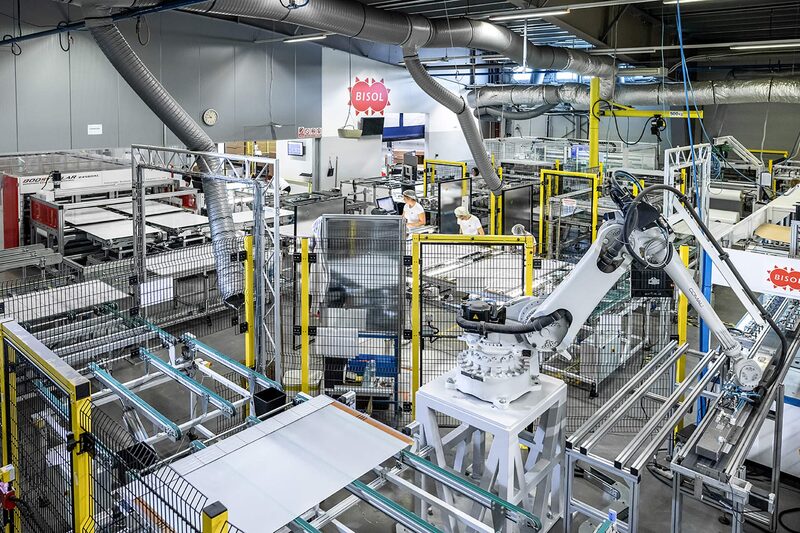
European manufacture is the differentiator BISOL leans on. The company states that its modules are designed and manufactured in Europe and are 100% made in Europe, and that production is carried out entirely in-house without subcontracting1. It describes itself as the largest European manufacturer of premium solar modules2. For a household, that speaks to supply chain length and to the traceability of production, not to how much electricity a panel generates once it is on the roof.
The company has also been publicly arguing a policy case. In February 2026 it published a Manifesto of European Industrial Realism, calling for European industrial policy and financial mechanisms to support European solar manufacturing2. That is a statement of commercial position rather than a product fact, but it explains why the brand positions itself as it does.
Where a household wants to compare module types before choosing, types of solar panel sold in the UK sets out the categories, and solar cell technology explains what TOPCon means against PERC and heterojunction.
Specifications: TOPCon cells and a portfolio that moved to G12R
BISOL's published product information is thinner than the datasheet-level detail a household would want. The maker's product page states that its modules use TOPCon technology for enhanced efficiency and that they are built to rigorous quality standards, without listing model-by-model wattages, efficiencies or temperature coefficients on that page1.
What is documented is the cell transition. BISOL moved its entire portfolio from M10 to G12R cells from the second quarter of 2025, a change the company announced across its product line1. G12R is a larger wafer format, and the shift is the kind of change that affects module dimensions, weight and the mounting hardware a roof needs, so it is worth confirming which cell generation a quoted module uses.
The portfolio also expanded in 2026. BISOL announced the BGO Duplex and BGO Bifacial modules and launched the BHO Duplex and BHO Bifacial modules in March 2026, with BGO production planned to start in the first quarter of 20261. It introduced Spectrum Silver Beam as an addition to its Spectrum range1. The company also holds a TÜV NORD certificate of conformity for its photovoltaic module types, issued in Essen on 16 April 2026, and a factory inspection certificate dated 24 March 20261.
| Item | BISOL position |
|---|---|
| Cell technology | TOPCon, stated for enhanced efficiency1 |
| Cell format | Portfolio moved from M10 to G12R from Q2 20251 |
| Manufacturing | 100% made in Europe, in-house, no subcontracting1 |
| New modules, March 2026 | BGO Duplex, BGO Bifacial, BHO Duplex, BHO Bifacial1 |
| Certification | TÜV NORD certificate of conformity, 16 April 20261 |
For the wider picture on how efficiency, STC ratings and tolerances are declared, reading a solar panel datasheet covers the conventions, and bifacial and glass-glass panels explains what a bifacial module does differently.
Warranty: 25 years product, 30 years linear power

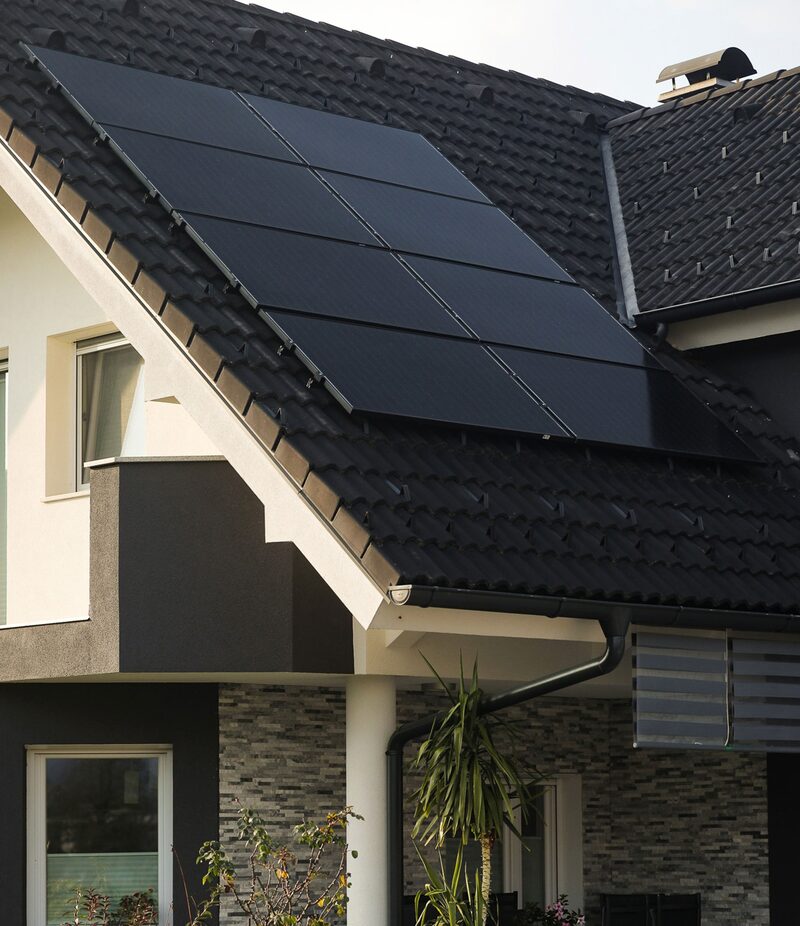
BISOL's warranty terms are unusually long for the module market, and they are stated by the maker rather than confirmed by an independent body. The company announced a 25-year product warranty on its standard modules, valid worldwide, together with a 30-year linear power warranty running to 90% of rated output2. Both apply to all new orders2.
The Supreme module carries a different and stronger claim: BISOL describes it as the only solar module offering a 100% power guarantee for 25 years2. A 100% power guarantee is a materially different promise from a linear degradation curve, and the wording should be read carefully against the certificate that accompanies the module.
"Garantie produit de 25 ans"
Two practical points sit alongside the headline terms. First, a module warranty is only one part of a system warranty: the Energy Saving Trust notes that many parts of a solar panel system will be covered by a warranty from the installer, so warranty documents should be kept safe4. Second, faults caused by poor workmanship should be covered free of charge by the installation warranty while the system is still within its installation warranty period5. A household therefore holds two separate warranties, one from the module maker and one from the installer, and the second is the one that covers how the panels were fitted.
For the general framework, including degradation curves and how they are measured, solar panel warranties and degradation sets out the conventions. Where a system is being funded through a grant scheme, the warranty terms attached to the approved measure matter as much as the module terms; the ECO4 innovation measures list is one example of how a scheme specifies a 25-year manufacturer's warranty on an approved product6.
What a BISOL system costs in the UK
There is no published BISOL price for the UK market. BISOL has stated that its price structure was adjusted and that updated price information would be provided to partners with new projects, and separately that market developments allowed its price lists to be adjusted during 20262. No figure is given, so a BISOL quotation is installer-quoted and nothing more specific can be said about the module's own price.
What can be said is what a UK solar system costs in general, which is the context any BISOL quote will sit in. Independent guidance puts a typical domestic system at around 4.5 kWp and around £7,6008. The same 4.5 kWp figure appears in cost breakdowns, where installation costs on a £7,600 system are put at around £6849. Quoted ranges vary: around £4,600 to £8,000 depending on panel quality and system size10, and the same £4,600 to £8,000 average among suppliers11. Other independent figures put installation at around £6,10012, between £6,100 and £11,000 depending on property size13, and £6,000 to £10,000 as a typical range14.
| Source basis | Figure |
|---|---|
| Typical 4.5 kWp system | around £7,6008 |
| Installation element of a £7,600 system | around £6849 |
| Quoted range by panel quality and size | around £4,600 to £8,00010 |
| Average installation cost | around £6,10012 |
| Range by property size | £6,100 to £11,00013 |
| Typical range | £6,000 to £10,00014 |
| Scotland, installation cost range | £1,500 to £10,00015 |
Scotland is the one nation where a distinct range is published, at £1,500 to £10,000 for installation cost15. A worked example from an independent review puts a ten-panel east-facing system on a 35-degree pitched roof with modest shading at £7,400 installed16, and a case study of a 14-panel system with a battery came in at around £9,000 including the battery and installation17. An older average of around £7,800 to buy and install dates from August 2023 and should be read as historical18.
VAT treatment is not stated in any of these figures, so they should be read as quoted rather than as confirmed VAT-inclusive prices. How much do solar panels cost in the UK covers the cost structure in more detail, and solar panel savings and payback periods deals with what a system returns over time.
Company status and European manufacturing
BISOL is trading and active. The company describes itself as the largest European manufacturer of premium solar modules, states that its products are installed in more than 120 countries, and says its modules are produced entirely in-house without subcontracting2. It holds a current TÜV NORD certificate of conformity for its module types, issued on 16 April 2026, and a factory inspection certificate dated 24 March 20261. It participated in a European photovoltaics webinar on 2 July 20261.
The company has been publicly positioning itself around quality and long-term risk through 2026. It published material arguing that 2026 marks a shift in photovoltaic projects towards managing long-term risk rather than focusing solely on the lowest price per watt, and that long-term system behaviour has become increasingly a risk for installers1. It has also published a Manifesto of European Industrial Realism calling for European industrial policy and financial mechanisms to support European solar manufacturing2.
For a household, the relevant reading is straightforward. A manufacturer that is trading, holds current third-party certification and publishes warranty terms is in a different position from one in administration, and nothing in the available material suggests BISOL is in difficulty. The dependence that remains is the ordinary one: the warranty is a promise from a European company, enforceable through the terms it sets, and the practical route to a remedy runs through the installer who supplied the system.
What BISOL means for household energy independence
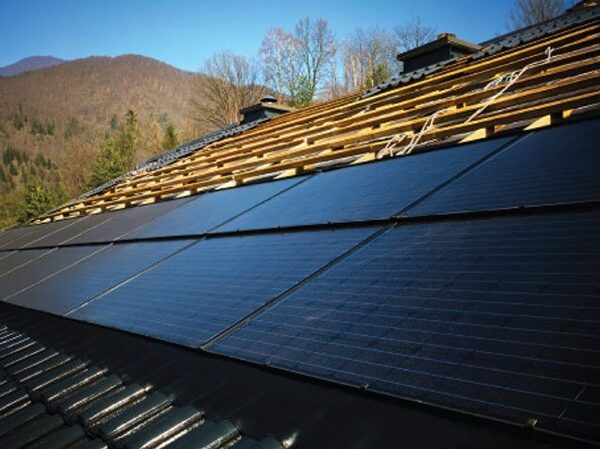
A solar module is the part of a system that determines how much electricity a roof can generate, and BISOL's contribution to independence sits there rather than in the wider system. The company states a 25-year product warranty and a 30-year linear power warranty to 90% of rated output, and describes its Supreme module as carrying a 100% power guarantee for 25 years2. It also states that its modules are warranted for 25 years without degradation1. Long warranty terms matter to independence because they set how long a household can expect the generating asset to keep performing without replacement.
European manufacture shortens the supply chain. BISOL states that its modules are 100% made in Europe and produced in-house without subcontracting1. That reduces exposure to distant supply routes for replacement modules and parts, though it does not remove the dependence on the manufacturer as a company, on the installer who fitted the system, or on the distributor who holds stock.
What a BISOL module does not change is the rest of the system. A grid-connected array still depends on the grid for the times it is not generating, on an inverter to convert DC to AC, and on a supplier or export tariff to be paid for what is sent out. The module is one component in that chain. Solar Energy UK's position is that more homegrown energy means greater energy independence, which is the general case for the technology rather than a claim about any one brand19.
For the wider argument, solar panels and household energy independence sets out what a system does and does not remove, and solar panel maintenance and cleaning covers what keeps an array performing over its warranty term.
Sources19 cited
- BISOL PV modules product page, BISOL, 2026-09-17
- BISOL warranty announcement, BISOL, 2025-09-18
- Top energy saving ideas for your home improvement project, Energy Saving Trust, 2026-08-03
- Solar panel cleaning and maintenance, Energy Saving Trust, 2026-08-25
- Most common solar panel problems, Which?, 2026-09-20
- ECO4 innovation approved innovation measures v1.17, Ofgem, 2026-01
- ECO4 innovation approved innovation measures v1.5, Ofgem, 2023-10
- Solar panels advice, Energy Saving Trust, 2026-08-27
- Solar panel costs, Which?, 2026-08-03
- Solar panels, Uswitch, 2026-09-09
- Are solar panels worth it?, Uswitch, 2026-09-16
- Energy saving upgrades for home renovation, Energy Saving Trust, 2026-05-05
- Make your home more energy efficient, Confused.com, 2026-07-06
- Do solar panels increase home value?, CPA, 2026-01-20
- Solar panels, Home Energy Scotland, 2026-09-20
- Are solar panels worth it?, Which?, 2025
- Beth Martin story: solar panels and an electric vehicle, Energy Saving Trust, 2025-03-03
- Solar panels: a good investment?, CPA, 2023-08-23
- Solar Energy Scotland manifesto, Solar Energy UK, 2026-09-17
 BISOL solar panels for UK roofsBISOL panels are made in Europe and sold through UK installers rather than shops.