

On this page
Scotland's Fuel Insecurity Fund was a Scottish Government scheme that paid money to third sector organisations so they could help households at risk of self-rationing or self-disconnecting their energy use, meaning people cutting back on heating or going without it altogether because they could not afford it1. The fund grew from a £10 million commitment to £20 million and then to up to £30 million for 2023-24, its peak year1. It covered households on any tariff type and using any type of fuel, and its recipients included the Fuel Bank Foundation, Advice Direct Scotland and the Scottish Federation of Housing Associations1.
The fund no longer operates. Its funds have been removed, and the Scottish Government's own engagement reporting states that the Scottish Welfare Fund currently remains the only significant source of crisis funding available to support people with their energy bills as a result2. This page sets out what the fund did, who it reached, why it covered every fuel type, and what has taken its place in Scotland's funding landscape.
What the Fuel Insecurity Fund was for
The fund existed for a specific and severe problem: households not merely struggling with bills, but actively rationing or disconnecting their energy use because they could not pay. The Scottish Government described its purpose in these words:
"to help households who are at risk of self-rationing or self-disconnecting their energy use"
That is a step beyond ordinary fuel poverty. It describes homes where the heating goes off, the cooker is not used, or prepayment meters are run down to nothing before the next money arrives.
The scale of the underlying problem was large and getting worse while the fund operated. Fuel poverty in Scotland was estimated at 34% in 2023 under modelling based on 2019 fuel prices4. The Scottish House Condition Survey put the 2023 estimates at 33.9% of households, some 859,000 homes, with 19.4%, or 491,000 households, in extreme fuel poverty3. By 2024 the estimate had fallen to 732,000 households, 28.7% of all households3. Against numbers of that size, even £30 million was crisis relief rather than a solution: the fund bought emergency vouchers, debt relief and warmth items for the households in the most immediate difficulty, not a permanent reduction in fuel poverty.
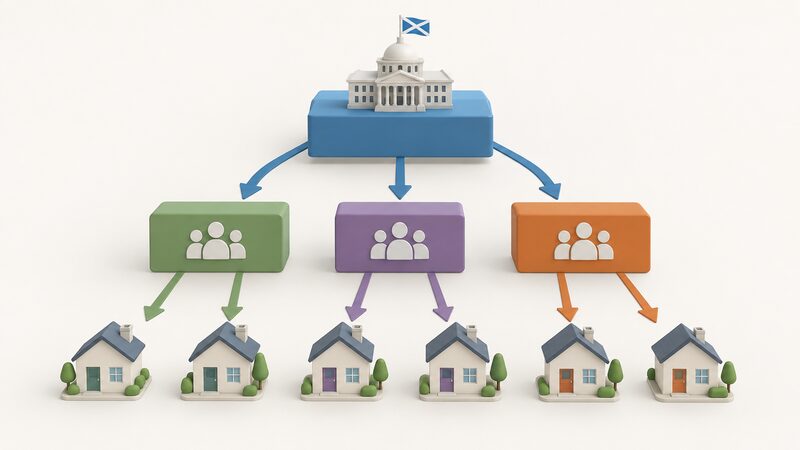
The money never went directly to households. The Scottish Government made the funding available to third sector organisations, which used their own referral routes and local knowledge to reach people1. That design let the fund respond quickly to crisis, but it also meant households had to come to the attention of a participating organisation to benefit.
Who the fund reached: the most vulnerable households

The fund was aimed squarely at "the most vulnerable households in Scotland"1. It sat within a wider landscape in which, as the Fuel Poverty Advisory Panel records, funding to tackle fuel poverty comes from a range of sources: the Scottish and UK Governments, local authorities, Ofgem, energy companies, and winter support payments administered by Social Security Scotland and the DWP5.
Vulnerability in this landscape is defined in several ways. Under the Fuel Poverty (Targets, Definition and Strategy) (Scotland) Act 2019, a household is in fuel poverty if:
- the total fuel costs necessary for the home are more than 10% of the household's adjusted net income after housing costs, and
- after deducting fuel costs, benefits received for a care need or disability and childcare costs, the remaining adjusted net income is insufficient to maintain an acceptable standard of living3
The remaining income must be at least 90% of the UK Minimum Income Standard to be considered acceptable6. The Act sets a statutory target that no more than 5% of Scottish households would be in fuel poverty by 2040, and those targets must be achieved within each of the 32 local council areas and not just in Scotland as a whole3.
Other schemes define their target groups differently, which shows where the Fuel Insecurity Fund sat:
| Scheme | Who it targets | What it provides |
|---|---|---|
| Fuel Insecurity Fund | The most vulnerable households, any tenure, any fuel1 | Emergency fuel support, debt help, warmth items1 |
| Warmer Homes Scotland | Mainly owner occupiers, plus some private rented tenants; proxies include benefits, age, long term health conditions, carers, families with children under 168 | Energy efficiency and heating improvements8 |
| Warm Home Discount (Scotland, Broader Group) | Low income tested through qualifying benefits, plus a vulnerability requirement such as a child under 5 or a disability element10 | A bill rebate |
The Fuel Insecurity Fund was narrower in purpose than any of these, emergency support rather than installation or a bill rebate, but broader in reach, because it was not tied to a particular tenure, benefit or heating system.
Why eligibility covered all fuel types
The fund's coverage of households "on any tariff type and using any type of fuel" was a deliberate design choice, and the fuel poverty statistics explain why1. There are many households in Scotland whose energy is unregulated because it is LPG, oil or solid fuel, or provided by some other mechanism including heat networks2. Those households fall outside much of the support architecture built around mains gas and electricity, such as supplier obligations and metered discounts.
The fuel poverty rates by fuel type show how much this mattered:
| Heating fuel | Fuel poverty rate | Source period |
|---|---|---|
| Gas | 27% | 202411 |
| Heating oil | 23% | 202411 |
| Other fuels | 26% | 202411 |
| Electricity | higher than gas (29%) and oil (28%) | 202212 |
| Other fuel types | 41% | 202212 |
Applying fuel price changes alone increased the fuel poverty rate by 11 percentage points in modelling of the 2019 sample under 2022 prices12.
A fund that covered only gas and electricity customers would have missed a substantial share of the households most at risk, particularly in rural and off-gas-grid Scotland. The Fuel Poverty Advisory Panel has since noted that previous support schemes, such as the Fuel Insecurity Fund in Scotland, covered all fuel types, and has recommended that the Scottish Government should ensure there is always a pot of flexible crisis money targeted at energy costs available, for example a fund building upon the learning of the Fuel Insecurity Fund13. It has also recommended that the Scottish Government urge the UK Government and Ofgem to reform the Warm Home Discount by increasing the payment rate and introducing regional variation covering people using unregulated fuels5.
The £10 million extension and how the fund grew
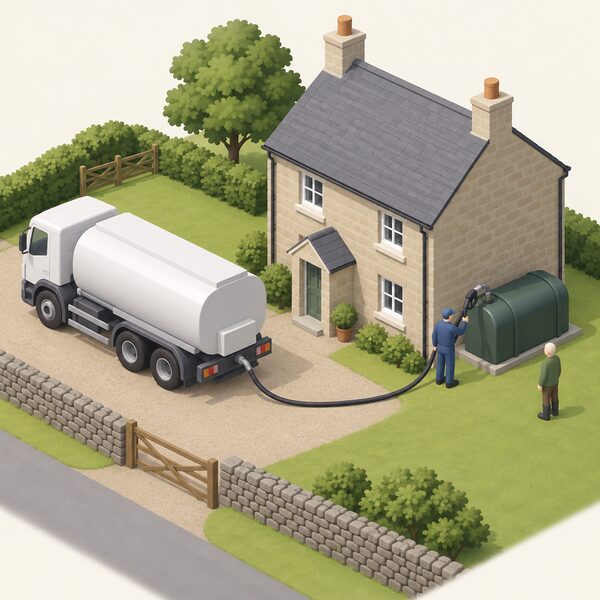
The fund's growth tracked the energy price crisis. The Scottish Government had previously committed to doubling the Fuel Insecurity Fund from £10 million to £20 million, and then announced it would triple it to £30 million for 2023-24, with up to £30 million made available through the fund that year1.
That trajectory continued a pattern of winter crisis funding that predated the fund's peak. In its strategic approach to tackling fuel poverty, the Scottish Government recorded:
- £7 million made available to third sector partners to help households struggling with fuel costs under its Winter Plan for Social Protection14
- a further £10 million available to third sector partners to support those facing fuel insecurity as a Winter Support Fund14
- at least £465 million over five years committed to support those in fuel poverty in the heat transition and to remove poor energy efficiency as a driver of fuel poverty14
The pattern since the fund's removal has been narrower and more targeted. In March 2026 the Scottish Government announced an additional £5.4 million to support lower income households dependent on oil to heat their homes, with full details of eligibility criteria and routes to apply to be made public in the coming days15. The panel reviewing the funding landscape has recommended that the Scottish Government work with the UK Government and Ofgem to extend funding windows across all fuel poverty funds to facilitate long term planning and support delivery5.
What took the fund's role: the Heat Network Fund and other successors
No single scheme replaced the Fuel Insecurity Fund, because nothing else does the same job. What has replaced it is a set of funds aimed at the longer term, plus one remaining crisis route.
Scotland's Heat Network Fund launched in 202216. It makes £300 million of capital grant funding available to support the roll out of zero emission heat networks across Scotland, and aims to support the roll-out of zero emission district heat networks and communal heating systems17. It offers capital grants to businesses and organisations in the public, private and third sectors to develop heat network projects, and remains open to new applications until March 203018. By the time of the Climate Change Plan reporting, it had awarded approximately £14.1 million to five heat network projects in Scotland16. The £300 million allocation was confirmed in the 2022 update to the Heat in Buildings Strategy20.
The Heat Network Fund is infrastructure finance, not household crisis support. A household cannot apply to it for help with a bill. The same is true of the wider successor architecture: the Heat Networks (Scotland) Act was passed by the Scottish Parliament on 23 February 2021, and new heat networks consented from 2023 need to use heat from low or zero emissions sources21. The Act has since been partly superseded by GB-wide regulation19. The Heat in Buildings Strategy also committed to establishing a virtual National Public Energy Agency21.
For households in crisis, the position is starker. The Scottish Government's engagement reporting states that the Scottish Welfare Fund, which helps households on a low income or getting certain benefits through crisis grants and community care grants, "currently remains the only significant source of crisis funding available to support people with their energy bills following the removal of the funds from the Fuel Insecurity Fund"2. Households facing an energy crisis in Scotland can read more about crisis and hardship funds for energy and the Scottish Welfare Fund, and about the wider picture of home energy grants in Scotland.
The Green Heat Finance Taskforce and longer-term policy
The Fuel Insecurity Fund's closure sits within a shift in Scottish policy from crisis payments toward financing the transition of homes off fossil fuels. The independent Green Heat Finance Taskforce was established in February 2022, following a commitment in the Heat in Buildings Strategy to establish a taskforce "to explore potential new and value for money innovative financing mechanisms for both at-scale and individual level investment"19. It published its Part 1 report in November 2023 and its Part 2 report in April 2025, and the Scottish Government is considering its recommendations8.
The strategy that created the taskforce also set the guardrails for how heat policy interacts with fuel poverty. The Heat in Buildings Strategy commits to taking forward no action that could have a detrimental impact on fuel poverty rates, unless additional mitigating measures can also be put in place24. The consultation that preceded it committed an additional £55 million to support work to eliminate poor energy efficiency as a driver of fuel poverty, within over £1 billion to support heat decarbonisation and energy efficiency across other strategic priorities25.
The fuel poverty numbers that follow the fund's removal show why the guardrail matters. Modelling for January to March 2026 estimates that after the removal of the Renewables Obligation and ECO levies there would be around 730,000 fuel poor households in Scotland, 29%, a reduction of around 60,000 households, or 2.5 percentage points, in the number of fuel poor households26. For April to June 2026 the estimate is around 680,000 fuel poor households, 27% of all households27. Those figures remain far above the 2040 statutory target of no more than 5%3.
What the fund meant for household energy security
The Fuel Insecurity Fund addressed the sharpest end of energy dependence: a household that cannot afford the energy it needs has no independence at all. Emergency vouchers and debt relief do not make a home self-sustaining, but they stop the immediate harm of a cold home and buy time for longer-term measures, such as the insulation and heating improvements funded through Warmer Homes Scotland8, or the Home Energy Scotland grant and loan scheme, which is open to homeowners on an equal basis with no eligibility criteria based on age or any other protected characteristic28.
The fund's removal leaves a gap that the Fuel Poverty Advisory Panel has named directly: it recommends that the Scottish Government should ensure there is always a pot of flexible crisis money targeted at energy costs available, for example a fund building upon the learning of the Fuel Insecurity Fund5. Until such a fund exists, a Scottish household in fuel crisis is dependent on:
- the Scottish Welfare Fund, applied for through its local authority2
- schemes with narrower fuel coverage, such as the Emergency Heating Oil Scheme, which is only for homes that use heating oil or LPG and helps people on lower incomes pay for them29
- UK-wide payments such as the Warm Home Discount

Sources30 sources
- More funding made available for Fuel Insecurity Fund, Scottish Government, 2026-09-17
- Tackling Fuel Poverty in Scotland: periodic report 2021-2024 engagement responses, Scottish Government, 2025-04-22
- Scottish House Condition Survey 2024: key findings, Scottish Government, 2026-02
- Scenario modelling of 2023 fuel poverty levels under 2019 fuel prices, Scottish Government, 2023
- Principles and recommendations on the fuel poverty funding landscape in Scotland, Fuel Poverty Advisory Panel, 2026-11-09
- Warmer Homes Scotland programme annual review 2018-19, Scottish Government, 2020-07-30
- Home energy and fuel poverty: fuel poverty policy, Scottish Government, 2026-09-17
- Heat in Buildings progress report 2025, Scottish Government, 2025-10-02
- Tackling Fuel Poverty in Scotland: a strategic approach, Scottish Government, 2021-12-23
- Warm Home Discount briefing, House of Commons Library, 2026-02-26
- Fuel poverty briefing CBP-9838, House of Commons Library, 2024
- Scottish House Condition Survey 2022: key findings, fuel poverty, Scottish Government, 2022
- Social Tariff Working Group final report, spring 2025, Scottish Government, 2023
- Tackling Fuel Poverty in Scotland: a strategic approach (PDF), Scottish Government, 2021-12
- Help for households using heating oil, Scottish Government, 2026-03-17
- Scotland's Climate Change Plan 2026-2040, Scottish Government, 2025-11-06
- Energy efficiency in social housing policy, Scottish Government, 2026-09-17
- Scottish Government response to the Green Heat Finance Taskforce, part 3, Scottish Government, 2025-12-17
- Scottish Government response to the Green Heat Finance Taskforce, part 4, Scottish Government, 2025-12-17
- Heat in Buildings Strategy 2022 update: progress, Scottish Government, 2022-10-31
- Update to the Renewable Heat Target action, Scottish Government, 2021-10-27
- Draft Heat in Buildings Strategy consultation, Scottish Government, 2021-02
- Scottish Welfare Fund, mygov.scot, 2026-09-17
- Heat in Buildings Strategy business and regulatory impact assessment, Scottish Government, 2021-11-11
- Heat in Buildings Strategy consultation, page 8, Scottish Government, 2021-02-05
- Scenario modelling: impact of the reduction of the Renewables Obligation and ending ECO on fuel poverty in Scotland, Scottish Government, 2026
- Fuel poverty scenario modelling based on Ofgem energy price caps up to April to June 2026, Scottish Government, 2026
- FOI 202300391064: Home Energy Scotland Grant and Loan Scheme, Scottish Government, 2024-05-15
- Home Heating Advice FAQs, Home Heating Advice Scotland, 2026-09-17
- Home Heating Advice Scotland, Home Heating Advice Scotland, 2026-09-17