
On this page
Scotland runs its own grant for home electric vehicle charging, separate from anything offered UK-wide. The domestic charge point grant provides up to £400 towards the cost of buying and installing a charge point at home, is funded by Transport Scotland, and is managed by Energy Saving Trust. It is available only to residents in Scotland, and it comes with three conditions: the household must live in a rural or remote area of Scotland, including islands; must have, or be able to show it will soon have, an electric vehicle; and must have an annual household income of £50,000 or less1.
That grant does not stand alone. Home Energy Scotland describes domestic charge point funding as a grant towards the purchase and installation of a charge point for eligible households in Scotland2, and alongside it sit UK-wide schemes run by the Office for Zero Emission Vehicles (OZEV), which offer up to £350 per socket but only to particular groups: people living in flats, people who rent their homes, and residential landlords3. There is also a cross-pavement charging grant pilot worth up to £3,500 per household in Scotland for those who cannot park off-street4, and a loan route for used electric vehicles administered through Energy Saving Trust5. This page sets out what each scheme offers, who qualifies, how the applications work, and where the limits are.
The grants available to a Scottish household
The schemes a Scottish household might encounter come from two different governments and serve two different purposes. The Scottish schemes, funded through Transport Scotland and the Scottish Government, are deliberately weighted towards rural and island communities and towards households on modest incomes. The UK-wide schemes, run by OZEV, are weighted towards people who do not own a driveway: flat owners, renters and landlords.
| Scheme | Who it is for | Amount | Who runs it |
|---|---|---|---|
| Domestic charge point grant | Rural and remote households in Scotland, including islands, with an EV or one soon, income £50,000 or less | Up to £400 | Funded by Transport Scotland, managed by Energy Saving Trust1 |
| EV chargepoint grant (renters and flat owners) | People living in flats, including leaseholders and tenants, and people in rented accommodation | Up to £350 per socket | OZEV3 |
| EV chargepoint grant (residential landlords) | Landlords and property companies, including property factors in Scotland | Up to £350 per socket | OZEV3 |
| Cross-pavement charging grant pilot | Scottish households without off-street parking | Up to £3,500 per household | Scottish Government4 |
| Workplace Charging Scheme | Employers, charities and public sector bodies | Up to 75% of costs, capped at £500 per socket | OZEV9 |
Two things follow from this table. First, a Scottish homeowner in a town or city with a driveway and an income above the threshold has no dedicated Scottish grant to claim, and the main OZEV grants are not aimed at them either. Second, the schemes are not interchangeable: each has its own conditions, its own application route and its own paperwork, and the sections below take them in turn.
The Energy Saving Trust grant: up to £400 towards a home charger
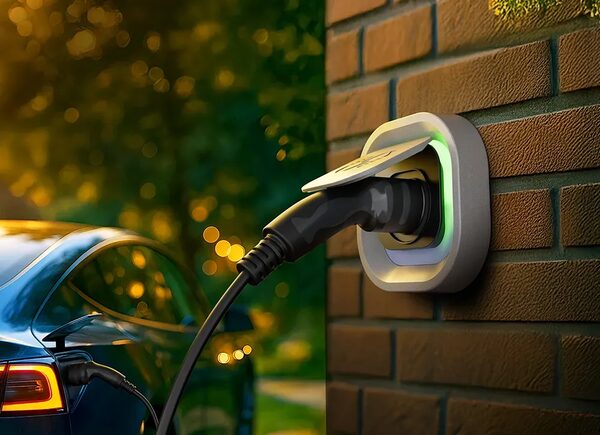
The domestic charge point grant is the headline Scottish scheme. Energy Saving Trust, which manages it on behalf of Transport Scotland, describes it as providing "up to £400 of funding to support the installation of a charge point for an electric vehicle (EV)"1. The grant goes towards both the purchase of the charge point and its installation, and it is available to residents in Scotland only1.
The eligibility conditions are unusually specific for a public grant, and they are worth reading in full. To qualify, a household must:
- Live in a rural or remote area of Scotland, including islands1
- Have an electric vehicle, or be able to show that it will soon have one1
- Have an annual household income of £50,000 or less1
The income test is a hard threshold, not a sliding scale: £50,000 or less qualifies, and the grant rules as published give no discretion above it1. The vehicle test is more forgiving than it might appear, because the grant does not insist that the car is already on the driveway. A household that has ordered a vehicle, or can otherwise evidence that one is arriving soon, can satisfy the condition, though exactly what evidence satisfies "will soon have" is assessed by the scheme administrator rather than set out as a fixed waiting period1.
The geographical test is the one that excludes most of Scotland's population. The grant is aimed at rural and remote areas and islands, where public charging has historically been thinner and where households are more dependent on their own infrastructure. Home Energy Scotland, the advice service that fronts the scheme, confirms that domestic charge point funding "offers eligible households in Scotland a grant towards the cost of purchasing and installing" a charge point2. A household unsure whether its postcode counts as rural or remote can ask Home Energy Scotland directly before committing to anything, and that is the sensible first call, because the answer determines whether the rest of the process is worth starting.
Rural and remote households: a dedicated route to funding
The rural focus of the charge point grant is not an accident of scheme design; it is part of a wider pattern in Scottish funding in which island and remote rural homes receive more generous support than the Scottish average. The clearest example sits in the Home Energy Scotland Grant and Loan Scheme, where an uplift of £1,500 is available for remote rural and island homes on both the energy efficiency and the clean heating grants6. That uplift applies to heat pumps, insulation and related measures rather than to charge points, but it shows the direction of travel: a rural household planning a wider energy upgrade can assemble support across several measures at once.
The Home Energy Scotland Grant and Loan Scheme is open to self-builders and homeowners who meet the conditions, and it carries an Energy Performance Certificate requirement: eligible properties are rated E to G, or D to G where someone in the household has an eligible health condition10. The scheme provides grant and loan funding directly to owner occupiers, as well as to private registered landlords for their rented properties11. For households in island and remote rural areas, the Scottish Government has also set out support of grants of up to £9,000 together with loans for connecting to local district heat networks12.
For charging specifically, the position is straightforward: the islands are named in the charge point grant rules, not excluded from them. The grant's own conditions state that a qualifying household must "live in a rural or remote area of Scotland, including islands"1. Highland Council, whose area covers a large share of Scotland's landmass and islands, signposts residents to Home Energy Scotland for electric vehicle support, including the electric vehicle loan scheme13. A household on Skye, in Orkney or in the Western Isles is therefore in the scheme's intended heartland, provided the income and vehicle conditions are also met.
The Transport Scotland EV loan alternative
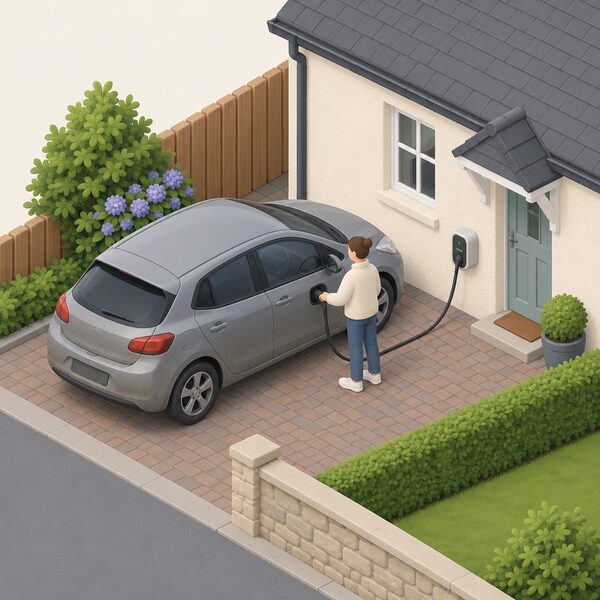
The charge point grant has a companion scheme aimed at the other half of the electric vehicle question: the car itself. The Scottish Government, through Energy Saving Trust, provides low-cost loans for used electric vehicles for certain groups, subject to budget limits5. The scheme has previously made available zero interest loans for second-hand EVs5, which makes it distinct from almost anything available elsewhere in the UK, where used EV finance is a commercial product.
The scale of the scheme is measurable. Scottish Government figures show that the purchase of some 8,700 used vehicles has been supported through the scheme, approximately 16 per cent of all privately owned EVs in Scotland at the time the figures were published5. That is a substantial share of the electric vehicle fleet, and it means the loan has done as much to shape Scottish EV ownership as any charging grant.
The loan and the grant answer different problems, and a household can find itself needing both. The loan helps with the vehicle; the charge point grant helps with the hardware at home. Neither covers the other's ground. A rural household that borrows to buy a used EV and then claims the £400 charge point grant has used the two Scottish schemes as they were designed to be used: one for the car, one for the charger. The loan is repaid over time, subject to budget limits and to the eligibility rules for the groups the scheme covers, and the current terms are confirmed with Energy Saving Trust rather than assumed from earlier rounds5.
How the UK-wide OZEV chargepoint grant works alongside Scottish support
The OZEV grants operate across all four nations, including Scotland, and they are the main route to public money for households the Scottish grant does not reach. The electric vehicle chargepoint grant can help towards the cost of installing a charge point socket at a property14, and the current published level is up to £350 per socket, aimed at residential landlords, people living in flats and people who rent their homes3.
The renters and flat owners version of the grant carries a vehicle requirement that is broader than the Scottish grant's. It is for plug-in battery electric and hybrid vehicles, and an applicant can qualify as the registered keeper of a new or second-hand eligible vehicle, as someone assigned a company car, as someone leasing an eligible vehicle, as a person named as the primary user by an employer, or as someone who has ordered an eligible vehicle for delivery within three months15. The eligibility page for the household grant states the same core condition in plainer terms: "you own or use an eligible vehicle"16.
The landlords' version has its own, longer eligibility list. A landlord with property to let can apply, as can a right to manage company, a residents' management company, a company or person owning the freehold of a multi-unit property, a company owning a building's common areas where the shareholders are the leaseholders, a public sector organisation, a charity that manages or owns residential property, a registered social housing provider, a property management company representing a landlord, and, notably for Scotland, a property factor8. The property must be located in England, Wales, Scotland or Northern Ireland8, and neither grant covers the Channel Islands or the Isle of Man16.
Two changes to the UK-wide picture are worth recording. A government consultation on expanding charging access for tenants and leaseholders describes the charge point grants as offering up to £500 to those living in flats, including leaseholders and tenants, those in rented accommodation and residential landlords17. News reporting from February 2026 gives the same figure, stating that applications open on 1 April 2026 and will be available for one year, and that the new level is more than 40 per cent higher than the previous £350 grant18. The two figures differ because they describe the scheme at different moments: £350 is the level in the published guidance, and £500 is the level in the consultation and reporting on the reformed scheme. A household applying now should check the current figure on the scheme pages before budgeting.
The OZEV grants also have a hard timing rule that catches households out. The grant cannot be backdated: the charge point must not already be installed when the application is made9. For households with on-street parking, the conditions are stricter still: they must not have already installed the charge point, must own or rent the property they live in, must install a non-temporary cross-pavement charging solution alongside the charge point, must not have private and exclusive access to off-street parking, must have adequate on-street parking, must have permission from the local highways authority, and must own or be responsible for an eligible vehicle9. OZEV grants are also available in Northern Ireland, so the UK-wide schemes genuinely span all four nations9.
Eligibility, step by step
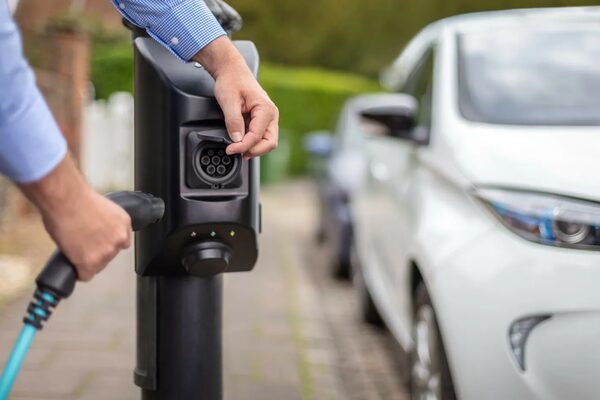
Because the Scottish and UK-wide schemes have different tests, it helps to set out the sequence a household works through. The order matters: several conditions cannot be fixed after the fact, and the no-backdating rule means the application has to precede the installation.
- Identify which scheme fits the household. Rural or remote household in Scotland with an EV and income of £50,000 or less: the domestic charge point grant1. Flat dweller, renter or landlord anywhere in the UK: the OZEV chargepoint grant3.
- Check the vehicle condition. The Scottish grant requires an EV now or soon1. The OZEV renters and flat owners grant accepts ownership, leasing, company car use, being named primary user by an employer, or an order for delivery within three months15.
- Check the property and parking conditions. The OZEV on-street route requires no private off-street parking, adequate on-street parking, a non-temporary cross-pavement solution and highways authority permission9.
- Rule out the exclusions. The OZEV landlord grant cannot be given where charge point installation was a mandatory requirement, which includes buildings under construction or renovation where the Part S regulations apply on or after 15 June 2022 in England, or where similar devolved regulations apply, for example the Building (Scotland) Regulations from 5 June 20238.
- Confirm the installer. The UK-wide grants require an installer authorised by OZEV, and the vehicle must be on OZEV's list of approved vehicles19.
- Apply before any work is done. The grant cannot be backdated9.
The Building (Scotland) Regulations point deserves a note of its own, because it is where Scottish and English rules diverge in the small print. The OZEV exclusion for mandatory installation references the Building (Scotland) Regulations from 5 June 2023 as the devolved equivalent of England's Part S8, which is the set of rules requiring charge point provision in new buildings and major renovations. A household in a new Scottish home that already has charge point provision as a regulatory requirement cannot claim a grant for it, because the installation was not voluntary. Our page on EV charge point requirements for new build homes covers those rules in full.
How to apply, and who can help you through the process
The application process for the OZEV grants begins with the installer, not with the government. An applicant contacts an OZEV-authorised installer to get a quote, then selects the "Start new application" button, creates an account and applies using the form provided, submitting details of the property and the vehicle to OZEV8. The installer is therefore doing more than fitting the unit: the choice of installer determines whether the grant can be claimed at all, because only authorised installers can support an application19.
For the electrical work itself, the guidance is to hire an electrician registered with a recognised certification body, like NICEIC19. Registration with a certification body is the householder's practical check that the person fitting a permanently wired charge point is qualified to do so, and it matters for the paperwork as well as the workmanship. Our page on home charge point installation covers the process in detail.
For the Scottish schemes, the route in is advice-led. Home Energy Scotland is the front door for the domestic charge point grant and for the wider Grant and Loan Scheme2, and local authorities including Highland Council signpost residents to it for electric vehicle support, including the electric vehicle loan scheme13. The advice service exists precisely because the eligibility rules are layered: a rural household may qualify for the charge point grant, the £1,500 rural uplift on heating and efficiency grants6, and the used EV loan5, and working out which combination applies is easier with the scheme administrator on the phone than from the published rules alone. Home Energy Scotland's advice is the practical way to resolve the postcode question, the income test and the evidence needed to show a vehicle is on its way.
Where grants fit in the wider picture: charging, ownership and independence
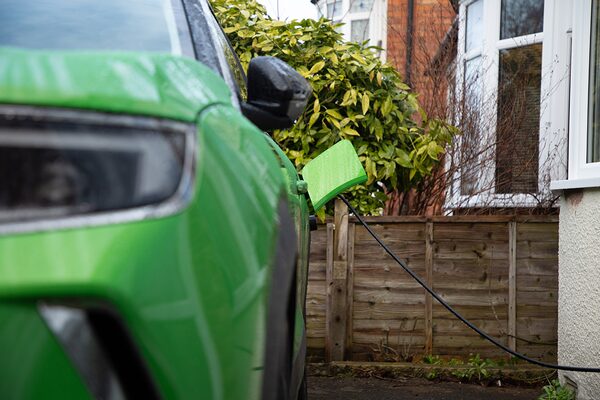
A grant towards a charge point is a grant towards energy independence, but only part of the way. A household with a home charge point no longer depends on the public network for everyday charging, which matters most in exactly the places the Scottish grant targets: rural and island areas where the nearest public rapid charger may be many miles away. What the household still depends on is the electricity grid, a supplier and a tariff, and the charge point itself, which is a manufactured device with a warranty and, in most cases, an app. Our page on EV charging and household energy independence takes that longer view.
The public network in Scotland is nonetheless substantial, and it is the fallback for households that cannot charge at home. At 1 July 2026, Scotland had 231.6 total public EV chargers per 100,000 population, of which 59.1 were rapid or above7. The Climate Change Committee notes that the number of public EV charge points per capita in Scotland is 7 per cent higher than the UK average20, a figure also stated in the Committee's own reporting on electric technologies in Scotland21. Scottish targets have been explicit for years: delivering 6,000 charge points by 2026 and approximately 24,000 by 203022.
The funding behind that network is a mix of public and private. Since 2011 the Scottish Government has provided over £65 million to support the development of public EV charging infrastructure, including £30 million for the EV Infrastructure Fund23. By the end of 2024, with private sector investment fuelling rapid growth, over half of all public EV charging in Scotland was owned and funded by the private sector23. Earlier in the decade the picture was different: a 2021 consultation recorded around 2,400 public charging points in Scotland, around 43 per 100,000 population, and 10.3 per cent of the UK total, alongside 8,849 domestic charge points funded by the Scottish Government across 1,113 workplaces and homes, and estimated an overall investment of £280 million in Scotland up to 203024. The growth between those two snapshots is the story: the public network has multiplied several times over, and the Scottish Government's own funding is now the minority share of it.
For households without a driveway, the Scottish answer is the cross-pavement route. A cross-pavement charging grant pilot worth up to £3,500 per household is available in Scotland to enable access to the lower costs of home charging4, and the OZEV on-street conditions require a non-temporary cross-pavement solution alongside the charge point9. Our page on charging without off-street parking covers the practicalities. Historically, the Scottish Government also funded a Local Authority Installation Programme, with funds offered to all Scottish local authorities on the condition that the charge points joined the ChargePlace Scotland network25, which for years was the distinctive feature of Scottish public charging: a single publicly backed network. With the private sector now owning over half of public charging23, that distinctiveness has faded, and the household case for a home charge point, grant-funded or not, rests on controlling one's own charging rather than on any network's coverage.
One final limit to state plainly: grants are time-limited instruments. The OZEV grant statistics are published as official statistics in development, tracking the number and value of grants awarded for charge point installation26, and the levels and rules have already changed once in the recent past, from £350 towards the £500 figure set out in the 2026 consultation17. A household planning an installation checks the current scheme pages rather than relying on any figure, including the ones here, being permanent.
Sources26 sources
- Domestic charge point funding, Energy Saving Trust, 2026-08-27
- Charging at home grant, Home Energy Scotland, 2026-09-18
- Charging electric vehicles advice, Energy Saving Trust, 2026-04-23
- Progress in reducing emissions in Scotland 2025, Climate Change Committee, 2025
- Supercharging the EV transition, Consumer Scotland, 2026-03-10
- Heat in Buildings progress report 2025, Scottish Government, 2025-10-02
- Public electric vehicle charging infrastructure statistics 1 July 2026, GOV.UK, 2026-07-01
- Electric vehicle chargepoint and infrastructure grants for landlords, GOV.UK, 2026-09-18
- Electric vehicle chargepoint and infrastructure grants, Infrastructure NI, 2026-09-18
- Solar panel grants, Federation of Master Builders, 2026-10
- FOI 202500448310, Scottish Government, 2025-02-20
- Heat in Buildings Bill update from the Cabinet Secretary, Scottish Parliament, 2025-11-18
- Electric vehicle infrastructure, The Highland Council
- Electric vehicle chargepoint grant for households, GOV.UK, 2026-09-17
- Electric vehicle chargepoint grant for renters and flat owners, GOV.UK, 2026-09-18
- Electric vehicle chargepoint grant eligibility, GOV.UK, 2026-09-17
- Expanding electric vehicle charging access for tenants and leaseholders, GOV.UK, 2026-10-21
- Electric car charger grants rise to £500, Carwow, 2026-02-25
- Electric vehicle charger installation and maintenance, NICEIC, 2025-08
- Scotland's carbon budgets, Climate Change Committee, 2025-05-21
- Electric technologies will help Scotland decarbonise, Climate Change Committee, 2025-05-21
- Scottish emission targets: progress in reducing emissions 2022, Climate Change Committee, 2022-12-07
- Scotland's Climate Change Plan 2026 to 2040, Scottish Government, 2025-11-06
- Scottish building regulations: proposed changes to energy standards, Scottish Government, 2021-07-23
- Electric vehicle charging market study final report, Competition and Markets Authority, 2021-07-23
- Electric vehicle charging device grant scheme statistics October 2025, GOV.UK, 2025-11-26
 EV Charging in Northern IrelandCan you get a grant for a home charger in Northern Ireland, do you need planning permission, and who do you tell at NIE Networks?