
In this guide
Kronoterm is a Slovenian heat pump manufacturer that builds inverter-driven units for air, ground and water sources, and sells into the UK through a partner network rather than direct. The company states that its most efficient heat pumps reach a COP of 8.48, and that its units are designed to operate at very low temperatures and function effectively even at -25°C1. It describes a standard 2-year warranty on devices sold in the European Union, and a service life of 20 years or more with regular annual service checks1.
The range is built around the ADAPT and ADAPT 2 air-to-water families and the ESSENTA domestic hot water heat pump, with ground-source and water-source options alongside. Kronoterm presents its heat pumps as providing heating, cooling and hot water, with passive cooling through floor or wall pipes and active cooling through convectors2. The maker's own figures for running cost savings are striking but narrow in scope: up to 75% lower electricity consumption against an electric boiler for sanitary water, with payback in approximately three years on that specific replacement1.
For a UK household, the practical questions are availability, servicing and what the unit depends on. Kronoterm's sales process runs through business partners, who carry out a site visit and install the system1. There is no published UK list price in the material available, so costs are installer-quoted. The sections below set out the range, the efficiency claims and their limits, the cooling functions, the controls, the cost and payback evidence, servicing and warranty, and what ownership means for a home's energy independence.
A Slovenian maker with five decades of in-house development
Kronoterm's own account of its history runs from a single heat pump in 1976 to what it describes as a leading European heat pump company, and the company marked 50 years of innovation in 20261. The two dates in the material do not agree: one maker document places the start in 1976 and another in 1998, and that conflict is unresolved. What is consistent is the claim of long in-house development rather than rebadging, and the 2026 anniversary framing.
The company's recent milestones are documented in its own reporting. In 2025 it summarised achievements including the ADAPT MAX patent and EHPA certification, the ESSENTA launch, trade fair appearances and industry awards, and it introduced the ESSENTA heat pump water heater, which it claims is the most efficient in Europe1. In 2026 it presented the ADAPT 2, a new generation of the ADAPT heat pump, and opened what it describes as one of the most advanced heat pump service and support centres in Europe, monitoring more than 110,000 systems in real time1.
That monitoring centre is worth noting for two reasons. It is evidence of scale beyond the UK market, and it is a reminder that remote diagnostics depend on the manufacturer's infrastructure and a working internet connection at the property. The ADAPT 2 M and ADAPT 2 L received the EHPA Quality Label for the Austrian and Swiss markets in April 2026, making them eligible for the main Austrian and Swiss subsidy schemes1. That certification is for those markets, not for the UK, and no equivalent UK grant eligibility is stated in the material.
For a household, the relevant point is that Kronoterm is an established European manufacturer with a long product history and a partner-led sales model, not a UK-facing brand with its own national installation arm. The company's own comparison work is also on the record: a technical comparison of ten leading 12 to 14 kW models under EN 14825 conditions found annual heating costs varied, with the Kronoterm ADAPT M achieving the highest seasonal efficiency1. That is the maker's own testing and should be read as such.
The range: ADAPT, ADAPT 2 and ESSENTA, with heat from air, water or the ground
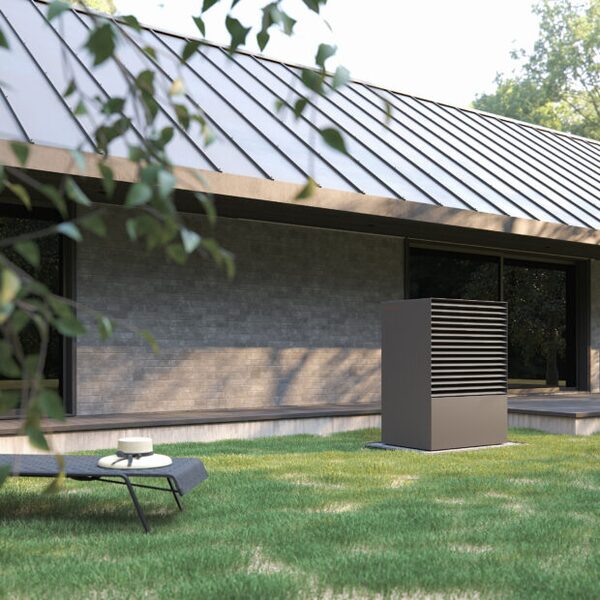
Kronoterm's product families cover the three main heat pump sources. The ADAPT is an air-to-water heat pump, using outside air that the maker notes can exceed 35°C in summer2. Ground-source and water-source units draw on steadier temperatures, and the maker states that these can provide cooling through passive means, where only the primary pumps function during cooling, while reversible air-source units cool actively with the compressor running1.
The ESSENTA is a different product category: a domestic hot water heat pump rather than a space heating unit. Kronoterm presented it in 2025 and states that in September 2025 it was confirmed as the most efficient domestic hot water heat pump in the ducted installation with outdoor air intake category, based on an internal comparison of Keymark certified units1. That is a maker comparison of certified units, not an independent test result.
| Family | Source | Function | Notes |
|---|---|---|---|
| ADAPT | Air | Heating, cooling, hot water | Air-to-water; air can exceed 35°C in summer2 |
| ADAPT 2 | Air | Heating, cooling, hot water | New generation presented in 20261 |
| ESSENTA | Air (ducted or outdoor intake) | Domestic hot water | Maker claims most efficient in its Keymark category1 |
| Ground and water source units | Ground or water | Heating, passive cooling | Primary pumps only during passive cooling1 |
The wider market context is that heat pump types include air source, ground source and air-to-air, and that developers can install air source, ground source or water source heat pumps depending on the needs and location of the property4. A heat pump extracts energy from the air, ground or water and converts it into heat6. Some manufacturers offer a single unit that can connect to three different sources, ground, water or air, which shows the flexibility available at the top of the market7.
Kronoterm's monoblock design integrates all essential parts of the device into a single unit1. That matters for installation and for where the refrigerant circuit sits, and it is covered in more detail on monobloc and split heat pumps. For the underlying types, see air source heat pumps, ground source heat pumps and water source heat pumps.
Efficiency and cold-weather performance: COP of 8.48 and operation to -25°C
Kronoterm states that its most efficient heat pumps even have a COP of 8.48, and that its heat pumps are designed to operate at very low temperatures and effectively function even at -25°C1. Both figures come from the maker and apply to its own products. The COP figure is a peak or laboratory-style number rather than a seasonal average, and the maker does not state the test conditions alongside it in the material available.
Independent guidance puts the cold-weather picture in context. Most current heat pump models work fine down to about -25°C, while some advanced cold-climate heat pumps work in temperatures as low as -35°C8. Heat pumps can perform down to -15°C or lower, but there may come a point when the heat pump's output is not enough for the property9. Welsh Government guidance states that heat pumps run on electricity and work efficiently even on cold days, down to temperatures as low as -20°C10.
On efficiency standards, the Boiler Upgrade Scheme requires heat pumps to have a seasonal coefficient of performance (SCOP) of at least 2.811. That is a scheme eligibility threshold rather than a performance expectation, and it sits well below the peak COP figures manufacturers quote. The distinction between peak COP and seasonal performance is set out on heat pump efficiency: COP, SCOP and SPF, and cold-weather behaviour is covered on heat pumps in cold weather.
What drives real-world efficiency is not the badge but the flow temperature and the emitter system. A heat pump that runs at a lower flow temperature condenses or compresses more efficiently, and the annual service and correct commissioning matter as much as the headline number. The maker's own servicing guidance ties longevity and efficiency together, which is covered below.
Heating, hot water and cooling from one unit
Kronoterm presents its heat pumps as covering heating, cooling and hot water, and states that they are designed to function effectively even during the most extreme heatwaves, with different temperatures settable in different rooms2. That is a broader capability claim than most UK households expect from a heating appliance, and it rests on the unit being reversible and on the emitter system being able to distribute cool water.
The maker distinguishes two cooling methods. Passive or surface cooling works by circulating cold water through pipes embedded in the floor or walls, the same pipes that serve underfloor heating in winter and cooling in summer2. Active cooling uses ceiling, wall or floor convectors, which provide dynamic cooling with dehumidification using cold water supplied by the heat pump, with fans distributing the cool air2. The maker also states that ground-source and water-source heat pumps can cool through passive means, where only the primary pumps function during cooling, while reversible heat pumps cool actively with the compressor operating1.
Passive cooling has limits that the maker states plainly. Surface cooling is effective in transitional periods but may become insufficient during extreme heatwaves, it does not dehumidify the air, and floors should not be overly cooled to prevent condensation2. That last point is a practical constraint: a floor held too cold in humid conditions risks condensation on its surface.
Independent guidance supports the general principle that heat pumps can cool. Air-to-air heat pumps can be configured for cooling as well as heating12, and a heat pump warms radiators, underfloor heating or a hot water tank depending on the setup13. Other manufacturers sell single systems that deliver heating, cooling and hot water together14, and exhaust air heat pumps combine ventilation, heating and hot water in a single unit16. Cooling with a heat pump is covered in more detail on using a heat pump for cooling, and the air-to-air route on air-to-air heat pumps.
Noise, design and the planning rules that apply
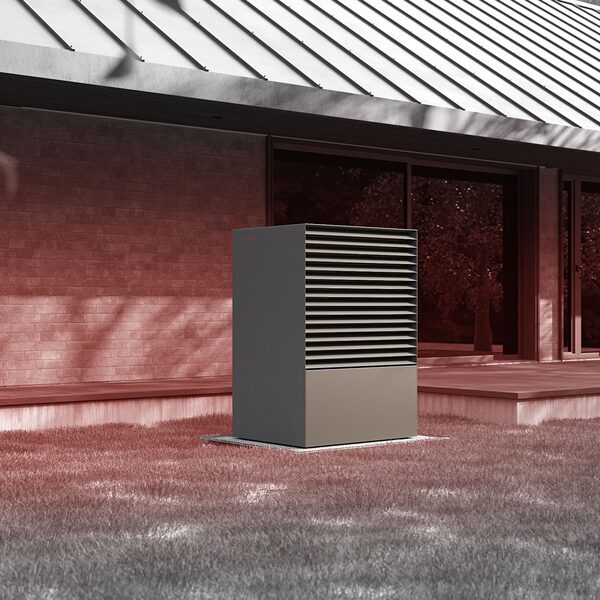
Kronoterm's 2025 summary refers to the silence of its products, and the company's own reporting frames noise as a design priority. The material available does not give a sound power figure for a specific Kronoterm model, so no decibel comparison can be made here. What can be said is that noise is a planning matter in the UK, not only a comfort matter.
Air source heat pump noise assessment takes account of existing background noise levels, the characteristics of the noise, noise levels at all operating modes including defrost cycles, the distance between the unit and neighbouring properties, and any noise barriers or mitigation measures17. The MCS 020 planning noise assessment calculator includes a field for the third heat pump make and model when four heat pumps are being assessed18. The government's air source heat pump noise emissions planning guidance and regulations page was last updated on 8 January 2024, and the underlying review is DESNZ research paper number 2023/04619.
Quiet Mark certification is one way manufacturers signal low noise, and it is awarded to specific products rather than brands. Examples in the material include the Vaillant aroTHERM plus range20, the Vaillant flexoTHERM ground source unit7, the Daikin Altherma 3 H HT21, a Daikin multi air conditioner14 and the InstaGen IG8-MP1-A115. No Kronoterm model appears in the Quiet Mark listings available here, so no such certification can be claimed for it.
The planning position differs across the four nations, and the noise limits and permitted development conditions are set out on heat pump planning permission in England, Scotland, Wales and Northern Ireland. The assessment method itself is covered on MCS 020: the heat pump noise assessment and how noisy is a heat pump.
Controls and connectivity via Krono.Cloud
Kronoterm's remote control runs through the CLOUD.KRONOTERM app, which the maker states allows a householder to adjust home temperature, switch between cooling and heating modes, cool remotely and set operating schedules2. That is a cloud service, so it depends on the property's broadband connection, the manufacturer's servers and the app continuing to be supported.
The automatic mode switch function is a maker feature with a stated trigger: it activates when the outside temperature is higher or lower than 12°C at 9:00 PM for three consecutive days1. Independent guidance on weather compensation describes a switch typically when the temperature falls below 7C22. The two figures differ, and they describe different control approaches rather than a disagreement about the same setting.
Other manufacturers take a similar cloud route. The Daikin Altherma 3 H HT comes pre-fitted with cloud and app control functionality, initiated by inserting an included SD card into the indoor unit, and includes cloud connectivity and a wireless LAN adaptor for app control21. OpenTherm, a control protocol, has future expansion possibilities including connecting OpenTherm controllers to other smart energy systems such as HEMS and grid control23. That points to where controls are heading: interoperability with home energy management and grid signals rather than a single maker's app.
For a household, the dependence is worth naming. Local control at the unit and at a wired programmer continues without an internet connection, but scheduling from away, remote cooling and any monitoring depend on the cloud chain. Controls, weather compensation and smart operation are covered on heat pump controls, and the tariff side on time-of-use tariff heat pump savings.
Costs, savings and payback: up to 75% on hot water and payback in about three years
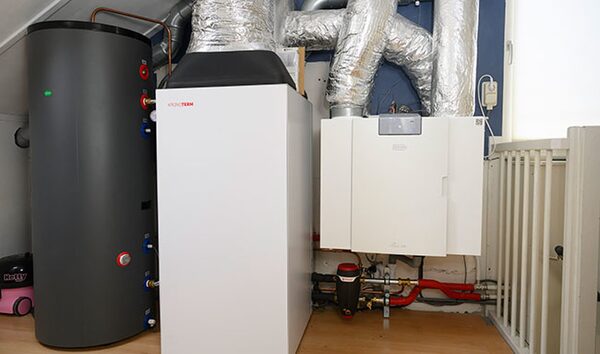
Kronoterm's cost claims are specific and narrow. The maker states that by installing a heat pump a household gets more hot water and that electricity consumption costs will decrease by up to 75%, and that the investment will pay off in approximately three years1. Both figures apply to replacing an electric boiler for sanitary water, which is a particular comparison rather than a whole-house heating comparison. The maker also states that heat pumps provide up to four times more heat for the same amount of money compared with other heating methods1.
Independent payback figures vary widely and depend on assumptions. The Energy Saving Trust reports that heat pump payback periods could be as little as four years, and separately that it is possible for a heat pump to pay for itself within two to four years with government grants, no gas standing charge and avoiding a replacement boiler24. An integrated electric home case study states that with the right tariff, a heat pump could pay for itself within two to four years25. The Low Carbon Hub puts a well-designed heat pump system at 8 to 12 years26.
| Source | Payback figure | Conditions stated |
|---|---|---|
| Kronoterm1 | Approximately three years | Replacing an electric boiler for sanitary water |
| Energy Saving Trust24 | As little as four years | Good tariff, government grants, deducting replacement boiler cost |
| Energy Saving Trust24 | Two to four years | Government grants, no gas standing charge, avoiding a replacement boiler |
| Integrated electric home case study25 | Two to four years | With the right tariff |
| Low Carbon Hub26 | 8 to 12 years | Well-designed heat pump system |
The spread is the point. The shortest figures assume grants, a favourable tariff and a boiler that would otherwise have been replaced. The longest assumes none of those. There is no published Kronoterm UK list price in the material available, so a UK installation cost is installer-quoted. Wider cost context is on how much does a heat pump cost in the UK and heat pump running costs, and grant eligibility on heat pump grants and funding across the UK.
Servicing, lifespan and warranty: an annual check, 20 years or more, standard 2-year warranty
Kronoterm recommends a yearly maintenance check-up, ideally before the heating season begins, and notes that a heat pump operates for nearly 3,000 hours a year3. The maker states that only an authorised technician should service the heat pump, with access to genuine spare parts3. That is a condition of the servicing route rather than a legal requirement, but it shapes who can work on the unit.
On lifespan, the maker's figures are 20 years or more with regular annual service checks, and separately 15 years or more1. Its servicing guidance states that regular servicing prevents excessive wear and ensures the heat pump functions flawlessly for 15 years or more3. Independent and official figures sit in a similar band: Home Energy Scotland states that most systems come with a two to three-year warranty and that a well-maintained heat pump should last for 20 years or longer27, and the government's response on Boiler Upgrade Scheme amendments refers to the expected lifespan of a heat pump as typically 15 to 20 years28. The Consumer Protection Association gives 20+ years29.
Warranty terms are modest. Kronoterm states that all devices sold in the European Union are covered by a standard 2-year warranty1. Home Energy Scotland states that heat pumps usually come with warranties lasting two to three years, which can often be extended for a fee30, and that most systems come with a two to three-year warranty27. The maker's 2-year term sits at the lower end of that range, and no UK-specific extension is stated in the material.
Servicing and warranty interactions are covered on heat pump servicing and maintenance and does servicing a heat pump affect the warranty.
UK availability and what owning a Kronoterm means for energy independence
Kronoterm's sales process is managed through business partners, and enquiries are directed to the nearest authorised representative, who conducts a site visit and installs the system1. There is no direct sales route described by the maker. For a UK household that means the practical availability of a Kronoterm installation depends on whether a partner covers the area, and the quote comes from that partner rather than from a published price list.
The energy independence picture is mixed and worth stating plainly. A heat pump replaces a gas, oil or LPG boiler with an electrically driven unit, which removes the household from the gas grid and from a gas supplier. That is a real shift in where the energy comes from. What remains is a dependence on the electricity grid and an electricity supplier, and on the manufacturer for parts, servicing, warranty support and the cloud service behind the app.
There are further dependencies specific to this route. Servicing is stated to require an authorised technician with genuine spare parts3, so the household depends on the partner network continuing to operate. Remote control and monitoring depend on broadband and on Kronoterm's cloud platform2. During a prolonged power outage, the maker's instruction is to empty the water connection between the outdoor and indoor units after 12 hours1, which is a reminder that an electrically driven heat pump provides no heating or hot water without a working supply.
The wider context is that heat pumps are one of several low-carbon routes, and the alternatives differ in what they depend on. Hybrid systems keep a boiler alongside the heat pump, which is covered on hybrid heat pumps. The independence question across technologies is set out on heat pumps and household energy independence, and the full picture on the heat pumps pillar guide.
Sources30 cited
- Kronoterm FAQ, Kronoterm, 2024-01-05
- Heat pumps: warm in winter, cool in summer, Kronoterm, 2026-09-17
- Yearly maintenance: the key to longevity and efficiency, Kronoterm, 2025-03-17
- Hybrid heat pumps, Energy Saving Trust, 2026-07-16
- What the Future Homes Standard means for homeowners, NICEIC, 2026-04-22
- Heat pumps campaign, CIBSE, 2026-09-17
- Vaillant flexoTHERM ground source heat pump, Quiet Mark, 2026-09-17
- Heat pump fact check, Energy Saving Trust, 2026-07-01
- How to ensure a heat pump runs efficiently, Energy Saving Trust, 2026-05-19
- Your essential guide to heat pumps, Welsh Government, 2025-02-20
- Boiler Upgrade Scheme guidance for installers, Ofgem, 2023-09-25
- Air-to-air heat pumps, Energy Saving Trust, 2026-09-11
- How heat pumps work: a guide for homeowners, NICEIC, 2025-09-17
- Daikin 4 port multi air conditioner, Quiet Mark, 2026-09-17
- InstaGen IG8-MP1-A1 heat pump, Quiet Mark, 2026-09-17
- Exhaust air heat pumps, Energy Saving Trust, 2025-06-05
- Air source heat pumps, Westmorland and Furness Council
- MCS 020 noise assessment calculator, MCS Certified, 2025-07
- Air source heat pump noise emissions, planning guidance and regulations, DESNZ, 2024-01-08
- Vaillant aroTHERM plus air source heat pump, Quiet Mark, 2026-09-17
- Daikin Altherma 3 H HT heat pump, Quiet Mark, 2026-09-17
- How to install a heat pump at home, Quiet Mark, 2020-10-16
- What is OpenTherm?, OpenTherm Association, 2026-01-26
- Flexible futures: integrating smart tariffs with low-carbon home technologies, Energy Saving Trust, 2026-07-10
- Integrated electric home case study, Energy Saving Trust, 2026-08-12
- The real cost of a heat pump, Low Carbon Hub, 2025-10-30
- Heat pumps, Home Energy Scotland, 2026-09-20
- Amendments to the Boiler Upgrade Scheme: government response, DESNZ, 2025-11
- Heat pumps vs boilers, Consumer Protection Association, 2025-02-18
- Living with a heat pump, Home Energy Scotland, 2024-02