

In this guide
WOLF is a Bavarian heating manufacturer whose UK heat pump line rests on two products: the CHA Monobloc air-to-water heat pump for space heating and hot water, and the FHS, a domestic hot water heat pump with an integrated cylinder. The CHA Monobloc is sold in 7kW, 10kW and 16/20kW outputs and carries a stated COP of 4.651. WOLF states that the CHA comes with a 5 year warranty and is 100 per cent Made in Germany1.
The range is small by UK standards, and that shapes what a household can expect. There is no published UK list price for either unit, so costs are installer-quoted. There is no WOLF-branded UK installer directory in the material reviewed here, so finding someone to fit and service the unit runs through the general routes: the CIPHE find a plumber tool and the MCS find a heat pump installer tool3. The wider UK context matters here, because there is a shortage of qualified heat pump installers, and an estimated additional 123,199 trained installers will be needed between 2023 and 2035 across the UK6.
What WOLF does offer is a set of control features that bear directly on running costs and on how much of the system depends on the grid. Summer mode, weather-compensated switching, SG-Ready labelling on the CHA and the WOLF Link interface all sit in that territory2.
Who WOLF is: a Bavarian maker with a narrow UK line
WOLF's heat pump development and production site is in Bavaria, and the FHS is described as coming from that site11. The company positions the CHA Monobloc as an air-to-water heat pump that can also be used to heat existing buildings, which places it in the retrofit market rather than the new-build-only segment1.
The range itself is deliberately compact. The CHA Monobloc is available in 7kW, 10kW and 16/20kW outputs, and WOLF describes it as heating in winter and cooling in summer, working efficiently for both2. Installation options are garden, patio or wall mounting, and the maker states the unit is designed to blend with a home's overall design10.
For a household, the significance of a narrow range is straightforward. There is less to choose between, and fewer output steps to match against a heat loss calculation. A 7kW unit suits a well-insulated flat or small house; the 16/20kW unit reaches into larger properties. Between those, the 10kW sits as the middle option. The gap between 10kW and 16/20kW is wide, so a property sitting between them depends on the installer's heat demand calculation rather than on picking the nearest number2.
WOLF also makes gas condensing boilers, including the FGB range, which is relevant to hybrid arrangements. Those products describe how far down a boiler can turn when the heat load falls, which is the part of a hybrid system that decides whether the boiler is cycling or modulating in mild weather.
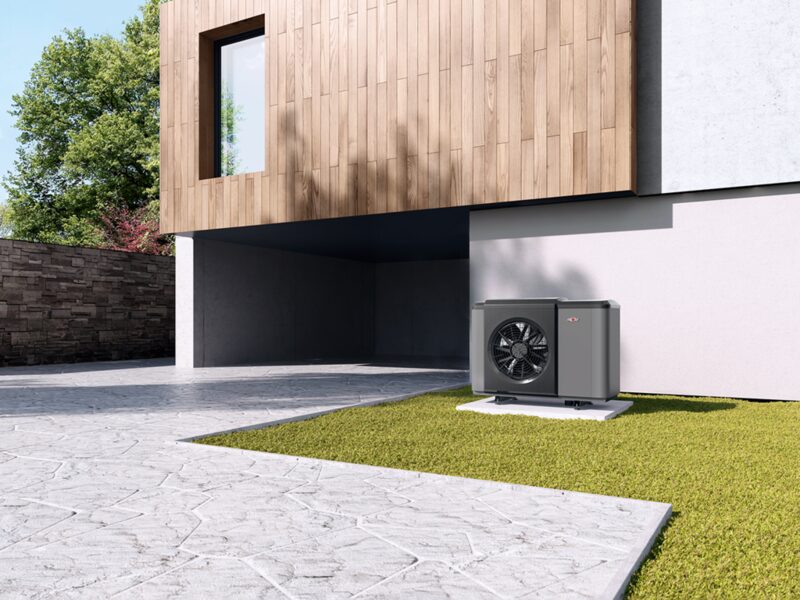
The range: CHA Monobloc and the FHS hot water heat pump
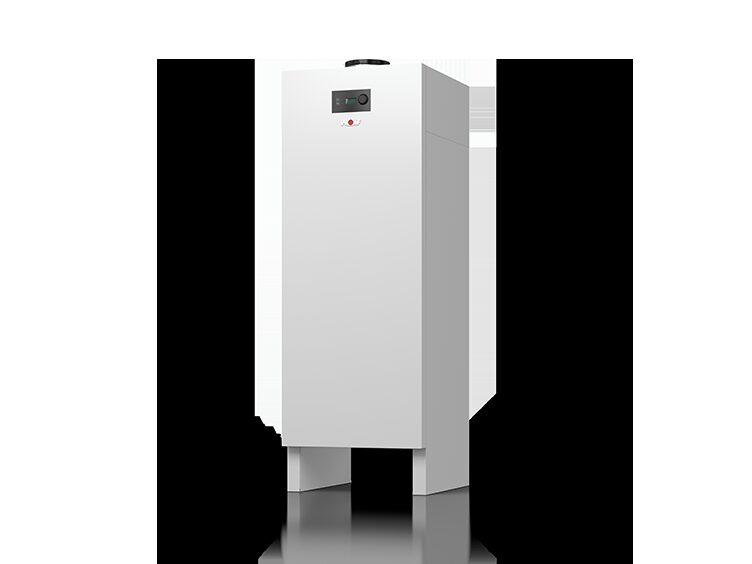
The two products do different jobs and are not alternatives to each other. The CHA Monobloc is the space heating and hot water source for a wet central heating system. The FHS is a hot water heat pump: it heats domestic hot water and nothing else, and it is designed to be added to a system that already has a heat generator11.
The FHS carries an integrated DHW cylinder, can extract air continuously, and is described as suitable both on its own in a single-family home and combined with multiple appliances for apartment buildings11. It can be added to other heat generators including gas, oil, biomass or air and water heat pumps, which makes it a route to hot water for a home whose main heating is something else11. A 2 kW immersion heater is standard on every appliance, and the unit has a pasteurisation function for hygienic water heating and has been awarded an EHPA quality label11.
That immersion heater matters for how the FHS behaves in practice. Most heat pumps heat hot water to 50 to 55 degrees C very efficiently, and then a sterilisation cycle raises the temperature further13. The FHS handles that cycle through its pasteurisation function, with the immersion element available as backup.
| Product | Type | Key figures | Warranty |
|---|---|---|---|
| CHA Monobloc | Air-to-water heat pump | 7kW, 10kW, 16/20kW; COP 4.652 | 5 years1 |
| FHS | DHW heat pump with integrated cylinder | 2 kW immersion heater standard; EHPA quality label11 | Not stated in the material reviewed |
Warranty: 5 years on WOLF products
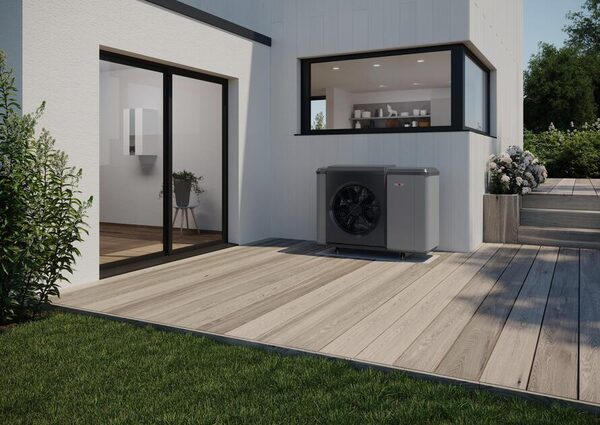
WOLF states that the CHA Monobloc comes with a 5 year warranty, describing this as applying like all WOLF appliances, and that the unit is 100 per cent Made in Germany1. That is the manufacturer's own term, and it is the figure a household should hold the maker to.
For context on where 5 years sits, other routes into a heat pump carry different terms. Octopus Energy offers an eight year warranty on its own-brand heat pumps and a five year warranty on other brands, and also has a tariff attached14. EDF Energy offers a warranty of up to seven years along with a range of heat pump tracker tariffs with discounted rates15. Those are installer and supplier terms rather than manufacturer terms, and they apply to installations those companies carry out.
The distinction matters because a manufacturer warranty and an installation warranty cover different things. A maker's term covers the appliance. An installer's term covers the workmanship of the fit, which is where a great deal of real-world performance is decided. WOLF's 5 year figure is the appliance side of that split.
Summer mode: how the switch works and what it saves
Summer mode is the single most useful control feature on a WOLF heat pump for running costs, because it stops the unit heating a house that does not need heating. In summer operation the heat pump takes over hot water preparation exclusively and the heating circuit stays deactivated8.
The switch is automatic. WOLF states that heat pumps switch themselves to summer operation based on the averaged outdoor temperature, with no manual setting required8. The factory threshold for the winter and summer changeover is around 16 degrees C of averaged outdoor temperature, and an outdoor sensor measures the air temperature and forms an average over three hours8. Averaging over three hours prevents a single warm afternoon from shutting the heating down prematurely.
The saving comes from what stops. WOLF states that because the heating circuit is deactivated and energy is used only for hot water preparation, the heat pump consumes significantly less electricity in summer over several months8. That is a maker's statement about its own equipment, and it describes the mechanism rather than a measured figure.
There is a related control that households often overlook. Independent guidance is to avoid heating hot water or the house overnight when outside air temperatures are significantly lower, unless on a time of use tariff16. Time of use tariffs change that calculation, and British Gas, E.ON Next, EDF Energy, Octopus Energy and Scottish Power are among suppliers offering specific heat pump tariffs17. Weather compensation, where the system varies flow temperature according to the season, is the underlying control method that makes both summer mode and lower flow temperatures work18.
Cooling and vacation mode: what the systems can and cannot do

WOLF is explicit about the limits here. Some heat pump models can be used for cooling but do not replace a classic air conditioning unit8. The CHA Monobloc is described as heating in winter and cooling in summer, working efficiently for both2. That is comfort cooling delivered through the water circuit, not the fan-coil blow of a split air conditioner.
The wider picture on heat pump cooling is mixed. Some hydronic air-to-water heat pumps can provide cooling by reversing the heat transfer process, but not all can do this19. Air-to-air heat pumps can both heat and cool air depending on what is needed, and in summer can be operated in reverse and used like an air conditioning unit, though they are unlikely to provide hot water as well20. Systems that only provide cooling are excluded from the MCS Scheme, which matters for grant eligibility20.
Vacation mode is the other absence control. WOLF states that a vacation mode is available for many systems for longer absences8. It sits alongside summer mode as a way of telling the system that nobody is home, without switching anything off at the wall.
That warning is the practical answer to a common question about isolating a heat pump over a holiday. The unit needs power to keep its own safeguards running, including the periodic legionella cycle that keeps stored hot water hygienic.
Smart Grid ready: using surplus electricity
The CHA Monobloc carries the SG-Ready label. WOLF states that the label is only awarded to heat pumps whose control system can connect to an intelligent electricity grid2. In practice that means the unit can be told by an external signal to run or to pause, which is what allows a household to shift heat pump operation into periods of cheap or surplus electricity.
The FHS takes a more direct route. WOLF states that the FHS can use excess power from a photovoltaic system to heat hot water11. That is a self-consumption arrangement: instead of exporting surplus solar generation, the cylinder absorbs it as stored heat.
The UK policy backdrop supports this kind of flexibility. Support is available for installers and manufacturers to expand supply chains22. The Heat Pump Ready Programme included a project at Bridgend23. Those are programme facts rather than household entitlements, but they show the direction of travel for grid-connected heat pump operation.
For a household, the independence question is what SG-Ready actually changes. It does not remove the need for a grid connection or a supplier. It changes when the unit draws power, which can lower the cost of each unit of heat if the household is on a tariff that rewards off-peak or high-renewable operation. The heat pump still runs on electricity from the grid, and the cylinder still needs a power supply for its protection cycles.
WOLF Link and smart home compatibility
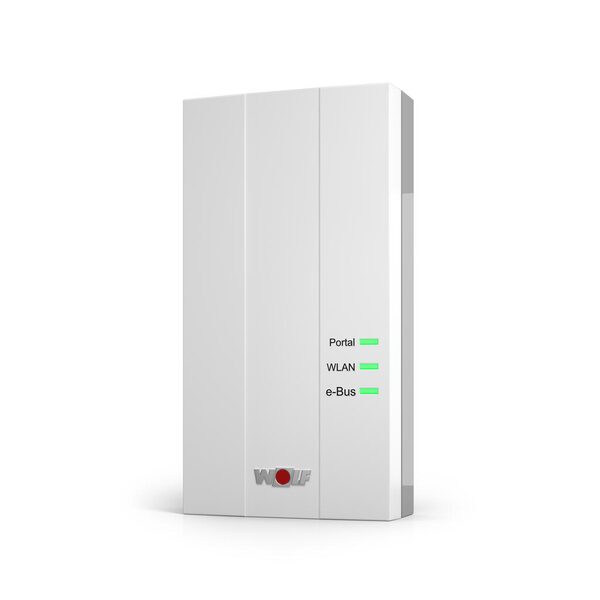
Remote control on a WOLF system runs through interface modules rather than through the heat pump itself. The WOLF Link home and Link pro interface modules connect a WOLF heating and ventilation system to the internet24. The Smartset app connects the WOLF heating system to the Link home or Link pro modules for remote control via smartphone9.
The Link pro module extends further back into a system's history. It allows control of older WOLF heating appliances and ventilation systems as well as combined heat and power units25. That is unusual, and it means an older WOLF installation is not automatically cut off from app control.
On third-party integration, WOLF states that domestic technology can be controlled using popular smart home systems such as wibutler or Amazon's Alexa24. Heating and ventilation units from WOLF can be operated with the Alexa voice assistant9. If a smart home system has a geofencing function, it can be used with appliances from WOLF9. Wibutler compatibility has been available since the first quarter of 202325.
From 2025, every WOLF CHA heat pump is equipped with the WOLF Link interface as standard, ready for internet connection and the Smartset app at no extra cost26. That removes a step that would otherwise sit between buying the unit and controlling it remotely.
The dependence this creates is worth naming plainly. Local control at the unit continues without a connection, but app control, remote scheduling and any cloud-based features depend on home broadband, WOLF's servers and the Smartset app. A household that wants to run the heat pump without that chain can do so, but it gives up the remote layer.
Finding an installer and service in the UK
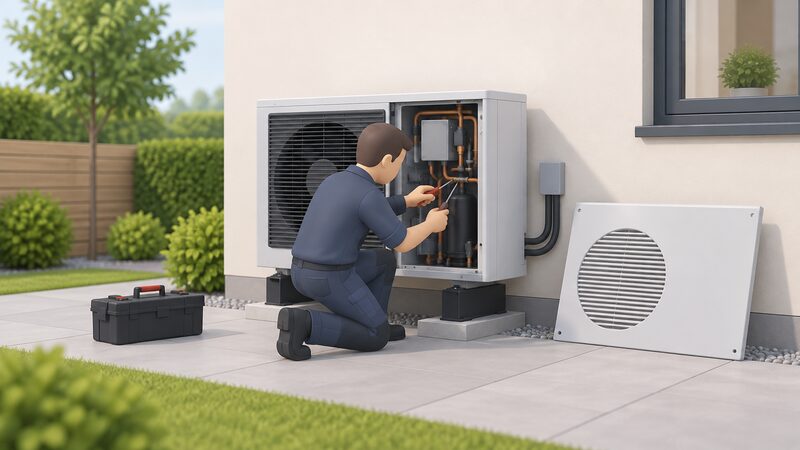
WOLF does not publish a UK engineer directory in the material reviewed here, so finding someone to fit or service a WOLF heat pump runs through the general routes. The CIPHE find a plumber tool lists vetted plumbing and heating professionals in your area4. The MCS find a heat pump installer tool is the route the government's grant guidance points to, and your installer applies for the grant on your behalf through Ofgem5.
Official guidance for Wales is to contact an installer who can provide the necessary advice, preferably one who belongs to either the Microgeneration Certification Scheme or the relevant Competent Person Scheme27. That preference is worth applying regardless of nation, because scheme membership is what ties an installer to a published standard of work.
Before quoting, an installer will calculate your home's heat demand and other information to inform their recommendations12. The government's own suitability checker asks for nation (England, Scotland, Wales or Northern Ireland), heating system type and number of bedrooms28. Servicing is usually once a year, according to the manufacturer's advice18.
The supply side is the constraint. There is a shortage of qualified heat pump installers in the UK, so it may be more difficult finding someone to service the system6. An estimated additional 123,199 trained installers will be needed between 2023 and 2035 across the UK7. For a household with a less common brand, that shortage bites harder, because the pool of engineers familiar with the specific unit is smaller than the pool familiar with the market leaders.
Where the WOLF range has limits
The honest position on WOLF in the UK is that the product facts are clear and the support facts are thin. The CHA Monobloc's outputs, COP and 5 year warranty are stated by the maker1. The FHS's role, cylinder, immersion heater and EHPA label are stated by the maker11. What is not in the material reviewed here is a UK price, a UK installer network, or a UK service arrangement specific to the brand.
That leaves three dependencies a household should weigh. The first is the grid and a supplier: a WOLF heat pump runs on electricity, and SG-Ready changes when it draws power rather than whether it needs the grid2. The second is the manufacturer, for parts, warranty administration and any app-based features, since the Smartset app and Link modules are WOLF's own9. The third is the installer, because the 5 year term covers the appliance and not the fit.
Against that, the control set is genuinely useful for running costs. Summer mode stops the heating circuit when the averaged outdoor temperature passes around 16 degrees C8. Weather compensation varies flow temperature with the season18. SG-Ready and the FHS's solar self-consumption let a household absorb cheap or surplus electricity as heat2. None of that removes the grid connection, but it changes what the connection costs to use.
For households comparing routes, the wider material on air-to-water heat pumps and monobloc and split heat pumps sets out how the CHA's format compares with alternatives, and heat pump controls covers weather compensation in more depth. The heat pumps pillar explains how a heat pump's efficiency is measured in practice.
Sources28 cited
- Heat pump comparison, WOLF, 2026-09-17
- CHA Monobloc, WOLF, 2026-09-17
- Future of home heating, CIPHE, 2026-09-17
- Rogue traders, CIPHE, 2026-09-20
- Heat pump installation, GOV.UK, 2026-09-10
- Heat pump fact check, Energy Saving Trust, 2026-07-01
- What the UK needs from the Warm Homes Plan, Energy Saving Trust, 2026-07-13
- Summer operation, WOLF, 2026-09-17
- Smart home advice, WOLF, 2026-09-17
- DHW heat pump, WOLF, 2026-09-17
- FHS heat pump, WOLF, 2026-09-17
- Heat pump installation: a step by step guide, Energy Saving Trust, 2026-07-15
- Heat pump myths, Energy Saving Trust, 2025-09-02
- Heat pumps vs boilers, Which?, 2025-09-22
- Air source heat pump costs and savings, Which?, 2026-04-14
- How to ensure a heat pump runs efficiently, Energy Saving Trust, 2026-05-19
- Time of use tariffs explained, Which?, 2026-04-23
- Heat pump questions answered, Energy Saving Trust, 2026-05-27
- How a heat pump can cool your home, Which?, 2026-07-17
- Air to air heat pumps, MCS Certified, 2026-07-24
- Air source heat pumps, Electricity North West, 2026-09-19
- Heat Pump Ready Programme, UK Parliament POST, 2026-09-19
- Heat Pump Ready Programme Stream 1 Phase 1 projects, GOV.UK, 2026-05-28
- Smart home solutions, WOLF, 2026-09-17
- Smart home guidance, WOLF, 2026-09-17
- WOLF CHA heat pumps, WOLF, 2026-09-17
- Building regulations and heat pumps, Welsh Government, 2026-09-17
- Check if a heat pump could be suitable for you, GOV.UK, 2026-09-17
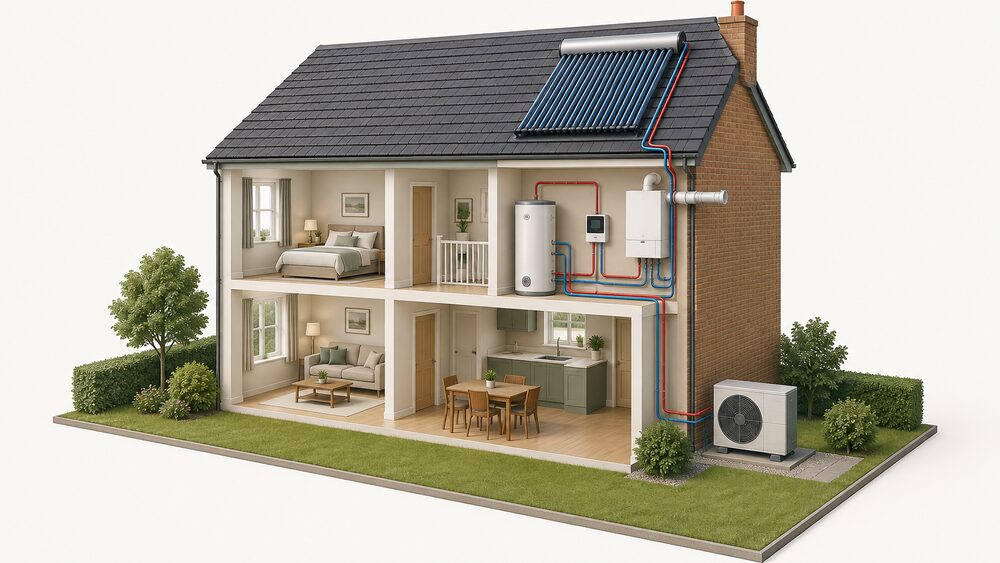 WOLF heatingWOLF is a German heating brand sold in the UK, making gas and oil boilers, heat pumps, solar panels and hot water cylinders.
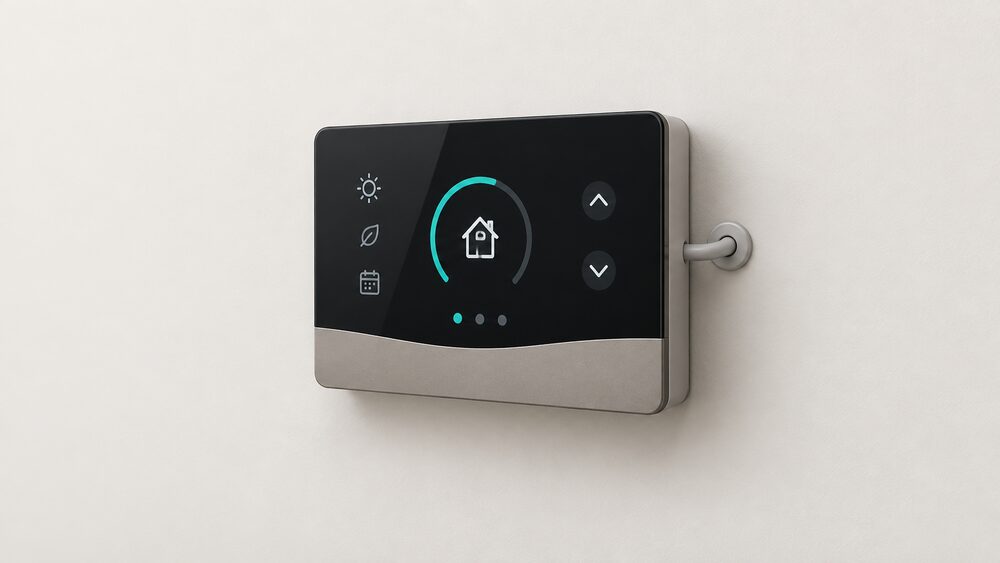 WOLF Heating ControlsYour WOLF boiler works with the sensoCOMFORT control, which runs your heating and hot water from one place and can also look after solar and ventilation on bigger systems.