

In this guide
Mycond is a heat pump brand sold into the UK market, offering air source equipment for domestic heating, cooling and hot water. Its published UK material centres on the BeeHeat split series, described by the maker as installed in a modern townhouse where it provides "efficient heating and cooling for everyday comfort" and "year-round climate control in a compact and stylish design"1. The range also includes the MBasic MHM-U09HL, an air-to-water unit intended to serve space heating and a hot water cylinder.
For a household, the practical questions are narrower than the product list. What is certified, what will an installer need to check, what does an installation cost in the UK, and what does the equipment change about where a home's heat comes from. On the last point, the evidence is consistent: individual heat pumps are "highly effective in most buildings when they are combined with appropriate energy efficiency measures", and households running a heat pump alongside an electric vehicle are "far less dependent on foreign oil and gas imports" and make more use of British electricity2.
What a Mycond unit does not do is take a home off the electricity grid. An air source heat pump runs on electricity, so it swaps a gas or oil supply for a grid connection and an electricity supplier. That is a real change in the fuel and in the import exposure, not independence from the network.
What Mycond makes: the BeeHeat split range and the MBasic MHM-U09HL
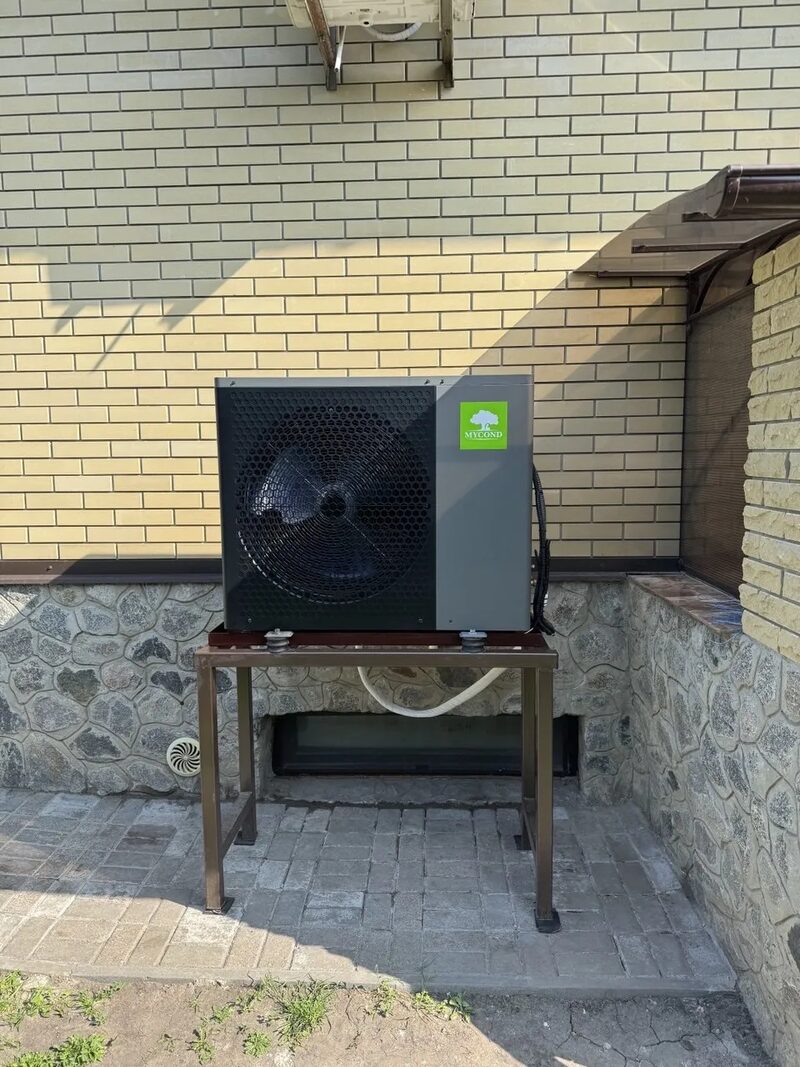
Mycond's UK-facing product material describes the BeeHeat split series as a heating and cooling system for domestic settings. The maker's own case study places it in a modern townhouse and states that the series ensures "efficient heating and cooling for everyday comfort", with "year-round climate control in a compact and stylish design"1. That is a maker's description of its own product, and it is the only published performance framing the brand gives for the series.
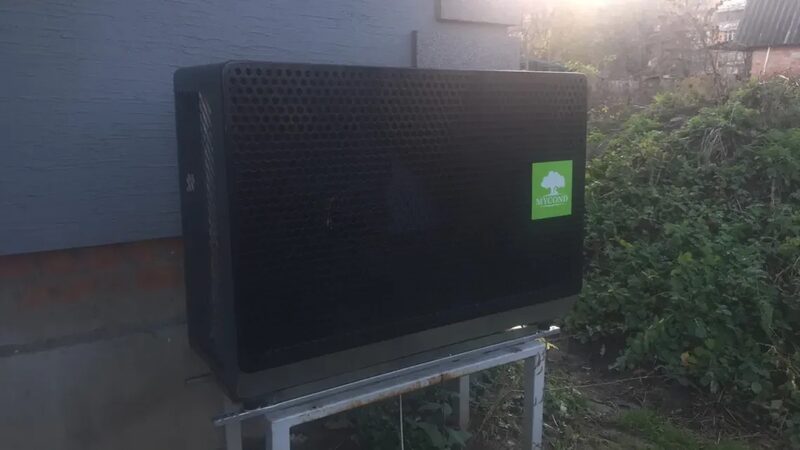
The MBasic MHM-U09HL is the other model named in the range. It is an air-to-water heat pump, the type that feeds radiators, underfloor heating or a cylinder rather than blowing warmed air directly into a room. Air-to-water units of this class are designed as a single source for space heating and domestic hot water, which is the arrangement most UK households replacing a gas boiler will be looking at. The distinction between air-to-air and air-to-water matters for grants as well as for comfort: air-to-air heat pumps can only be installed in residential properties under the Boiler Upgrade Scheme, and only residential properties are eligible for them9.
Split systems, which the BeeHeat series is, separate the outdoor unit from an indoor unit. That layout suits properties where wall space or siting is constrained, and it is the arrangement covered on our page on monobloc and split heat pumps. For the wider picture of how air source equipment works, see air source heat pumps explained.
Certification: Heat Pump Keymark and what it covers

The Heat Pump Keymark is the certification scheme a buyer is most likely to encounter when checking a heat pump's claimed performance. It is "a voluntary certification mark that supports the quality and performance of heat pumps on the European market", and it "can apply to all heat pumps, combination heat pumps and hot water heaters"11. It is not a legal requirement and it is not the same thing as MCS certification, which governs installer and product eligibility for UK grants.
The scheme is a voluntary, independent, third-party mark based on European standards, specifically EN 14825 and EN 14511, and it was introduced in 20164. Testing under the current scheme version is carried out to EN 14511:202212. One certificate in the scheme's own database references the Heat Pump Keymark Certification Scheme (2022) as its testing basis, so certificates in circulation are not all issued against the same edition of the scheme13. Where a certificate's testing basis differs between documents, the certificate itself is the record that applies to that product.
What the mark buys a householder is independent verification rather than a maker's own figure. The scheme's stated benefits include certified product quality, compliance with EU standards and Ecodesign, increased consumer confidence, and reduced costs for testing, inspection and certification11. It also involves a "quality check of the production sites", so certification covers the factory as well as the sample tested14. The mark is based on Ecodesign requirements and executed by independent certification bodies and test laboratories14.
For UK grant purposes, the relevant certification is different. MCS operates a product scheme equivalency route, and the Boiler Upgrade Scheme's approved standards are set out in government regulations15. A householder checking whether a specific Mycond model qualifies for a grant should look at the MCS product directory rather than the Keymark listing. Our page on heat pump standards and certification sets out how the schemes fit together.
Which model fits which home: townhouse versus residential heating and hot water
The BeeHeat split series is positioned by the maker for a modern townhouse, a property type where outdoor space is limited and the outdoor unit often has to go on a wall bracket or in a narrow side return1. Split systems help here because the indoor and outdoor halves are separate, so the outdoor unit can be smaller and placed where a monobloc would not fit.
The MBasic MHM-U09HL sits in the air-to-water category, which is the arrangement that serves heating and hot water together. Air-to-water heat pumps feed a wet system: radiators, underfloor loops or a cylinder. Ground source units are described in official guidance as transferring energy from the earth "to heat the home and domestic hot water", and air-to-water units work on the same principle with air as the source17. For a household replacing a boiler, this is the configuration that keeps the existing emitters and cylinder in play.
Property type also determines grant eligibility. Under the Boiler Upgrade Scheme, air-to-air heat pumps can only be installed in residential properties, and only residential properties are eligible for them9. That rules out using an air-to-air unit in a mixed-use or commercial building and claiming the grant, and it is a distinction worth checking before any deposit is paid.
For homes where a wet system is not straightforward, the alternatives are covered on our pages on air-to-air heat pumps and hybrid heat pumps. Which homes suit which approach is set out in more detail in which homes suit a heat pump.
| Model | Type | Stated function | Best suited to |
|---|---|---|---|
| BeeHeat split series | Split air source | Heating and cooling, year-round climate control1 | Modern townhouse, constrained siting1 |
| MBasic MHM-U09HL | Air-to-water | Space heating and domestic hot water | Homes with a wet system and cylinder |
Specifications and what to check before buying

Mycond's published UK material does not carry a full technical specification table for either model, so the figures a householder needs at decision stage come from the installer's survey rather than from a brochure. That is normal for this market, but it means the checks matter more, not less.
The first check is the heat demand calculation. Installers "calculate your home's heat demand and other information to inform their recommendations", and that calculation, not the model name, determines the output a property needs8. The second is the design standard the installation will be held to. Heat pumps and any dedicated ancillary products, such as integrated hot water cylinders, "should be commissioned in accordance with both the manufacturer's instructions and the appropriate system design parameters"18. The governing design standard for UK heat pump work is MIS 3005-D, Issue 2.016.
The third check is metering and performance evidence. Under the Domestic RHI, all heat pumps accredited from 22 May 2018 had to be fitted with metering for performance before applying, confirmed on the MCS certificate19. That scheme is closed to new applicants, but the principle it established, that performance should be measurable rather than assumed, still shapes how installers approach monitoring.
The fourth is the efficiency threshold that design guidance works to. Scottish building standards guidance states that heat pumps should have a COP "not less than 3.0 for space heating and not less than 2.0 for domestic hot water"20. That is a design floor, not a prediction of what a specific installation will achieve. How COP, SCOP and SPF differ is explained on our page on heat pump efficiency.
Cost and installation considerations for UK households
There is no published Mycond list price for a supplied and fitted heat pump, so costs are installer-quoted. The figures that do exist are UK-wide and indicative. A parliamentary committee reported "a wider range in the cost of installing a heat pump of between £8,000 and £15,000" depending on the work needed to the home5. For a small home or apartment, one official estimate puts the combined cost at around £6,000 to £8,000, depending on whether any radiators need replacing6.
Those two figures differ because they describe different scopes. The £8,000 to £15,000 range covers the full spread of retrofit work, including properties needing emitter upgrades, pipework changes or electrical work. The £6,000 to £8,000 figure is a narrower case. Neither is a quote for a specific house.
On grants, the process runs through the installer. Under the Boiler Upgrade Scheme, "your installer will apply for the grant on your behalf through Ofgem", and the route to a quote is the MCS find a heat pump installer tool or an energy supplier22. Eligibility can be checked through the government's Clean Energy website23. Independent guidance recommends getting quotes from "at least three MCS-certified heat pump installers to find the best value"8.
VAT treatment on heat pump installation is set out in HMRC's manuals on energy saving materials and grant funded heating supplies, which distinguish between grant-funded and standard supplies24. The position depends on the scheme and the supply, so it should be confirmed in writing with the installer rather than assumed from a headline price.
Planning is usually straightforward. Domestic heat pumps benefit from permitted development rights, meaning "in most cases you do not require planning permission to install them, subject to certain limitations and conditions"7. The position differs across the four nations, and the conditions, including noise limits and siting rules, are set out on our pages on planning permission in England, Scotland, Wales and Northern Ireland.
Contacting Mycond: phone and email
Mycond publishes its contact details on its own website at mycond.uk, which is the authoritative source for a current phone number and email address. Contact details change, and a third-party listing can go stale, so the company's own contact page is the place to check before relying on any number.
For an installation enquiry, the practical route is through an MCS-certified installer rather than the manufacturer directly. Installers handle the survey, the heat demand calculation and the grant application, and they are the party who will confirm whether a specific Mycond model is available and appropriate for a property. Independent guidance recommends approaching at least three MCS-certified installers8.
Mycond also publishes technical writing on its own site. Its blog lists an article dated 27 January 2026 on sources of moisture in buildings and calculating moisture loads, and one dated 30 January 2026 on engineering approaches to dehumidification system design for museums and archives. These sit alongside the product pages and indicate the company writes for a technical audience as well as for householders.
For comparison, other manufacturers publish contact routes through their UK distribution arms, such as NIBE, which lists UK availability through its own site26. The general process from survey to handover is set out on our page on heat pump installation.
What owning a Mycond heat pump means for household energy independence
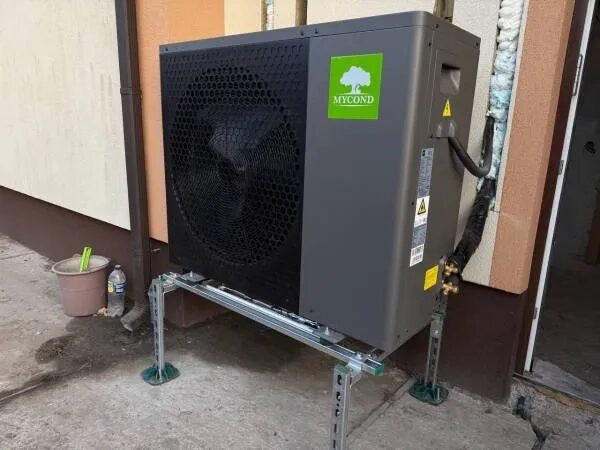
A heat pump changes what a home buys and where the heat comes from. Instead of burning gas or oil on site, an air source unit moves heat from outside air using electricity. The independent evidence on what that does for a household's position is direct: households with a heat pump and an electric vehicle are "far less dependent on foreign oil and gas imports" and "make more use of British electricity"3. The same analysis states that insulating homes and running electric heat pumps and cars on an even mix of wind and solar "would boost energy independence"3.
The dependence that remains is on the electricity grid and an electricity supplier. A heat pump does not generate anything. It also depends on the manufacturer for parts, controls and any app-based features, and on an installer for commissioning and servicing. Where a household already has solar panels, the picture shifts: using the free energy solar panels generate to power a heat pump can save more than running the heat pump on imported electricity alone27.
Effectiveness is conditional. Individual heat pumps are "highly effective in most buildings when they are combined with appropriate energy efficiency measures"2. Fabric first, then the heat source. The wider policy and target picture is covered on our page on heat pumps and household energy independence, and the full guide to the technology sits at heat pumps.
"If the Government wants to boost energy independence, insulating homes and running electric heat pumps and cars on an even mix of wind and solar is the way to do it."
Sources27 cited
- Townhouse Mycond split heat pumps BeeHeat series, Mycond, 2026
- Heat buildings strategy: strategic environmental assessment, Scottish Government, 2021
- Household energy buying British, Energy and Climate Intelligence Unit, 2024
- Heat Pump Keymark certification celebrates a decade, European Heat Pump Association, 2026
- Public Accounts Committee report: heat pump installation costs, UK Parliament, 2024
- Heat buildings: multiple ownership, mixed use buildings and energy retrofit, Scottish Government, 2023
- Planning permission for heat pumps, Welsh Government, 2026
- Heat pump installation: a step by step guide, Energy Saving Trust, 2026
- Boiler Upgrade Scheme: information for installers, Ofgem, 2026
- Boiler Upgrade Scheme guidance for installers v5.1, Ofgem, 2026
- Heat Pump Keymark, European Heat Pump Association, 2026
- Heat Pump Keymark certificate 041-K002-78, Heat Pump Keymark, 2025
- Heat Pump Keymark certificate 041-K032-03.03, Heat Pump Keymark, 2026
- Heat Pump Keymark: benefits for consumers, Heat Pump Keymark, 2026
- Product scheme equivalency, MCS Certified, 2026
- Boiler Upgrade Scheme: approved standards, grant categories and grant levels, GOV.UK, 2026
- VAT: energy saving materials and grant funded heating supplies, VENSAV3080, HM Revenue and Customs, 2026
- Approved Document L Volume 1 consultation version, Welsh Government, 2025
- Domestic RHI essential guide, Ofgem, 2022
- Domestic building services compliance guide 2022, Scottish Government, 2022
- MCS welcomes changes to Boiler Upgrade Scheme, MCS Certified, 2025
- Heat pump installation: applying for the grant, GOV.UK, 2026
- Zero carbon and climate change: action for residents, Manchester City Council, 2026
- VAT: energy saving materials and grant funded heating supplies, VENSAV3090, HM Revenue and Customs, 2026
- Warm Homes Social Housing Fund wave 3 scheme guidance addendum, Department for Energy Security and Net Zero, 2026
- NIBE S1156 ground source heat pump, Quiet Mark, 2026
- Is now a good time to get a heat pump, Energy Saving Trust, 2025