On this page
BG Electrical's SyncEV home charging range is sold in the UK through Sync Energy, which lists the full range of chargers and accessories direct and describes the products as ASTA approved, UKCA and CE marked1. The home installation service is positioned around a fixed offer: a 3-year warranty, certified installers, and a standard installation that the maker says covers 95% of customers, with more than 2000 UK homeowners described as having used it1. The range sits in a UK home charging market that Citizens Advice estimates now contains around 1 million home chargers3.
The core product is a 7.4kW wallbox. Charging is described as dynamic, up to 7.4kW at 32A, with a Type 2 socket and auto-lock on the standard model4. Around it sit variants with a metal control box, a tethered cable option, a portable 3-pin charger, floor-mounted dual-socket units aimed at commercial settings, and a dynamic load balancer for multi-charger installations5.
The range: Link wallboxes, EV Wall Charger 2, Pro floor units and a portable option
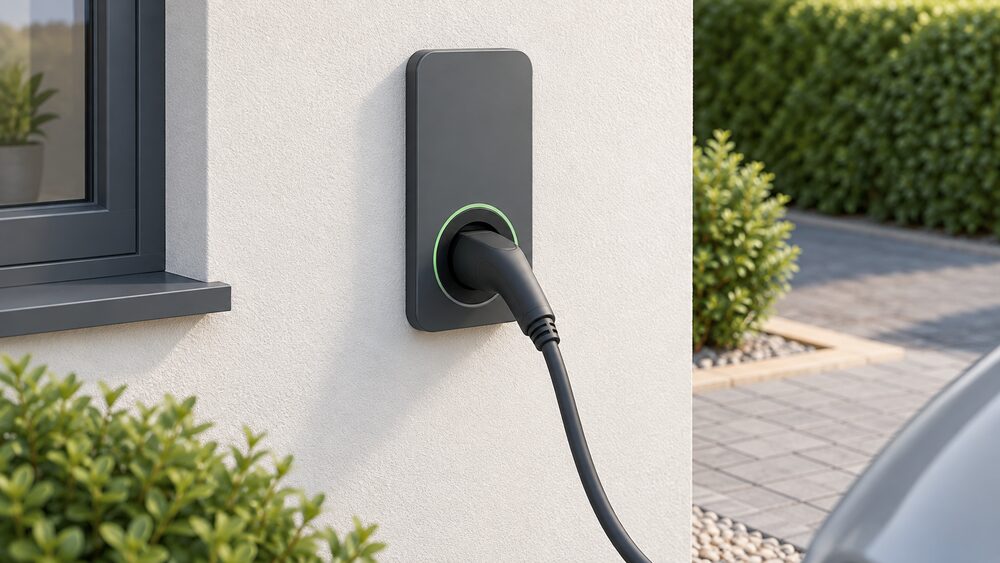
The Sync Energy Link EV Charger is the anchor product: a Type 2 socketed unit with auto-lock, up to 7.4kW (32A) dynamic charging, WiFi and LAN connectivity with optional 4G, built-in SPD, Type A RCD and PEN protection, and an installation kit supplied4. It is also one of the slimmest units available at only 37mm deep when recessed, and it is suitable for indoor and outdoor installations4.
Three Link variants add a metal control box: the EVLR7MSG (recessed), the EVLS7MS (surface) and the EVLS7MSG (surface with metal unit). All three list WiFi, LAN and 4G, dynamic charging up to 7.4kW (32A), and integrated safety with built-in SPD, 40A MCB and Type A RCD, with the recessed model also listing 6mA DC protection, which the maker says eliminates the need for extra upstream devices5. All three ship with backed-out terminal screws and combi terminal screws, details that matter to the installer rather than the householder5.
Alongside these sit the EV Wall Charger 2 in socketed and tethered forms, the latter with a built-in 7.5m Type 2 cable1; the EVC22325SL, a 7.4kW single-phase unit rated at 250V with a UV-stable polycarbonate build8; and the EVCM22135, a portable charger that draws up to 10A, 2.4kW from a domestic 13A UK 3-pin socket, described as charging at up to 8 miles per charging hour and aimed at destinations that offer only a 3-pin socket9. At the commercial end, the Pro Charger AC is a floor-mounted unit: a dual-socket single-phase model delivering 2 x 7.4kW with an integrated mid meter, 4G, RFID, Monta app integration with QR code and contactless card payment10, and a three-phase dual-socket version at 2 x 11kW with a pay terminal that meets PAS 1899:2022 standards12.
| Model | Form | Power | Connection | Notable |
|---|---|---|---|---|
| Link EV Charger | Wall, socketed, recessable to 37mm | up to 7.4kW (32A) | WiFi, LAN, optional 4G4 | SPD, Type A RCD, PEN protection4 |
| Link with metal unit (EVLR7MSG, EVLS7MS, EVLS7MSG) | Recessed or surface | up to 7.4kW (32A) | WiFi, LAN, 4G5 | SPD, 40A MCB, Type A RCD5 |
| EV Wall Charger 2 (tethered) | Wall | 7.4kW class | WiFi setup at install1 | Built-in 7.5m Type 2 cable1 |
| EVC22325SL | Wall | 7.4kW / 250V single phase | Not stated | UV stable8 |
| EVCM22135 | Portable | up to 10A, 2.4kW | None | 13A UK 3-pin socket use9 |
| Pro Charger AC | Floor mount, dual socket | 2 x 7.4kW or 2 x 11kW | 4G10 | RFID, Monta app, contactless10 |
Power and charging rate: 7.4kW at 32A
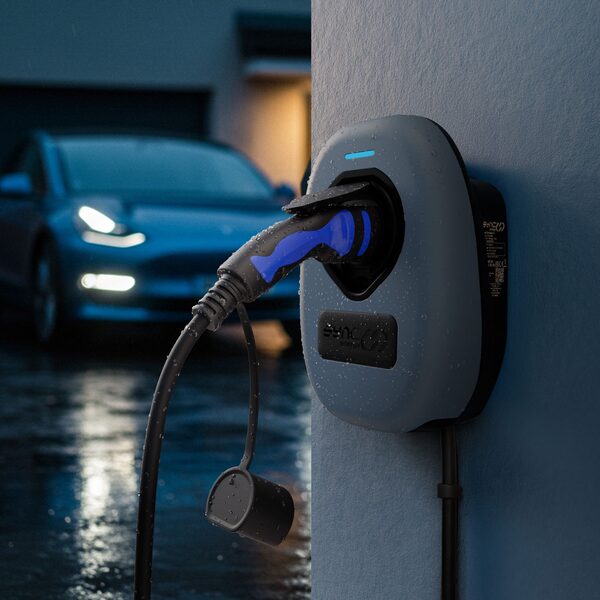
Every wall-mounted SyncEV unit for the home tops out at 7.4kW, delivered at 32A on a single phase4. That is the standard UK home charging rate: independent guidance notes home chargers can charge at up to 22kW, though most suppliers offer 3kW or 7kW as standard15. A 7kW rate adds roughly 30 miles of range per hour on a typical electric car4, which is why an overnight charge covers almost any commuting week; the fuller picture of charging times is at how long it takes to charge an electric car at home.
The word "dynamic" in the specification matters. The charger does not have to draw its full 32A: the rate adjusts to what the installation and the load management allow4. The clearest published figure for the floor is the fallback: if communication between chargers and the load balancer is lost, all connected chargers default to a safe 6A rate to maintain safe operation14. So the effective range runs from 6A in a fault condition up to 32A at full tilt.
The portable EVCM22135 is a different animal: up to 10A and 2.4kW from a 3-pin socket, roughly 8 miles of range per charging hour9. It is a backup or travel product, not a substitute for a wallbox, and charging from a 3-pin socket long-term is covered at can I charge an EV from a 3-pin socket.
Connectivity: WiFi and LAN as standard, 4G as an option
The standard Link charger offers WiFi and LAN as standard, with 4G described as optional, letting you manage and monitor a charge from anywhere4. The installation service includes commissioning, WiFi setup on the 2.4GHz band only, and an app walk-through1. The 2.4GHz detail is worth knowing: it is the longer-range band most routers broadcast, but if your home network runs a single combined 5GHz-only network, the setup step needs attention.
The metal-unit Link variants list WiFi, LAN and 4G together, so a 4G connection is available without relying on home broadband at all5. The Pro Charger AC floor units go further, with 4G connectivity, RFID cards, Monta app integration with a QR code, and contactless card payment options10. Those payment features are aimed at commercial or shared-use settings rather than a private driveway.
The independence trade-off here is the usual one for smart chargers. Remote scheduling and monitoring depend on a working connection and on the maker's app and servers; the 4G and RFID options reduce the dependence on your home broadband but add a dependence on a mobile network. The background is at EV charger apps, WiFi, 4G and firmware.
Load management: CT clamps and the Dynamic Load Balancer
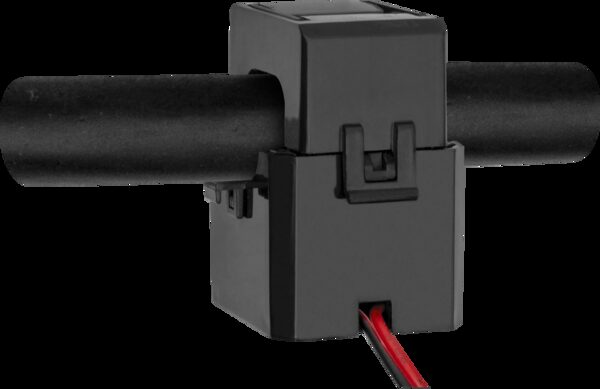
Sync Energy's load management "automatically balances your EV charging, with options available for Household and Commercial properties"2. The household tool is a set of CT clamps: "Designed for intelligent load management, they monitor and balance power across your installation, protecting circuits"16. In practice a CT clamp measures what the house is already drawing and tells the charger to hold back so that charging plus cooking plus a shower never exceeds the main fuse. How this works in detail is explained at load management and load balancing for home EV chargers and CT clamps and sensors used with home EV chargers.
For multiple chargers, the EV Dynamic Load Balancer communicates with each charger via RS485 protocol for what the maker calls accurate, real-time power management, supporting installations with up to 16 chargers14. If that communication fails, every charger drops to the safe 6A rate rather than running unmanaged14. The balancer is compatible with Sync Energy chargers and most other smart chargers that support dynamic load balancing, and it can be used alongside solar PV or other renewable sources when paired with compatible chargers14, which opens the route to surplus-solar charging described at charging an EV from solar panels.
The Link units also carry their own electrical protection: built-in SPD, Type A RCD and PEN protection on the standard model, with the metal-unit versions adding a 40A MCB and, on the recessed model, 6mA DC protection, which the maker states eliminates the need for extra upstream devices4. What those devices do is explained at EV charger earthing and PEN fault protection and what RCD protection an EV charge point needs.
Tethered or socketed: Type 2 either way
Home chargers in the UK come "either with a tethered Type 1 or Type 2 cable, which can be plugged straight into the car, or with a Type 2 socket for use with the vehicle's charging cable"17. NICEIC puts the same choice more simply: tethered chargers come with a cable and connector installed, while untethered chargers just have a socket where a cable plugs in18.
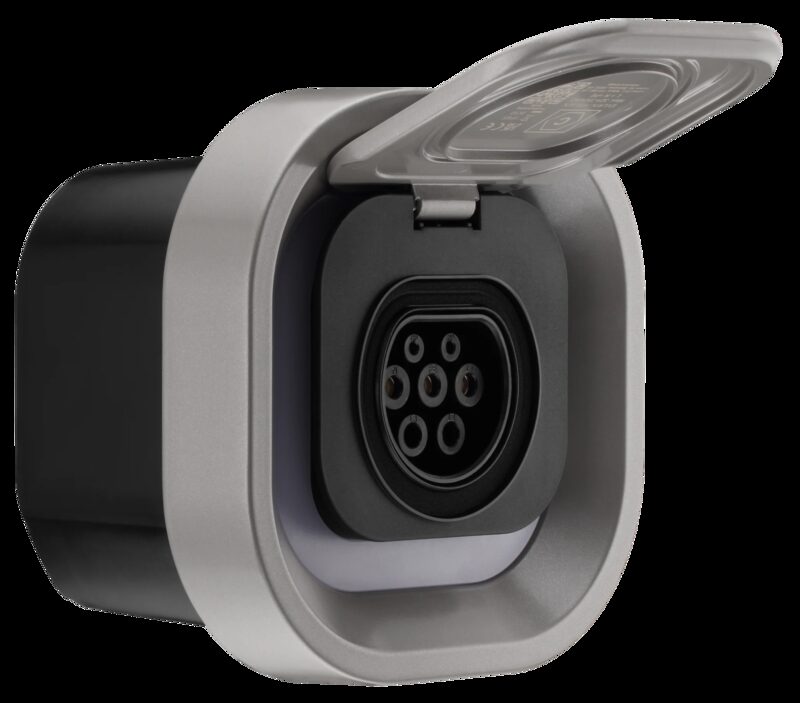
SyncEV covers both. The socketed units have a Type 2 socket with auto-lock, compatible with all Type 2 EVs and plug-in hybrids4. The tethered EV Wall Charger 2 has a built-in 7.5m Type 2 cable for simple charging1. The interchangeable faceplates fit both socketed and tethered versions, so the cosmetic choice is independent of the cable choice19. Type 2 is the connector every current European EV uses, so either route charges any modern car20; the connector landscape is mapped at EV connectors and cables and tethered vs untethered chargers.
The maker also sells Mode 3 Type 2 charging cables at 7.4kW single phase in a 10 metre length, compatible with all electric and hybrid plug-in vehicles21, which is what a socketed installation needs in the boot or on the wall.
Build quality and mounting
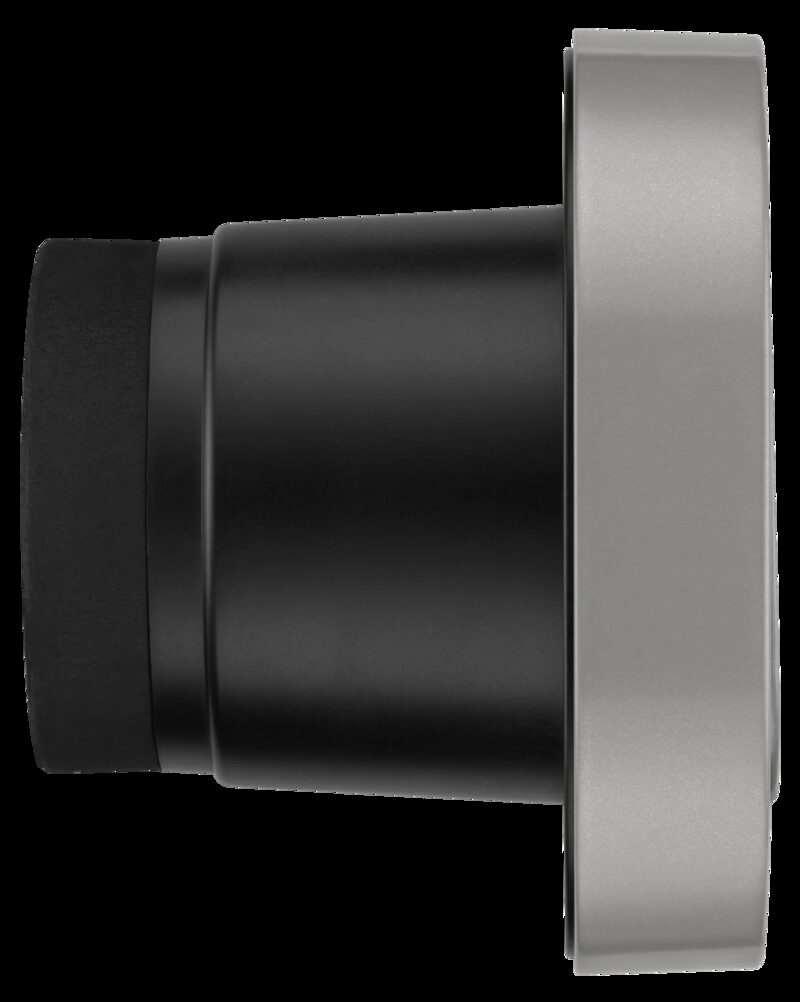
Polycarbonate is the consistent housing material across the range: the Link metal-unit models, the EVC22325SL, the EVCM22135 and the Pro Charger AC all list it for the base, housing or front plate5. The EVC22325SL adds UV stability and what the maker calls robust construction with connector guard caps and protectors8. The interchangeable faceplates come in 9 colours and are ASTA approved, UKCA and CE marked19.
Mounting options run from a wall holder, itself polycarbonate and described as weatherproof and impact-resistant, protecting the charger plug23, through the 37mm recessed Link installation4, to the floor-mounted Pro units10. The portable EVCM22135 needs no mounting at all, and the portable cable range includes built-in in-line power control that safeguards against short circuits, overloads, earth faults and temperature spikes22.
Smart charging regulations and certification
Every home charger sold in the UK must meet the Electric Vehicles (Smart Charge Points) Regulations 2021, which require charge points to offer smart charging and to protect the grid. BSI's Kitemark certification for EV chargers exists to prove compliance with "regulations such as UK Smart Charge Regulation and ETSI EN 303 645", the latter being the consumer cybersecurity standard24. The rules themselves are set out at the Electric Vehicles (Smart Charge Points) Regulations 2021, and the cybersecurity side at EV charger cybersecurity, data and remote control.
For SyncEV specifically, the Pro Charger AC is stated to meet PAS 1899:2022 standards12, the accessibility standard for public charge points. The whole range is described as ASTA approved, UKCA and CE marked1.
On the installation side, the work itself falls under building regulations: an EV charger installation needs a compliance certificate proving the work complies with building regulations25. Who can do the work, and the notification process, are covered at home EV charge point installation and do you need building regulations approval for an EV charger.
Warranty, price and what depends on whom
The published warranty is 3 years, offered alongside certified installers on the home installation service1. That is shorter than some UK competitors offer, and the terms behind it are not published in the material available, so it is worth reading the warranty document before signing up. How EV charger warranties compare across brands is at EV charge point warranties and aftercare.
On price, there is no published SyncEV list price for a supplied-and-fitted charger. The maker's offer is structured as a standard installation that covers 95% of customers, with anything outside that standard quoted separately1. That means prices are installer-quoted, and the honest comparison is against the general fitted costs set out at how much a home EV charge point costs, fitted. VAT treatment is not stated in the maker's material, so quotes should be read as quoted rather than confirmed VAT-inclusive.
For a household weighing energy independence, the position is mixed. A SyncEV charger with load management and a CT clamp lets the home charge its car without overwhelming its own supply, and the balancer's compatibility with solar PV means a charger can sit alongside generation rather than depending on it14. But the charger itself keeps the home on the grid and on an electricity supplier, the smart features depend on the maker's app and connectivity, and the warranty and installation route tie the household to the manufacturer's own installer network1. The wider picture is at EV charging and household energy independence.
Sources25 sources
- Sync Energy home EV charger installation, sync.energy, 2026-09-17
- Sync Energy EV chargers and accessories range, sync.energy, 2026-09-17
- Navigating the network: improving the consumer journey when installing low-carbon technology, Citizens Advice, 2026-07-01
- Sync Energy Link EV Charger, sync.energy, 2026-09-17
- Sync Energy EVLR7MSG Link EV Charger with Metal Unit, sync.energy, 2026-09-17
- Sync Energy EVLS7MS Link EV Charger, sync.energy, 2026-09-17
- Sync Energy EVLS7MSG Link EV Charger with Metal Unit, sync.energy, 2026-09-17
- Sync Energy EVC22325SL, sync.energy, 2026-09-17
- Sync Energy EVCM22135 portable charger, sync.energy, 2026-09-17
- Sync Energy Pro Charger AC EVPCFSM27LBGR, sync.energy, 2026-09-17
- Sync Energy Pro Charger AC EVPCFSM27NBGR, sync.energy, 2026-09-17
- Sync Energy Pro Charger AC EVPCFSM211LBGRP, sync.energy, 2026-09-17
- Sync Energy Pro Charger AC EVPCFSM211LBGR, sync.energy, 2026-09-17
- Sync Energy EV Dynamic Load Balancer, sync.energy, 2026-09-17
- EV charging guide, Uswitch, 2026-09-19
- Sync Energy CT Clamps, sync.energy, 2026-09-17
- Home charging guide, Zapmap, 2025-06-19
- EV charger installation and maintenance, NICEIC, 2025-08
- Sync Energy EV Charger interchangeable faceplates, sync.energy, 2026-09-17
- EV connector types, Zapmap, 2026-05-20
- Sync Energy EV charging cables, sync.energy, 2026-09-17
- Sync Energy portable EV charging cables, sync.energy, 2026-09-17
- Sync Energy EV Charger wall holder, sync.energy, 2026-09-17
- BSI Kitemark certification for EV chargers, BSI, 2026-09-17
- EV charging and building regulations, Planning Portal, 2026-09-17