
In this guide
Autel is one of more than 50 manufacturers supplying charging units suitable for EV charging at home, a market that has grown crowded enough that the choice of wallbox now matters less than the wiring behind it1. Autel's domestic line is the MaxiCharger, sold in several variants with different connector counts, power ratings and warranty terms. The MaxiCharger AC Pro carries a 5 year warranty and the MaxiCharger AC Elite 3 years, both stated by the maker2.
For a UK household the practical questions are the same whatever the badge on the box. A home charger is classified as development, and it is up to the householder to ensure the correct permissions are in place3. Each charging point needs its own dedicated final circuit with a separate MCB or RCBO at the distribution board and no other loads sharing it4. In England and Wales the installation must be notified to local authority building control because it creates a new circuit5.
What an Autel unit does for energy independence is limited and specific. It moves the fuel for the car from petrol or diesel to electricity, and it allows that electricity to be bought on a time-of-use tariff overnight. It does not remove the household from the grid, and the smart features that make the most of cheap windows depend on a network connection to the charger and on the maker's app.
Autel at a glance: the maker and the domestic range
Autel's charging hardware sits in a market where more than 50 manufacturers provide units suitable for charging an EV at home1. That number is the single most useful fact for a householder weighing the brand: the wallbox is a commodity item, and the differences between reputable units are narrower than the differences between installations.
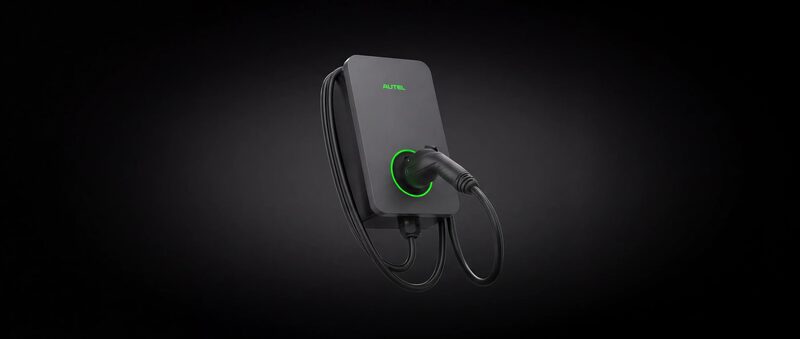
The MaxiCharger family is Autel's domestic and light commercial line. The AC Pro is the single-connector unit, listed with J1772/NACS connector support and smart load balancing across up to 200 chargers per site2. The AC Elite and AC Ultra are both listed with 2 connectors, and the AC Elite has a home variant rated at 12 kW2. The multi-connector and high-count load balancing features point at shared parking and small commercial sites rather than a single driveway, which is worth knowing when comparing the range against a straightforward domestic wallbox.
Autel is not a UK-only brand and does not manufacture in the UK. It sells into the UK through distributors and installers, which shapes both the support route and the warranty claim path. The company's own product pages are the authoritative source for what each model includes, and they are the pages to read before accepting an installer's description of a unit.
MaxiCharger models: which unit fits which home
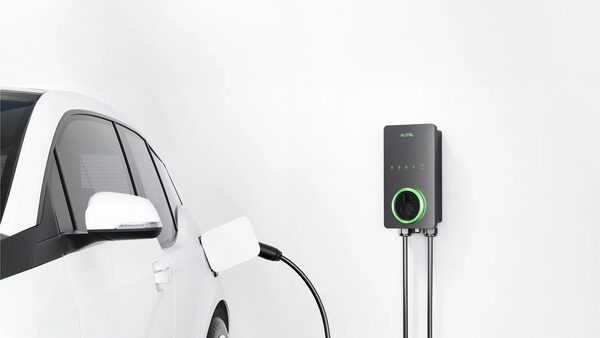
The range splits by connector count and by intended site. The AC Pro is the single-connector unit, which is what a single-car household with one parking space needs. The AC Elite and AC Ultra each carry 2 connectors, which suits a two-car household sharing one charge point or a small shared parking area2.
The AC Elite also has a home variant listed at 12 kW2. That is above the 7kW ceiling most UK single-phase homes can support, so a 12 kW unit implies a three-phase supply or a site with capacity beyond the ordinary domestic connection. A householder considering it should establish the supply position first, because the charger rating is not the constraint: the incoming supply is.
| Model | Connectors | Notable listing | Warranty |
|---|---|---|---|
| MaxiCharger AC Pro | 1 | J1772/NACS support, PV Hybrid Green Mode, load balancing to 200 chargers2 | 5 years2 |
| MaxiCharger AC Elite | 2 | 12 kW home variant2 | 3 years2 |
| MaxiCharger AC Ultra | 2 | Twin connector2 | Not stated |
The wider UK market gives a sense of scale. Shell Recharge Ubitricity operates the charging network with the most EV chargers across all power ratings7, and among hardware makers ABB and EV Tronic are counted at 817 and 385 charging locations respectively8. Those are network and location counts rather than domestic wallbox sales, but they show how many brands a householder will encounter when asking for quotes.
Specifications: power ratings, connectors and cables
Autel's published specification for the AC Pro covers connector support and load management rather than a single headline power figure2. The AC Elite home variant is listed at 12 kW2. Beyond that, the maker's product pages do not give a full domestic power table, so a householder should treat the installer's commissioning sheet as the record of what was actually fitted.
For context on what domestic charging equipment generally looks like, a comparable UK wallbox series is specified at 7 to 11 kW of power delivered through a 5 metre Type 2 tethered cable, with charging power listed as 7kW or 11kW9. That is the shape of the mainstream domestic market: a tethered Type 2 cable, a 7kW single-phase rating, and an 11kW or 22kW option where three-phase is available.
Cable choice is a separate decision from the charger. Home chargers come as tethered, with the cable and connector installed, or untethered, with just a socket where a cable is plugged in10. A tethered unit is simpler day to day and locks the household into one connector type; an untethered unit is more flexible if the car changes. Autel's connector listing for the AC Pro names J1772/NACS support, which is a North American standard rather than the Type 2 connector used on UK and European vehicles, so the exact UK variant and cable supplied should be confirmed in writing before ordering2.
Smart features: app control, scheduling and solar mode
The AC Pro is listed with PV Hybrid Green Mode support, which is Autel's term for running the charger from on-site solar generation2. Independent guidance on what to look for in a solar-linked charger names three features: solar diversion, which lets the charger prioritise solar power for EV charging and minimise reliance on the grid; app control; and dynamic scheduling11. The AC Pro's solar mode addresses the first of those, and its app addresses the second and third.
The AC Pro also supports several payment and authentication routes, including a POS kiosk for credit and debit cards and NFC payments, QR code payment, AutoCharge using MAC address authentication, and multiple payment methods through the Autel Charge app2. Those features are aimed at shared and commercial sites. On a domestic driveway they are mostly irrelevant, and the householder's practical interface is the app.
Authentication hardware is sold separately. The Autel RFID Charge Card is not included in the package with the EV charger, and it is compatible with all Autel EV chargers12. Binding a card is done through the Autel app, following the Me, My Charger, Change Card, Add sequence, or by scanning the card's QR code or entering the card number12.
Installation: what a UK household needs before fitting
Installation is the part of the process that decides whether a charger works well, and it is regulated. Installing a home charger is classified as development, and it is up to the householder to ensure the correct permissions are in place3. All EV charging installations must comply with BS 7671, the Wiring Regulations governing electrical installations in the UK5, and the charger must be installed in line with the current edition of that standard10.
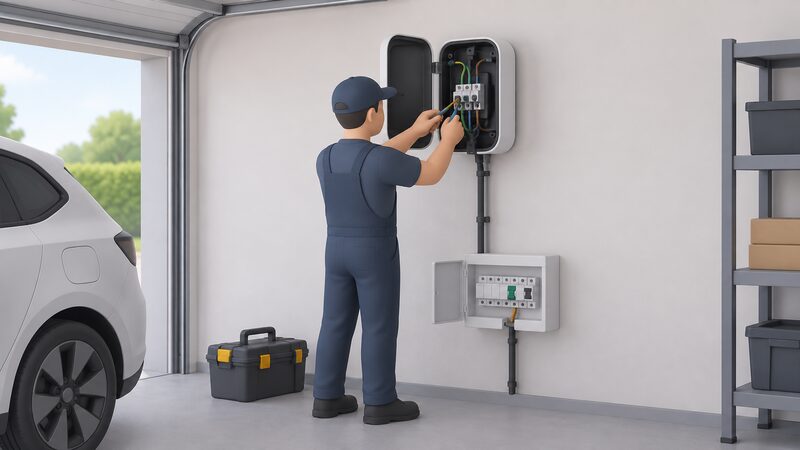
The circuit requirements are specific. Each EV charging point should be supplied by its own dedicated final circuit, with a separate MCB or RCBO at the distribution board for each charger and no other loads sharing it4. The installer must assess the adequacy of the supply capacity for the new EV load plus any existing demand before fitting, and assess the adequacy of the earthing13. To install EV chargers, an installer needs competence in the IET Code of Practice for Electric Vehicle Charging4.
In England and Wales, building regulations require EV charger installations to be notified to the local authority building control because they involve creating a new circuit5. In Northern Ireland the process runs through NIE Networks, and installers must notify the network once the charge point is installed13. Network operators in Great Britain require an application before new EV charging equipment is installed, made by the installer or local authority14.
Looped supplies are the common obstacle. Installing a home EV charger typically requires a fuse upgrade to 80 to 100 amps, which often cannot be done on a looped supply without overloading the shared cable15. Where a home shares a looped electricity cable with a neighbour, a dedicated cable must be installed before the charger can go ahead13. Most local authorities also specify that households install a dedicated EV charger with protective earth neutral fault protection16.
Cost: purchase price and running costs
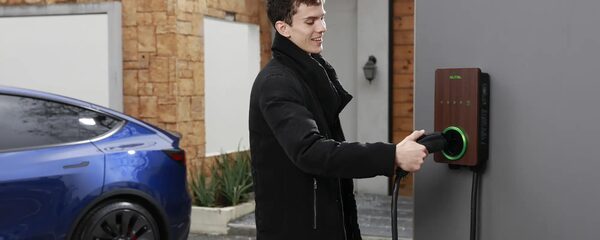
There is no published Autel list price for a supplied and fitted MaxiCharger in the material available, so prices are installer-quoted. The market benchmarks are useful for setting expectations. For most households, 7kW chargers are a good choice and cost around £900 to buy and install, and a home EV charger typically costs between £500 and £1,200 to buy and install6. Official guidance puts installation costs at £450 for a basic model, rising to around £1,200 as power and capabilities increase3, and states that an EV charger can be up to £1,00017.
The split between unit and labour matters when comparing quotes. A typical domestic installation is worth £800 to £1,500 for the electrical work alone, excluding the charger unit4. Installation typically adds £500 to £1,000 per charger18. A report from Checkatrade found the average cost of installing a home EV charger was £1,0008. These figures are quoted rather than confirmed VAT-inclusive, and the VAT position is not stated in them.
Running costs depend on the tariff rather than the charger. A household needs a home EV charger to use an EV tariff at all, since there is no point having an EV tariff without the ability to charge at home19. Octopus Energy offers three EV tariffs20, and the wider market includes subscription services from networks such as Be.EV, which operates a mixture of rapid chargers at 50kW and above and ultra-rapid chargers at 150kW and above21. Public charging subscriptions are a separate cost from home charging and are covered in more detail on public EV charging.
Warranty and support in the UK
Autel's warranty terms are published per model. The MaxiCharger AC Pro is listed with a 5 year warranty and the MaxiCharger AC Elite with 3 years2. That is a longer term than many domestic wallboxes carry, and it is the maker's own statement rather than a distributor's.
Certification is the other half of aftercare. The BSI Kitemark for Smart EV Chargers is assessed against the UK Smart Charge Regulations together with ETSI EN 303 645 and IEC 61851-122, which is the framework that covers both the electrical safety of the unit and the security of its connected functions. A householder comparing units can ask which certifications a specific model holds, and should expect the answer in writing.
Support in practice runs through the installer first. For voltage-related faults, official guidance is to speak to the installer or electrician in the first instance to check there is not a problem with the equipment23. Autel's own regional support pages carry the contact routes for the UK, and the serial number and carton identifiers are what a claim is traced against24. Warranty terms and aftercare routes across the market are set out on EV charge point warranties.
Fault codes and voltage problems
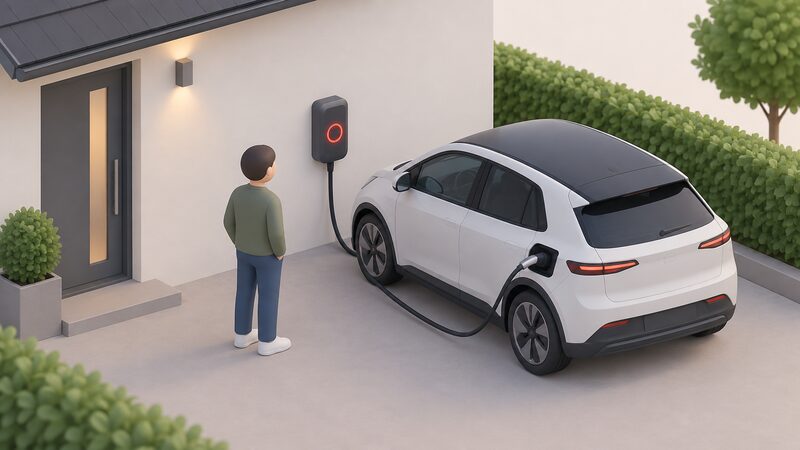
Many charger faults in the UK are supply problems rather than charger problems. If the voltage goes beyond the acceptable range, the charger will not function and will display a red ring or an error23. If the voltage goes outside that range, the charger will stop working and show an error, a safety feature that protects both the charger and the vehicle25. Voltage drop or surge is a recognised cause of EV charger errors25.
The first response is not to reset repeatedly. Official guidance is to switch the charger off and on at the isolator switch, and to speak to the installer or electrician in the first instance to check there is not a problem with the equipment23. Where a fault is suspected in the unit itself, the general safety position for electrical products is to stop using it immediately and report the fault to the manufacturer or retailer26. Autel publishes model-specific fault codes in its product documentation, and those codes are the reference point for a support call.
What an Autel charger means for household energy independence
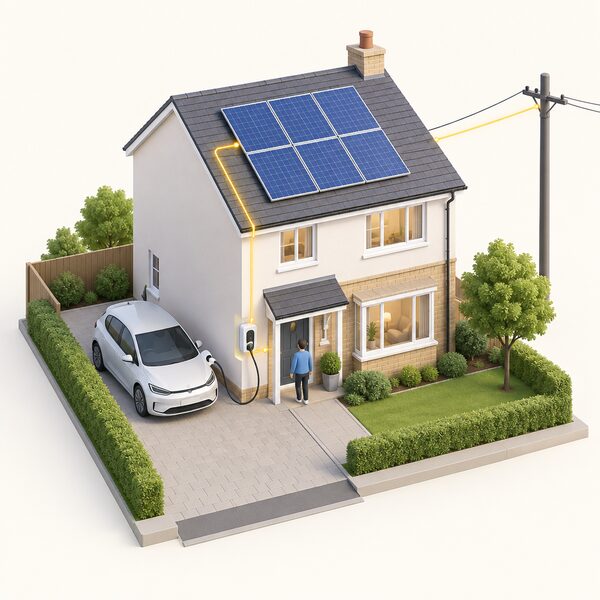
A home charger is the piece of equipment that lets a household buy its motoring energy on its own terms. Without one, an EV tariff is unusable, because there is no way to charge the car at home during the cheap window19. With one, the household can shift charging to overnight periods and, where solar is installed, divert generation into the car rather than exporting it.
The dependencies that remain are worth stating plainly. The charger sits on the grid and on a licensed supplier: the electricity still arrives through the distribution network, and the household still pays a standing charge and a unit rate. The smart functions depend on a network connection to the charger and on Autel's app and servers, so scheduling and remote monitoring stop working if the connection or the service does. The hardware depends on a manufacturer that is not UK-based, which affects parts and support timescales rather than the warranty term itself.
Solar changes the picture but does not remove the grid. The AC Pro's PV Hybrid Green Mode is the mechanism for using on-site generation2, and solar diversion is the feature that lets a charger prioritise solar over imported power11. A home battery can extend that further, and the options are set out on EV charging alongside a home battery and charging an EV from solar panels. The wider question of what home charging can and cannot do for a household's independence is covered on EV charging and household energy independence.
Sources26 cited
- Home charging guide, Zapmap, 2025-06-19
- MaxiCharger AC Pro product page, Autel Energy, 2026-09-17
- Electric vehicle chargers, Planning Portal, 2026
- Section 722 EV charging complete guide, Elec-Mate, 2026-07-02
- EV charger regulations in England: what's changed, NICEIC, 2026-08-19
- Electric car charging at home, Which?, 2026-02-25
- EV charging statistics, Zapmap, 2026-08
- EV charging statistics, Uswitch, 2025-12-15
- EVT Charger Series, Salus Controls, 2026-09-20
- Electric vehicle charger installation and maintenance, NICEIC, 2025-08
- Integrating solar panels with EV charging, Uswitch, 2025-07-02
- Autel RFID Charge Card, Autel Energy, 2026-09-17
- EVs and heat pumps FAQs, NIE Networks, 2026-09-19
- Existing electricity supplies, SSEN, 2026-09-19
- Looped services, NIE Networks, 2026-09-19
- Cross-pavement charging solutions, Energy Saving Trust, 2025-07-18
- Electric vehicles, nidirect, 2026-09-17
- Best EV tariffs for multi-car families, Uswitch, 2025-07-02
- EV energy tariffs, Uswitch, 2025-09-17
- Octopus EV energy tariffs, Uswitch, 2025-10-09
- Best electric car charging subscriptions, Carwow, 2025-11-21
- What makes BSI Kitemark certified EV chargers a smarter choice, BSI, 2026-09-17
- Voltage changes in your home or business, UK Power Networks, 2026-09-17
- Product safety report: ROMADA New Energy EV Charger and Cable, Office for Product Safety and Standards, 2026-09-11
- Managing voltage changes in your property, Electricity North West, 2026-09-19
- E-scooters safety advice, Electrical Safety First, 2026-09-17