On this page
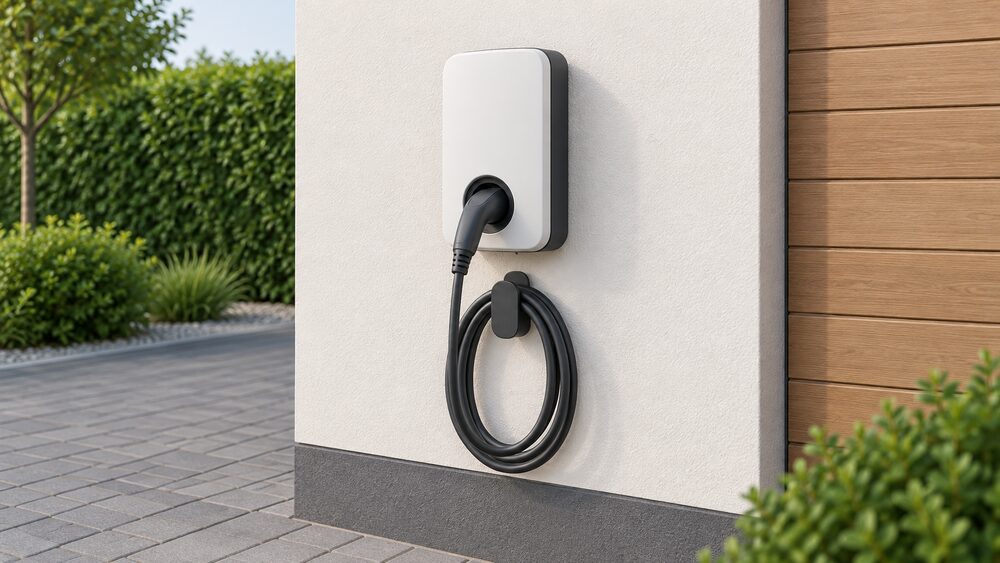
Alfen is a Dutch energy equipment maker whose Eve range of home charge points is sold in the UK, and the Eve Single is its domestic wallbox family. Alfen ICU B.V. is the manufacturer of record, and the units are, in Alfen's words, "manufactured in the Netherlands using A-grade components"1. The home range spans 3.7 to 22kW across two lines, the Eve Single S-line and the Eve Single Pro-line, joined by the newer Eve Single Plus, and Alfen positions them for both homes and small businesses3.
The range's distinguishing promise is openness. Alfen states its charge points are sim-lock free, so any operator can be connected, and the Eve Single can be linked to any OCPP management system rather than one proprietary network3. For a household weighing energy independence, that is the core of the offer: a charger that charges the car, reacts to flexible tariffs and renewable generation, and does not lock the owner to a single supplier's platform. What Alfen does not publish is equally important: no UK warranty term appears on its product pages, and there is no list price, so both come from the installer or seller.

A Dutch maker whose Eve range reaches UK driveways
Alfen is a Netherlands-based company with a UK presence at alfen.com, and its EV charging pages cover home, business and public segments1. The home chargers are the Eve Single family, and Alfen's own framing of the product sits squarely on the energy transition: its UK news pages carry items on Europe's energy independence and on EV charging becoming part of building design under the EPBD, both published in 20261. The company also reports supporting a TU Eindhoven student project building a solar-powered ambulance, which gives a sense of where it sees its market: solar, storage and smart grids alongside charging1.
The Eve Single itself is not new. It passed the IEC61851-1 test on 20 July 2018 and the OCPP 1.6 Full Certificate test on 19 December 2019, and the technical file covering the S-line and Pro-line was last updated in November 20223. That maturity cuts both ways: the charger has a certification history behind it, but some headline features on the newer Plus model are still listed as future firmware. Around 1.4 million home chargers were installed at UK homes with driveways by the end of 20258.
The Eve range: Single, S-line and Pro-line
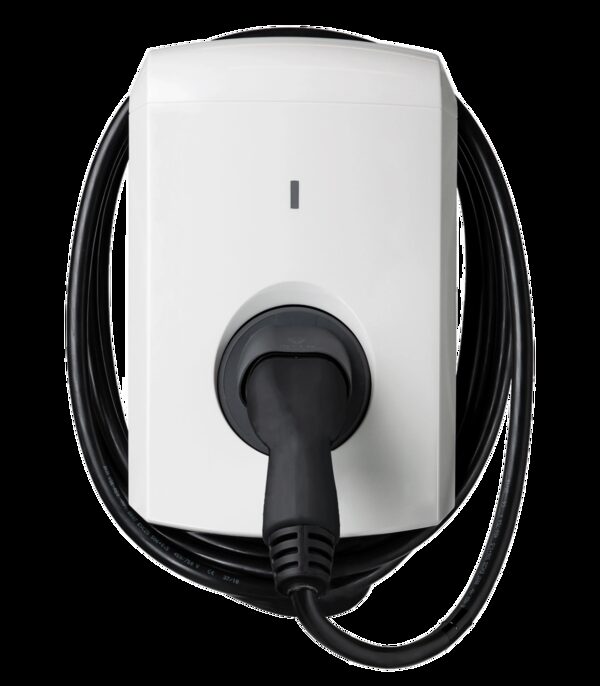
Alfen offers two lines of smart charging stations of 3.7 to 22kW for home charging, plus the Eve Single Plus as a next-generation addition4. The S-line and Pro-line share the same charging capacity and the same sim-lock-free positioning, and differ mainly in how the user interacts with them at the unit.
The Eve Single S-line uses an LED user interface, while the Eve Single Pro-line has a full-colour 3.5 inch display supporting a personalised logo and dynamic QR codes, configurable in various languages3. The Pro-line's integrated RFID reader supports user identification, and its MID meter enables financial settlement, which points to its semi-commercial positioning: Alfen notes that up to 100 single-socket stations, or 50 dual-socket stations, can be connected per network5. The S-line is available as a charging contact (a socket) or connected by a cable including cable storage, in a housing measuring 373 x 242 x 173mm for the fixed-cable model6.
The Eve Single Plus is the newest of the three, powered by what Alfen calls the Alfen Hardware Platform. It supports single and three phase charging up to 32A, delivering 1.4 to 22kW, and comes as a Type 2 socket, a Type 2 shutter socket, or a fixed cable2. Several of its advertised capabilities are flagged for future firmware releases: WLAN connectivity, EMS integration via Modbus TCP/IP, solar charging, Eve Connect support, Vehicle-to-Everything and Plug & Charge2. A buyer should check which of these are live on the unit being quoted, since Alfen marks them as upcoming rather than current.
| Line | Power | Interface | Connection options |
|---|---|---|---|
| Eve Single S-line | 3.7 to 22kW6 | LED3 | Socket or fixed cable with storage6 |
| Eve Single Pro-line | 3.7 to 22kW5 | 3.5 inch colour display5 | Power outlet or fixed cable, type 1 or 25 |
| Eve Single Plus | 1.4 to 22kW, up to 32A2 | App and display | Type 2 socket, shutter socket, or fixed cable2 |
For the differences that matter when choosing, types of home EV charger explains tethered against untethered and smart against basic units.
Eve Single specifications: metering, connectivity and durability
The specification that defines the Eve Single in practice is its metering and connectivity. Both the S-line and Pro-line carry a MID-certified energy meter for accurate power consumption registration, the certification that allows readings to be used for billing6. The technical file states that the figures measured or calculated are accurate to within 10% of the actual figure, which is the maker's own accuracy claim for the measuring system3.
Connectivity differs by line. The Pro-line connects to the internet via LTE or ethernet, with data available through the chosen third-party management system provider5. The Plus adds wired, WLAN and mobile 4G connectivity, though WLAN is listed as available in future firmware releases2. The Plus also includes integrated DC residual current detection, a safety feature that detects fault currents a standard RCD can miss2.
On the charging side, the Plus supports active load balancing via a P1 DSMR smart meter, a Linky smart meter or an external Modbus TCP/IP energy meter, and can connect directly to a smart meter via P1 or TIC for load balancing and smart charging network support2. Authentication options on the Plus are Plug&Power, RFID, ISO 15118 Plug & Charge (future firmware) and AutoCharge2. The S-line and Pro-line enable active load balancing in combination with a connection to a smart meter6. What the published pages do not state is an IP rating for weather protection or a warranty term, so both should be confirmed with the installer before ordering; EV charge point warranties sets out what to look for in any charger guarantee.
Smart charging: OCPP 1.6 certification and open back-ends
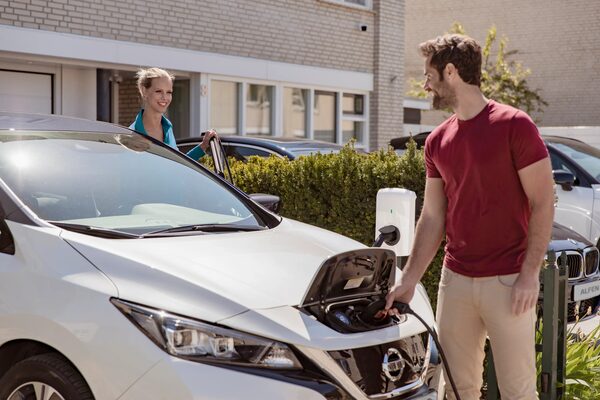
The Eve Single's smart charging rests on OCPP, the open protocol used between chargers and management platforms. The technical file describes OCPP 1.6/J as a "full and certified implementation" including a smart charging module, and the charger passed the OCPP 1.6 Full Certificate test in December 20193. Alfen's broader charging pages describe direct OCPP support with wide back-end compatibility across its stations1. The same technical file also lists OCPP 2.0.1/J with the same functionalities as supported by OCPP 1.6, so both protocol versions appear in the maker's documentation; a buyer's back-end provider will determine which matters in practice3.
The practical benefit of OCPP is the same as the sim-lock-free position: the charger is not welded to one company's servers. Alfen states the Eve Single can be connected to any random OCPP management system, and the Pro-line's data is available via the chosen third-party management system provider4. That means the smart features, the scheduling and the tariff response can survive a change of energy supplier or charging network, which is not true of every charger on the UK market. How smart charging works in general is covered at what is a smart EV charger.
Load balancing and charging profiles: stack levels, default hours and randomised delay
The Eve Single's smart charging behaviour is set out in its technical file in some detail. It supports a maximum stack level of 15 charging profiles, meaning up to 15 smart charging profiles can be stacked by different parties, such as the supplier, the network operator and the household's own schedule3. Its default charging hours, where a local time-of-use schedule is active, are weekdays on from 12am to 8am, on from 11am to 4pm and on from 10pm to 12am, with weekend off-peak charging on3.
The charger also applies a default randomised delay of up to 600 seconds when a local time-of-use schedule is active3. This is not an Alfen quirk but a legal requirement: under the Electric Vehicles (Smart Charge Points) Regulations 2021, a charge point must be configured to operate a default randomised delay of up to 600 seconds (10 minutes) at each charging instance, so that millions of chargers do not all switch on at the same moment and destabilise the grid9. The technical file also lists a delay of up to 1800 seconds in places, so the two figures appear side by side in the maker's documentation; the regulatory minimum is the 600-second figure3.
Active load balancing, which caps the charger's draw so the house does not exceed its supply, is enabled on the S-line and Pro-line in combination with a connection to a smart meter, and on the Plus via P1 DSMR, Linky or an external Modbus meter6. The mechanics of this are explained at load management and load balancing.
Security and data: TLS 1.2 and certified metering
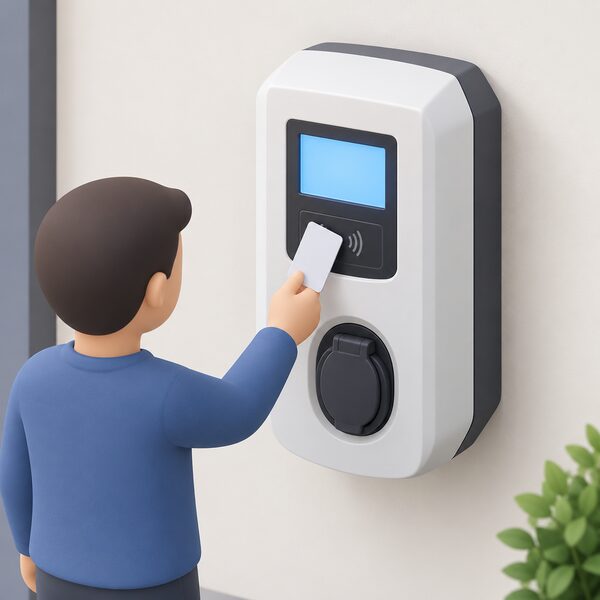
On security, the technical file states that the communication channel can be protected using an encryption layer, TLS 1.2, and also specifies a password length of 12 alphanumeric or special characters3. Those are the maker's stated protections for the link between charger and back-end. The wider context is that UK smart charge point rules include cybersecurity provisions, and BSI operates a Kitemark certification for the digital security of EV chargers that checks compliance with the UK Smart Charge Regulation and the ETSI EN 303 645 consumer device security standard10. Alfen's pages do not claim Kitemark certification for the Eve Single, so a buyer wanting that assurance would need to ask the seller directly.
The data position follows from the open back-end: with the Pro-line, data is available via the chosen third-party management system provider, so the household's charging data flows to whichever operator it connects5. The MID-certified meter is the trust anchor for billing accuracy on both home lines6. The privacy and remote-access implications of app-controlled charging are set out at EV charger cybersecurity and data.
What an Alfen charger means for household energy independence
An Alfen home charger sits at the centre of what a household can do with its own energy. Alfen states the Eve Single range can be integrated into renewable energy sources and associated smart products, and that the chargers can react to flexible energy tariffs4. The Plus lists solar charging among its features, though as a future firmware release rather than a current one2. Paired with solar panels and a tariff that pays different rates through the day, the charger becomes the device that decides when the car drinks from the roof and when from the grid; the combinations are covered at charging an EV from solar and EV tariffs and home charging.
The independence the range offers is real but bounded. Charging at home removes dependence on public charge points for everyday top-ups, and the sim-lock-free, OCPP-certified design removes dependence on any single supplier's platform. What remains is the grid itself: a 3.7 to 22kW charger is a large electrical load, the smart charging rules exist precisely to manage grid stress, and the randomised delay and default charging hours mean some control is handed to the regulatory framework. The app layer adds a dependence on the connected operator's servers, and the Plus's headline features depend on Alfen continuing to deliver the promised firmware.
Environmental product declarations and building rules
Alfen has been developing Environmental Product Declarations for its EV charging equipment since the end of 2024, with the stated aim of expanding coverage across the full product portfolio1. An EPD sets out a product's environmental footprint across its life cycle, and its arrival in the charger market reflects the same pressure that is pulling EV charging into building design: Alfen published a news item in April 2026 on EV charging becoming part of building design under the EPBD1.
For a UK householder, the building rules that bite are domestic. Installing a charge point is not generally a planning matter, but the requirements differ across the nations and in conservation areas, and new-build homes face charge point requirements under Part S in England. Those rules are covered at planning permission for a home charge point and EV charge point requirements for new builds.
Price, warranty and buying
There is no published Alfen list price for a supplied-and-fitted Eve Single; prices are installer-quoted, and no UK retail figure is published. What can be said is that the cost of any home charger installation depends on the work involved, as set out at how much a home charge point costs.
On warranty, Alfen's UK product pages for the S-line, Pro-line and Plus do not state a guarantee term. That means the warranty on an Alfen charger is whatever the installer or distributor offers in the contract. Before signing, the term, what it covers and who honours it should be confirmed in writing; the questions to ask are listed at EV charge point warranties.
Sources10 sources
- Alfen EV charging, Alfen, 2026
- Eve Single Plus product page, Alfen, 2026-09-17
- Technical file, Alfen Eve Single, Kelvelec, 2022-11
- Alfen home EV charging, Alfen, 2026-09-20
- Eve Single Pro-line product page, Alfen, 2026-09-17
- Eve Single S-line product page, Alfen, 2026-09-17
- Eve Connect app page, Alfen, 2026-09-20
- Home and community charging statistics, Zapmap, 2025
- Guide to the EV Smart Charge Point Regulations 2021, HM Government, 2026-09-18
- BSI Kitemark Certification for EV Chargers, BSI, 2026-09-17