
In this answer
Short answer
Loft insulation uptake in Scotland is close to saturation at the shallowest depth and still climbing at the deepest. In 2024, 95% of applicable dwellings had loft insulation to 100 mm or more, an increase of around 24 percentage points on 2007 levels1. Depth is where the change is sharper: 67% of dwellings with lofts had 200 mm or more, against 27% in 2009, and the share at 300 mm or more rose from 32% to 35% between 2023 and 20241.
The pattern is not uniform. The social sector leads on depth, with around 99% of dwellings insulated to 100 mm or more, 76% at 200 mm or more and 41% at 300 mm or more. The private sector sits lower, at 94% of lofts insulated to 100 mm or more, 65% to 200 mm or more and 34% of dwellings at the 300 mm high standard1. Across Great Britain, 26.1 million homes have a loft and 67% of them have insulation thicker than 125 mm; in Scotland, 86% of homes with a loft reach at least 125 mm, against a Great Britain average that includes 81% of cavity-walled homes insulated in Scotland compared with 71% across Great Britain2.
What the uptake figures actually measure
The headline number is a measure of presence, not of performance. A dwelling counts as insulated to 100 mm or more once any qualifying depth is present, which is why 95% of applicable dwellings clear that bar while only 35% reach 300 mm or more1. The Scottish House Condition Survey figures for 2024 describe the stock as it stands, and the gap between the two thresholds is the practical story: most Scottish lofts have some insulation, and roughly a third have what the statistics call a high standard.
The trajectory matters as much as the level. The rise of around 24 percentage points since 2007 at the 100 mm threshold shows how much of the easy work has been done1. Movement at the deeper thresholds is slower and more recent: 200 mm or more went from 27% in 2009 to 67% in 2024, and 300 mm or more moved only one percentage point in a single year, from 32% to 35%1. That is the shape of a mature programme, where the remaining households are the harder ones to reach or the ones where the loft is boarded, converted or otherwise awkward.
Tenure explains much of the variation. Social landlords have worked to a standard and to a programme, which is why around 99% of social sector dwellings reach 100 mm or more and 41% reach 300 mm or more, against 34% of private sector dwellings at the high standard1. Private owners respond to grants, to moving house and to energy prices, and the private rented sector adds a split incentive between landlord and tenant that the draft Energy Efficiency (Domestic Private Rented Property) (Scotland) Regulations address through exemptions for consent, negative impacts on the fabric or structure of the property, a cost cap and temporary exemptions3.
For a household, the figures set a benchmark rather than a target. A loft at 100 mm is now ordinary in Scotland; a loft at 300 mm is in the top third. The difference between the two is what determines how much heat the roof is losing and how much of the household's energy spend is buying warmth that leaves through the ceiling.
Who the figures cover, and who they leave out
The 95% figure applies to dwellings with loft spaces, not to every Scottish home. Flats, maisonettes and buildings with vaulted ceilings and no loft space fall outside it, and the statistics distinguish between dwellings that have a loft and dwellings where insulation is applicable1. That distinction is why the same survey can report 95% of applicable dwellings at 100 mm or more and 67% of dwellings with lofts at 200 mm or more: the denominators differ.
Tenure is the other dividing line. The private sector figures are reported for lofts, at 94% insulated to 100 mm or more and 65% to 200 mm or more, while the social sector figures are reported for dwellings, at around 99% and 76% respectively1. The 300 mm high standard is reported at 34% of private sector dwellings and 41% of social sector dwellings1. Reading the two sets side by side requires attention to whether the unit is a loft or a dwelling.
Scotland also sits above the Great Britain average on the shallower measure. Nationally, 86% of homes with a loft are insulated to at least 125 mm, and 81% of homes with cavity walls are insulated, against a Great Britain cavity wall average of 71%2. The 125 mm threshold used in the Great Britain dataset is not the same as the 100 mm and 200 mm thresholds used in the Scottish survey, so the two sets of figures are not directly interchangeable.
Conditions, exceptions and where insulation is not straightforward
Building regulations guidance for ceilings and floors refers to a 250 mm loft insulation standard, and notes that this may be inappropriate if the loft is already boarded out and the boarding is not to be removed as part of the work4. That single exception explains a share of the dwellings sitting below the high standard: a boarded loft used for storage is a reason not to disturb the floor, not a reason the household has declined insulation.
Approval is a separate matter from depth. Installing insulation to a loft area requires an application for approval under the Building Regulations, and the same requirement is stated for energy efficiency work on extensions5. In Scotland the Building Standards system applies, and a building warrant may be needed for certain types of work7. Where loft work involves electrical fittings, the safety record is worth stating plainly: electricity causes more than two-thirds of all house fires in Scotland each year, electrical products cause the majority of house fires, and the percentage of domestic fires caused by electricity has remained at similar levels in recent years despite the overall number of fires slowly falling8. A registered electrician can confirm what is required.
Funding schemes carry their own conditions. Under the Home Energy Scotland Grant and Loan, a loft and cavity-walled home must have adequate loft and cavity wall insulation to claim funding, and where loft and cavity wall insulation are recommended in an energy report they must be installed before funding for low and zero emission heating can be claimed9. Under Warmer Homes Scotland, lower cost insulation measures such as loft and cavity insulation are mandatory measures under the contract unless the property already has insulation to the same or higher specification than the contract technical specification, or the surveyor determines the measure is inappropriate or unsuitable for the property, but not because the customer does not want it installed10.
Where insulation cannot lawfully be installed, exemption routes exist. Under the Domestic RHI, an application could still proceed with evidence from a relevant organisation such as a local authority planning department, Historic Scotland, CADW, a chartered surveyor or an ecologist11. Acceptable signatories for insulation exemption evidence where installation would be unlawful include a representative from the planning department of the local authority in which the property is located, Natural England, the Natural Resources Body for Wales, or a chartered ecologist12. Those routes are narrower than a general exemption and depend on the specific constraint.
How loft insulation is delivered in Scotland
Delivery runs through two channels: area-based schemes and the national Warmer Homes Scotland programme. Area-based schemes fund energy efficiency improvements such as loft, cavity, internal or external wall or room-in-roof insulation, or a home renewables system, for eligible homeowners in Scotland13. They work street by street, which is why uptake clusters geographically and why the best-performing local authorities for uptake in 2026 are recorded as Na h-Eileanan Siar, Midlothian and Moray14.
The national scheme is open to households across Scotland. The National Heat in Buildings Scheme is accessible to all households in Scotland, including island households, where they meet the eligibility requirements for the scheme criteria15. That universality is unusual among UK insulation programmes, which typically target low energy efficiency homes in certain areas: the Great British Insulation Scheme, for example, offers roof, loft or cavity wall insulation to homes with particularly low energy efficiency and which fall in certain areas16.
The technical rules for what counts as complete are set out in delivery guidance. For roof insulation under the Great British Insulation Scheme, the proportion of property treated is considered to be 100% when the entire heated area of the property has received roof insulation17. Pitched roof insulation should only be applied in lofts with existing habitable rooms which do not meet the criteria for being considered a room in roof, as well as a vaulted ceiling with no loft space17. Those conditions matter because they define which lofts are eligible for funded work at all.
The wider policy frame is a fabric-first one. Scottish building regulations work has been achieved through a focus on reducing energy demand through measures such as improved fabric insulation19, and the Heat in Buildings Strategy sets the direction for the stock as a whole20. Scotland's legally binding target is net zero emissions of all greenhouse gases by 204521, with a target of no more than 5% of households in fuel poverty by 2040 and no more than 1% in extreme fuel poverty20. Loft insulation is one of the cheapest levers on both.
What the figures mean for a household's independence
Loft insulation is the measure that most directly reduces a household's dependence on bought energy, because it lowers the heat lost through the roof before any of it is metered. A dwelling at 300 mm or more loses less than one at 100 mm, and the Scottish figures show that only 35% of dwellings have reached the high standard while 95% have reached the shallow one1. The remaining gap is where the household benefit sits.
What insulation does not change is the dependence that remains. A well-insulated Scottish home still buys gas or electricity from a supplier, still relies on the grid, and still sits within a market where Scotland has the highest average electricity bill of all the UK nations, though the difference between nations is negligible at 0.47% higher than England and Wales and 0.85% higher than Northern Ireland23. Insulation reduces the size of the bill; it does not change the structure of the market or the fact that gas is transported by SGN in Scotland24.
The policy targets set the context for further change. Scotland aims to reduce emissions from buildings by 68% by 2030 against a 2020 baseline, and over one million households are expected to need a low-carbon heating system by 203025. Insulation is a precondition for much of that work: a heat pump performs differently in a leaky home, and the Home Energy Scotland funding rules make adequate loft and cavity wall insulation a condition of support for low and zero emission heating9. For a household, the practical position is that loft insulation is now near-universal at a basic depth, the deeper standard is where the remaining gains are, and the conditions attached to funding mean insulation is often the first step rather than an optional extra.
Sources25 cited
- Scottish House Condition Survey 2024: Key Findings, Scottish Government, 2026
- Energy Innovation Needs Assessment: Heat and Buildings, UK Government, 2025
- Draft Energy Efficiency (Domestic Private Rented Property) (Scotland) Regulations, Scottish Government, 2025
- Building Regulations: Ceilings and Floors, Planning Portal, 2026
- Building Regulations: Energy Efficiency for Extensions, Planning Portal, 2026
- Building Regulations: Energy Efficiency, Welsh Government, 2026
- How to Work With Your Tradesperson, NICEIC, 2026
- Electrical Safety in Scotland, Electrical Safety First, 2026
- Heat Pump Installation Checklist Guide, Home Energy Scotland, 2024
- Warmer Homes Scotland Annual Review 2017-2018, Scottish Government, 2019
- Domestic RHI: Essential Guide, Ofgem, 2022
- Boiler Upgrade Scheme: Insulation Exemption Evidence Templates, Ofgem, 2023
- Area Based Schemes, Home Energy Scotland, 2026
- Low Carbon Landscape 2026, MCS Certified, 2026
- Heat in Buildings National Scheme: Island Communities Impact Assessment, Scottish Government, 2022
- The Worst Places in the UK for Insulation Problems, Which?, 2026
- Great British Insulation Scheme Delivery Guidance, Ofgem, 2023
- ECO4 Delivery Guidance, Ofgem, 2025
- Building Regulations: Proposed Changes to Energy and Environmental Standards, Scottish Government, 2024
- Heat in Buildings Strategy: Summary, Scottish Government, 2021
- Scotland's Climate Change Plan 2026-2040, Scottish Government, 2025
- Climate Change Policy, Scottish Government, 2026
- Energy Statistics, Uswitch, 2025
- How to Move Your Gas or Electricity Meter, Uswitch, 2026
- High Rise Retrofit and Upgrade Programme Phase 1, City of Edinburgh Council, 2026
 Scottish Building StandardsBuilding or extending in Scotland means meeting Scottish rules on insulation, glazing and ventilation.
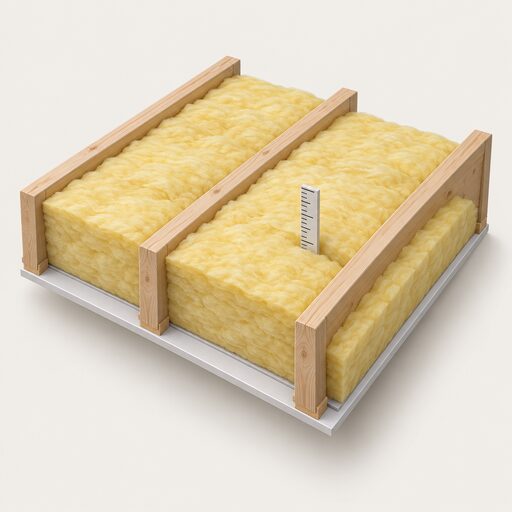 Loft InsulationHow much loft insulation do you need, and is your current depth enough?
 Climate TargetsScotland aims to stop adding greenhouse gases by 2045, five years before the rest of the UK.
 Housing Stock Data for ScotlandScotland's housing is measured differently from England's, so the numbers you see may not compare directly.
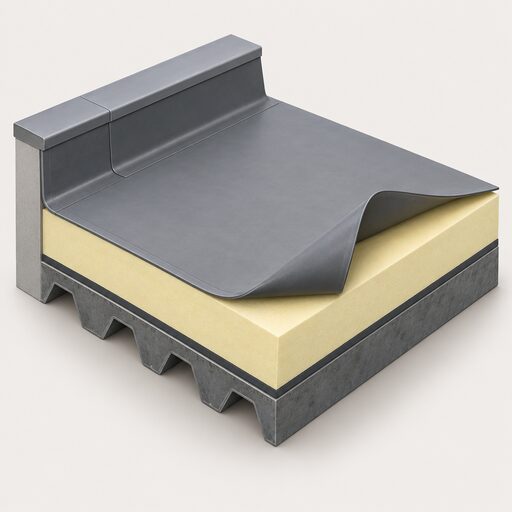 Roof InsulationHow much heat escapes through your roof, how thick the insulation should be, what it costs and what it saves?
 Insulation and Glazing CostsTypical installed costs for cavity wall, solid wall, loft and roof insulation, draught-proofing and replacement glazing, by measure and home size, with the savings, VAT position and funding schemes that shape the final bill.