

In this guide
Global Energy Systems is a British company that designs and builds air source heat pumps for domestic and commercial use, and describes itself as an MCS accredited manufacturer and installer of its own heat pumps1. Its domestic unit is marketed on a short list of claims: British design, operation down to minus 20 degrees C, domestic hot water at up to 65 degrees C, simultaneous heating and hot water, compatibility with existing radiators, and a personal energy portal with real time monitoring1.
The company's published material is thin on the things a buyer normally checks first. There is no stated factory location, no model-by-model efficiency table, no published price, and no written guarantee terms on the product page. What is published is a telephone number, 033 33 44 44 14, and a contact link1. That shapes how this page has to be read: the maker's claims are set out as the maker states them, and the surrounding framework of standards, grants and design rules comes from official and independent sources.
For a household, the appeal is straightforward. An air source heat pump moves a home off gas for space heating and hot water, and the running cost then depends on electricity price and on how well the system is designed rather than on a gas tariff. The dependence that remains is on the electricity grid and an electricity supplier, and on the manufacturer for controls, monitoring and spares.
What Global Energy Systems makes: air source heat pumps designed in the UK
The product is an air source heat pump, which means it takes heat from outside air and delivers it to a wet heating system inside the building. Global Energy Systems describes the unit as British designed and as designed for the UK climate down to minus 20 degrees C, and states that it is intended for domestic and commercial use1. Cold weather operation matters in the UK because the design condition for sizing is a cold day, not an average one: Approved Document L requires heat pumps to be selected to meet the full space heating requirement at the design condition chosen for the heat loss calculations2.
Two details in the maker's specification point at outdoor siting. The unit is described as allowing location under a bedroom window, and all electronic components sit in sealed enclosures1. The first is a noise and clearance question as much as a physical one, and the second is a weatherproofing claim rather than a performance figure. Neither substitutes for a site assessment.
The wider category is well established. Heat pumps are described in independent guidance as versatile systems capable of providing heating, cooling and hot water for homes, commercial buildings and industrial applications3, and the Microgeneration Certification Scheme includes clear standards to support the installation of wind turbines and air source heat pumps4. Certification is the mechanism by which a UK installation becomes eligible for grant funding and, in practice, the mechanism by which a household can check that a company is what it says it is.
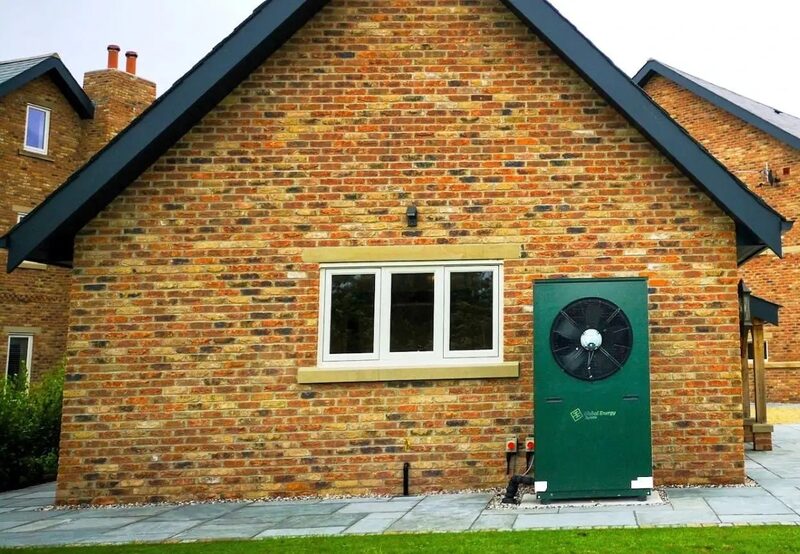
The range: Eco Air Boiler and commercial Lincoln units
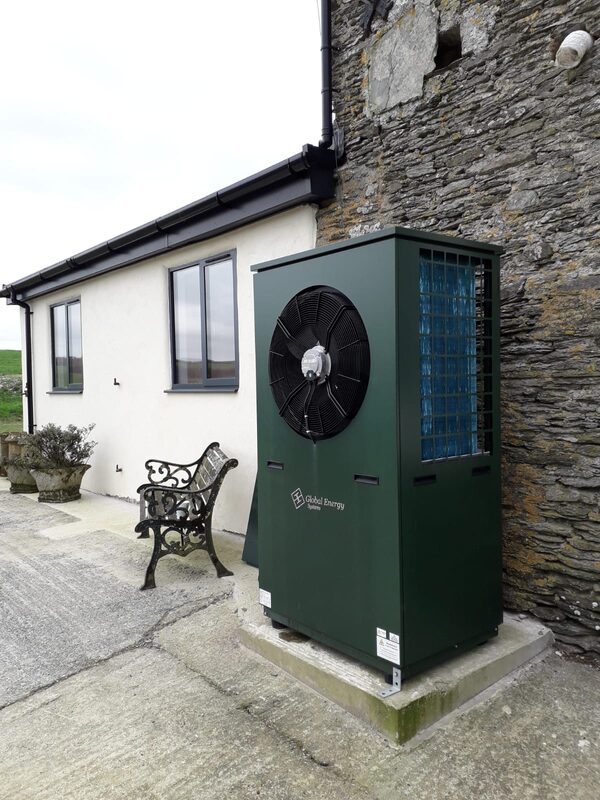
Global Energy Systems presents a single domestic product line, the Eco Air Boiler, alongside commercial units under the Lincoln name. The published specification covers the domestic air source heat pump: British designed, rated for the UK climate down to minus 20 degrees C, producing domestic hot water at up to 65 degrees C, with simultaneous hot water and heating, a data link for real time monitoring, a personal energy portal showing bills and usage, and a remote internet control function1.
The commercial side is described only in general terms, as designed for domestic and commercial use1. No output figures, model list or efficiency data for the Lincoln units appear in the material available, so nothing further can be stated about them here.
| Feature | Published detail |
|---|---|
| Product | Air source heat pump, domestic and commercial use1 |
| Design origin | British designed1 |
| Cold weather rating | Down to minus 20 degrees C1 |
| Hot water temperature | Up to 65 degrees C1 |
| Simultaneous heating and hot water | Yes1 |
| Radiator compatibility | Designed to work with radiators1 |
| Monitoring | Data link, personal energy portal, remote internet control1 |
| Electronics | Sealed enclosures1 |
For households comparing this with better documented ranges, the useful comparison pages are air source heat pumps and air-to-water heat pumps, which set out how the technology works and what a specification normally contains.
Performance: up to 400% efficient, 23kW output and 65°C hot water
The headline performance claims are a hot water temperature of up to 65 degrees C and simultaneous heating and hot water1. The 65 degrees C figure is the one that carries most weight for a household, because it determines whether the existing hot water cylinder and its coil can be reused and whether an immersion heater is needed as a top-up. Many air source units run cooler than that, which is why cylinder sizing and coil surface area become design questions in their own right.
On efficiency, the independent benchmark is that heat pumps generally produce around three times more energy than they take in, which is 300% efficient according to the Energy Saving Trust5. That is a seasonal figure for the technology as a whole, not a claim about this unit, and no model-specific coefficient of performance or seasonal performance figure is published by the maker. Where a maker's efficiency figure is absent, the honest position is that the installed performance will be determined by the design: flow temperature, emitter sizing, insulation and controls.
The 23kW output figure sometimes attached to this range is not stated in the company's published specification, so it cannot be confirmed here. What can be said is that output has to be matched to the calculated heat loss of the property, and that Approved Document L requires selection to meet the full space heating requirement at the design condition2. Oversizing a heat pump to cover an unknown heat loss is not a neutral choice: it affects cycling, noise and running cost.
Working with existing radiators and heating systems
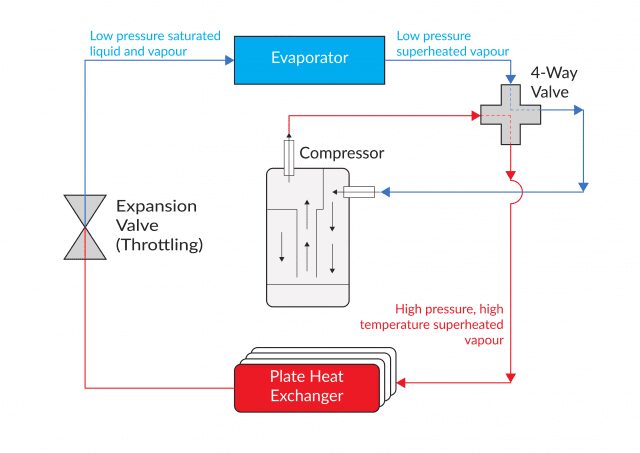
The maker states the unit is designed to work with radiators and is ideal for existing heating systems1. That is a compatibility claim, not a statement that every existing radiator will do the job at the flow temperature the heat pump prefers. Radiator output falls as flow temperature falls, so a system that ran comfortably at gas boiler temperatures may need larger emitters or a different balance of flow and return once the heat source changes.
The general principle in official guidance is that heat pumps can augment existing heating systems in the same way as solar panels, which is the framing used for ground source and water source units in HMRC's technical manuals6. In other words, the heat pump does not have to be the only heat source in the building, and a hybrid arrangement is a recognised configuration. The hybrid heat pumps page covers how that works in practice, and radiators and emitters covers what changes when flow temperatures come down.
For a household, the practical sequence is a heat loss calculation, then an emitter schedule, then a decision on flow temperature. The heat pump sizing page sets out why the calculation comes first. Where a property is on a shared ground loop or a networked arrangement, different rules apply, and those are covered under shared ground loop networks.
Monitoring and support: the energy portal and remote monitoring service

Global Energy Systems lists a data link for real time monitoring, a personal energy portal with bills and usage, and a remote internet control function1. This is the part of the offer that most directly affects how independent a household actually is, because remote monitoring and remote control depend on a working internet connection, on the manufacturer's servers and on the manufacturer's app continuing to exist and be supported.
The value of monitoring is real. Independent work on heat pump performance has relied on exactly this kind of data: the Heat Pump Monitor platform dataset covers 383 systems, self-reported by owners using the Open Energy Monitor platform8. That is a small, self-selected sample, and it is the kind of evidence base the sector has, which is why household-level monitoring matters for spotting a system that is underperforming.
Official support for the supply chain exists alongside this. Support is available for installers and manufacturers to expand supply chains in the UK9, and the Heat Pump Ready Programme was set up to stimulate innovative research and solutions to address the impact of domestic heat pumps on the electricity system9. Neither is a household service, but both shape whether monitoring and support improve over time.
Surveys, feasibility reports and how a quote is put together
Global Energy Systems states that it can provide a full assessment, specification and installation service, including a free survey of the property1. That survey is where the design is fixed: heat loss, emitter sizing, cylinder choice, siting of the outdoor unit and the electrical supply all get settled before a price is meaningful.
The company publishes no price list, so any figure is installer-quoted. What the public framework does provide is grant support. The Boiler Upgrade Scheme provides upfront capital grants to support the installation of heat pumps and biomass boilers in residential and non-residential properties, and ground source heat pumps are covered at £7,50010. The installer applies for the grant on the householder's behalf through Ofgem, and a quote can be obtained through the MCS find a heat pump installer tool or by contacting an energy supplier11. Eligibility extends to urban and rural properties in England or Wales, and a property can be on or off the gas grid12.
On planning, some councils offer a free pre-application service where the application relates to promoting sustainable development, which includes heat pump installations13. That is a planning advice service, not a system design report, and it is separate from the free property survey the company offers.

Guarantee, accreditations and installer standards
Global Energy Systems describes itself as an MCS accredited manufacturer and installer of its own heat pumps1. MCS is the certification route that matters in the UK: the Microgeneration Certification Scheme includes clear standards to support the installation of wind turbines and air source heat pumps4, and the Heat Pump Investment Roadmap describes delivering world leading standards for heat pump installations through the industry led Microgeneration Certification Scheme14.
The company's product page does not publish the terms of a five-year guarantee, so the parts covered, the labour position, the servicing conditions and whether registration is required cannot be stated here. That is a gap a household should close in writing before ordering. For context on how heat pump guarantees are usually structured, the Glow-worm GeniaAir carries a standard 2-year guarantee that can be extended up to 5 years, with the extension applying when the unit is installed by a qualified installer with a HydraCyl cylinder and registered on myREWARDS15. That is a different manufacturer's term, quoted to show the shape of the market rather than to describe this company.
Standards for the wider category are set out in heat pump standards and certification, and the practical consequences of servicing for warranty cover are covered under heat pump servicing and warranty.
Where Global Energy Systems fits in UK energy independence
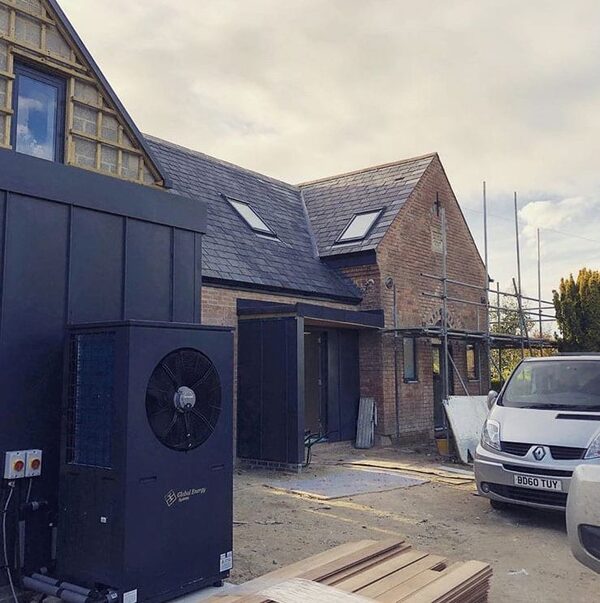
An air source heat pump changes what a household depends on. It removes the gas boiler and the gas supply from the heating system, and replaces them with electricity, which means the household's heating is only as low carbon and as cheap as the electricity it buys. The dependence that remains is on the grid, on an electricity supplier and on the tariff chosen, and on the manufacturer for controls, monitoring and spares.
The maker states the unit is ideal for use with solar PV for free heating1, which is the route by which a household reduces its exposure to electricity prices rather than merely changing supplier. The solar and battery with a heat pump page covers how that combination is put together, and heat pumps and household energy independence sets out the wider picture.
The scale of the transition is not in doubt. The heat capacity of heat pumps will need to increase globally from 1000 GW in 2021 to 2600 GW in 2030, on the IEA estimate16. In the UK, deployment statistics cover air-to-water and ground or water source heat pump technologies17, and data on heat pumps used in central heating of dwellings is published for England and Wales18. Northern Ireland guidance covers heat pumps separately19, and in Wales the Green Homes Wales scheme lists eligible works including the installation of an air source heat pump, external wall insulation and smart home energy systems20, and can be used alongside the Boiler Upgrade Scheme, which provides grants for heat pump installations across England and Wales21.
For a household weighing this particular maker, the position is that the technology delivers genuine independence from gas, and the company's own published detail is thinner than the market norm. The full UK heat pump guide sets out what a complete specification normally contains.
Sources21 cited
- Outstanding performance, Global Energy Systems, 2025-10-15
- Approved Document L, Conservation of fuel and power, Volume 1: Dwellings, GOV.UK, 2026-09-17
- Heat pumps campaign, CIBSE, 2026-09-17
- The Microgeneration Certification Scheme, Planning Portal, 2026
- Heating fuel guide, Uswitch, 2026-01-27
- VAT energy saving materials and grant funded heating supplies: VENSAV3080, HM Revenue and Customs, 2026-09-17
- VAT energy saving materials and grant funded heating supplies: VENSAV3081, HM Revenue and Customs, 2026-09-17
- Heat pump transition report, GOV.UK, 2026-05
- Information about the Heat Pump Ready Programme, GOV.UK, 2026-05-11
- Boiler Upgrade Scheme guidance for installers v2.1, Ofgem, 2023-09-25
- Heat pump grants, Clean Energy Campaign, 2026-09-10
- Boiler Upgrade Scheme installer guidance, Ofgem, 2022-07-21
- Planning guidance: heat pumps, Richmond Council, 2026-04-22
- Heat pumps investment roadmap, GOV.UK, 2023-04-03
- Ground source heat pumps and water source heat pumps, Scottish Government, 2010-03
- Energy innovation needs assessment: heat and buildings, GOV.UK, 2021
- Heat pump deployment statistics: June 2026, GOV.UK, 2026-09-10
- Heat pumps used in central heating, England and Wales, Office for National Statistics, 2025-10-28
- Heat pumps, nidirect, 2025-02-24
- Written statement: Green Homes Wales scheme, Welsh Government, 2024-10-17
- £5 million to help Welsh households invest in greener homes, Welsh Government, 2026-03-05