On this page
CTEK is one of the smaller names in UK home EV charging, and the practical headline for a buyer today is availability rather than specification. The company's UK EV charging pages list four home EVSE products, and all four are shown as out of stock1. The one CTEK home charging product with a published price is an accessory, a dynamic load balancing unit for the NJORD GO portable charger, at £99.901. Everything else about the range, its warranty and its cost has to be read against that backdrop.
CTEK is not a maker most households will meet by default. More than 50 manufacturers provide charging units suitable for EV charging at home in the UK2, and there are estimated to be around 1 million home EV chargers already installed across the country3. CTEK's UK presence in that market currently rests on a portable charger, an accessory, and a public and workplace charging station that sits outside the domestic category altogether1.
The range: four products, none currently orderable
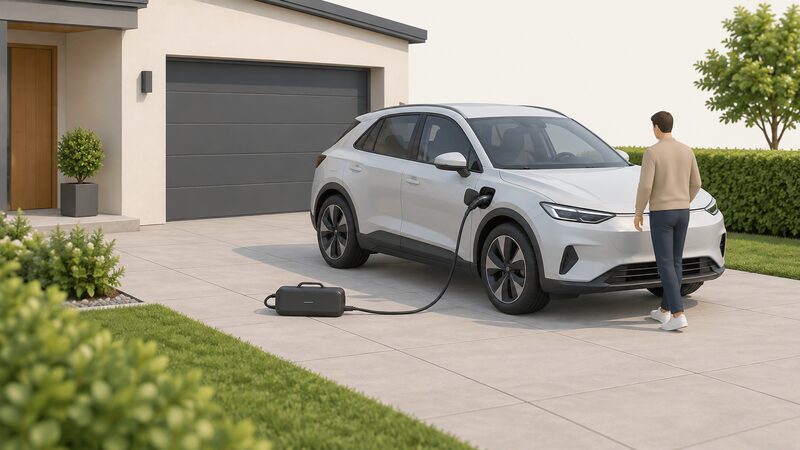
CTEK's UK EV charging pages list 4 products in the EVSE category, and the availability marker against them reads "Out of stock (4)"1. The products that can be identified from the maker's own pages are the NJORD GO portable EV charger, a dynamic load balancing accessory for it, and a public and workplace AC charging station. The fourth listing is not separately described in the material available, so this page does not speculate on what it is.
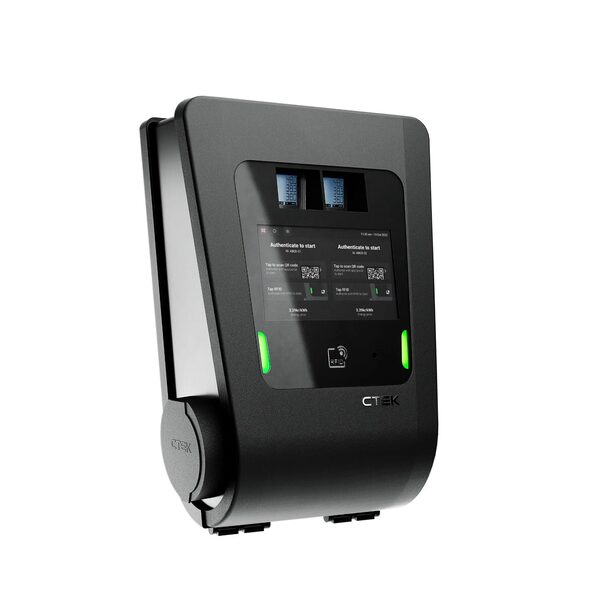
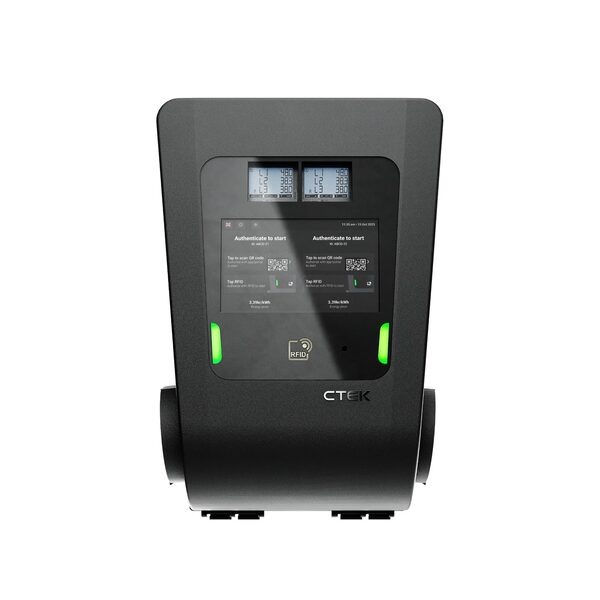
The shape of the range matters for what a household is actually buying. A portable charger is not a fixed wallbox: it connects through a socket rather than being hardwired, which makes it slower to deploy each time but movable between vehicles and locations. The load balancing accessory exists to make that safer in a home, dynamically managing the charger's draw against the rest of the household so the main supply is not overloaded, and CTEK describes its installation as easy, without the need for an electrician1. The public and workplace station is a different class of product entirely: up to 22kW per outlet, in single or dual form, with a 7 inch touchscreen showing live charging data, cost transparency and dynamic QR-code payments1.
For comparison with the wider market, types of home EV charger explains the difference between portable, tethered and untethered units, and home EV charger installation covers what a fixed wallbox installation involves.
Specifications: what CTEK publishes, and what it does not
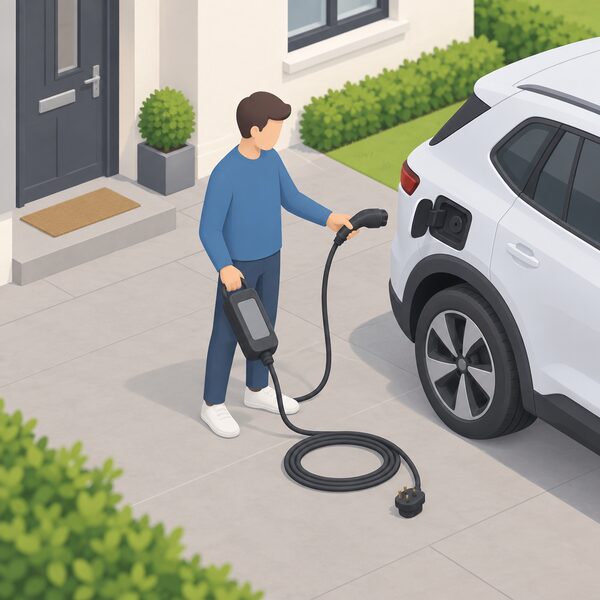
The published specifications are limited, and it is worth being clear about where the boundaries are. For the NJORD GO portable charger itself, CTEK's UK pages do not state a charging power in the material available. The load balancing accessory is described only by function: dynamic load balancing for the NJORD GO, easy installation without an electrician, at £99.901.
The public and workplace station is better specified, but it is not a home product. It delivers up to 22kW charging per outlet, single or dual, with dual outlets enabling two vehicles to charge simultaneously1. Its platform is described as cybersecurity-certified and ISO 15118-ready, with AutoCharge available today and Plug & Charge hardware-ready1. Those standards matter for the future of public charging, but they say nothing about what a household gets from the home range.
The power question for a home is settled by the supply, not the badge. Faster home chargers of up to 22kW need a three-phase power supply, which most homes do not have6, and a 22kW charge point is unusual for a home, though it may be used in some workplaces7. On a standard single-phase domestic supply, a fixed home charge point tops out at 7kW in practice. CTEK's only 22kW product is the public and workplace station, so within its home range the single-phase question does not really arise. More on power levels is at EV charging speeds and times.
| Product | Category | Key published specification | UK availability |
|---|---|---|---|
| NJORD GO | Portable home EV charger | Power not stated on UK pages | Out of stock1 |
| Load balancing accessory | Accessory for NJORD GO | Dynamic load balancing, £99.90, no electrician needed | Listed1 |
| Public and workplace AC station | Commercial | Up to 22kW per outlet, single or dual, 7 inch touchscreen | Listed1 |
| Fourth EVSE listing | Not described in available material | Not stated | Out of stock1 |
Warranty and registration: no published UK terms
CTEK does not publish warranty terms for its home EV chargers on the UK pages available, so this section can only set out the position rather than the numbers. Whatever cover applies to a CTEK home product comes from the terms given at the point of sale, by the retailer or installer, and those terms should be obtained in writing before buying. The general landscape of charger warranties, and what good ones look like, is covered at EV charge point warranties.
Registration is worth doing whatever the brand. Electrical Safety First's guidance on powered products is to register them with the manufacturer so you can be contacted easily if there is a safety recall8. That advice is given for e-bike chargers, but the principle is the same for any charger: a manufacturer that does not know where its products are cannot warn their owners. Keep the invoice, the installation certificate and any serial number recorded in the installation paperwork together, because a warranty claim years later will rest on them.
For an existing CTEK unit, the serial number location is not published on the UK pages. As with most charging equipment, the label on the side or underside of the unit, and the installer's commissioning paperwork, are the usual places to look.
Cost and where to buy in the UK
There is no published CTEK price for a home charger, because there is no stock to price. The only CTEK figure that exists is the £99.90 load balancing accessory1. Any figure for a CTEK home unit itself would be installer-quoted or retailer-quoted, and at the time of writing there is no UK stock to quote against.
For context, the cost of home charging hardware generally is well documented across all brands. It typically costs between £500 and £1,200 to buy and install a home EV charger, with 7kW chargers, the most common choice, costing around £900 to buy and install4. The Energy Saving Trust puts the typical cost of installing a home charge point at around £800 to £1,2009, while Flexi-Orb's certification body guidance separates the elements, giving an actual installation cost of £100 to £650 on top of the hardware10. Those figures are for the market as a whole, not for CTEK products, and VAT treatment is not stated in them. A fuller breakdown is at home EV charger cost.
Solar panels, home batteries and the CTEK range
CTEK makes no published claim about solar-aware charging or home battery integration for its home products on its UK pages. That absence is worth stating plainly, because solar compatibility is where several rival makers now compete hardest. The general position is that solar panels can charge an electric car, though in the UK you are unlikely to rely entirely on solar power year-round, especially in winter11. A solar system's inverter converts the DC electricity the panels generate into AC for household use, which includes a charger12.
A home battery changes the economics. Storage is a way of increasing self-consumption and reducing reliance on the grid13, and estimates put the contribution of panels, especially alongside a solar battery, at around 40% of a home's energy14. Charging an EV with renewable energy such as solar significantly reduces its carbon footprint15. But without a charger that measures household solar surplus and adjusts its output accordingly, that coordination is done by timing and habit rather than automatically. Chargers that do this state it as a feature; CTEK does not. The detail is at charging an EV from solar panels and EV charging alongside a home battery.
What a CTEK charger means for energy independence
A home charge point of any brand is a step toward household energy independence, because it turns the driveway into a private fuelling point and opens the door to EV energy tariffs that price overnight electricity far below pump-equivalent rates. An EV tariff needs a home charger to be useful, since there is no point in one if the car cannot charge when the household is at home16. The independence gained is real but partial: the home still depends on the grid, on an electricity supplier, and, for a smart charger, on the manufacturer's app and servers.
Within that picture, the choice between tethered and untethered matters for how the unit is used day to day. Tethered chargers come with a cable and connector installed, while untethered chargers have a socket where a cable is plugged in17. Untethered home chargers take up less space, tend to cost less, and accept any Type 2 compatible connector18. CTEK's portable NJORD GO sits outside that distinction altogether, since it is a cable-and-control-box unit rather than a fixed socket or tethered wallbox.
Two obligations come with any installation. Installing a home charger is classified as development, so it is up to the householder to ensure the correct permissions are in place19, covered in detail at planning permission for a home EV charge point. And load management, which CTEK's accessory addresses for its portable charger, is covered generally at load management and load balancing.
Availability limits: buying, owning and fault-finding a CTEK unit today
The buying position is stark: all four home EVSE products are out of stock on the UK store, with no published restock date1. Against a market of over a million home EV charging devices in the UK at the end of 20245, and more than 50 manufacturers supplying it2, a household wanting a charger fitted now will be choosing among other brands. Anyone set on CTEK specifically can monitor the store or contact the company, but there is no published indication of when stock will return.
For existing owners, the fault route is the same as for any charger. In the first instance, speak to your installer or electrician to check there is not a problem with the household's equipment or supply20. If a charger appears sub-standard or faulty, stop using it immediately and report the fault to the manufacturer or the retailer8. Free general energy advice is available from the Centre for Sustainable Energy's home energy team on 0800 082 223421. Troubleshooting steps for common charger faults are at EV charge point faults and troubleshooting.
The independence verdict is straightforward. A CTEK home charger, if one could be bought, would give the same core independence as any home unit: private charging, tariff access and control over when the car draws power. The dependencies that remain are the grid, the electricity supplier, and, for the portable NJORD GO, the maker's accessory ecosystem for load balancing. What CTEK does not currently offer is the one thing a buyer needs most, which is stock on a UK shelf.
Sources21 sources
- CTEK EV charging, UK, CTEK, 2026-09-18
- Home charging guide, Zapmap, 2025-06-19
- Navigating the network: installing low carbon technology, Citizens Advice, 2026-07-01
- Electric car charging at home, Which?, 2026-02-25
- EV charging statistics, Uswitch, 2024-12
- Home electric vehicle chargers, Carwow, 2026-01-09
- Guide to Electric Vehicle Infrastructure, BEAMA, 2024-09
- E-bikes, batteries and chargers safety advice, Electrical Safety First, 2026-09-17
- Electric vehicles: debunking myths, Energy Saving Trust, 2025-09-22
- Electric vehicle charge points (EVCP), Flexi-Orb, 2025-04-22
- Can solar panels charge electric cars?, The Consumer Packaging Alliance, 2026-04-15
- Solar power facts, Energy Saving Trust, 2026-08-13
- Electrical energy storage systems (EESS), Flexi-Orb, 2025-04-22
- Make your home more energy efficient, Confused.com, 2026-07-06
- Everything you need to know about EV charging points, NICEIC, 2024-09-27
- EV energy tariffs, Uswitch, 2025-09-17
- EV charger installation and maintenance, NICEIC, 2025-08
- Tethered vs untethered, Zapmap, 2026-02-23
- Electric vehicle charging: planning permission, Planning Portal, 2026
- Voltage changes in your home or business, UK Power Networks, 2026-09-17
- Electric heating and home energy advice, Centre for Sustainable Energy, 2026-06