
In this answer
Short answer
An estimated 56% of Scottish homes were rated EPC C or better in 2024, a share that has risen by 11 percentage points since 20191. That leaves a substantial share of the housing stock below band C, and the Scottish House Condition Survey has put the number of homes in EPC band D or below at over 1.6 million2. The gap is not evenly spread: 52% of owner occupied homes and 50% of homes in the private rented sector do not achieve the standard3.
The direction of travel is set. The Heat in Buildings Strategy states that all homes should meet a standard at least equivalent to EPC band C by 20334, and the Fuel Poverty (Targets, Definition and Strategy) (Scotland) Act 2019 sets 2040 targets for fuel poverty itself5. Scotland's climate targets run to net zero by 2045, five years before the UK targets1.
For a household, the EPC band is the practical link between three things that are usually discussed separately: the cost of heating the home, the legal trajectory of Scottish housing policy, and the support available to improve the building. This page sets out what the figures show, what the targets require, and where the remaining dependence on the grid, on gas and on a supplier sits.
Why EPC C is the benchmark for Scotland's homes
The 56% figure comes from the Scottish House Condition Survey, which found that 56% of Scottish homes had an EPC rating of C or better in 2024, similar to 2023 levels7. Independent analysis of the same housing stock puts the share at 56% of homes rated EPC C or above8. The Scottish Government's own figure is an estimated 56% of homes now rated EPC C or better, which it describes as already an increase of 11 percentage points since 20191.
The benchmark matters because it is the point at which Scottish policy expects the housing stock to arrive. The Heat in Buildings Strategy sets out that all homes should meet at least the equivalent of EPC band C by 20334. That is a standard for the building, not a statement about any individual household's bills, and it sits alongside the separate fuel poverty targets for 2040.
The distribution of the shortfall is what makes the number difficult. The Scottish Government's engagement responses on fuel poverty record that 52% of owner occupied homes do not achieve the standard and 50% of homes in the private rented sector do not3. Those are large shares of the two tenures where the household, rather than a social landlord, generally decides whether work happens.
There is also a measurement gap outside the housing stock. Only 16% of Scotland's non-domestic buildings have an Energy Performance Certificate9, which is a reminder that EPC coverage is not universal even where the certificate exists as a concept. For homes, the certificate is the mechanism through which a rating becomes visible to a buyer, a tenant or a scheme administrator.
"56% of Scottish homes had an EPC rating of C or better in 2024 similar to 2023 levels."
Fuel poverty: the legal targets behind the rating

Fuel poverty in Scotland is defined in law. Under the Fuel Poverty (Targets, Definition and Strategy) (Scotland) Act 2019, a household is in fuel poverty if the total fuel costs necessary for the home are more than 10% of the household's adjusted net income, that is income after housing costs10. Extreme fuel poverty uses the same test with a threshold of more than 20% of adjusted net income11.
The 2040 targets are specific. The legislation requires that by 2040, as far as reasonably possible, no household in Scotland is in fuel poverty, that no more than 5% of households are fuel poor, that no more than 1% are in extreme fuel poverty, and that the median fuel poverty gap is no more than £250 at 2015 prices, adjusted for changes in the value of money5. The Scottish House Condition Survey restates the same statutory target: no more than 5% of households fuel poor with under 1% in extreme fuel poverty in 204012.
The current position is far from those figures. Scottish Government scenario modelling based on Ofgem price caps for October to December 2026 estimated around 820,000 fuel poor households, 32% of all households, and around 440,000 in extreme fuel poverty, 17% of all households, each up around 20,000 households on the previous quarter13. Earlier modelling for the April to June 2026 cap period put extreme fuel poverty at around 320,000 households, 12% of all households14.
The history here is worth noting because it explains the legal form the targets now take. The Housing (Scotland) Act 2001 placed a statutory duty on the Scottish Government to eradicate fuel poverty in Scotland, as far as is reasonably practicable, by November 201615, and the Scottish House Condition Survey records that commitment to eradicating fuel poverty as far as practicably possible by that date16. The 2019 Act replaced that approach with the 2040 targets and the statutory definition now in force.
For a household, the practical consequence is that the EPC band and the fuel poverty definition are connected but not identical. A home can be below band C and its occupants not be in fuel poverty on the statutory test, and a household can be in fuel poverty in a home that already meets band C if income is low enough relative to fuel costs. The rating describes the building; the fuel poverty test describes the household's position after housing costs.
Heat from homes: almost a fifth of Scotland's emissions
Heat from homes and buildings makes up almost a fifth of Scotland's carbon emissions17. That is the reason the EPC trajectory exists: the building fabric and the heating system together determine how much carbon and how much money it takes to keep a Scottish home warm.
The conversion targets are large. The Heat in Buildings Strategy states that by 2030 over 1 million homes and the equivalent of 50,000 non-domestic buildings are converted to zero emissions heat5. By 2045, 92% of existing homes are expected to have low-carbon heat, reaching all homes by 205018. The Climate Change Committee's advice on Scotland's carbon budgets reaches the same 2045 figure for existing homes19.
The New Build Heat Standard applies in Scotland, and the Scottish Government's position is that heating Scotland's homes and buildings is one of the biggest contributors to carbon emissions20. New build regulation and retrofit policy are therefore pulling in the same direction, but they act on different parts of the stock: new homes are built to a standard, while the 1.6 million homes at band D or below have to be improved in place2.
The constraint on retrofit is the building itself. The Tenements Short Life Working Group's final report on energy efficiency and zero emissions heating records over 1.6 million homes being in EPC Band D or below2, and tenement and solid-wall construction limits which measures are feasible without major works. That is why area-based schemes in Scotland have tended to concentrate on solid wall insulation and other measures for homes that are hard to treat due to non-standard construction21.
Bills: the highest average electricity bill of the UK nations
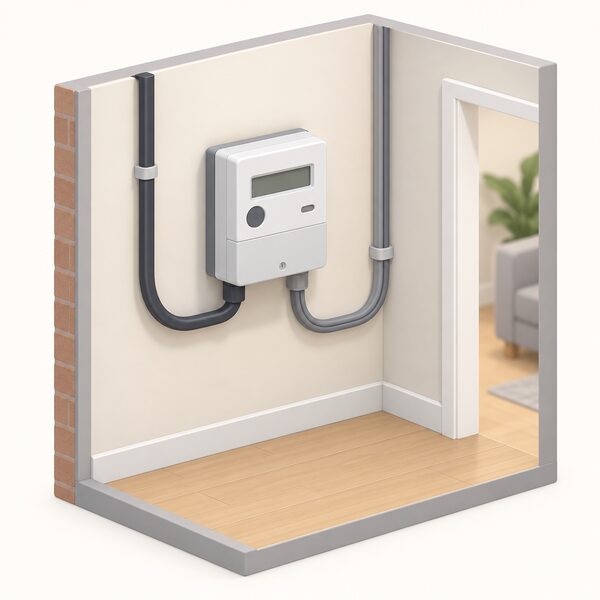
Scotland has the highest average electricity bill of all the UK nations, according to independent statistics drawing on Department for Energy Security and Net Zero data22. The margin over the other nations is small: 0.47% higher than England and Wales, and 0.85% higher than Northern Ireland22. North Scotland is the second most expensive region in the UK for electricity bills, with average costs of £1,089 per year22.
The Ofgem price cap figures for 1 July to 30 September 2026 show how the two Scottish electricity areas compare on benchmark maximum charges23:
| Area | Standing charge | Annual bill at 2,500 kWh single-rate | Standing charge | Annual bill at 3,400 kWh multi-rate |
|---|---|---|---|---|
| Southern Scotland | £223.08 | £838.48 | £224.90 | £1,008.38 |
| Northern Scotland | £200.04 | £829.05 | £202.30 | £1,002.90 |
The pattern is worth reading carefully. Northern Scotland has the lower standing charge of the two areas but the annual bill figures are close, and the multi-rate consumption figure is higher than the single-rate one because it assumes more electricity used. These are cap levels for benchmark consumption, not a prediction of any household's bill.
The bill picture connects directly to the EPC question. A home below band C generally needs more energy to reach the same internal temperature, so the same unit price produces a larger bill. Scotland's higher average electricity bill and its large below-C share compound each other, and the roughly 20% of households off the gas network have no mains gas option to fall back on6.
Support: Warmer Homes Scotland and Home Energy Scotland
Warmer Homes Scotland is funded by the Scottish Government and offers funding and support to eligible households struggling to stay warm and keep on top of energy bills24. The scheme offers support worth £10,000 or more for eligible households for energy-saving home improvements such as heating and insulation25. Households that are not eligible may qualify for the Home Energy Scotland Grant and Loan or an area-based scheme through their council25.
The Home Energy Scotland Grant and Loan offers up to £7,500 for energy efficiency improvements such as insulation and up to £7,500 for clean heating systems such as heat pumps, for owner occupiers in Scotland26. It is administered by the Energy Saving Trust on behalf of the Scottish Government26.
Home Energy Scotland itself provides free, independent and impartial energy advice to householders, community groups and businesses throughout Scotland27. It offers free advice on improving the energy efficiency of your home28 and free impartial advice on energy efficiency and renewable energy in Scotland29. It is the standard first point of contact before any application.
Council area-based schemes add a further route. West Lothian Council, in partnership with the Scottish Government, offers grant funding to help homeowners improve the energy efficiency of their properties, focusing on solid wall insulation and other measures for homes hard to treat due to non-standard construction21. Warmer Homes Scotland is funded by the Scottish Government and offers funding and support to eligible households struggling to stay warm and keep on top of energy bills22.
Warmer Homes Scotland publishes performance data covering household energy efficiency support by financial year, types of heating systems installed, and a regional breakdown of households supported22.
Net zero: five years ahead of the UK targets
Scotland's climate change targets are to reach net zero five years before the UK targets1. The Scottish Government has legislated new emissions reduction targets to reach Net Zero by 204530, and the Climate Change Committee notes that this is five years earlier than the rest of the UK due to the greater potential for carbon sequestration in Scotland19.
For homes, the 2045 date is the outer boundary. The Scottish Government's social housing energy efficiency policy states that by 2045 all homes in Scotland must have significantly reduced their energy use31. The interim milestone is the 2033 standard at least equivalent to EPC band C for all homes4, and the 2030 conversion target of over 1 million homes to zero emissions heat sits between the two5.
The Climate Change Committee's assessment in February 2026 was that Scotland's plan means immediate climate targets are now within reach30. That is an assessment of the plan, not of the housing stock's current position, and the 56% EPC C figure shows how much of the work remains1.
The comparison with the rest of the UK is instructive. The Future Homes Standard is intended to ensure that new-build homes in England are ready for net zero from 202532. Scotland's approach combines a new build standard with a retrofit trajectory and a statutory fuel poverty target, which is a different mix from the English emphasis on new build regulation.
Where the household's independence stands
The EPC band is the clearest single measure of how much a Scottish home depends on bought energy to stay warm. A home at band C or better needs less of it; a home at band D or below, which describes over 1.6 million Scottish homes2, needs more, and the bill that follows is set by a supplier and a price cap rather than by the household.
The dependence that remains is structural. Around 20% of Scottish households are not connected to the gas network6, so for them the choice is electricity, oil or solid fuel rather than mains gas. Even for connected homes, the gas itself and the electricity are bought from a supplier, and the price cap levels for Southern and Northern Scotland are set centrally23. Improving the building reduces the quantity of energy needed; it does not remove the connection.
What the Scottish framework does offer is a route. The 2033 standard for all homes4, the 2040 fuel poverty targets5, the Warmer Homes Scotland funding25, the Home Energy Scotland Grant and Loan26 and the free advice service27 together form the mechanism through which a below-C home is meant to improve. The EPC system itself is operated by the 32 Scottish local authorities and the Scottish Government33, so the rating that determines access to much of this sits with public bodies rather than with the market.
Scotland's per-household uptake of net zero technologies has been found to run ahead of England's for both solar PV and heat pumps, according to analysis of MCS data6. That is a measure of installation rates rather than of the housing stock's efficiency, but it indicates that the retrofit route is being used.
Sources33 cited
- Scotland's Climate Change Plan 2026 to 2040, Scottish Government, 2025-11-06
- Tenements Short Life Working Group: Energy Efficiency and Zero Emissions Heating Final Report, Scottish Government, 2023-11-28
- Tackling Fuel Poverty in Scotland: Periodic Report 2021 to 2024 Engagement Responses, Scottish Government, 2025-04-22
- Heat in Buildings Strategy Summary Document, Scottish Government, 2021-10
- Heat in Buildings Strategy: Achieving Net Zero Emissions in Scotland's Buildings, Scottish Government, 2021-10
- Uptake of Net Zero Technologies in Scottish Homes, Energy and Climate Intelligence Unit, 2026-06-22
- Scottish House Condition Survey 2024: Key Findings, Scottish Government, 2026-02
- Balancing Investment in Clean Heat and Energy Efficiency in Scottish Housing Retrofit, ClimateXChange, 2024
- Edinburgh Local Heat and Energy Efficiency Strategy, City of Edinburgh Council, 2023-12
- Tackling Fuel Poverty in Scotland: A Strategic Approach, Scottish Government, 2021-12
- Scottish House Condition Survey 2024: Key Findings Report, Scottish Government, 2026-02
- Heat in Buildings Progress Report 2024, Scottish Government, 2024
- Fuel Poverty Scenario Modelling Based on Ofgem Energy Price Caps up to October to December 2026, Scottish Government, 2026-09-02
- Fuel Poverty Scenario Modelling Based on Ofgem Energy Price Caps up to April to June 2026, Scottish Government, 2026
- Warmer Homes Scotland Business Case, Scottish Government, 2015-07
- Scottish House Condition Survey 2021: Fuel Poverty, Scottish Government, 2023-05-30
- Wood Burning Stoves to be Permitted in New Homes, Scottish Government, 2026-09-17
- Scotland's Carbon Budgets, Climate Change Committee, 2045
- Electric Technologies Will Help Scotland Decarbonise, Climate Change Committee, 2025-05-21
- New Build Heat Standard Factsheet, Scottish Government, 2025-01-01
- Energy Efficient Scotland: Area Based Schemes, West Lothian Council, 2026-09-17
- Energy Statistics, Uswitch, 2025-12-17
- Energy Price Cap Levels 1 July to 30 September 2026, Ofgem, 2026
- Warmer Homes Scotland, Argyll and Bute Council, 2026-09-17
- Warmer Homes Scotland, Home Energy Scotland, 2026-09-20
- Home Energy Scotland Grant and Loan, House of Commons Library, 2026-05-13
- Energy Efficient Scotland: Area Based Schemes 2020, Glasgow City Council, 2026-06-08
- Financial Help for Energy Efficiency and Low Carbon Heating Improvements, City of Edinburgh Council, 2026-09-20
- Domestic Renewable Heat Incentive: Who to Contact, Ofgem, 2026-09-17
- Scotland's Plan Means Immediate Climate Targets Are Now Within Reach, Climate Change Committee, 2026-02-25
- Energy Efficiency in Social Housing, Scottish Government, 2045
- The Future Homes Standard, House of Commons Library, 2026-09-20
- Energy Performance of Buildings (Scotland) Regulations 2008, legislation.gov.uk, 2026-09-17
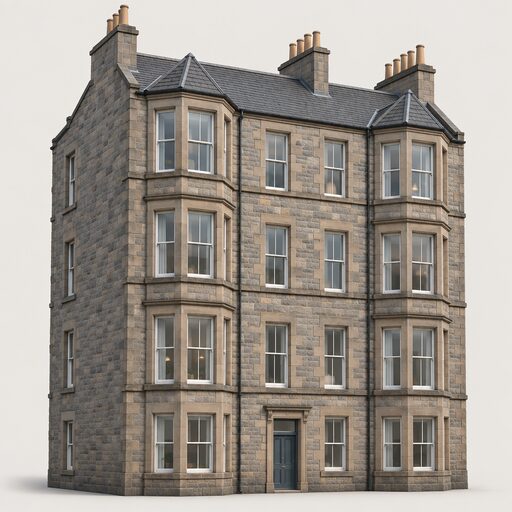 Housing Stock and EPCsHow energy efficient are Scottish homes, and how many reach a good rating?
 Housing Stock Data for ScotlandScotland's housing is measured differently from England's, so the numbers you see may not compare directly.
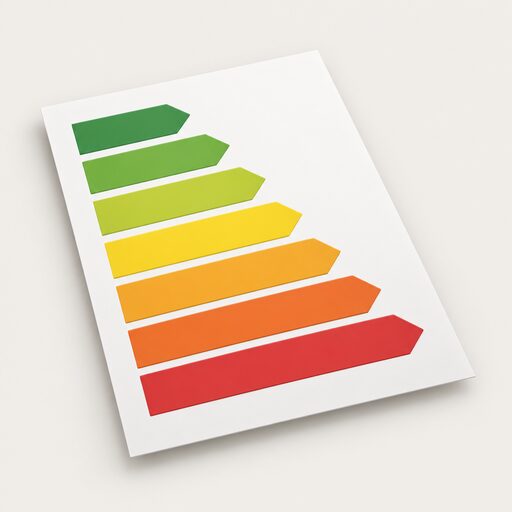 Housing Stock and EPCsNorthern Ireland's homes score best in the UK for energy efficiency, yet most run on heating oil.
 New Build Energy PerformanceHow energy efficient are new build homes compared with older ones?
 EPC StatisticsHow energy efficient are UK homes, and is it getting better?
 Efficiency of UK HomesMost UK homes now score better on energy than they did a decade ago, but older houses still lag well behind new builds.