
In this guide
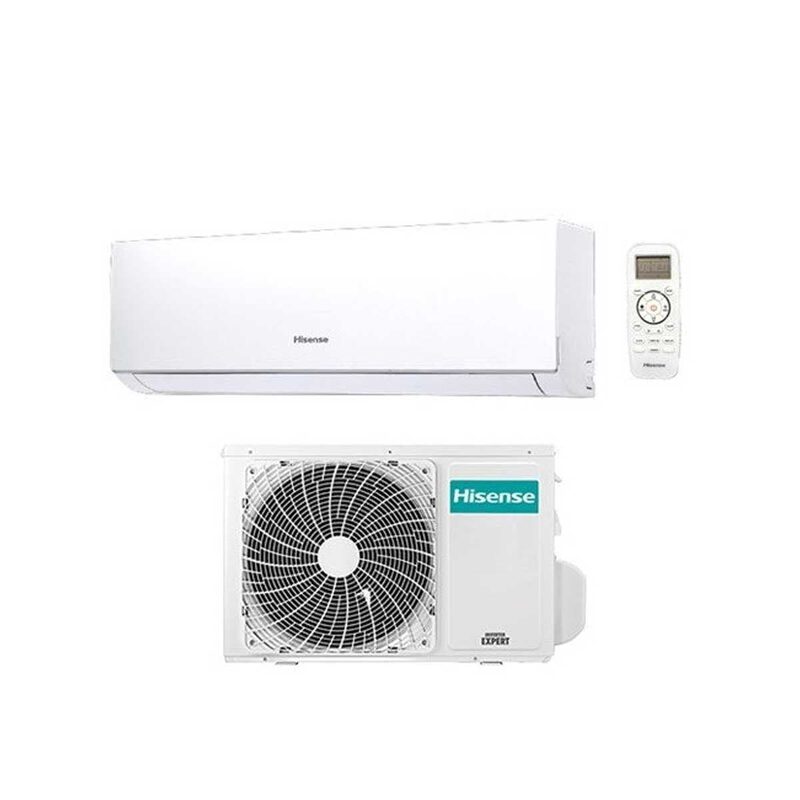
Hisense heat pumps reach UK households through a distributor and an installer rather than a direct sales channel. Bublshop states it began working with Hisense in 2023 and is now the sole UK distributor of Hisense HVAC products, and it extended its free manufacturer training programme to cover Hisense air source heat pumps from 14 November 2023, with courses starting at its Gillingham, Dorset headquarters. An extended two-day course for heating engineers followed on 18 and 19 September 2024 at the same Dorset showroom.
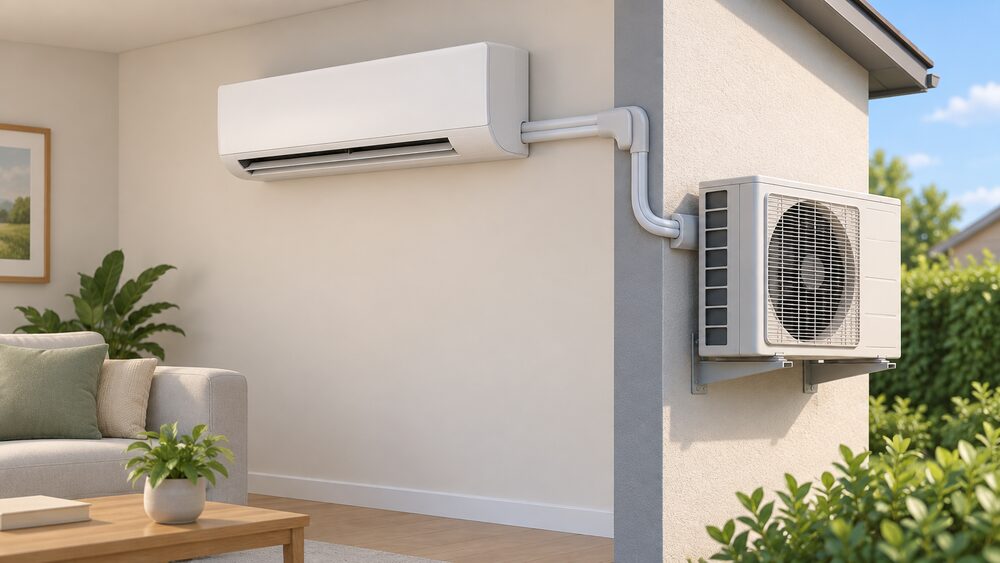
The product most often discussed under this name is the DH7S107BB, a split unit that sits in the overlap between air conditioning and heating. HMRC's stated understanding is that most air conditioning units are air source heat pumps, because they absorb heat from the outside or surrounding air and transfer it into usable heat in the home for space or water heating1. That classification matters commercially as well as technically, and it is the reason a unit sold as air conditioning can be described as a heat pump without contradiction.
Air source is the mainstream technology in the UK. The Energy Saving Trust lists air source and ground source as the two types most common in the UK, and describes air source as the most common type of domestic heat pump, suitable for most types of home2. Government guidance goes further, stating that heat pumps are technically suitable for most UK homes if installed appropriately4. What follows is what the available material supports on the Hisense route specifically, and where it runs out.
Hisense air conditioning heat pumps in the UK
Air source heat pumps are the most common type of heat pump in the UK, and the most common type of domestic heat pump, suitable for most types of home3. Smart Energy GB describes air source, or air-to-water, units as the most common domestic heat pumps in Great Britain9. The Energy Saving Trust's top energy saving ideas page repeats the point in a single line: the most common heat pump for homes is an air source heat pump10.
Hisense enters that market as one of many suppliers rather than a dominant one. Official statistics record at least 33 manufacturers supplying air source heat pumps in the UK, with Mitsubishi Electric, Vaillant, Daikin and Samsung accounting for nearly two thirds of total annual UK sales11. Hisense is not named among that leading group. An official consultation adds a supply-side figure: of heat pumps sold in the UK, the UK manufactures around one third, with two thirds imported7.
That import share is the first thing to understand about a Hisense system. The brand's route into UK homes runs through a distributor, and the equipment itself is part of the imported majority. For a household thinking about where its heating comes from, that is a supply chain fact rather than a performance one, but it is the kind of fact that shapes parts availability and service response over a ten to fifteen year working life.
Who sells and supports Hisense heat pumps in the UK: Bublshop
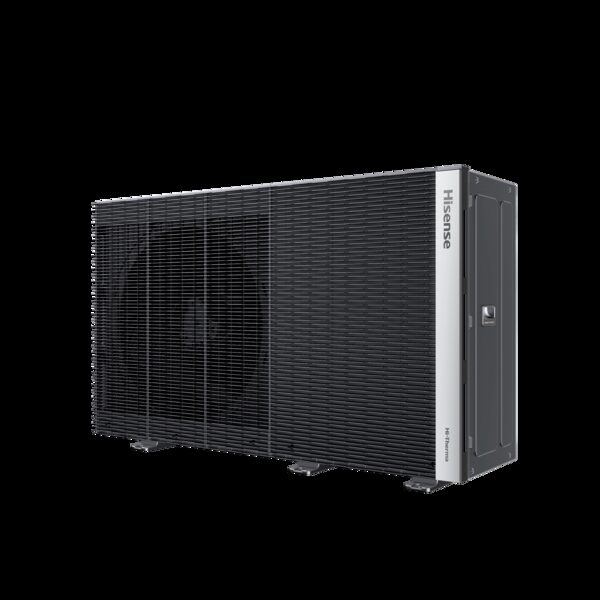
Bublshop is the named UK route for Hisense HVAC products. The company states it started working with Hisense in 2023 and is now the sole UK distributor of Hisense HVAC products. That is a distributor's own statement about its own business, and it is the only supply-chain fact available on the brand in the UK.
The wider installer-support picture is official. Government guidance notes that support is also available for installers and manufacturers to expand supply chains4. That describes a policy environment aimed at the trade rather than at householders, and it is consistent with a market where a distributor sits between the manufacturer and the installer.
For a household, the practical consequence is that Hisense equipment is not bought from Hisense. It is specified by an installer who sources through a distributor. That adds a layer between the maker and the warranty holder, and it means the installer's own competence and continuity matter as much as the badge on the outdoor unit.
The Heat Pump Ready Programme, the government's innovation funding stream, shows the kind of trade-side support that exists in the sector. One successful project lists Nusku Ltd as lead partner, and the Bristol Heat Pump Ready project names Buro Happold, Veritherm, Build Test Solutions, Sustainable Westbury on Trym, Bristol Energy Network and CIG Consultants as subcontractors12. Neither involves Hisense or Bublshop, but both illustrate where public money has gone in the supply chain rather than to individual households.
The DH7S107BB: Hisense's heat pump for households
The DH7S107BB is the model that appears under the Hisense heat pump name. It is a split unit, and the classification question around it is settled by tax guidance rather than marketing. HMRC's understanding is that most air conditioning units are air source heat pumps, because they absorb heat from the outside or surrounding air and transfer it into usable heat in the home for space or water heating1.
What a heat pump does in general is well documented. The European Heat Pump Association describes a heat pump as a device that can provide heating, cooling and hot water for buildings, districts and even for industry14. Government news guidance states plainly that heat pumps can provide domestic hot water8. Northern Ireland's official guidance lists residential homes, apartments and small commercial buildings as suitable applications for air source units15.
The distinction that matters for the DH7S107BB is between air-to-air and air-to-water. An air-to-air unit heats the air in a room directly, and can reverse to cool it. An air-to-water unit heats water that then runs through radiators, underfloor loops or a cylinder. The DH7S107BB sits on the air-to-air side of that line, which is why it is described as an air conditioning heat pump rather than a wet-system heat pump. The differences in how each is installed, controlled and used are set out in air-to-air vs air-to-water heat pumps.
| Attribute | Position |
|---|---|
| Product type | Split air conditioning unit, classified as an air source heat pump1 |
| Functions | Heating, cooling and hot water capability in the wider category14 |
| Suitable applications | Residential homes, apartments, small commercial buildings15 |
| UK supply route | Distributor to installer, not direct from Hisense |
| Installer training | Free Bublshop programme, extended to two days in September 2024 |
Installer training: what Bublshop offers and why it matters
Bublshop's Hisense training is the clearest documented support structure around the brand in the UK. The programme was extended to cover Hisense air source heat pumps from 14 November 2023, with courses starting at its Gillingham, Dorset headquarters, and it is described as free. A two-day course for heating engineers followed on 18 and 19 September 2024 at the Dorset showroom.
Training matters because heat pump performance is an installation outcome as much as a product one. Official guidance is explicit that heat pumps should be selected to meet the full space heating requirement at the design condition chosen for heat loss calculations16. Northern Ireland's guidance warns that an undersized unit may struggle to meet demand, while an oversized unit may cycle on and off often and lessen efficiency15. Neither failure is visible on a specification sheet.
The wider training picture is larger than any one brand. The Heat Pump Association counted 268 heat pump training locations among its members as of June 2024, with annual manufacturer-specific training capacity of 50,548, against a lower annual requirement of 4,581 people to be trained each year until 202817. Official statistics record around 9,000 individuals taking training in 202411.
"Participants will gain the skills required to size and specify heat pump systems correctly"
That course is designed for building services engineers rather than domestic installers, but the skill it teaches is the one that decides whether a heat pump works in a given house. The Hybrid Heat Pump Installer course from the Heating and Hotwater Industry Council notes that installers of hybrid heat pumps will also require skills for both heat pumps and condensing gas boilers19, which shows how the required competence widens as systems get more complex.
What an air-source heat pump means for household energy independence
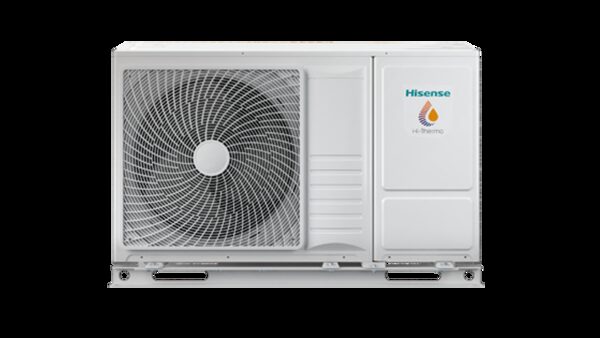
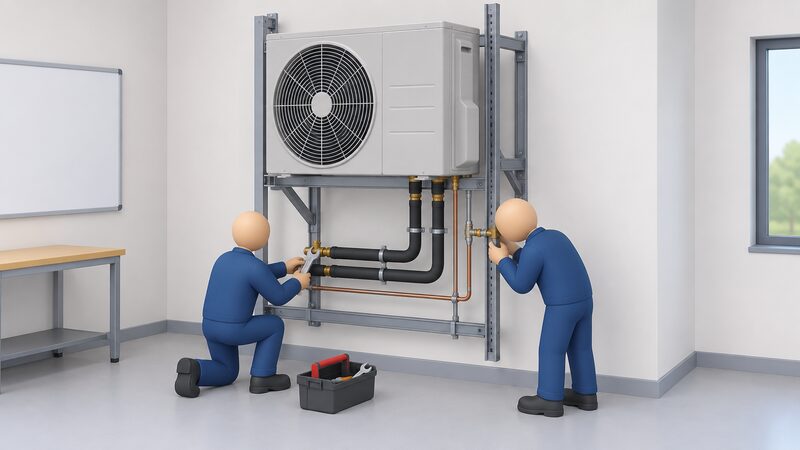
An air source heat pump extracts heat from the outside air to heat a home and its water20. The Energy Saving Trust describes the mechanism as taking warmth from the outside air and using it for heating and hot water3, and Pendle Borough Council's fact sheet puts it as moving heat from the air to a hot water supply21. HMRC's manual describes units that absorb heat from the outside or surrounding air and transfer it into usable heat in the home for space or water heating1.
The independence gain is real but partial. A heat pump runs on electricity rather than gas, so it removes the household from the gas grid and from a gas supplier. It does not remove dependence on the electricity grid, on an electricity supplier, or on the network's generation mix. The European Heat Pump Association notes that air source units use the energy in outside air or air from a ventilation system for heating, cooling and heating water14, which is a description of where the heat comes from, not of where the power to move it comes from.
Running costs are the practical test. The Energy Saving Trust states that at current energy prices, running costs for heat pumps are around the same as for a new gas boiler6. That is a comparison at a point in time, not a guarantee, and it depends on the tariff, the property and how the system is set up.
For a Hisense split unit specifically, the dependence profile is different again. An air-to-air unit heats air directly and can cool, but it does not produce domestic hot water on its own, and it does not feed a wet radiator system. A household running one still depends on another source for hot water. The wider question of what a heat pump does and does not deliver for self-sufficiency is covered in heat pumps and household energy independence.
Is a Hisense heat pump right for your home?
Government guidance states that heat pumps are technically suitable for most UK homes if installed appropriately4, and the Energy Saving Trust says they are suitable for most houses in the UK2. That is the general position. The specific position depends on the building.
Insulation is the first variable. New Forest District Council's guidance states that heat pumps are best suited to buildings with good insulation levels, and that insulation may need to be added internally or externally where homes do not already have good levels22. The National Energy Action response to the Northern Ireland consultation makes a similar point from the other direction, noting that air source and ground source heat pumps are suitable for some homes, particularly new-build and well-insulated properties23.
Underfloor heating usually works well with heat pumps24, which matters more for wet systems than for a split air-to-air unit. Compact heat pumps are specifically designed to heat small, well-insulated modern flats and homes3, a category that overlaps with where a single split unit is most likely to be adequate.
The installer route is the same as for any heat pump. Welsh building regulations guidance advises contacting an installer who can provide the necessary advice, preferably one belonging to the Microgeneration Certification Scheme or the relevant Competent Person Scheme25. The Planning Portal and Bedford Borough Council give the same advice in near-identical terms26, and the Energy Saving Trust recommends quotes from at least three MCS-certified installers5. For grant-funded work, the installer applies on the householder's behalf through Ofgem28.
Where a household is weighing a split unit against a wet system, the comparison is set out in air-to-air heat pumps and in air source heat pumps explained. The broader cost picture, including what a full wet-system installation involves, sits in how much does a heat pump cost in the UK.
Sources28 cited
- VAT energy saving materials: air conditioning units, HM Revenue and Customs, 2026-09-17
- Heat pumps, Energy Saving Trust, 2026-06-11
- Air source heat pumps, Energy Saving Trust, 2026-07-16
- Heat pumps, Parliamentary Office of Science and Technology, 2026-09-19
- Heat pump installation: a step by step guide, Energy Saving Trust, 2026-07-15
- Heat pump fact check, Energy Saving Trust, 2026-07-01
- Raising minimum standards for heat pumps: options assessment, Department for Energy Security and Net Zero, 2024-11-27
- Heat pumps explained: experts answer your questions, GOV.UK, 2024-03-28
- How do heat pumps work, Smart Energy GB, 2026-03-16
- Top energy saving ideas for your home improvement project, Energy Saving Trust, 2026-08-03
- Energy innovation needs assessment 2025: heat and buildings, Department for Energy Security and Net Zero, 2024
- Heat Pump Ready Programme stream 2 wave 2 projects, GOV.UK, 2026-05-28
- Heat Pump Ready Programme stream 1 phase 2 projects, GOV.UK, 2026-05-28
- About heat pumps, European Heat Pump Association, 2026-04-24
- Heat pumps, nidirect, 2025-02-24
- Approved Document L, conservation of fuel and power, volume 1, Department for Levelling Up, Housing and Communities, 2026-09-17
- Projecting the future domestic heat pump workforce, Heat Pump Association, 2024-06
- Heat pumps campaign, CIBSE, 2026-09-17
- Hybrid heat pump installer skills, Heating and Hotwater Industry Council, 2026-09-17
- DESNZ public attitudes tracker: heat and energy use in the home, Department for Energy Security and Net Zero, 2025-10-28
- Fact sheet 5: air source heat pumps, Pendle Borough Council, 2026-09-17
- Heat pumps, New Forest District Council, 2026-09-17
- NEA Northern Ireland response on support for low carbon heat, National Energy Action, 2025-01-10
- In-depth guide to heat pumps, Energy Saving Trust, 2026-07-16
- Building regulations: heat pumps, Welsh Government, 2026-09-17
- Heat pumps: building regulations, Planning Portal, 2026-09-17
- Building regulations renewables guidance, Bedford Borough Council, 2026-09-17
- Heat pump, Department for Energy Security and Net Zero, 2026-09-10