
In this guide
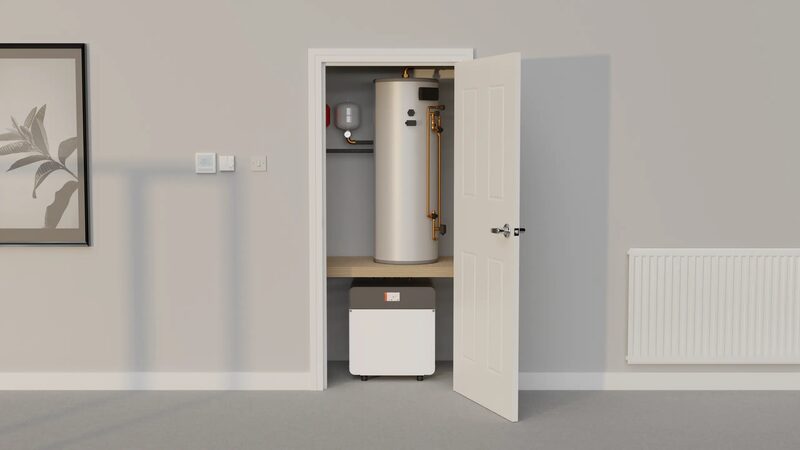
The Kensa Shoebox is a ground source heat pump built to sit inside a home rather than outside it. It is sold in 3kW and 6kW models and is described by its maker as ideal for flats, apartments, new builds and networked heat pump schemes1. The point of the design is space: the unit is small enough to fit inside an airing cupboard or a kitchen cabinet, which is what makes ground source heating viable in a flat that has no garden and no plant room2.
Its efficiency claim is around 300%, meaning over three units of heat for every unit of electricity used, with the ground itself supplying the renewable share3. One installation using the newer Shoebox NX recorded a seasonal coefficient of performance of 5.35 in heating mode, achieved with a ground temperature of around 10 degrees4. The pump is designed to last between 20 and 25 years, while the underground pipework is expected to perform for over 100 years3.
What the Shoebox does for a household's independence is specific. Each property has its own heat pump wired to its own private electrical supply, so residents can choose their own energy supplier and tariff rather than buying heat from a communal contract5. What remains is a dependence on electricity, on the ground loop that serves the building, and on Kensa for parts and support.
What the Kensa Shoebox is: a ground source heat pump that fits in a cupboard
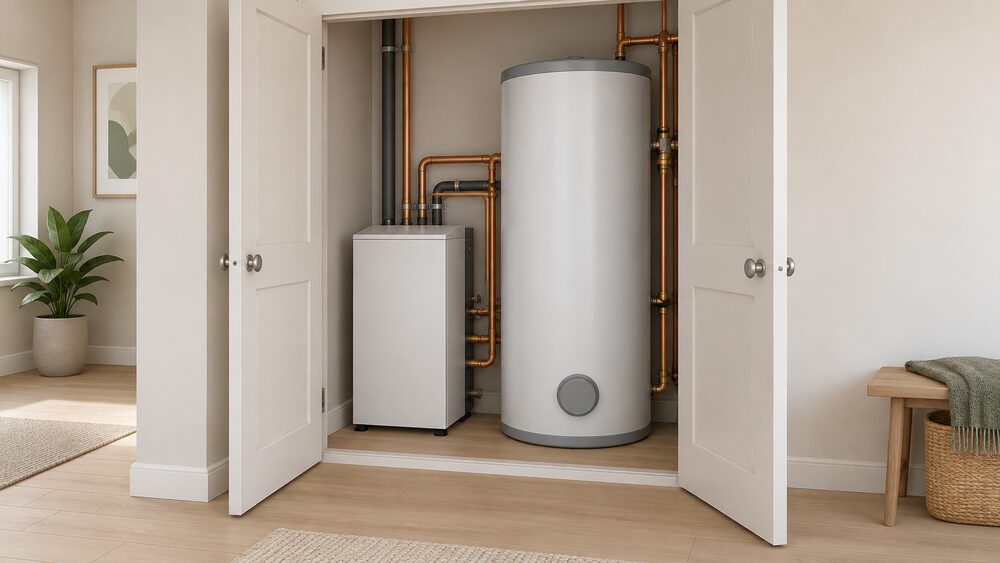
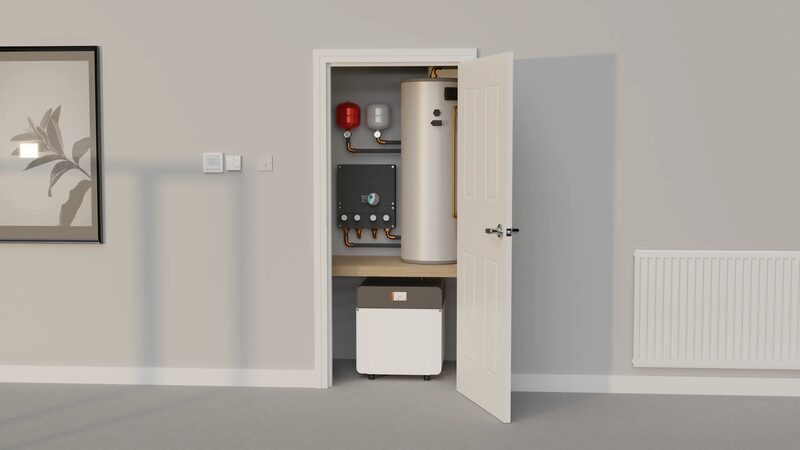
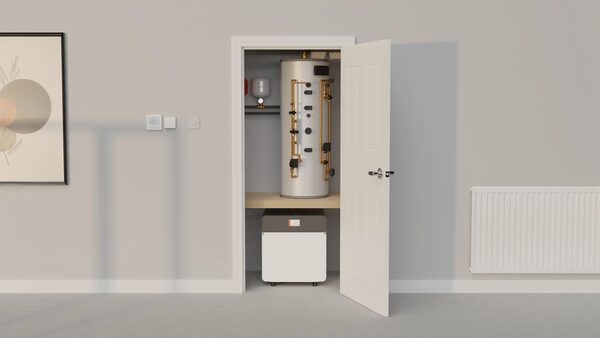
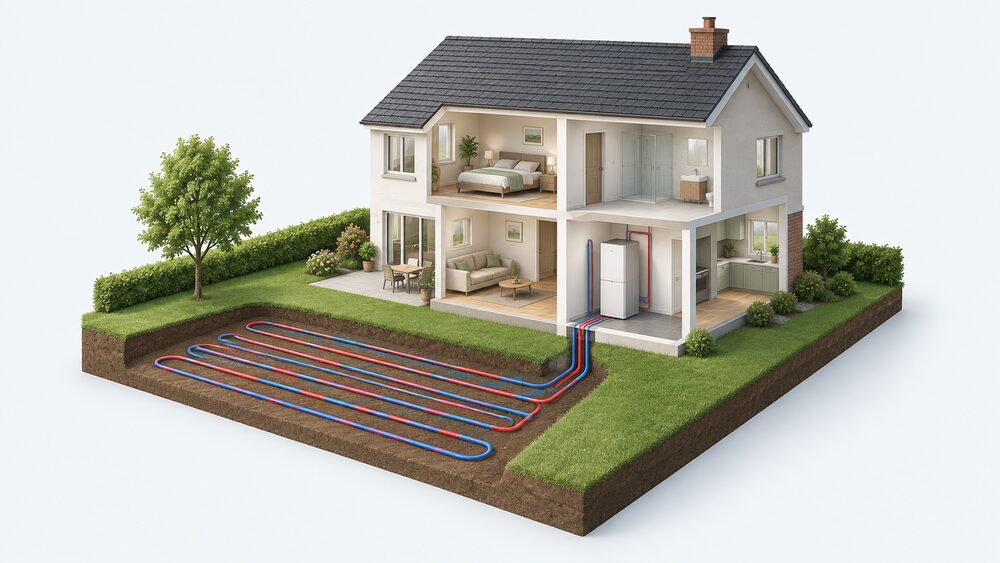
The Shoebox is a ground source heat pump, not an air source unit, so it takes its heat from the ground through a loop of pipe rather than from outside air1. Kensa describes the Shoebox range as offering the first ground source heat pumps that can be fitted inside a dwelling, which is the design decision that separates it from most of the market7. Inside each home, the installation is a compact Shoebox unit and a hot water cylinder in a cupboard3.
That indoor siting matters for more than tidiness. A ground source heat pump has no outdoor fan unit, so there is no external box, no defrost cycle and no noise at the boundary of the property. The unit is linked to a radiator system, upgraded where necessary, and in one retrofit the 6kW Shoebox Twin units were located in tenants' airing cupboards alongside new domestic hot water cylinders2.
The range has moved on since the original Shoebox. The Shoebox NX is described as designed to fit in cupboards, a compact unit for space constrained homes, and is stated to be ideal for flats and 2 to 5 bed properties9. One installer working on a shared ground array serving a block of flats called that the ideal situation for the NX, and noted that having the screen displayed on the heat pump itself is more in line with Kensa's Evo range4.
Sizes and specifications: 3kW and 6kW models
The Shoebox comes in 3kW and 6kW models, a range repeated across Kensa's product pages and accessories listings1. The Shoebox NX comes in 3kW and 5kW models6. That is a narrow band by heat pump standards, and it reflects the intended market: individual flats and small houses on a shared ground loop, where each dwelling needs a modest amount of heat rather than the output of a whole-house unit.
| Model | Outputs | Intended use | Source |
|---|---|---|---|
| Kensa Shoebox | 3kW and 6kW | Flats, apartments, new builds, networked schemes | 1 |
| Kensa Shoebox NX | 3kW and 5kW | Flats and 2 to 5 bed properties | 9 |
| Kensa Shoebox Twin | 6kW | Airing cupboard installations with cylinders | 8 |
Real installations show how the outputs are matched to dwellings. At Fountainbridge in Edinburgh, Kensa installed 8 x 6kW and 6 x 3kW Shoebox heat pumps with Sunamp thermal batteries across 14 homes12. At Sutton Dwellings in Chelsea, the retrofit used 62 x 3kW and 19 x 6kW Shoebox heat pumps with 27 boreholes13. A single 6kW unit has also been specified for a 35m² classroom space, and a 6kW Shoebox Twin for a social housing scheme14.
The Shoebox NX is offered in 3kW and 5kW models, and Kensa describes it as a compact unit suited to space constrained homes9. One installation used a 6kW Shoebox on a water source heat pump system, taking heat from water rather than from boreholes14. That flexibility in the heat source, ground or water, is part of what the range offers.
Efficiency: around 300%, or over three units of heat for every unit of electricity
Kensa states that its ground source heat pumps deliver around 300% efficiency, producing over three units of heat for every unit of electricity used3. A separate case study puts it slightly differently: the ground source system is 300% efficient, which means for every unit of electricity it can access two to three units of free renewable energy from underground15. The two statements describe the same performance from different directions, one counting total heat output and the other counting the renewable share.
Independent figures for heat pumps generally sit in a similar place. The CPA gives an average of 300 to 400% for heat pumps16, and Quiet Mark states that heat pumps generate about 3.5kWh of heat for every 1kWh of electricity used17. Those are general figures across heat pump types, not Shoebox-specific, and ground source units typically sit at the upper end because ground temperature is more stable than air temperature.
The strongest single figure in the material is a measured one. At a self-build bungalow served by a Shoebox NX, the installer reported a seasonal coefficient of performance of 5.35 in heating mode, achieved with a ground temperature of around 10 degrees4. That is a seasonal figure across a heating season, not a peak laboratory number, and it is the kind of result that a well-matched ground source installation can produce.
"we're actually getting around 10 degrees, and then that ups the efficiency to seasonal coefficient performance of 5.35"
What drives the difference between a headline 300% and a measured 5.35 is the ground loop and the emitter circuit. A shared ground loop array collects energy from the underlying rock and distributes it at ambient temperature to the heat pumps, so the source temperature stays stable through the year2. On the heating side, the lower the flow temperature the radiators can run at, the better the seasonal performance. Kensa's own guidance to ground source owners advises lowering flow temperature to around 35 degrees, reducing thermostat settings and long-term insulation measures18.
For a household, the practical meaning is that the efficiency is real but conditional. A Shoebox on a well-designed ground array feeding adequately sized radiators will run near the top of the range. The same unit on an undersized array or with radiators that need a high flow temperature will not. More on how these figures are measured is at heat pump efficiency: COP, SCOP and SPF.
How the networked model works: individual pumps on shared ground loops
The Shoebox is most often sold into a networked arrangement, which Kensa calls a Shared Ground Loop Array and which is also referred to as shared ground loops19. The architecture is a ground source heat pump per dwelling, each connected to a Fifth Generation District Heating ambient loop20. Kensa describes the model as connecting multiple properties to a network of boreholes to provide efficient heating, hot water and cooling9.
The distinction from a conventional district heating scheme is where the heat pump sits. In a traditional heat network, heat is generated centrally and distributed as hot water, which means residents buy heat from the network operator. In the Kensa model, the loop carries ambient temperature energy and each home has its own heat pump, so each household buys its own electricity20. Kensa states plainly that with a ground source heat pump in each home, residents can choose their energy supplier and tariff9.
That is the independence argument in one line. A resident on a shared ground loop is not tied to a communal energy contract, and one case study describes the arrangement as providing residents with heating and hot water independence and the ability to freely switch suppliers5. Each property's heat pump is wired to its own private electrical supply5.
The ownership model can vary. Kensa manages projects end to end and can fund, own and maintain the shared ground array on site, leaving the customer responsible only for providing the heat pump and internal distribution system12. Where that applies, the household's dependence on the ground loop is on a maintained asset rather than on their own borehole. More on the arrangements is at shared ground loop and networked ground source heat pumps.
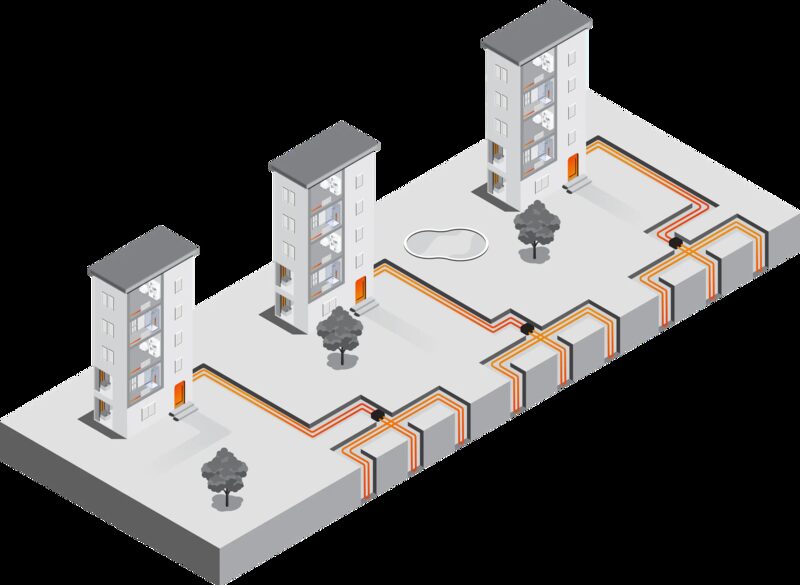
Where a Shoebox fits: flats, new builds and storage heater replacements
Kensa lists the Shoebox as ideal for flats, apartments, new builds and networked heat pump schemes1. The NX is stated to suit flats and 2 to 5 bed properties10. The unit can be fitted inside airing cupboards or kitchen cabinets, and in one scheme it was small enough to fit inside its airing cupboard in each property2.
The retrofit case is the most developed. Kensa states that its compact Shoebox ground source heat pump commonly replaces ageing night storage heaters in tower blocks, and that it fits easily into an airing cupboard in each apartment15. That is a direct swap of one electrical heating system for another, but with a much lower running cost per unit of heat because the ground supplies most of the energy. In one scheme the change reduced carbon emissions by 70%5.
The evidence base for this is unusually deep for a single product. Kensa's social housing case studies cover tower blocks, townhouses, new build developments and a canal barge15. At Fountainbridge, 3kW and 6kW Shoebox heat pumps went into apartments and townhouses, installed in cupboards and under the stairs12. At Daisyfield in Blackburn, individual Shoebox heat pumps were installed inside each property on a Shared Ground Loop Array, linked to a radiator system2. At Chadwell St Mary in Thurrock, the Shoebox was paired with the similarly space-saving Sunamp heat battery to provide 100% of the property's heating and hot water needs15.
New build is a distinct market. Kensa's new build work and its social housing programme both use the same architecture, and the maker offers a turnkey process for landlords: a bespoke feasibility report, a fixed price quote factoring in available funding, detailed design work and resident engagement, then project management from start to finish9. For a household in an existing flat, the practical question is whether the building has or can have a ground loop, which is a decision for the landlord or the freeholder rather than the individual resident. More on which homes suit the technology is at which homes suit a heat pump.
Noise, space and emissions: what living with one is like
The Shoebox is described by Kensa as as quiet as an average fridge freezer2. An installer working with the NX called it really quiet in operation and described that as a big bonus for the client4. Because the unit sits indoors and there is no external fan, there is no noise at the property boundary, which is the point at which air source installations most often attract comment.
Space is the other practical consideration, and it is the Shoebox's main selling point. The unit is designed to fit in cupboards, and installations have placed it in airing cupboards, kitchen cabinets and under the stairs2. In a flat where the alternative is a communal plant room or no heat pump at all, that footprint is what makes the option available.
On emissions at the point of use, Kensa states that ground source heat pumps produce no NOx, SOx, particulates or CO² emissions5. That is a statement about the appliance itself, not about the electricity that runs it: the carbon intensity of a Shoebox installation depends on the grid mix at the time it operates, and on whether the household has a renewable tariff or its own generation. The 70% carbon reduction reported at one scheme reflects the change from night storage heaters on the grid at that time5.
Kensa also states that because heat is generated at the point of use, there are no heat losses through the pipework, which increases the system's efficiency5. That is a real advantage over a conventional district heating network, where heat lost in distribution pipework is a standing inefficiency. For a household, the combination is a heating system that is quiet, invisible inside a cupboard, and free of combustion at the property.
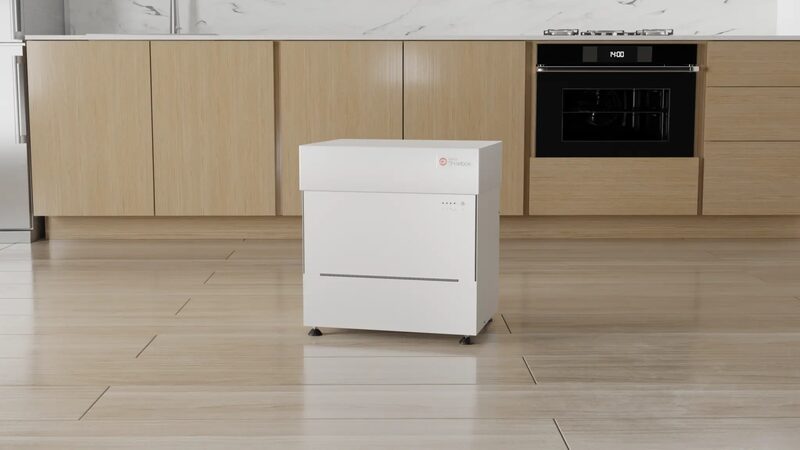
Lifespan: 20 to 25 years for the pump, over 100 for the ground array
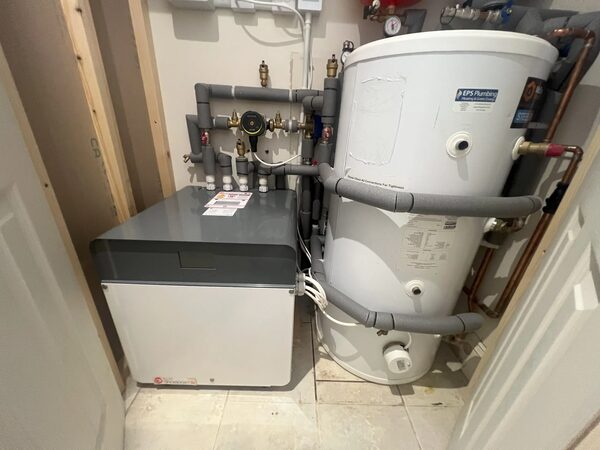
Kensa designed each Shoebox heat pump to last between 20 and 25 years3. The Shoebox NX is stated to have a 25+ year life expectancy with minimal maintenance9. One scheme's carbon saving is calculated over 25 years, described as the life of the ground source heat pumps in each flat15.
The ground side lasts far longer. Kensa expects the underground pipework, which draws renewable heat from the ground, to perform for over 100 years3. That asymmetry is the core of the ground source case: the expensive, disruptive part of the installation, the boreholes and the loop, is a once-in-a-century asset, while the pump itself is a replaceable box in a cupboard.
Warranty terms are separate from design life and are shorter. Kensa lists three options across its range: a 1 year out-the-box warranty, a 4 year standard warranty and an 8 year extended warranty6. The documents do not resolve how these tiers apply to a specific Shoebox model, so a buyer should treat the tier as something to confirm for the model and installer in question rather than assume.
For a household, the lifespan figures shape the economics. A ground array that outlives several pumps means the second and third heat pump replacements inherit a working ground loop, which is why the technology is often described in terms of decades rather than a single appliance purchase. Servicing and maintenance expectations are covered at heat pump servicing and maintenance.
Cost, VAT and funding: 0% VAT and funding off installation
Kensa's product page refers to additional funding off installation costs, with eligibility conditions applying1. That is the maker's own wording and it does not name a figure, so no grant amount can be stated for the Shoebox specifically. Kensa's turnkey process for landlords includes a fixed price quote that factors in available funding, which indicates that funding is treated as part of the project economics rather than as a published discount9.
On VAT, the position is set by HMRC rather than by the maker. The reduced rate guidance states that if the products cost more than 60% of the total cost of installation, the customer pays only 5% VAT on the labour and standard 20% VAT on the products22. That is the Northern Ireland position as published, and it is the clearest statement in the material of how the split between labour and materials is treated. The draft guidance on changes to energy-saving materials uses a worked example of a £1,000 installation charge to a customer, excluding VAT23.
There is no published Kensa list price for a supplied and fitted Shoebox in the material, so prices are installer-quoted. The funding landscape for heat pumps generally, including the schemes that a Shoebox installation might draw on, is set out at heat pump grants and funding across the UK and at ground source heat pump cost. For a flat on a shared ground loop, the funding route often runs through the landlord or the scheme rather than the individual householder.
Kensa: the Cornish maker behind the Shoebox
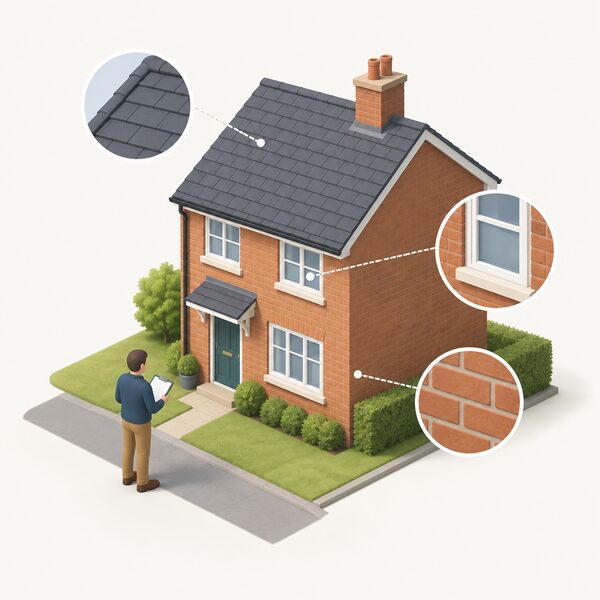
Kensa is a UK manufacturer, and its products are described as all manufactured in the UK10. The company supplies both slinky and straight ground pipes, so it can provide the ground side of an installation as well as the pump24. It also offers a heat loss survey of a home to establish how much heat is needed, and a comprehensive survey to help a householder decide what is best24.
The company's role in a project can extend well beyond supplying a box. Kensa managed an entire project from design to delivery, handling borehole drilling, underground pipework and installation3. It can fund, own and maintain the shared ground array on site, leaving the customer responsible only for the heat pump and internal distribution system12. For social housing landlords it offers a free feasibility study, and its turnkey process runs through feasibility report, fixed price quote, detailed design and resident engagement, then project management9.
Kensa's work is concentrated in the social housing and new build sectors, with schemes across England and Scotland. Recent projects include a Renfrewshire retrofit replacing gas heating in two Paisley tower blocks with networked ground source heat pumps, started in August 2025 with completion targeted for Summer 202618. Independent bodies have taken an interest in the model: Nesta has published work on clean heat neighbourhoods and on Kensa's Essex retrofit, and the Heat the Streets project replaced existing off-gas heating systems with Kensa's Shoebox heat pumps and new radiators19.
For a household, the maker's identity matters in two ways. A UK manufacturer shortens the supply chain for parts and support, and a company with a deep social housing order book is likely to be around for the life of the pump. The dependence that remains is on Kensa for spares, servicing and the ground array where the company owns it. The wider manufacturer landscape is covered at Kensa ground source heat pumps and at ground source heat pumps explained.
Sources25 cited
- Kensa Shoebox product page, Kensa
- Together Housing, Daisyfield, Blackburn, Kensa
- Low carbon heating, Lullington Close, Manchester, Kensa
- Self-build bungalow heated by Shoebox NX, Kensa
- Gentoo Group tower block ground source heating, Kensa
- Ground source heat pump demonstration unit, Kensa
- Croft Housing retrofit ground source heating, Kensa
- Bromford Housing ground source heating, Kensa
- Kensa social housing, Kensa
- Kensa accessories, Kensa
- Hot water secondary return pump, Kensa
- Fountainbridge, Edinburgh ground source heating, Kensa
- Central London retrofit, Kensa
- Sabrina 5 canal barge, Kensa
- Chadwell St Mary ground source heating, Kensa
- Ground source heat pumps, Energy Saving Trust
- Heat pumps vs boilers, The CPA
- Renfrewshire, Scotland tower block ground source heating, Kensa
- A tool to support local clean heat planning, Nesta
- Kensa Thurrock Council Chadwell St Mary, Heat Pumping Technologies
- Kensa social housing new build, Kensa
- Draft VAT guidance on changes to energy-saving materials, HM Revenue and Customs
- Heat the Streets project findings, Energy Systems Catapult
- Slinky pipe ground source heat pump, Kensa
- Clean heat neighbourhoods: Kensa's Essex retrofit, Nesta
 Kensa ground source heat pumpsKensa is the biggest name in British ground source heat pumps, so what does one actually cost to buy and run, and how does it compare with an air source system?