
In this comparison
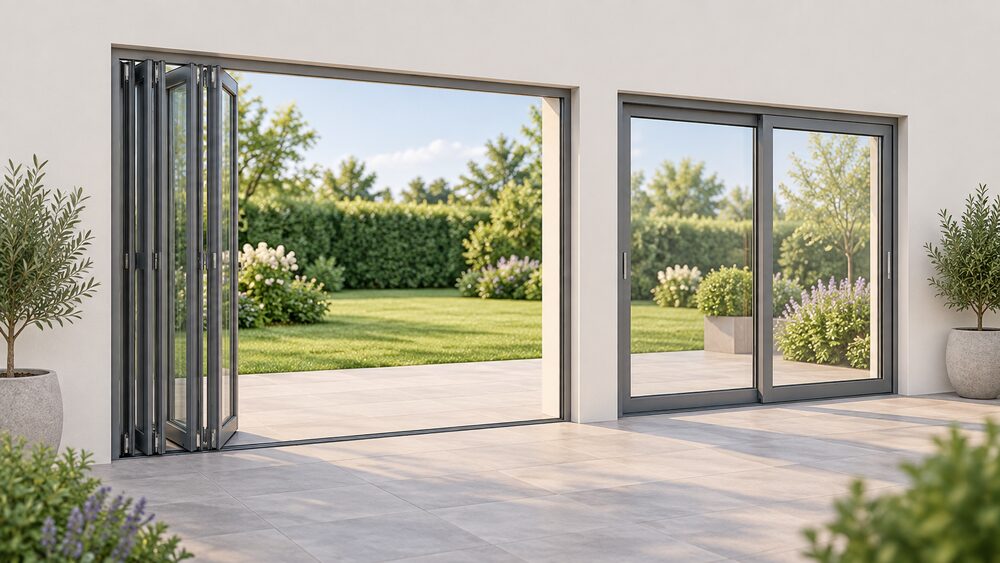
A bifold door is a set of two or more glass doors that fold back onto each other in a concertina, and it stays where it has been opened1. A sliding patio door runs on a track and does not swing into the room or the garden at all, which is why it is described as a good space saver1. Both come in aluminium and uPVC and in a range of colours and finishes, so the choice is rarely about material availability and almost always about how the opening is used1.
On cost, the honest answer is that neither type has a published UK price. A door bought on its own could cost more than £1,000, and might be less if bought alongside windows2. For context on the wider glazing market, replacing an entire window runs from £500 to £1,250 for a casement and from £1,500 to £5,000 or more for a bow window3. Anglian, the maker covered here, states that the full cost of its tilt and turn windows depends on size and style as well as design choices such as colour, and quotes rather than lists prices4.
On efficiency, the deciding factors are the glass build and the frame, not the opening mechanism. Energy efficient windows and high thermal performance doors are usually double glazed, with two sheets of glass, an insulating gap, an invisible metal oxide coating on the inside of the glass and sometimes a different gas in the gap; some are triple glazed with three sheets of glass2. The advice from the industry is to pay close attention to thermal performance ratings such as U-values rather than relying solely on broad marketing claims5.
Bifold or sliding: which suits which opening
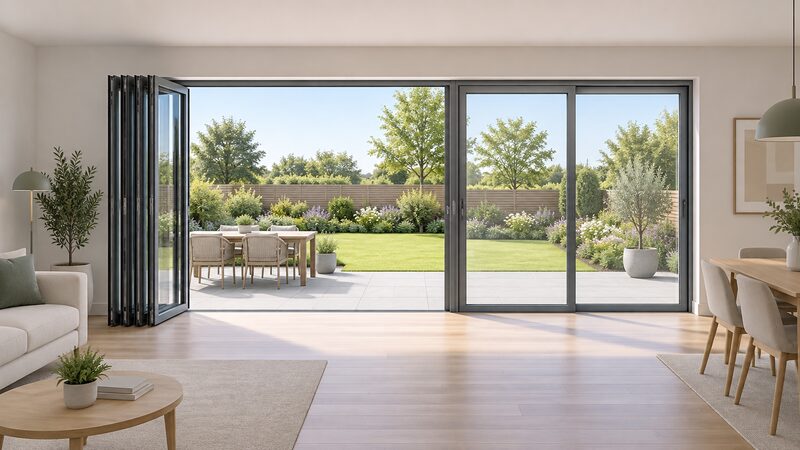
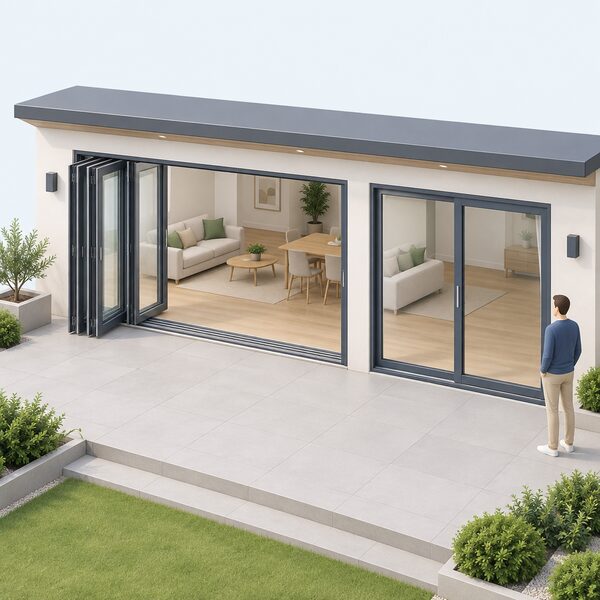
The two types solve different problems. A bifold needs somewhere for the folded leaves to stack, and it needs clear floor space on the side it folds towards. In exchange it can open a wide aperture almost completely, which is why it suits a kitchen or dining room opening onto a garden where the whole width is wanted in summer. A sliding door keeps its panels in the plane of the wall, so nothing projects into the room and nothing projects onto the patio.
That distinction matters most in small rooms. Sliding doors are described as a good space saver precisely because they do not have to open into the garden or the home's floor space1. A bifold in the same opening consumes a stack of floor area whenever it is open, and the track and frame depth has to be planned around furniture.
The comparison with other door types is useful. French doors open out like casement windows, and although both leaves can open, one can be kept closed at a time1. Casement windows usually open inwards, which generally makes them easier to clean but limits what can be stored or displayed on the windowsill1. Sash windows typically open by lifting vertically up or down1. Tilt and turn units open inwards in two ways, tilting vertically for secure ventilation or opening fully horizontally, with multi-point locking systems7.
For a household, the practical question is how often the opening is used at full width. A bifold earns its space where the answer is often; a sliding door earns its place where the answer is occasionally and the room is tight. Neither choice changes the amount of glazing, and therefore neither changes the heat loss area, which is set by the size of the opening rather than the mechanism.
Cost: what drives the price of each
No published UK price exists for either a bifold or a sliding patio door in the material available here, and prices are installer-quoted. What can be said is what sits behind the quotation. The first driver is size: a wider opening needs more frame, more glass and heavier hardware, and a bifold of four or five leaves needs more of all three than a two-panel slider. The second is the frame material, since both types come in aluminium and uPVC and in various colours1. Aluminium doors from Anglian have a thermal break to reduce heat flow through the door, a construction detail that adds cost and performance together6.
The third driver is the glass specification. Moving from double to triple glazing raises the unit cost, and the wider glazing market gives a sense of the scale: replacing an entire window runs from £500 to £1,250 for a casement and from £1,500 to £5,000 or more for a bow window3. A door bought on its own could cost more than £1,000, although it might be less if bought alongside windows2. Those two figures come from different sources and describe different products, so they should be read as context rather than as a price for a patio door.
Where several properties are done at once, costs fall. Working on properties simultaneously allowed Bristol Green Doors to facilitate savings of approximately £500 in installation costs per household8. That is a group retrofit finding rather than a door price, but it shows how much of a quotation is labour and access rather than product.
Thermal efficiency: what the glass and frames deliver
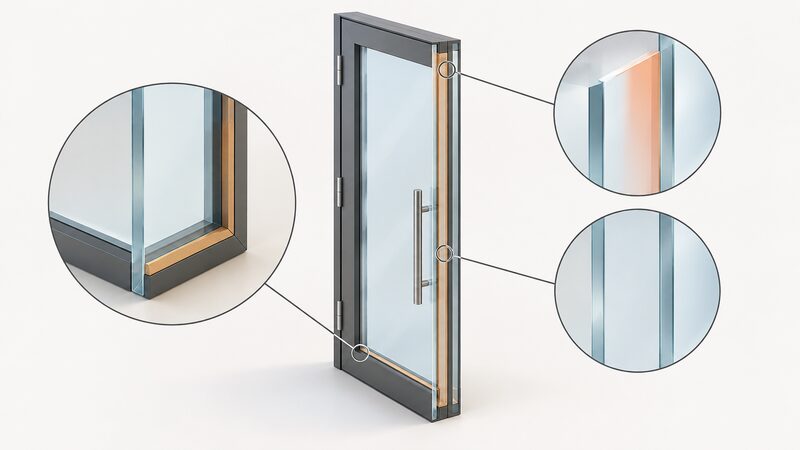
The opening mechanism does not determine thermal performance; the glass unit and the frame do. Energy efficient windows and high thermal performance doors are usually double glazed, with two sheets of glass, an insulating gap, an invisible metal oxide coating on the inside of the glass and sometimes a different gas in the gap, and some are triple glazed with three sheets of glass2. The guidance from the industry is to look closely at thermal performance ratings such as U-values rather than relying solely on broad marketing claims5.
The benefits are consistent across sources. Energy efficient windows and doors reduce heat loss, lowering energy bills and improving comfort, insulate against external noise and reduce condensation10. On condensation specifically, double glazing maintains a higher surface temperature on the interior side of the glass, allowing it to accommodate more water vapour without condensing, and retains more heat within the home11. That is a comfort and fabric point as much as a bill point, and it matters in kitchens and living rooms where a large glazed door is the coldest surface in the room.
Frame construction carries the rest. Anglian's aluminium doors use a thermal break to reduce heat flow through the door6. At the top of the market, a timber aluminium triple glazed window combines timber, insulating foam and aluminium cladding, a build the maker describes as providing superior thermal performance12. A lift and slide door in the same range can be combined with fixed glazing, which allows a wide opening to be part glazed fixed and part opening without a second frame line13.
For a household, the practical expectation is that a well specified double glazed door performs close to a well specified window of the same area, and that the difference between a cheap and an expensive door of the same size is mostly in the frame, the hardware and the installation quality rather than in the glass alone.
Space and everyday use: the practical trade-offs
Everyday use separates the two types more than any specification does. A sliding door is a good space saver because it does not have to open into the garden or the home's floor space1. That makes it the natural choice for a narrow kitchen, a balcony access or any opening where furniture sits close to the glass. The trade-off is that only part of the opening is ever clear at once, since the panels stack in front of one another.
A bifold gives the full width when open, and the leaves stay where they have been opened1. The cost is the stack: floor area, a track that has to be kept clear of grit, and a threshold detail that has to work with the floor finish. In a room where the door is open for much of the summer, that is a fair exchange. In a room where it is opened twice a week, it is space given up for little return.
Cleaning and access differ too. Casement windows usually open inwards, which generally makes them easier for cleaning but limits what can be stored or displayed on the windowsill1. A large glazed door has the same problem at greater scale, and the outer face of an upper panel on a tall sliding door can be awkward to reach from inside.
Where the building itself restricts what can be done, the rules bite. Replacing single with double glazing might be acceptable in some locations but not in more sensitive locations or where the traditional glazing bars are too narrow14. In a listed building or a conservation area, that constraint can rule out a full width glazed door altogether, and listed buildings and glazing sets out how consent works. Where replacement is not possible, secondary glazing is a cost-effective option for rented accommodation and where windows cannot be replaced or the budget does not allow replacement15, and it comes in horizontal sliders, vertical sliders, top hung, side hung, double side hung, lift-outs and removable fixed panels fitted onto the back of doors16.
Anglian: the maker behind the doors
Anglian makes doors to measure at factories in the UK, and offers front and back doors, French doors, patio doors and bifold doors6. The door range covers composite, uPVC, wood and aluminium6. Aluminium doors carry a thermal break to reduce heat flow through the door6. The company's A-rated windows carry a Made in Britain claim17.
On trading history the company's own pages disagree. One states over 55 years in business and another states 60+ years in business18. Both figures come from Anglian and the conflict is not resolved, so both are reported here. Either way the firm is long established, which is relevant to a household weighing whether a guarantee will still have a company behind it in ten years. The wider market has seen failures, and Everest and Safestyle UK are covered elsewhere on this site.
Anglian states a like for like price match on uPVC windows9. It also states that upgrading from pre-2002 uPVC double glazing to A-rated windows from Anglian could save £184.25 off annual energy bills for a typical house with gas heating17. That is a maker's modelled figure for windows, not an independent measurement, and it is not a figure for a door.
Accreditations and standards: GGF, FENSA, BBA and Kitemarks
The accreditation picture is where a household can check claims independently. FENSA and CERTASS are the recognised bodies for windows and doors registration19. Anglian lists BBA certificates, TrustMark, Glass and Glazing Federation and FENSA membership, CERTASS certificates for building regulation compliance, and Made in Britain status18. Its wooden flush casement windows are described as FENSA and Glass and Glazing Federation accredited, FSC certified, BFRC accredited, BSI Kitemark certified, British Board of Agrement certified and TrustMark registered9. The company also states 10 Kitemark accreditations, six of them for windows alone, and Police-backed Secured by Design accreditation on its uPVC tilt and turn windows4.
The Glass and Glazing Federation publishes consumer guidance through its knowledge hub7, and the Federation also explains secondary glazing for households that cannot replace units16. For a buyer, the practical value of these marks is that they tie the installation to a registration route, which matters at the point of sale or resale and when a building control question arises. Replacement window rules covers how FENSA and building control interact in practice.
"FENSA or CERTASS (for windows and doors)"
The Consumer Protection Association also publishes guidance on spotting rogue traders19, which is relevant to a purchase of this size. Finding an insulation or glazing installer sets out how to check a firm before signing.
Recycling and UK manufacture: what happens to old units
Anglian states that it takes old windows away and breaks them down to responsibly recycle them9. Parts of old windows and doors are recycled into products such as loft insulation, plastic pipes and into non-visible areas of new windows and doors17. That closes part of the material loop on a replacement, though the company does not publish an annual tonnage, so the rate of recycling cannot be stated.
The wider policy direction is towards design for recovery. The government's consultation outcome on tumble dryers states that manufacturers must design tumble dryers to facilitate material recovery and recycling at the end of their life cycle20. That is a different product category, but it shows the regulatory direction of travel for building products generally. On the housing stock, the parliamentary briefing is blunt: existing homes will all need to be retrofitted21. Glazed doors are part of that fabric work, and the choice between a bifold and a slider does not change the fact that the opening has to be brought up to standard.
UK manufacture shortens the supply chain and keeps specification changes with one firm. It does not by itself determine performance, which is set by the glass and frame specification and by how well the unit is fitted.
Ordering and installation: lead times and deadlines
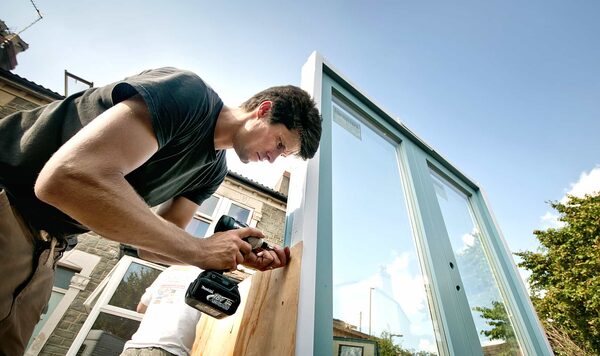
Anglian set an order deadline of 5:59pm on 20 October 2026 for doors, windows and Rooftrim to be fitted before Christmas 2026, with terms and conditions applying6. The same date and time appears across its door, window and roofline pages, including patio doors specifically6. Orders placed after that point fall outside the pre-Christmas installation window.
Lead times for made to measure doors are set by survey, manufacture and fitting, and the company does not publish a standard lead time in the material available here. What is published is the deadline that matters most to households planning around a winter event.
For households comparing a door purchase with other fabric work, insulation and glazing costs sets out how door and window spending sits alongside insulation, and external doors: materials, U-values and draughts covers the thermal side in more detail. The wider context for how glazing contributes to a home's independence from the grid and from imported gas is set out in insulation, glazing and energy independence.
Sources21 cited
- Choosing double glazed windows and doors, Which?, 16 September 2026
- Energy efficient glazing and high performance external doors, Centre for Sustainable Energy, June 2026
- Window insulation guide, Uswitch, 27 October 2025
- Tilt and turn windows, Anglian Home Improvements, 20 September 2026
- Energy efficient home improvements, The Consumer Protection Association, 7 May 2026
- Energy efficient doors, Anglian Home Improvements, 20 September 2026
- Windows knowledge hub, Glass and Glazing Federation, 20 September 2026
- Catalysing net zero retrofit, CREDS, 22 November 2023
- Wooden flush casement windows, Anglian Home Improvements, 20 September 2026
- Windows and doors, Energy Saving Trust, 20 May 2026
- Condensation advice, FENSA, 20 September 2026
- Internorm HF 510 timber aluminium triple glazed window, Quiet Mark, 17 September 2026
- Internorm glazing and door solutions, Quiet Mark, 17 September 2026
- Making alterations to a listed building, Bristol City Council, 17 September 2026
- Secondary glazing, Centre for Sustainable Energy, August 2026
- What is secondary glazing?, Glass and Glazing Federation, 22 December 2023
- Energy efficiency windows savings, Anglian Home Improvements, 20 September 2026
- uPVC windows, Anglian Home Improvements, 20 September 2026
- Spotting rogue traders, The Consumer Protection Association, 9 December 2025
- Raising standards for household tumble dryers: government response, Department for Business and Trade, 24 March 2026
- Energy efficiency of the UK housing stock, Parliamentary Office of Science and Technology, 6 January 2025
 Solid Wall InsulationSolid walls lose far more heat than cavity walls, so what can actually be done about it?
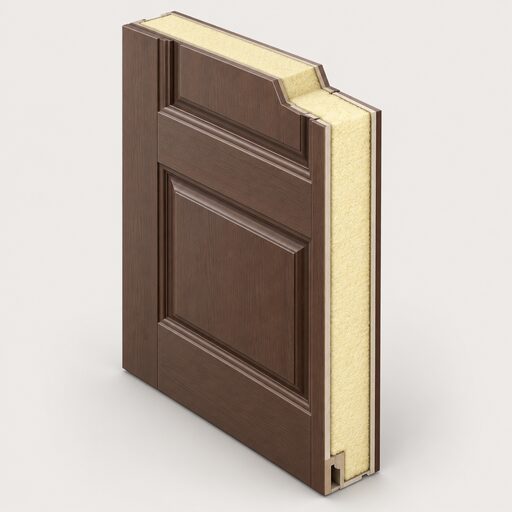 External Doors and U-ValuesWhich front door keeps the heat in best, and how much does it really matter?
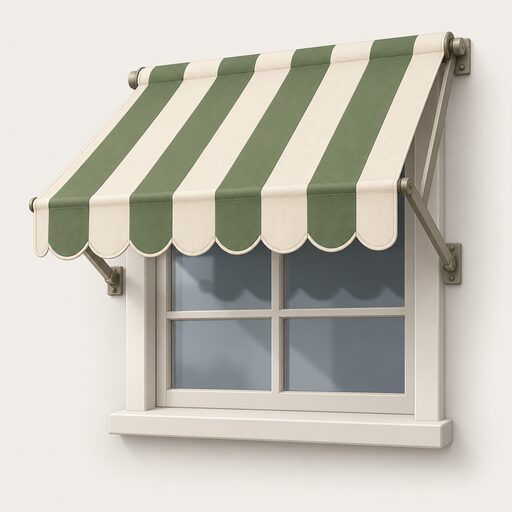 External ShadingExternal shutters, blinds, awnings and fixed shading explained: why shading outside the glass blocks more solar heat than internal blinds, the main options, orientation, materials, costs, planning and long-term ownership.
 Boiler SizingWhat size boiler does your home actually need, and does the number of bedrooms or radiators decide it?
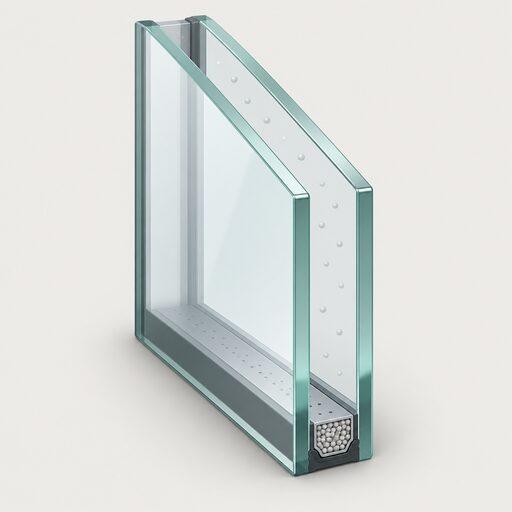 Double GlazingMisted up panes, noisy streets, rooms that never feel warm: is new double glazing worth the money, and how much could it cut your bills?
 Monobloc and Split Heat PumpsWhich heat pump suits your home, a monobloc or a split?