
In this guide
Thermia is a Swedish heat pump maker whose UK domestic sales are built around ground source equipment, with air source models alongside it. The company's own remote monitoring platform, Thermia Online, connects the heat pump to the existing home broadband network and works on all heat pump models in Thermia's current domestic range1. That single line sets the shape of the offer: a maker that expects its units to be monitored, serviced and kept for a long time.
The case for the technology is well established. A heat pump is a device that can provide heating, cooling and hot water for buildings, districts and even for industry2, and independent guidance puts achievable efficiencies at 250 to 400%3. Fuel bills can be reduced by a massive 50% according to one network operator's guidance4, while a household could save more than 50% on running costs with a heat pump compared to a gas boiler, though that requires high quality installation, high efficiency and a heat pump tariff5.
What follows is what the range covers, how it performs, what it needs from a household, and where the dependence on the maker, the installer and the electricity grid remains.
Thermia at a glance: a Swedish maker in a mature market
Heat pumps were invented in the late 19th century8, and the technology has been refined in Scandinavia for far longer than it has been promoted in the UK. That matters for a household weighing a Thermia unit, because the design assumptions behind the equipment come from a market where the technology is ordinary rather than novel.
The wider market context is worth holding alongside the brand. Air-to-water heat pumps, including exhaust air models, are counted within the residential space heating category in European industry statistics9. In Scandinavian countries, air-to-air heat pumps are typically used with other supplementary heat sources10, which is a reminder that a single unit is rarely the whole story in a cold climate.
Thermia's own published case histories span decades and countries. A family in Örebro, Sweden had a Diplomat Optimum G2 geothermal heat pump installed in March 2009 after switching from previous heating due to high bills and hot water shortages, and a second unit, a Diplomat Optimum G3 with a horizontal ground loop, followed in October 2012. An Icelandic household replaced a 1983 Thermia Duo after 28 years of use, ordering a Diplomat Optimum 10 kW in its place. Another household replaced a Thermia JBC400M installed in 1979 with a Diplomat Optimum G3 after 33 years of trouble-free operation. These are the maker's own accounts rather than independent test data, but they describe the service life the equipment is designed for.
For a UK household the practical point is that Thermia is a specialist rather than a mass-market name, and its UK route to market runs through installers who work with ground source systems. The full UK heat pump guide sets out how that compares with the larger air source brands.
Ground source and air source: what the range covers
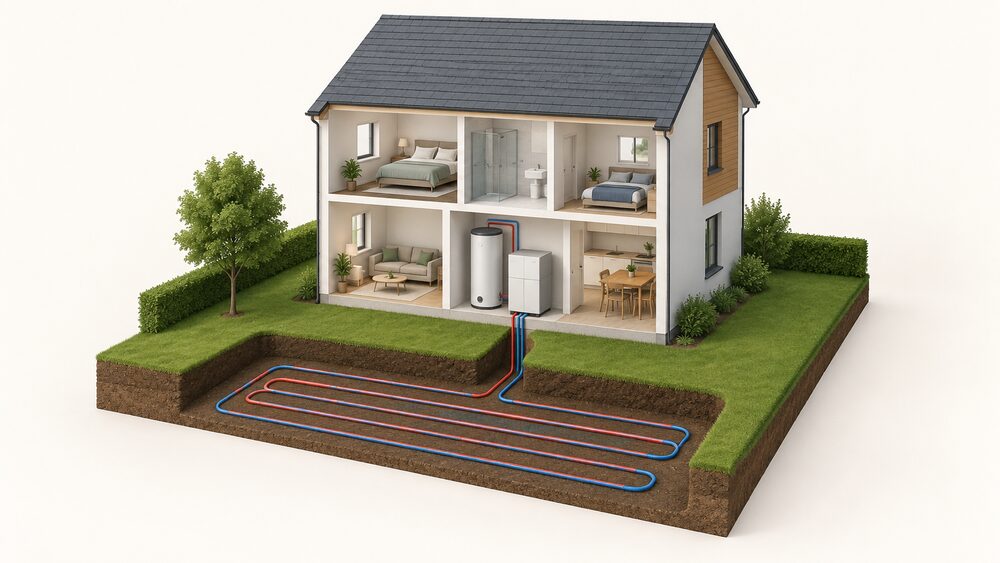
Ground source heat pumps transfer energy from the natural heat stored in the earth to heat the home and domestic hot water11, and independent guidance confirms they provide both space heating and domestic hot water12. That dual function from one unit is the core of the ground source proposition.
The technology is recognised across UK schemes. Air-source, ground-source and water-source heat pumps are eligible for the Boiler Upgrade Scheme13, and water source heat pumps are included in the list of technologies qualifying for VAT relief on energy saving materials15. Ground and water source heat pumps appear as an eligible measure under the Green Homes Grant Local Authority Delivery Scheme16.
Thermia's own range spans both ground and air source. The maker's case histories include a 16 kW Thermia air source heat pump with a Plus unit and a 300 litre cylinder, installed by O'Brien Brothers Heating & Plumbing and running since October 2016, and a 9 kW Thermia Atec air source heat pump with a Total 180 litre cylinder that started running in March 2017 in a 185 sqm bungalow heated by underfloor heating. A German energy consultant switched from an oil-fired heating system to a Thermia Atec 9 kW air-source heat pump in September 2014 and began publishing its performance data online. The Calibra E ground source range was made available from 1 February 2021.
| Technology | What it draws on | Thermia presence |
|---|---|---|
| Ground source | Heat stored in the earth11 | Diplomat, Calibra E ranges |
| Air source | Outside air | Atec, Plus unit combinations |
| Water source | A body of water17 | Covered by UK scheme eligibility13 |
Other configurations exist in the wider market. Exhaust air heat pumps combine ventilation, heating, and hot water in a single unit18, and water source heat pumps can heat your home and provide hot water17. Air and water source pumps offer additional options based on a property's needs19. The ground source and air source pages cover those alternatives in detail.
Efficiency: 50 to 75% savings on running costs
The headline figures for heat pumps generally are strong, and they apply to Thermia equipment as much as to any other. Independent guidance states that a heat pump's efficiency can reach 300 to 400%20, and a separate assessment puts achievable efficiencies at 250 to 400%3. The two documents disagree at the top of the range, and both are given here rather than reconciled.
On bills, one network operator's guidance states that fuel bills can be reduced by a massive 50%4. Dr Jan Rosenow's assessment is more conditional: a household could save more than 50% on running costs with a heat pump compared to a gas boiler, but this requires high quality installation, high efficiency and a heat pump tariff5. The conditions are the substance of the claim, not a caveat bolted on afterwards.
Cost reduction is also expected to continue at component level. One industry report models a 25% reduction in heat pump component costs by 205021. That is a projection, not a price a household can act on today.
What drives the real number in a given house is the same set of factors in every case: the heat loss of the property, the flow temperature the system runs at, the quality of the installation, and the tariff the electricity is bought on. A ground source system with a borehole or a horizontal loop sees a steadier source temperature than an air source unit, which is why ground source is often specified where the ground area or drilling budget allows. The running costs page works through the tariff side, and the efficiency page explains what COP, SCOP and SPF actually measure.
Heating and hot water from one unit
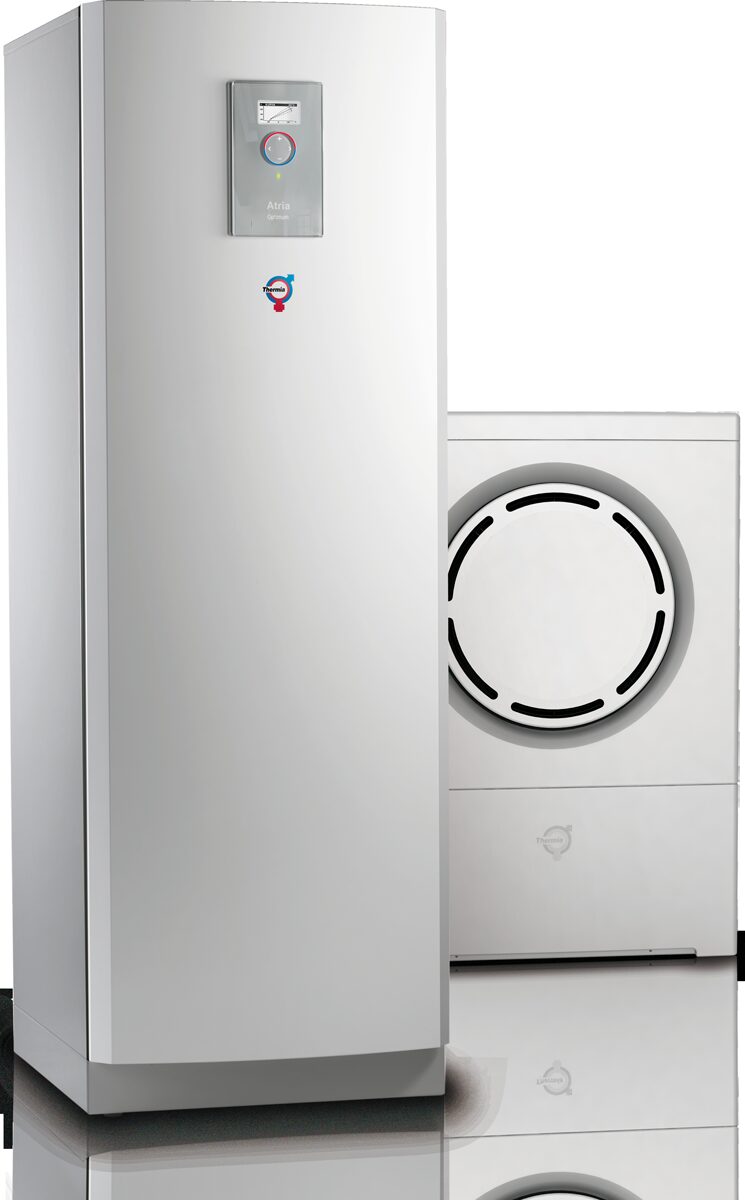
A heat pump warms radiators, underfloor heating, or a hot water tank, depending on the setup22. Thermia's controllers expose the detail: the actual temperatures in the heating and hot water system can be read on the controller, and different operating modes can be selected, including producing hot water only23. The operating time can also be checked for the compressor, auxiliary heater and domestic hot water production23.
Weather compensation is fine-tuned across the range typically between +5 and -5 degrees Celsius outdoor temperatures23. That band is where most of the year's running hours sit in a UK climate, so it is where the settings matter most.
The maker also describes an auxiliary mode in which internal heating and hot water production can be operated temporarily without the heat pump compressor activated23. That is a useful diagnostic and a fallback, and it is also the mechanism behind passive cooling on a ground source system.
On the hot water side, the cylinder is part of the installation rather than the heat pump alone. Thermia's case histories include a 300 litre cylinder with a 16 kW air source unit and a Total 180 litre cylinder with a 9 kW Atec. The hot water cylinder page covers sizing and coil selection, and the flow temperature page explains why the cylinder setpoint and the space heating setpoint are separate decisions.
Cooling: passive on ground source, active on the compressor
Cooling is a genuine capability of the technology rather than an add-on. A heat pump is a device that can provide heating, cooling and hot water for buildings, districts and even for industry2. Official guidance confirms that heat pumps may also provide water cooling24.
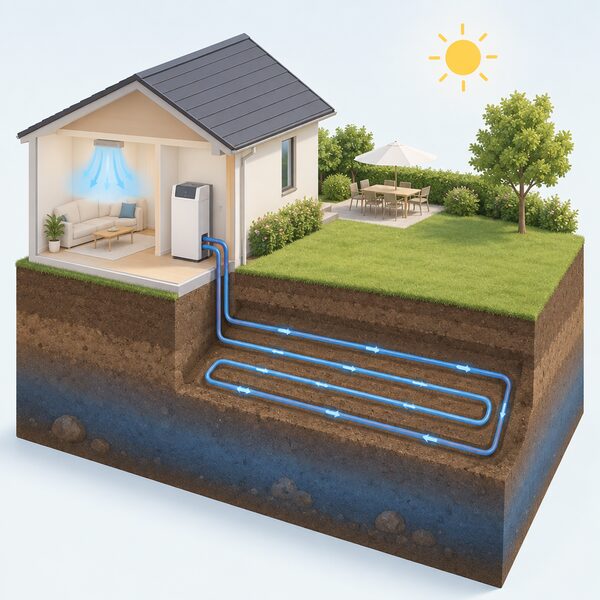
Thermia's own support material describes operating internal heating and hot water production temporarily without the heat pump compressor activated23. On a ground source system this is the basis of passive cooling: the brine loop circulates through the ground, which is cooler than the house in summer, and the compressor stays off. Active cooling uses the compressor in reverse, which delivers more cooling capacity at the cost of running the machine.
The distinction matters for a household because passive cooling is close to free in running cost terms while active cooling is not. It also matters for eligibility: heat pumps do not have to provide domestic water heating to be eligible for support, but may do so, and they may also provide water cooling24. The heat pump cooling page covers how the two modes are configured and what they can realistically deliver in a UK summer.
Footprint, compatibility and where a Thermia fits
Heat pumps can work with radiators or underfloor heating, and some types can work without either25. That is the compatibility question in one line, and it is answered at survey rather than from a brochure.
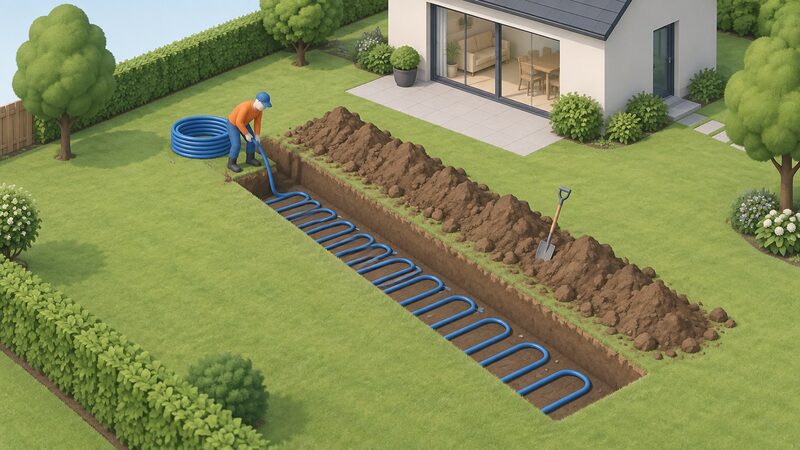
For a ground source unit the footprint question is different from an air source one. The indoor unit is roughly the size of a large fridge or a small boiler plus cylinder, but the collector needs either a horizontal loop in a garden or a borehole. The ground loops and boreholes page covers the space and drilling implications, and the siting page covers where an outdoor unit can go.
Retrofit is where the practical constraints bite. Under the Boiler Upgrade Scheme rules, if retrofitting thermal storage to an existing heat pump or upgrading the storage, this is not eligible26. That is a scheme condition rather than a technical limit, but it shapes what a household can claim for.
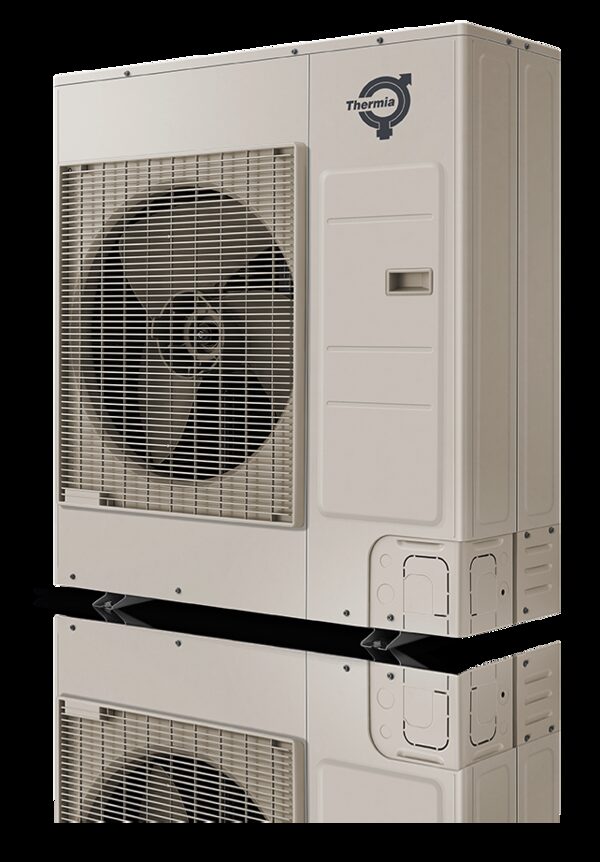
On the wider market, third-party room thermostats were commonly present in the systems observed during home visits in government field work27, which suggests that real installations often end up with a mix of manufacturer controls and third-party devices. The controls page explains how weather compensation and room influence interact, and the radiators and emitters page covers what a system needs from the heat emitters.
Living with a heat pump: pressure, strainers and brine checks
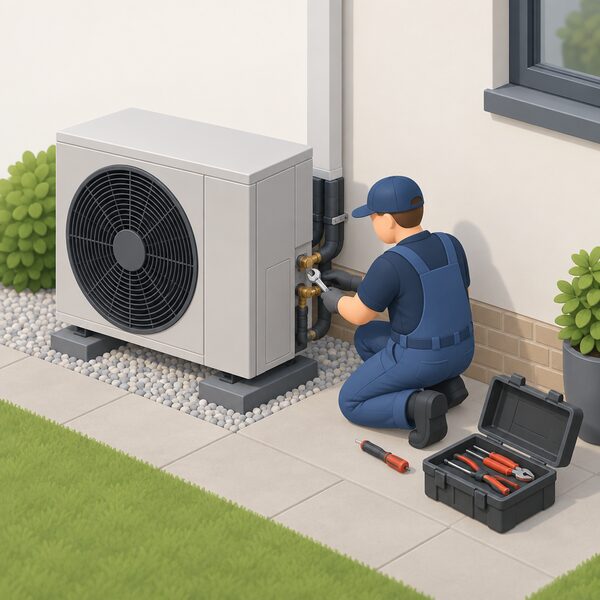
Day to day, a heat pump asks for very little. Domestic heat pumps do not generally require any maintenance, though some periodic cleaning of the collector may be required28. Heat pumps should get a service once a year6.
The controller is the household's window into the system. Actual temperatures in the heating and hot water system can be read on the controller, and running times for the compressor, auxiliary heater and domestic hot water production are all visible23. If something moves outside its band, the heat pump may stop running and an alarm will be shown on the controller display to prevent damage and ensure safe operation23. That alarm is a protection, not a fault in itself.
The brine circuit on a ground source unit and the heating strainers are the two items that get attention at the annual visit. Neither is a householder task on a fixed timetable, which is why the annual service is the point at which they are checked. The servicing and maintenance page sets out what a service covers, and the faults and troubleshooting page covers what an alarm code means.
Remote monitoring changes the picture slightly. Thermia Online connects the heat pump to the existing home broadband network and allows the heat pump to be controlled remotely1. That is a real convenience and a real dependence: the system's remote functions rely on a working broadband connection and on the maker's platform. Local control at the controller continues without it.
Service life, warranty expectations and Ecodesign compliance
A well-maintained heat pump should last for 20 years or longer6. Government consultation work takes a slightly more conservative view, stating that contract durations should not exceed the expected lifespan of a heat pump, typically 15 to 20 years7. The two figures differ and both are given here.
Thermia's own case histories sit at the upper end of that range and beyond: a unit replaced after 28 years of use in Iceland, and another after 33 years without problems. Those are the maker's accounts of individual installations rather than a warranty term, and they should be read as such.
On compliance, the Heat Pump KEYMARK certification is based on independent third-party testing and is compliant with efficiency requirements as set by Ecodesign Lot 1, 2 and 1029. Its stated benefits include certified product quality, compliance with EU standards and Ecodesign, increased consumer confidence, increased sales opportunities, and reduced costs for testing, inspection and certification29. The standards and certification page explains what those marks mean for a buyer.
The Heat Pump Ready Programme aims to improve lifetime consumer experience of heat pumps30, which is the policy acknowledgement that the experience after installation matters as much as the specification before it. For a household, the practical protections are the annual service, the installer relationship, and the certification of the equipment itself.
What a Thermia heat pump means for energy independence
A heat pump changes where a home's heat comes from. Instead of burning gas delivered through a national network, it moves heat from the ground or the air using electricity. That removes the gas standing charge and the gas supply from the household's balance sheet, and it removes exposure to gas price movements.
What replaces that dependence is electricity. A Thermia unit runs on mains power, so the household remains connected to the grid and to an electricity supplier. The independence gained is in the fuel, not in the supply: a home with a heat pump and its own generation, such as solar and a battery, can cover a larger share of its own running cost than a gas boiler ever could. The energy independence page works through that arithmetic.
Two further dependencies are specific to this kind of system. The first is the installer: a ground source installation is a significant piece of work, and the annual service and any repair run through whoever maintains it. The second is the maker's platform, since remote control and monitoring depend on Thermia Online and a broadband connection1.
The technology itself is well established and widely supported. Air-source, ground-source and water-source heat pumps are eligible for the Boiler Upgrade Scheme13, and the grants page sets out what is available across England, Scotland, Wales and Northern Ireland. The cost page covers what an installation involves, and the ground source cost page deals with the drilling and loop work that makes ground source a different proposition from an air source swap.
Sources30 cited
- Thermia Online, Thermia, 2026-09-17
- About heat pumps, European Heat Pump Association, 2026-04-24
- Balancing investment in clean heat and energy efficiency in Scottish housing retrofit, ClimateXChange, 2026-06-03
- Heat pumps, Electricity North West, 2026-09-19
- Air source heat pump costs and savings, Which?, 2026-04-14
- Moving house energy checklist, Energy Saving Trust, 2026-05-01
- Amendments to the Boiler Upgrade Scheme: government response, Department for Energy Security and Net Zero, 2025-11
- Heat pumps expert guide for homeowners, Development Bank of Wales, 2024-11-07
- From carbon to competitiveness, Heat Pump Association, 2026-01
- Air-to-air heat pumps, Nesta, 2025-02-03
- VAT relief: ground source heat pumps, HM Revenue & Customs, 2026-09-17
- Ground source heat pumps (individual), Nesta, 2025-02-03
- Boiler Upgrade Scheme installer guidance, Ofgem, 2022-07-21
- Boiler Upgrade Scheme guidance for installers v2.1, Ofgem, 2023-05-18
- VAT relief: water source heat pumps, HM Revenue & Customs, 2024-02-01
- Green Homes Grant scheme, Solar Energy UK, 2026-09-17
- Water source heat pumps, Energy Saving Trust, 2024-04-24
- Exhaust air heat pumps, Energy Saving Trust, 2025-06-05
- Sustainable home energy solutions, Planning Portal, 2024-09-02
- The real cost of a heat pump, Low Carbon Hub, 2025-10-30
- Green Gas Taskforce report: bio-hybrids, Cadent Gas, 2050
- How heat pumps work: a guide for homeowners, NICEIC, 2025-09-17
- Instruction movies, Thermia, 2026-09-17
- Eligible heating systems, Ofgem, 2026-09-17
- Heating your home, Energy Saving Trust, 2026-05-19
- Response to the Treasury's consultation on VAT relief for energy saving materials, Energy Saving Trust, 2025-10-08
- Heat pump transition report, Department for Energy Security and Net Zero, 2026-05
- My property and heat pumps, Renewables First, 2026-03-23
- Heat Pump KEYMARK, European Heat Pump Association, 2026-08-19
- Information about the Heat Pump Ready Programme, Department for Energy Security and Net Zero, 2026-05-11