
In this comparison
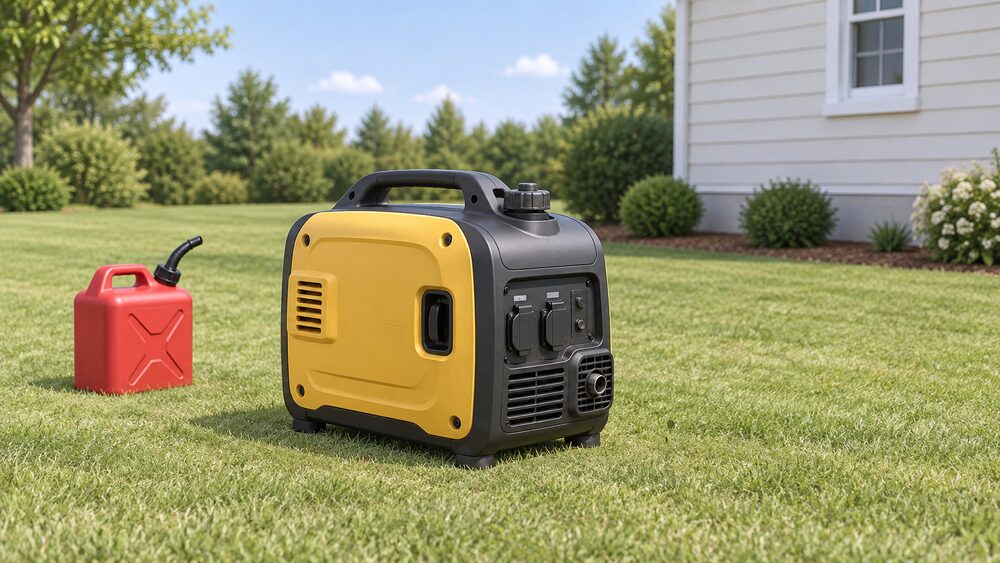
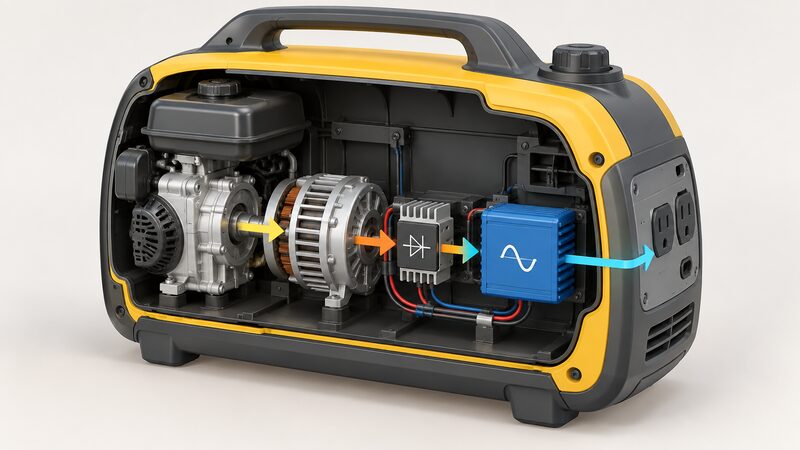
An inverter generator produces electricity in two stages. The engine's alternating current is converted to direct current, then inverted back to alternating current, which is what makes the output cleaner than a conventional set's1. A conventional generator couples the engine directly to an alternator and delivers whatever waveform the engine speed produces. The practical difference for a household is not the amount of power but its quality, and the price paid for that quality.
The two types also differ in how hard the engine works. An inverter generator adjusts engine speed to meet demand, which maker guidance describes as much more fuel-efficient than traditional fuel-powered generators1. A conventional generator runs at a fixed speed whatever the load. That is why inverter units cost more up front, and why they are the type usually chosen where laptops, routers, boiler controls and other electronics are on the circuit.
Prices for portable generators start at around £160 but can go up to £2,000 or more2. That range covers both types, so the inverter premium sits inside a market where the cheapest sets are conventional. For a household weighing independence against cost, the choice turns on what is being powered, how long the outage is expected to last, and whether the unit will ever be connected to the home's wiring rather than run as a standalone appliance.
How an inverter generator works: AC to DC and back to clean AC
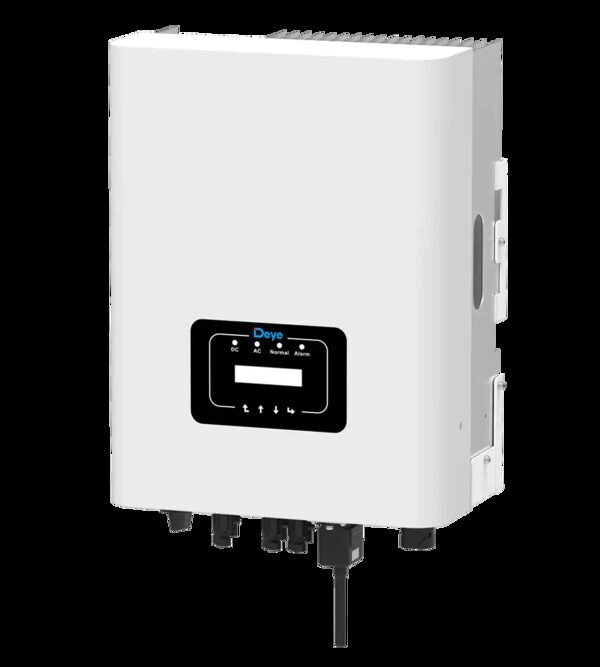
The principle is the same one that underpins solar inverters across the UK. An inverter is an electrical device that converts direct current electricity into alternating current electricity3. In a solar system the inverter turns the DC electricity from the panels into AC electricity to use in your home4, and in a plug-in system a micro-inverter attached to the back of the panel does the same job5. The output is 240V alternating current in a typical domestic array6.
An inverter generator applies that conversion inside a portable unit. It converts AC electric current into DC electric current, then inverts it back into AC to create a cleaner supply1. The engine still burns fuel and still turns an alternator, but the electricity the sockets receive has been regenerated electronically rather than taken straight from the alternator winding.
That extra stage is what separates the two products. A conventional generator has no conversion step, so the frequency and voltage of its output rise and fall with engine speed and load. Sensitive electronics tolerate that less well than resistive loads such as heaters do. The inverter stage decouples the output from the engine's mechanical behaviour, which is the whole point of the design.
Power quality: why the cleaner output matters for electronics
The case for clean power rests on what is plugged in. Electronics with switched-mode power supplies, including laptops, routers, televisions and the control boards inside modern boilers, are less tolerant of a ragged waveform than a kettle or an immersion heater. The inverter stage exists to give them a steadier supply, and that is the reason the type is specified for sensitive loads rather than for heavy resistive ones.
There is a second, quieter benefit. Balancing the grid means the grid needs to generate less electricity from fossil-fuelled generators, because enough renewable energy is generated to cover more homes for longer throughout the day7. A household running its own inverter set during an outage is not contributing to that, but the same inverter technology is what allows home generation to connect to the wiring at all. A device called an inverter connects solar panels or wind turbines to the main wiring in the house8.
Power quality also has a regulatory dimension once a generator is connected to the installation rather than used as a standalone appliance. Small generation installations must be connected via either EREC G99 or G98 type tested inverters9, and the G99 Fast Track process requires that any generating units, including electricity storage, connected through it use EREC G99 or G98 type tested inverters10. A harmonics report up to the 50th harmonic must be included for an inverter connected generator11. Those requirements apply to connected generation, not to a set run on an extension lead, but they show how seriously the network treats the quality of what is fed into a property.
Fuel efficiency: engine speed that matches the demand
The efficiency claim for inverter generators comes from how the engine is controlled. Inverters are much more fuel-efficient than traditional fuel-powered generators, and unlike older generators they adjust engine speed to meet demand1. A conventional set holds a constant speed to hold a constant frequency, so it burns fuel at a similar rate whether it is powering a full load or almost nothing.
The same principle appears in other inverter-driven products. Inverter air conditioning units are described as up to 30% more efficient than non-inverter systems, and in many cases use up to 30% less electricity14. That is a different appliance and a different fuel, but the mechanism is the same: matching output to demand rather than running flat out and throttling the result.
For a household, the practical effect is runtime. A generator that sips fuel at light load stretches the period between refuelling, which matters during a long outage when fuel supplies may be disrupted. It also reduces the noise and exhaust produced overnight, when the load is usually a fridge, a router and a few lights rather than the whole house.
Efficiency comparisons elsewhere in the energy system are worth noting for context. Fuel cells are more efficient than Stirling engines, and internal combustion engines are generally not suitable to use in your home15. That is a statement about fixed domestic generation, not about portable sets, but it explains why a generator is treated as backup equipment rather than a primary supply.
Price: why inverter generators cost more than conventional models
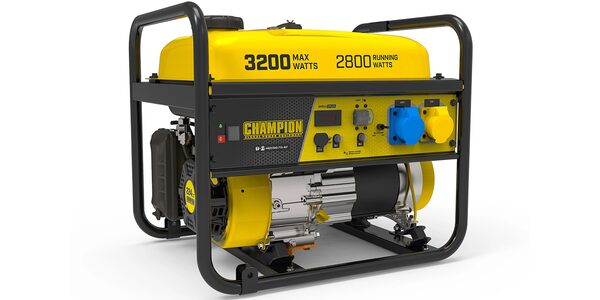
Inverter generators are more expensive compared to traditional fossil fuel generators, though they offer a more fuel-efficient supply1. The cost of an inverter generator varies significantly with fuel type, power output capacity, fuel storage capacity, manufacturer and length of warranty1. Those five variables explain most of the spread a buyer sees between one listing and another.
The market-wide picture is broad. Prices for portable generators start at around £160 but can go up to £2,000 or more2. Conventional sets cluster at the lower end of that band and inverter sets at the upper end, though the overlap is considerable once output and warranty are taken into account.
| Factor | What it changes |
|---|---|
| Fuel type | Petrol or propane sets differ in cost and in how fuel is stored1 |
| Power output capacity | Larger outputs cost more1 |
| Fuel storage capacity | Bigger tanks raise the price and extend runtime1 |
| Manufacturer | Brand affects price and parts availability1 |
| Length of warranty | Longer cover is priced into the unit1 |
For comparison, the inverter in a home solar array is a separate purchase with its own costs. Replacing a solar inverter costs around £800 depending on the size and manufacturer of the system16, or perhaps £500 to £1,00017. For a larger small wind system, inverter replacement usually costs between £1,000 and £2,00015. These are not generator prices, but they show that power electronics carry a substantial replacement cost wherever they sit in a system.
What owning a generator means for household energy independence
A generator changes what a household can do during an outage, and it also defines the limits of that independence. It runs on fossil fuels like petrol or propane1, so the household remains dependent on a fuel supply, on storing that fuel safely, and on being able to obtain more if the outage is long. The toxic fumes released from the combustion engine could poison or kill you, and liquid fuels always carry an added fire risk1. The unit cannot be used indoors, in a garage, shed, under a deck, or anywhere within 15 feet of the home1.
Against that, the electricity a household generates itself lowers the amount of electricity you import and pay for from the grid19. That statement is made about renewable generation, and a generator is not a renewable source, but the direction of travel is the same: every unit generated on site is a unit not drawn from the network. The stronger the wind, the more energy produced19, which is the renewable equivalent of the point about load matching.
The dependence that remains is threefold. There is the fuel, which must be bought and stored. There is the manufacturer, whose warranty and spare parts determine whether the unit can be kept running for its service life. And there is the network itself, because any connection of generation to the home's wiring is regulated. If you do choose to connect your own generation, this must be done by a qualified professional12. Generators of 50kW or less generally face no network capacity constraints or reinforcement costs in most areas21, while installations of 50kW or greater need a G99 A1-1 application in advance so that network planners can conduct a full study and quote21.
For most households the generator is therefore a bridge, not a replacement. It covers the hours or days when the network is down, at the cost of fuel, noise and a strict set of safety rules. It does not remove the grid from the picture, and it does not remove the supplier either.
Where a generator falls short of a battery

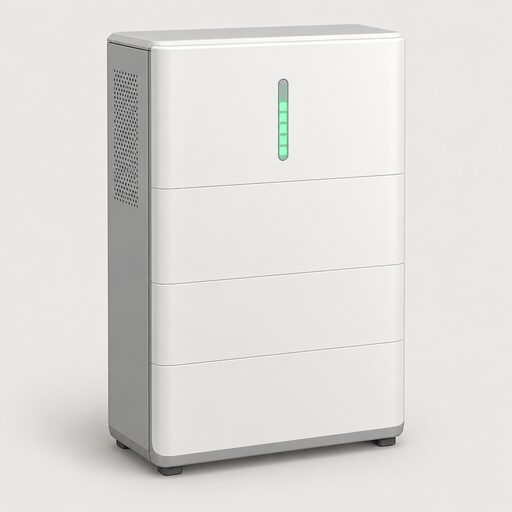
A generator is not the only way to keep a few circuits alive, and the comparison is worth stating plainly. A portable power station is extremely quiet, even more so than an inverter generator1, and it stores its energy rather than converting fuel on demand. That removes the exhaust, the fuel storage and the 15 foot separation rule in one step, at the cost of a finite runtime that ends when the battery is flat.
The generator's advantage is endurance. As long as fuel is available it can run, which is why it suits longer outages and heavier loads. The battery's advantage is that it can sit indoors, needs no refuelling and produces nothing to ventilate. For a short cut affecting a router, a fridge and some lighting, the battery covers the need without the safety constraints. For a multi-day outage with heating pumps and freezers running, the generator's fuel supply becomes the deciding factor.
There is also a maintenance dimension. A generator needs its fuel kept fresh, its oil checked and its engine exercised, while a battery system needs its charge managed. Neither is maintenance-free, and neither is a substitute for the other in every case. The choice follows the expected outage length and the loads that must stay on.
Brands and models sold in the UK
The UK portable generator market includes petrol-powered inverter sets alongside conventional models. One example documented in independent guidance is a maXpeedingrods portable inverter generator, a petrol-powered unit with two 230V 13A sockets, a 12V DC outlet and two USB ports2. That outlet mix is typical of the inverter category: a small number of mains sockets plus low-voltage and USB outputs for electronics.
Buyers comparing models should look at the same five variables that drive price: fuel type, power output, fuel storage, manufacturer and warranty length1. Output is quoted in kVA on many sets, and the usable power in kW is less than that, at 80% of the kVA2. A set rated at a given kVA therefore delivers noticeably less in kW, which matters when matching a generator to a load.
Warranty length is one of the stated cost factors1, so it is worth reading as a specification rather than an afterthought. Fuel type determines how the unit is stored and refuelled, and propane avoids some of the handling issues of petrol while still requiring outdoor operation. None of these choices removes the fundamental constraint that the unit runs on a fossil fuel and must be operated outside.
Sizing and connecting an inverter generator
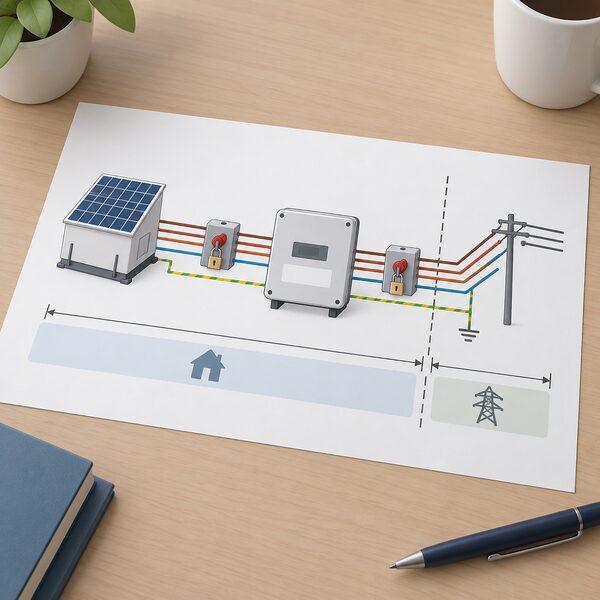
Sizing starts with the load, not the generator. The facts do not give a single recommended figure for a home, because the answer depends on what must run. What is documented is the arithmetic of ratings: the kW, the usable power, will be less than the kVA figure, at 80% of the kVA2. A household working out whether a set will carry a given appliance has to apply that discount first.
Connection is where the rules tighten. A copy of the harmonics report up to the 50th harmonic must be included for an inverter connected generator11. The schematic drawing for a micro-generation connection must show the generator itself, the name and power rating in kW of the inverter being used, the live phases, neutral and earth, lockable isolators, and clear demarcation between the network's equipment and the customer's22. The power rating on the inverter type test certificate should match the power rating of the inverter shown on the schematic diagram22.
For larger installations the process changes. Installations of 50kW or greater require a G99 A1-1 application in advance of installation so that network planners can conduct a full study and quote to connect21. Below that threshold, generators of 50kW or less generally face no network capacity constraints or reinforcement costs in most areas21. Northern Ireland operates its own arrangements through NIE Networks, where the majority of applications are up to 50kW for solar PV, up to 250kW for wind generation and up to 500kW for other technologies23.
Sources23 cited
- Inverter generators vs portable power stations, EcoFlow, 2025-06-16
- How to buy the best generator, Which?, 2026-01-20
- What is the difference between an inverter and a hybrid inverter?, Deye, 2023-01-18
- Solar panel installation, Energy Saving Trust, 2026-09-07
- Plug-in solar panels guide, Uswitch, 2026-09-04
- A complete guide to solar PV, Centre for Sustainable Energy, 2025-11
- Balancing the grid, Uswitch, 2026-02-09
- What is domestic distributed generation?, UK Power Networks, 2026-09-17
- G99 Fast Track process and SGIS, UK Power Networks, 2026-09-17
- G99 Fast Track process, Electricity North West, 2026-09-19
- Documentation to send with small scale generation, NIE Networks, 2026-09-19
- Should I buy my own generator?, NIE Networks, 2026-09-19
- Emergency power cuts, Electricity North West, 2026-09-19
- Inverter air conditioners, Daikin UK, 2026-09-17
- Small wind turbines, MCS Certified, 2026-08-18
- Solar power facts, Energy Saving Trust, 2026-08-13
- Buying a house with solar panels, Energy Saving Trust, 2026-08-13
- Beware these solar panel cold calls, Which?, 2024-08-29
- Are home renewables right for you?, Energy Saving Trust, 2025-12-11
- Generating renewable electricity, Energy Saving Trust, 2025-12-11
- Generation connections, SSEN Distribution, 2026-09-19
- Micro-generation connections above 3.68kW per phase but 50kW or less, SSEN Distribution, 2026-09-17
- Generation connections FAQs, NIE Networks, 2026-09-19
 Generator Fuel and Running CostsPetrol, diesel, LPG or HVO: which is cheapest to run a whole-house generator, and how much does it really cost each day?
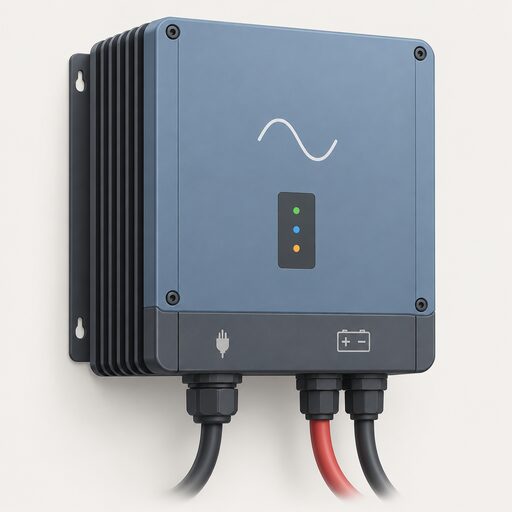 Inverters and Inverter-ChargersIf the power goes off, what actually keeps your fridge and boiler running?
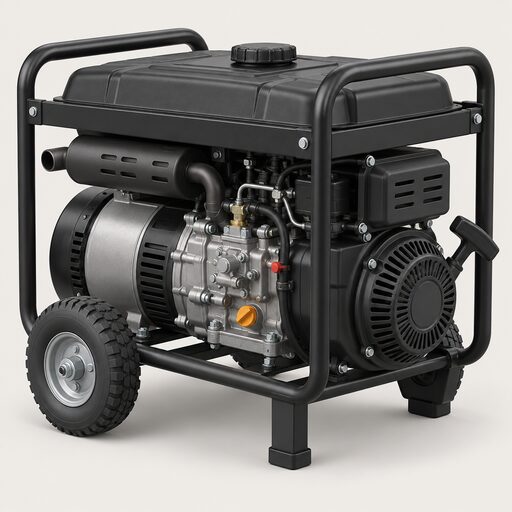 Portable Generators for HomesWhat can a portable generator actually run in a power cut, and for how long?
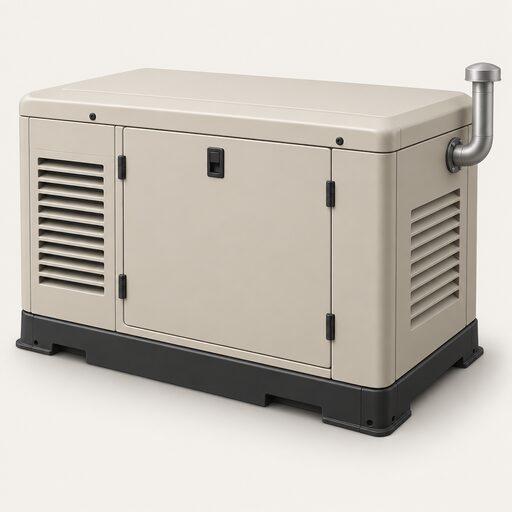 Standby Generators for HomesA standby generator starts itself when the power cuts out, so your home keeps running even when you are out.
 AC-Coupled vs DC-CoupledCan you add a battery to your existing solar panels without swapping the inverter, and does one kind waste more of your solar power than the other?
 Maintaining Backup PowerWill your generator actually start when the power goes off?