
In this comparison
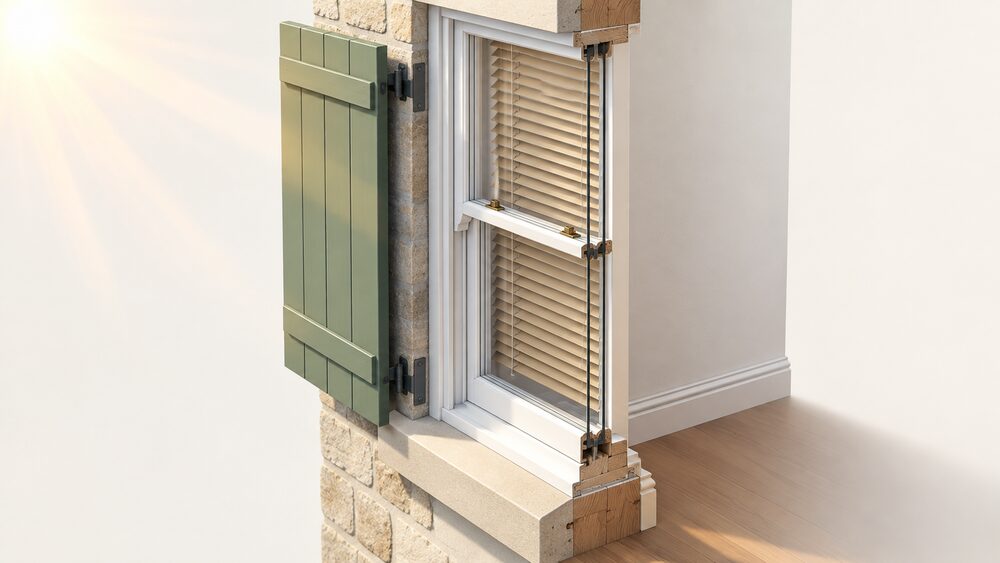
Shading is the cheapest cooling measure a household can take, and the choice between shutters and internal blinds turns on one physical fact: whether the barrier sits in front of the glass or behind it. External shutters are described in government-commissioned evidence as the most effective means of keeping heat out among shading devices, while internal blinds and shutters help only to some extent because by that point the heat is already inside the home, between the window and the shading device1.
The figures reflect that gap. Evidence cited in a London Assembly call for evidence puts internal blinds at a 9 to 13°C reduction in indoor temperatures, and external shading combined with night-time ventilation at 11 to 18°C in some homes3. Shutters, thick curtains or blinds are credited with a 35 to 60% difference to the thermal efficiency of windows, and timber shutters with a 51% reduction in heat loss, though those are winter retention figures rather than summer cooling ones4.
For a household, the practical position is that shading reduces reliance on fans and air conditioning, and therefore on the grid, but it does not remove dependence on either. It is a passive measure that works with the building rather than replacing anything.
Shutters or blinds: which keeps more heat out
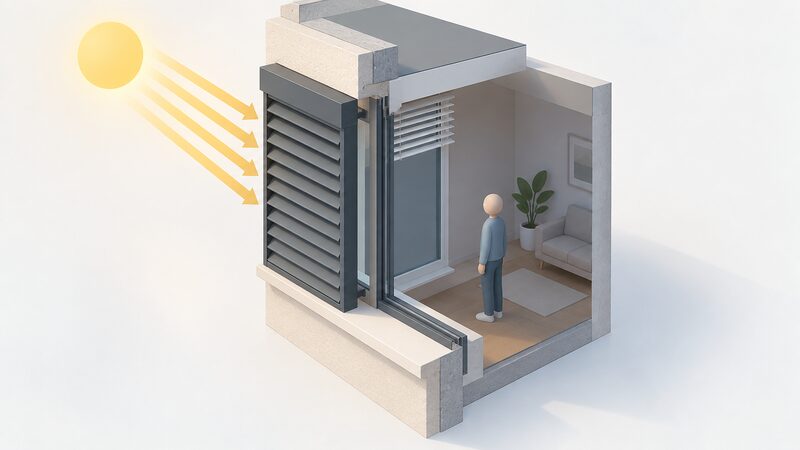
The ranking is consistent across the official and independent sources. External shutters come first, because they intercept solar radiation before it reaches the glazing. Internal blinds and shutters come second, because they intercept it after it has already passed through the glass and warmed the air cavity behind it1.
That ordering matters more than any single percentage. A shading device's performance depends on where it sits in the thermal path, not on how opaque its fabric is. A blackout blind is opaque to light but still sits inside the building envelope, so the heat it absorbs is heat that has already entered the room. An external shutter reflects or absorbs that energy outside the envelope entirely.
| Position | Device | What the evidence says |
|---|---|---|
| Outside the glass | External shutters | Most effective means of keeping heat out2; more effective when fitted externally1 |
| Outside the glass | External blinds, awnings | Suggested protection for south to west facing windows1 |
| Inside the glass | Internal blinds, shutters, curtains | Help to some extent; heat is already inside the home2 |
| Inside the glass | Internal blinds, cited reduction | 9 to 13°C, at approximately low cost3 |
The evidence base for the ranking is a study cited by Elmhurst Energy, which found shading devices, especially external shutters, to be the most effective means of keeping heat out2. BRE guidance reaches the same conclusion in principle, stating that blinds and shutters will be more effective if they can be fitted externally1. Neither source suggests internal shading is useless; both treat it as a partial measure.
There is a compatibility caveat that affects which homes can take the better option. Shutters can be difficult on modern outward opening windows, but easier for traditional sash or sliding windows7. That single constraint often decides the question in practice, particularly in newer housing where outward-opening casements are standard.
For energy independence, the distinction is about how much cooling work the household has to buy. Shading that keeps heat out at the envelope reduces the load on any mechanical cooling, and reduces the electricity drawn from the grid to run it. Shading that only works inside the room reduces that load less.
Why shading works best before heat enters the room
Solar gain is heat entering through glazing. Once it is inside, the building has to remove it by ventilation or mechanical cooling, both of which cost energy or money. Shading placed outside the glass prevents the gain in the first place; shading placed inside the glass manages its consequences1.
The timing rules follow from the same logic. Independent guidance recommends keeping curtains, blinds and shutters closed during the day to block out direct sunlight, and keeping them closed through peak sun hours, given as 11am to 3pm6. CIBSE's published hot-weather advice is to keep external blinds or shutters closed whenever the sun can shine on the windows, or internal blinds and curtains closed during the day, and to keep windows closed during the hottest part of the day if it is hotter outside than inside9.
That last point is the one households most often get wrong. Opening windows in the afternoon of a heatwave admits hotter outside air and can raise indoor temperatures. The recommended habit is to open windows and doors only when it is colder outside than inside, close them when the temperature rises, and open windows on opposite sides of the house where possible8.
Orientation determines how much shading is needed. A south facing window should be shaded completely when the sun is at a solar altitude angle of 50 degrees or higher, according to Approved Document O guidance10. Windows facing south through to west are the ones flagged for awnings, blinds or shutters to protect against solar heat gain1.
Traditional buildings behave differently. The risk of overheating is likely to be lower in traditional buildings with smaller windows and heavyweight stone walls, but needs to be assessed in all cases, and especially where the building has larger, south-facing windows11. Sash windows in such buildings have their own advantage: double hung sash windows can be very effective for ventilating a room when both top and bottom are open in hot weather12.
Shutters: solid barrier, best overall reduction
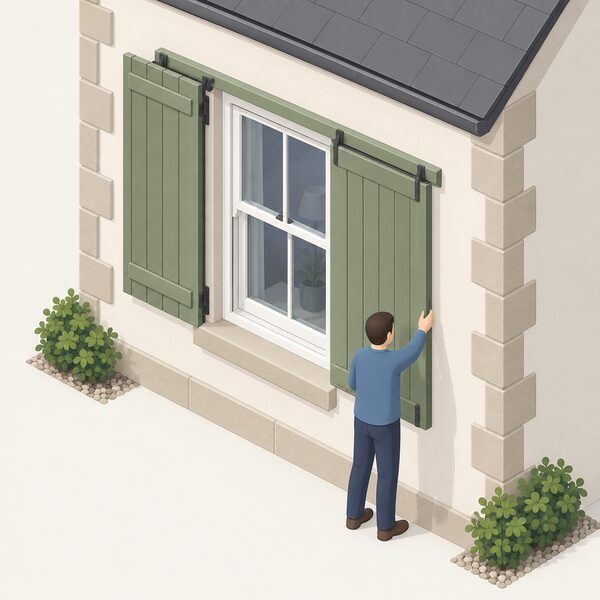
Shutters earn their place through two separate mechanisms. In summer they block solar gain at the envelope. In winter they add an insulating layer over the glazing, and the winter figures are the better documented of the two.
Timber shutters reduce heat loss by 51%, according to Historic Environment Scotland guidance5. Shutters, thick curtains or blinds together can make a 35 to 60% difference to the thermal efficiency of windows, per Welsh Government advice4. Secondary glazing used with other methods like blinds and shutters can reduce heat loss by more than 75%5. These are retention figures, and they should not be read as summer temperature reductions, but they show that a solid shutter is doing real thermal work rather than merely blocking light.
The summer case rests on the external position. External shutters are the most effective means of keeping heat out among shading devices2, and blinds and shutters are more effective when fitted externally1. Where a household can fit them, they reduce the cooling load before it becomes a cooling bill.
The practical constraint is window type. Shutters can be difficult on modern outward opening windows, but easier for traditional sash or sliding windows7. Homes with inward-opening or sliding sashes therefore have the easier route to the best-performing option, while homes with outward-opening casements may need to look at awnings or external blinds instead.
There is a planning dimension for anything fixed to the outside of a building, and a maintenance dimension for timber exposed to weather. Neither is a reason to avoid external shading, but both belong in the decision. For a fuller treatment of the external options, see external shading, shutters and awnings.
For independence, external shutters are the strongest passive option available to a household: they cut the heat load without drawing a watt, and they work during a power cut when mechanical cooling does not.
Internal blinds: convenient but partial
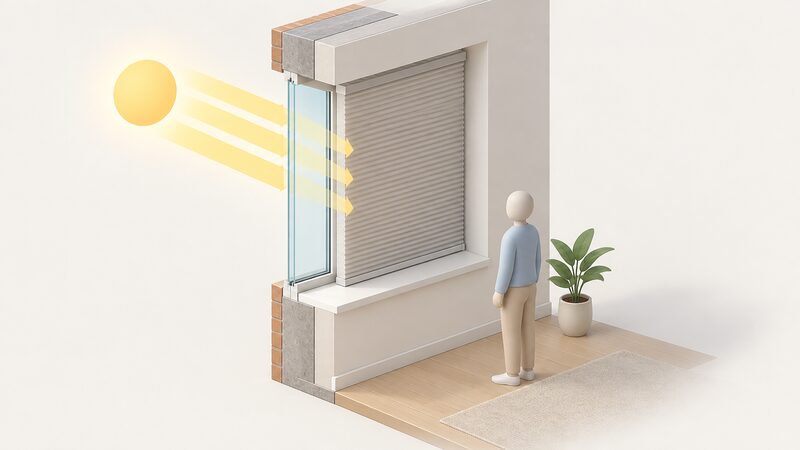
Internal blinds are the default because they are cheap, easy to fit and compatible with almost any window. Their limitation is structural rather than a matter of quality. Using internal blinds and shutters will help to some extent, but by that point the heat is already inside the home between the window and the shading device2.
The published figures for internal blinds vary enough that households should treat any single number with caution. Evidence cited in a London Assembly call for evidence puts internal blinds at a 9 to 13°C reduction in indoor temperatures, at a cost described as approximately low3. That is a large reduction, and it sits alongside the independent finding that internal shading is only partially effective. The two are not necessarily contradictory: a well-fitted reflective blind on a sunlit window in a well-ventilated room can perform very differently from a loose curtain on a west-facing window in a sealed flat.
What internal blinds do reliably is block direct sunlight, which reduces glare and the radiant component of heat gain. Independent guidance recommends keeping curtains, blinds and shutters closed during the day for exactly that purpose8, and CIBSE's advice treats internal blinds and curtains as the fallback where external shading is not available9.
For renters, internal options are often the only ones available, since external fixings usually need landlord or freeholder consent. Energy Saving Trust guidance for renters notes that heavy curtains can make a real difference to how much heat is lost during the winter, and that in the summer blinds can help keep rooms cooler, so a fan is not needed13. That is a fair summary of what internal shading can and cannot do.
Where internal shading falls short
The shortfall is not a defect in the product; it is a consequence of position. Heat that has passed through the glass is inside the building, and the blind can only slow its distribution, not prevent its entry2.
Three situations expose the limit most clearly:
- A single-aspect flat with no cross ventilation, where there is no cooler air path to flush the accumulated heat.
- A room with a large area of glazing, where the sheer volume of solar gain overwhelms what a blind can absorb.
- A top floor flat with less shade from surrounding buildings or trees8.
The risk profile is well documented. There is a greater overheating risk in certain types of dwelling, such as flats and mid-terraced houses, as well as rooms that face south or west6. Homes with large south, west or east facing windows, homes with lots of glazing without adequate ventilation, and top floor flats with less shade are all flagged as particularly vulnerable8.
Insulation measures can make this worse rather than better. Wall and floor insulation is an energy efficiency intervention and intended to retain heat, so it tends to further contribute to overheating7. Roof and loft insulation, by contrast, when correctly installed can lower internal temperatures14. The distinction matters for any household that has recently upgraded its fabric and found summers less comfortable as a result.
Where a dwelling has little or no cross ventilation or a high proportion of translucent glazing, Scottish building standards require it to be shown by calculation that the likelihood of high internal temperature in hot weather is not significant, slight or medium15. That is a new-build test, but it describes precisely the conditions in which internal shading alone will not be enough.
The honest conclusion is that internal blinds manage a problem rather than preventing it. They reduce discomfort and glare, and they lower the work any fan or air conditioner has to do, but they do not stop the heat entering.
Combining shutters and blinds with other measures
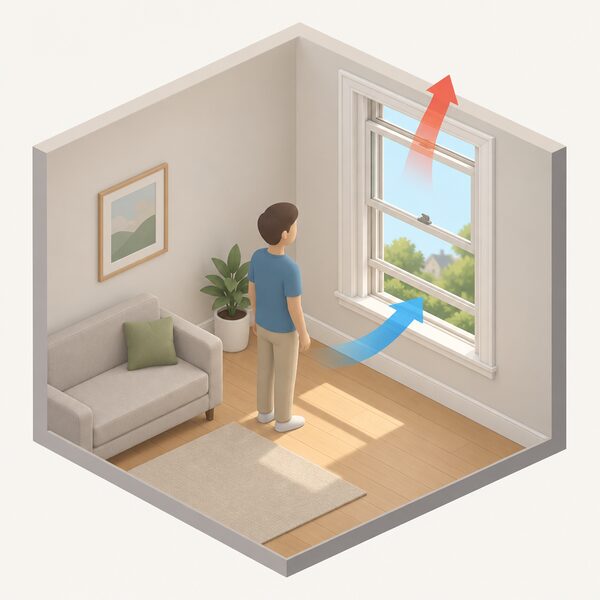
Shading performs best as part of a package. The strongest single result in the evidence combines external shading with night-time ventilation, which can eliminate overheating risk in some homes, reducing indoor temperatures by 11 to 18°C3. Neither element alone produces that outcome.
Ventilation is the partner measure. Open windows and doors only when it is colder outside than inside, close them when the temperature rises, and open windows on opposite sides of the house where possible8. Keep windows closed during the hottest part of the day if it is hotter outside than inside9. Sash windows, opened top and bottom, are particularly effective for ventilating a room in hot weather12.
Fabric measures interact with shading in both directions. Roof and loft insulation, correctly installed, can lower internal temperatures14, while wall and floor insulation tends to contribute to overheating because it is designed to retain heat7. Any retrofit programme should consider overheating risk and mitigate against it where necessary16.
The wider point is that ventilation and window orientation decisions are cheapest at the new build stage, before costly retrofit is needed later17. For existing homes, the sequence that makes sense is shading first, then ventilation habits, then mechanical cooling only if the first two leave a residual problem. The passive cooling approach sets out that hierarchy in full, and night ventilation covers the purge-cooling technique that pairs with external shading.
For a household's independence, this package is the point at which cooling stops being a purchase and becomes a behaviour. Shading and ventilation draw no power, need no refrigerant and no engineer, and continue to work during a power cut. What remains is the residual load on the hottest days, which is where mechanical cooling and its grid dependence re-enter.
Cost and fitting considerations
Shading sits at the cheaper end of overheating measures, but the evidence on cost is thinner than the evidence on performance. Internal blinds are described in one source as costing approximately low3, while mitigation packages for global warming scenarios are assessed as coming with a high cost18. Those two statements are about different scales of intervention and should not be read as a contradiction.
The general pattern in retrofit is that higher upfront costs are often associated with the purchase and installation of more durable products, and that this discourages some consumers19. External shutters are the durable option and carry the higher upfront price; internal blinds are the cheap option with the lower performance ceiling. Neither has a published UK price in the available evidence, so costs are installer-quoted and vary with window size, number and fixing method.
Fitting is where the regulatory line falls. Internal blinds and most internal shutters are a straightforward DIY fit. Anything involving replacement glazing or new window openings is different: professional installation is recommended for new windows and doors, and an installer registered to a competent person scheme is the way to make sure the work meets building regulations20. Window fitters should be registered with government authorised schemes such as FENSA or CERTASS, which monitor building regulation compliance for replacement windows and doors21. If the fitters are not registered, building control must sign off the installation and an additional cost is incurred21.
Where a whole-house solution is not affordable, the sensible sequence is to prioritise. If you cannot afford to replace all the windows, choose the rooms that cost the most to heat22. The same logic applies to shading: the rooms facing south or west, and the rooms with the largest glazing area, deliver the most benefit per pound spent.
For the wider context on how shading fits with mechanical options, home cooling covers the full range, and cooling and energy independence sets out what passive measures can and cannot remove from a household's dependence on the grid.
Sources22 cited
- Overheating Guidance v3, BRE Group, 2026
- 7 tips to keep your home cool during a heatwave, Elmhurst Energy, 2025-08-13
- Are London's homes ready for a heatwave?, London Assembly, 2026-06
- Advice on Improving Energy Efficiency, Eryri National Park Authority, 2022
- How to reduce heat loss from sash windows, Historic Environment Scotland, 2026-09-20
- Be summer ready, Electricity North West
- Considering summertime overheating in highly insulated homes: factsheet 1a, Welsh Government, 2024-01
- Make your home more comfortable in warmer weather, Plymouth Energy Community, 2026-09-20
- BBC News highlights CIBSE's expertise on managing overheating in homes, CIBSE, 2024-07-31
- Approved Document O: overheating frequently asked questions, UK Government, 2022-06-15
- Guide to the conversion of traditional buildings, Scottish Government, 2026-08-10
- Choosing double glazed windows and doors, Which?, 2026-09-16
- How to save energy and money if you rent your home, Energy Saving Trust, 2025-11-14
- Considering summertime overheating in highly insulated homes: factsheet 1b, Welsh Government, 2024-01
- Building Standards Technical Handbook 2019: mechanical ventilation and air conditioning, Scottish Government, 2019-09-17
- Risks to health, wellbeing and productivity from overheating in buildings, Climate Change Committee, 2026-09-19
- What can be done, Climate Change Committee, 2019-08-20
- Addressing overheating risk in existing UK homes, Climate Change Committee, 2026-09-19
- Scotland's clean heat transition, Zero Waste Scotland, 2026-03-17
- Windows and doors, Energy Saving Trust, 2026-05-20
- Replace double glazing, The CPA, 2023-08-02
- Glazing, Planning Portal, 2026
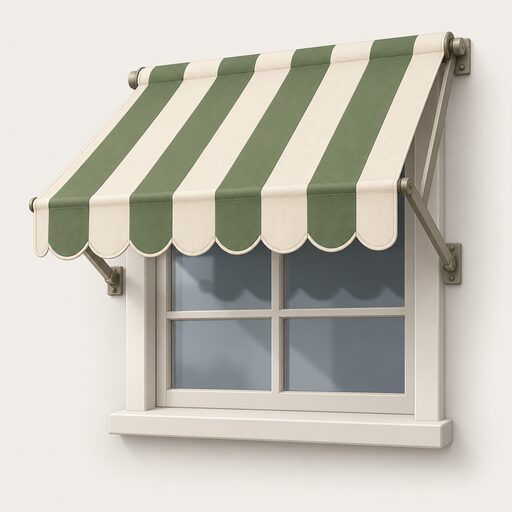 External ShadingExternal shutters, blinds, awnings and fixed shading explained: why shading outside the glass blocks more solar heat than internal blinds, the main options, orientation, materials, costs, planning and long-term ownership.
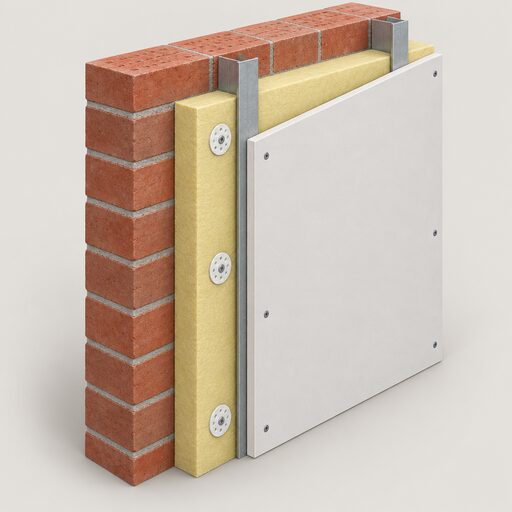 Solid Wall InsulationSolid walls lose far more heat than cavity walls, so what can actually be done about it?
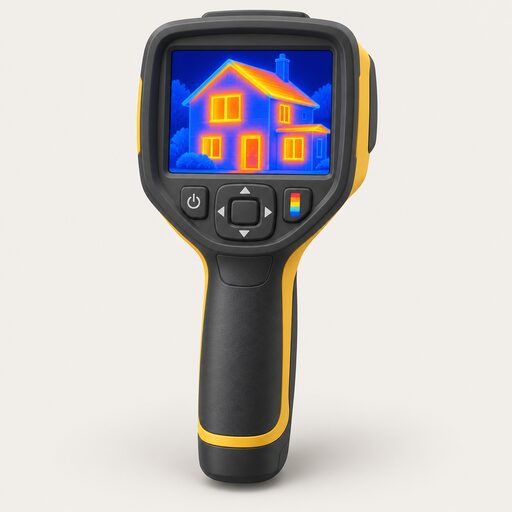 Insulation Savings and PaybackHow much can you really save by adding insulation, and does it depend on your home, your heating and how you use it?
 External Doors and U-ValuesWhich front door keeps the heat in best, and how much does it really matter?
 Fabric First ApproachWhy insulate before replacing the boiler or fitting a heat pump?
 Double GlazingMisted up panes, noisy streets, rooms that never feel warm: is new double glazing worth the money, and how much could it cut your bills?