
In this comparison
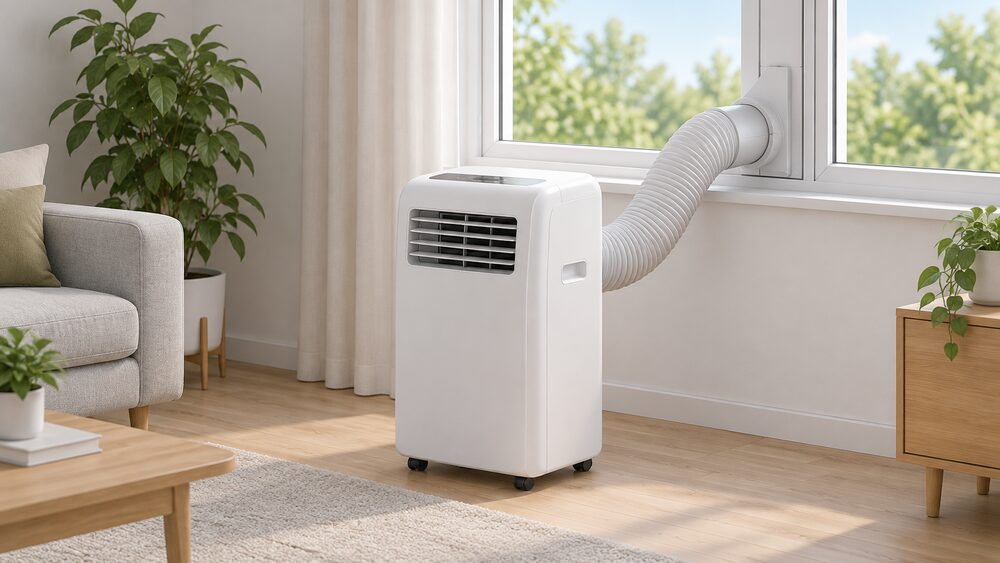
Lux Air and Meaco are the two names most UK households meet when they go looking for a portable air conditioner that does not need an installer. Both sell floor-standing units that roll into a room, take warm air out through a hose and need no permanent work. The comparison is not really about which brand is better. It is about which unit fits the room, whether it heats as well as cools, and whether the smart features and window kit match the house.
The two ranges overlap closely on capacity. Lux Air describes its 9,000 BTU models as ideal for smaller bedrooms and home offices, its 12,000 BTU models as suitable for medium-sized rooms and living spaces, and its 14,000 BTU models as a stronger option for larger rooms1. Meaco's current portables run from a 9,000 BTU MeacoCool MC Series Pro, quoted for rooms of 16 to 26 m², up to a Cirro+ 16000 BTU unit quoted for 35 to 40 m²2.
Where they diverge is in what is bundled and what is optional. Meaco's Cirro and Cirro+ models ship with both a standard window kit for sash windows and a flexible kit for all window types, and list voice control through Amazon Alexa and Google Assistant4. Lux Air offers WiFi, Alexa and Google compatibility and UV-C air treatment on selected models only, and states plainly that heating is a selected-model feature that should be checked before ordering1.
What the comparison comes down to
The practical difference between the two brands is not cooling power but what arrives in the box and what the buyer has to check. Meaco publishes a full specification table for every model, including room size, airflow, moisture removal, duct dimensions and window kit contents. Its Cirro 12000 BTU unit, for example, lists a cooling capacity of 12000 BTU, an energy rating of A, maximum airflow of 400m³ per hour, moisture removal of 1.6 litres per hour, a duct length of 1.8 m and a duct diameter of 15 cm4. The Cirro+ 14000 BTU lists 14000 BTU, an A rating, three fan speeds and modes of Cool, Fan, Dry and Sleep5.
Lux Air's presentation is looser. Its portable range is described by capacity band rather than by a single specification table, with 9,000, 12,000 and 14,000 BTU units and a note that selected models add heating, WiFi, Alexa and Google compatibility and UV-C air treatment1. That is not a criticism of the hardware, but it does mean a buyer has to open the individual product page to confirm what a given unit does.
One detail worth knowing before ordering either brand: Meaco states that the product title on the packaging of some Cirro+ units will show as MeacoCool Pro5. The model name on the box may not match the model name on the listing.
Sizing: 9,000, 12,000 or 14,000 BTU for your room

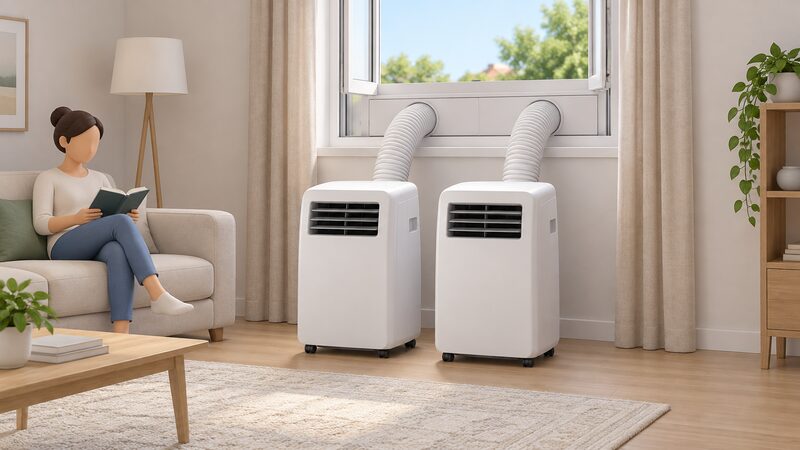
Capacity is the first decision, and both makers publish room-size guidance that overlaps almost exactly. Meaco's MeacoCool MC Series Pro 9000 BTU is quoted for 16 to 26 m² and the 10000 BTU version for 18 to 28 m²2. The Cirro 12000 BTU is quoted for 20 to 30 m², the Cirro+ 14000 BTU for 25 to 35 m² and the Cirro+ 16000 BTU for 35 to 40 m²4. Lux Air's bands are 9,000 BTU for smaller bedrooms and home offices, 12,000 BTU for medium-sized rooms and living spaces, and 14,000 BTU for larger rooms1.
Those figures are estimates, and both makers say so. Meaco states that room sizes are approximate and that ceiling height, insulation, glazing and sun exposure can affect cooling performance7. Lux Air states that rooms with large windows, strong sunlight or poor insulation may require a higher cooling capacity1. A south-facing top-floor flat with a large glazed wall is not the same cooling problem as a shaded ground-floor bedroom of the same floor area.
| Model | Cooling capacity | Quoted room size | Cooling power consumption |
|---|---|---|---|
| MeacoCool MC Series Pro 9000 BTU | 9000 BTU | 16 to 26 m²2 | 1005 watts2 |
| MeacoCool MC Series Pro 10000 BTU | 10000 BTU | 18 to 28 m²6 | 1120 watts6 |
| Meaco Cirro 12000 BTU | 12000 BTU | 20 to 30 m²4 | 1350 watts4 |
| Meaco Cirro+ 14000 BTU | 14000 BTU | 25 to 35 m²5 | 1550 watts5 |
| Meaco Cirro+ 16000 BTU | 16000 BTU | 35 to 40 m²3 | 1750 watts3 |
The pattern in that table matters more than any single row. Each step up in capacity carries a step up in electrical draw, from 1005 watts at 9,000 BTU to 1750 watts at 16,000 BTU2. A larger unit cools a larger room, but it also pulls more power while it runs. For a household thinking about what a hot week costs, the sizing decision and the running-cost decision are the same decision.
When a higher cooling capacity is needed
The published room sizes assume ordinary conditions. Where those conditions do not hold, the guidance from both makers points the same way: go up a band. Lux Air states that rooms with large windows, strong sunlight or poor insulation may require a higher cooling capacity1. Meaco's caveat is the same in substance, listing ceiling height, insulation, glazing and sun exposure as factors that affect performance7.
The other reason to size up is the shape of the room rather than its area. A long, narrow room with the unit at one end will not cool evenly, and a room with a kitchen or a bank of equipment in it carries an internal heat load that floor area alone does not capture. Meaco's own range tops out at the Cirro+ 16000 BTU, quoted for 35 to 40 m²3. Beyond that, a portable unit is the wrong tool and a fixed system is the realistic answer, which is where split air conditioning systems and multi-split systems come in.
There is also a hard limit that no capacity increase fixes. A portable air conditioner sits inside the room it is cooling, so its own compressor and fan add heat to the space, and the exhaust hose has to carry that heat away. A fixed split system puts the compressor outside and avoids the problem entirely. That is the structural reason portables are described as a compromise in portable air conditioners, and it is worth understanding before spending more on a bigger portable.
Smart features: WiFi, Alexa and Google compatibility

Voice control is now standard across most of both ranges, with the caveat that "selected models" is doing real work in the Lux Air description. Lux Air states that selected models offer WiFi connectivity and compatibility with Alexa and Google, and that selected portable units also add heating and UV-C air treatment1. Its split and multi-split inverter systems are described as Wi-Fi and voice-enabled via Alexa and Google Home8, and the Lux Air Designer system lists WiFi app control with Alexa and Google speech control10.
Meaco is more consistent on its current portables. The Cirro 12000 BTU, the Cirro+ 14000 BTU, the Cirro+ 16000 BTU and the Cirro 12000 BTU heater version all list voice control through Amazon Alexa and Google Assistant4. The MeacoCool MC Series Pro 9000 BTU and 10000 BTU models list voice control as yes2. The Cirro 12000 BTU also lists app compatibility as optional4.
For context, voice control is now a general feature of the wider market rather than a differentiator. Daikin notes that Wi-Fi-enabled air conditioners can integrate with voice assistants such as Alexa or Google Assistant12, Hitachi's airHome Multi Pro offers built-in WiFi and voice control compatible with Alexa and Google Home13, and the electriQ AirFlex Smart 14000 BTU portable is Alexa and Google assistant compatible14. Even heating controls have joined in: the Drayton Wiser Radiator Thermostat works with Amazon Alexa and Google Home smart speakers15.
What this means in practice is that the smart features are unlikely to decide the purchase. The question worth asking is narrower: does the specific model being ordered have WiFi, or is it one of the units in the range that does not? For a wider view of what these controls actually do, see air conditioning controls and Wi-Fi.
Cooling only, or heating as well
This is the sharpest difference between the two brands, and it is a difference of disclosure rather than of engineering. Lux Air states that selected models offer both cooling and heating, and advises checking the individual product specification before ordering1. Meaco states that its portable air conditioners offer Dry, Fan Only and even Heat Modes on selected models7.
The specification tables show how narrow that selection is. The Meaco Cirro 12000 BTU lists heating capacity as N/A4, and the Cirro+ 16000 BTU does the same3. Both are cooling-only units despite sitting in a range that includes heater versions. The heater variants are sold as separate products, such as the Cirro 12000 BTU Super Quiet Smart Portable Air Conditioner & Heater11 and the Cirro+ 14000 BTU heater model16.
That distinction runs through the whole air conditioning market, not just portables. Aermec lists the CWX, NLC, CME, CMV, NGW, NXW, NRV and NRL as cooling only, and the WWB as heating only18. Ferroli lists the TOR as only heating27. The lesson for a household is that the mode is a property of the specific model, not of the category, and that a product page has to be read to the specification table before ordering. For the wider picture on units that reverse, see air conditioning that heats.
Installation and the exhaust hose
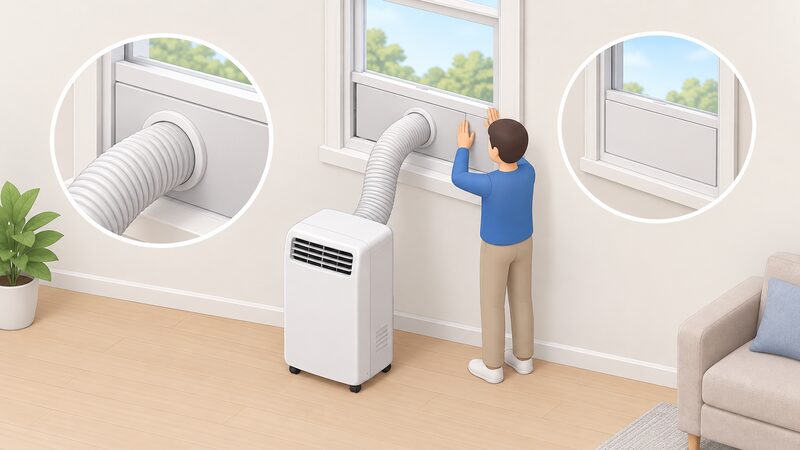
Neither brand needs an installer for its portable range. Lux Air states that its portable air conditioners require no permanent installation: the unit is positioned near a suitable window, the exhaust hose is connected and the warm air is vented outside1. Meaco's portables ship with window kits rather than requiring fixed work.
The window kit is where the two ranges differ in detail. Meaco's Cirro 12000 BTU includes one standard window kit and one flexible window kit; the standard kit is designed for sash windows, while the flexible kit can be used with all window types and measures up to 39 cm in width and up to 4 m in length4. The standard kit's plates measure 65 cm, 65 cm and 51 cm, a combined 170 cm4. The Cirro+ 14000 BTU and Cirro+ 16000 BTU include the same pair of kits, with the same flexible dimensions5. The MeacoCool MC Series Pro 9000 BTU and 10000 BTU follow the same pattern: standard kit for sash windows, flexible kit for all types of windows2.
Venting is not optional, and the Centre for Sustainable Energy is direct about why. It states that portable units need to be properly vented to the outside using a special fitting for the window, and that a vent simply put through an open window will let heat back in28. That is the single most common way a portable air conditioner underperforms: the hose is hung out of a gap and the unit spends the afternoon re-cooling air it has just warmed.
Condensate is the other installation detail. Lux Air states that its portable units have an automatic inbuilt condensate pump in heat mode, evaporate water through the exhaust hose in cool mode, and need manual emptying only in extremely humid conditions29. Meaco's portables list a drainage hose length of 65 cm across the Cirro, Cirro+ and MeacoCool MC Series Pro ranges2. For more on this, see does a portable air conditioner need a drain hose.
What this means for household energy independence
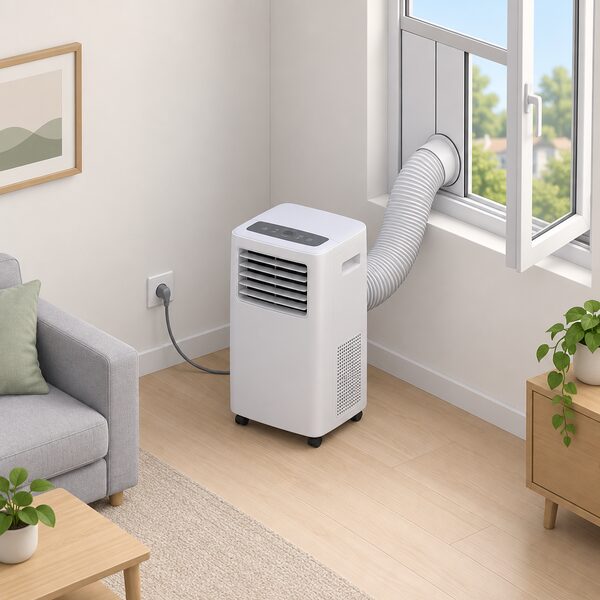
A portable air conditioner is the least independent form of cooling a household can buy, and it is worth being clear about that. It runs entirely on mains electricity from a supplier, it draws between 1005 watts and 1750 watts while cooling depending on capacity2, and it offers no generation, no storage and no reduction in reliance on the grid. What it does offer is a way to keep one room habitable during a heatwave without a survey, an installer, planning consent or a refrigerant commission.
The running cost is the number that matters most. Meaco quotes the Cirro 12000 BTU heater model at 35p per hour in cooling and 29p per hour in heating11. That is the maker's own figure and it will move with the tariff a household is on, but it gives the order of magnitude: a portable unit used through a hot afternoon costs pounds, not pence.
The dependence is not only on electricity. It is also on the manufacturer's app and cloud service for the smart features, on the window kit matching the windows in the house, and on the unit being in stock. Meaco's Cirro+ 14000 BTU and Cirro+ 16000 BTU are both listed as sold out with a return in April 2027, and the MeacoCool MC Series Pro 9000 BTU is listed as sold out2. Seasonal availability is a real constraint in this category.
Where a household wants cooling that contributes to independence rather than drawing on the grid, the options are different in kind: passive cooling, external shading and night ventilation reduce the heat load before any machine runs, and running air conditioning on solar panels changes what the electricity costs. For the wider argument, see home cooling and energy independence.
Sources29 cited
- Lux Air portable AC that cools, heats and sterilises, Cooleasy, 2026-09-23
- MeacoCool MC Series Pro 9000 BTU Portable Air Conditioner and Dehumidifier, Meaco, 2026-09-23
- Meaco Cirro+ 16000 BTU Super Quiet Inverter Smart Portable Air Conditioner, Meaco, 2026-09-23
- Meaco Cirro 12000 BTU Super Quiet Smart Portable Air Conditioner, Meaco, 2026-09-23
- Meaco Cirro+ 14000 BTU Super Quiet Inverter Smart Portable Air Conditioner, Meaco, 2026-09-23
- MeacoCool MC Series Pro 10000 BTU Portable Air Conditioner and Dehumidifier, Meaco, 2026-09-23
- Air Conditioners collection, Meaco, 2026-09-23
- Heating and cooling systems, Cooleasy, 2026-09-23
- Easy-fit single split air conditioning systems, Cooleasy, 2026-09-23
- Lux Air Designer Air Con Heat Pump Inverter System, Cooleasy, 2026-09-23
- Meaco Cirro 12000 BTU Super Quiet Smart Portable Air Conditioner and Heater, Meaco, 2026-09-23
- Inverter air conditioners, Daikin, 2026-09-17
- airHome Multi Pro, Hitachi, 2026-09-17
- electriQ AirFlex Smart 14000 BTU Portable Air Conditioner with Heating Function, electriQ, 2026-09-23
- Wiser Radiator Thermostat, Drayton Controls, 2026-09-08
- Meaco Cirro+ 14000 BTU Super Quiet Inverter Smart Portable Air Conditioner and Heater, Meaco, 2026-09-23
- Cooling-only type AC, Hitachi, 2026-09-17
- CWX, Aermec, 2026-08-13
- NLC, Aermec, 2026-08-13
- CME, Aermec, 2026-09-17
- WWB, Aermec, 2026-08-13
- CMV 2, Aermec, 2026-09-17
- NGW, Aermec, 2026-09-17
- NXW 0503 / 1654, Aermec, 2026-08-13
- NRV, Aermec, 2026-08-13
- NRL, Aermec, 2026-08-13
- TOR, Ferroli, 2026-09-17
- How to keep your home cool in hot weather, Centre for Sustainable Energy, 2026-07
- Lux Air 4kW 14000 BTU Portable Air Conditioning Heat Pump, Cooleasy, 2026-09-23
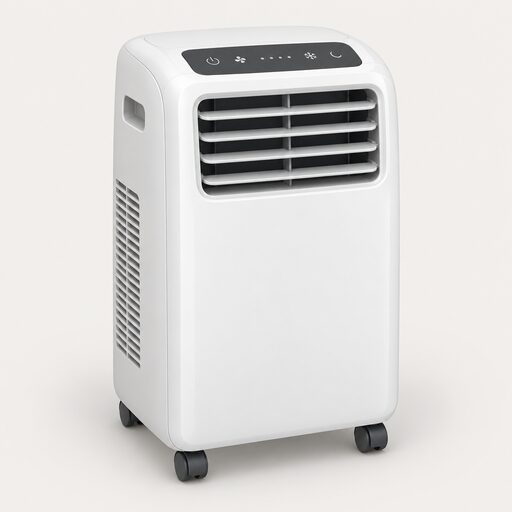
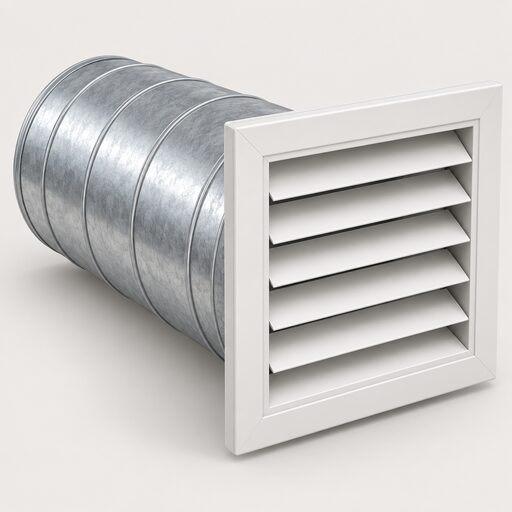 Types of Air ConditioningPortable, wall-mounted, multi-room or ducted: which air conditioning suits your home?
 The Full Cooling and Air Conditioning GuideDo you really need air conditioning in a British summer, or would a fan and better shading do the job?
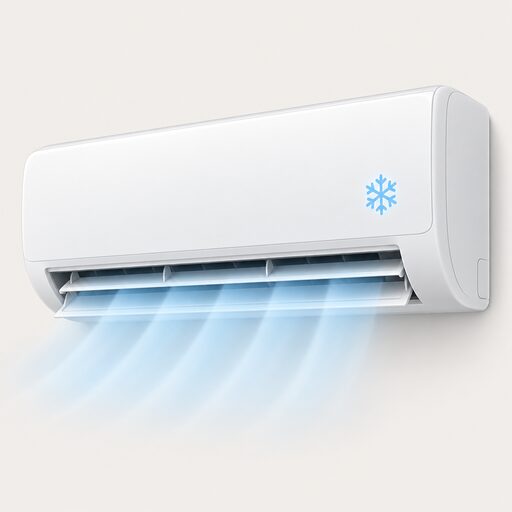 Using a Heat Pump for CoolingCan a heat pump cool your home in summer as well as heat it in winter?
 Air Conditioning SizingHow big an air conditioner does a room need?
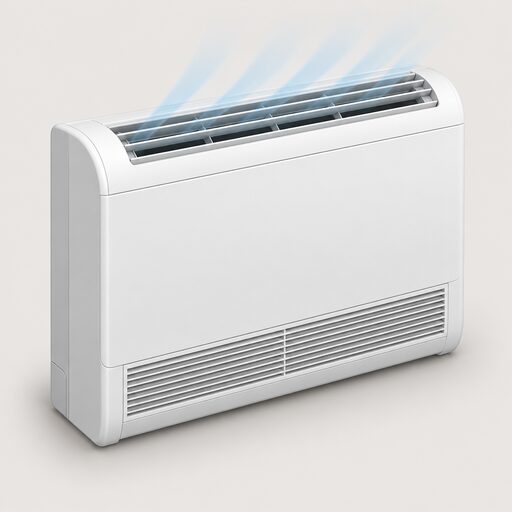 Split Air ConditioningA split air conditioning system cools or heats one room using an indoor unit and an outdoor unit linked by pipes.
 Cooling and Heat PumpsCan an air conditioner heat your home as well as cool it?