
In this answer
Short answer
A micro hydro scheme is not a single purchase with a delivery date. It is a sequence of permissions, designs, civil works and an electrical connection, and the sequence is dominated by the stage that involves other people: consent and licensing. Various consents and licences are required for a hydro project1, and that is the stage that sets the calendar for everything else.
The clearest official signal of the expected horizon is preliminary accreditation, the mechanism that fixes a scheme's eligibility before it is built. It remains valid for two years for hydro, against six months for solar PV and one year for anaerobic digestion and wind2. A two-year window is not a construction time, but it tells you the order of magnitude the industry plans around.
The quickest stages are the ones on your own land. A distribution network operator estimates 6 weeks to complete two to four domestic connections or a small commercial supply once ready on site, and 10 days to return a quote3. Commissioning confirmation for a power generating module is due no later than 28 days after commissioning where tests are not witnessed4. Everything between the survey and that point is where the months go.
Typical timescale: from site survey to first power
There is no single published figure for a complete micro hydro build, and any page that offers one is inventing it. What the official and independent material does give is the length of each stage, and the stages do not overlap neatly.
A micro hydro plant is defined as one that generates less than 100 kilowatts1. Below that threshold the scheme is still a piece of water engineering with an environmental footprint, and the consents reflect it. Planning determination alone takes up to 8 weeks for smaller applications, or up to 13 weeks for larger applications5. Where a scheme touches a conservation area or a listed building, consent can take up to 12 weeks and may delay installation7.
Design work is not a formality either. Comparable publicly funded retrofit programmes budget approximately 12 months per block for design and development8, which shows how long detailed design of a physical installation can run when it is done properly. Equipment lead times sit on top of that.
The practical picture is therefore a scheme measured in years rather than months, with the two-year preliminary accreditation window for hydro2 as the working assumption. Once consent is in hand and the site is ready, the physical build is the short part: 6 weeks for the connection works3, and commissioning confirmation within 28 days4.
For a household, this matters for independence. A micro hydro scheme delivers power for decades, with most hydropower systems lasting 40 to 50 years at low running and maintenance costs9, but it does not deliver anything during the consent stage. The dependence on the grid continues until first power, and the dependence on a supplier continues after it unless the scheme is sized and wired for stand-alone operation.
Consent and licensing: the longest and least predictable stage
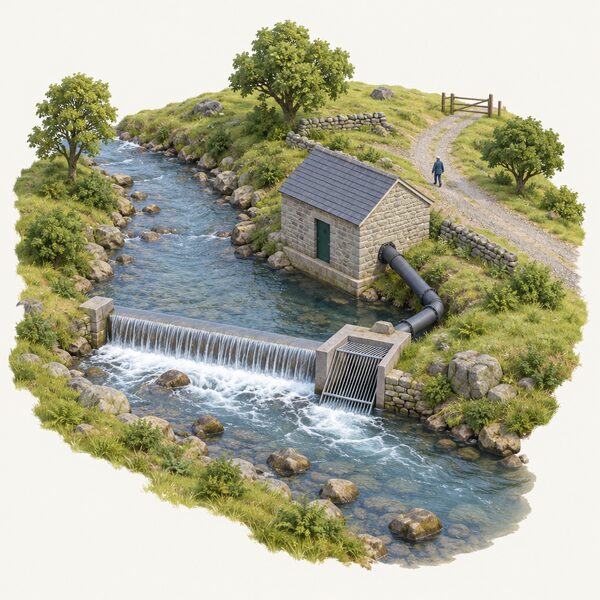
This is the stage that decides the timeline, and it is the one with the least certainty attached. Various consents and licences are required for a hydro project1, and they are granted by different bodies on different clocks.
Planning permission is likely to be required for most new buildings10, and a turbine house, intake structure or access track is a new building. Small-scale wind turbines need planning approval11, and hydro structures are treated with at least the same scrutiny because they sit in a watercourse. By contrast, planning permission is not normally needed when installing a biomass system in a house if the work is all internal12, which shows how much the position turns on whether the works are inside the building envelope or in the landscape.
Where permitted development rights might otherwise apply, the process has its own waiting period. Works cannot commence until the local planning authority notifies the householder that no prior approval is required, or the 42-day period expires without a decision13. That is a minimum delay before a spade goes in the ground, even on the favourable route.
Abstraction and environmental permissions run alongside planning and are not covered by it. The Microgeneration Certification Scheme covers microgeneration of 50kW or smaller14, which is a quality assurance route rather than a consent, but it interacts with the paperwork: an installer must register the installation on the Microgeneration Installation Database within 10 days of commissioning and supply the certificate generated from it15.
The unpredictability is not unique to hydro. Large net zero infrastructure projects are facing delays through the pre-application stage and the decision stage, and project differences, developer efficiency and policy changes are some factors that control the duration16. A domestic scheme is smaller, but the same variables apply in miniature: how complete the application is, how quickly the authority responds, and whether any objection is raised.
Design and equipment lead times
Design and equipment sit between consent and construction, and both take longer than a householder expects.
The design phase for a physical installation of this kind is measured in months. A publicly funded high-rise retrofit programme budgets approximately 12 months per block for design and development8. A hydro scheme is a different structure, but the exercise is comparable: survey, hydraulic design, structural design, and the specification that goes out to tender.
On the equipment side, the published figures are indirect but consistent. Preliminary accreditation for hydro remains valid for two years2, and the same two-year period is confirmed in the guidance for that technology3. That window exists because a scheme may be accredited before it is built, and the regulator allows two years for hydro against six months for solar PV and one year for anaerobic digestion and wind2. The comparison is the useful part: hydro is treated as the slowest of the microgeneration technologies to bring to commissioning.
Turbine manufacture is bespoke work. A Pelton, Turgo, crossflow or Archimedes screw machine is sized to the head and flow of one site, and the civil design has to match it. The hydro turbine types page sets out how the machine choice follows the site, and the head and flow page covers the survey work that precedes any order.
For a household, the design and lead-time stage is where the scheme stops being an idea and becomes a commitment. Money is spent before anything is generated, and the grid remains the only source of power throughout.
Civil works and installation on site
Once consent is granted and equipment is on order, the build itself is the most predictable part of the project.
The connection works give the clearest published figure. A distribution network operator estimates 6 weeks to complete two to four domestic connections or a small commercial supply once ready on site, and 10 days to return a quote3. That is the electrical side, and it is short.
Metering follows a similar pattern. In most cases a commercial electricity meter installation can be completed within 2 weeks, although this may depend on whether any site work is necessary17. For microbusiness consumers, first-time smart meter appointments operate on a 60-working-day, or twelve-week, time frame18, which is a consumer protection standard rather than a construction period, but it indicates the order of waiting involved in metering alone.
Building regulations approval runs in parallel with the physical work. A full plans application can expect a decision within 5 weeks, or 2 months with your consent19. Certification follows completion: a Building Regulations Compliance Certificate issued by NAPIT should arrive within 30 days of the work being completed, whether or not the work is done under MCS15.
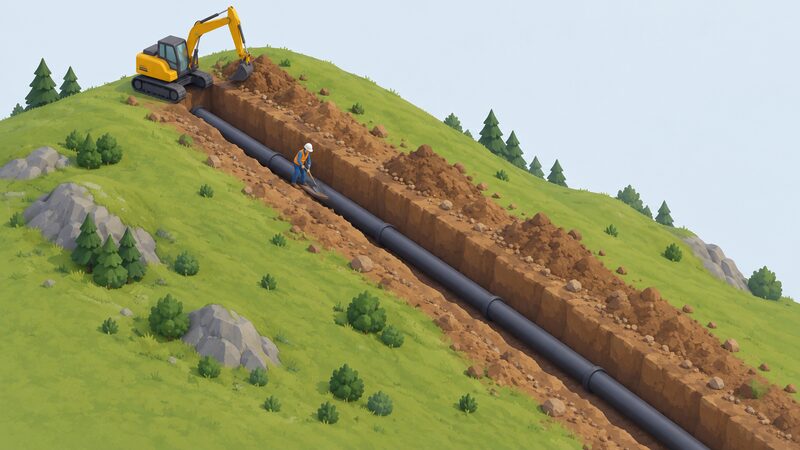
The civil works themselves, the intake, the pipeline, the turbine house and the outfall, are site-specific and no published figure covers them. What can be said is that they are the part of the project a household can see progressing, and the part where weather and ground conditions matter most.
Grid connection and commissioning
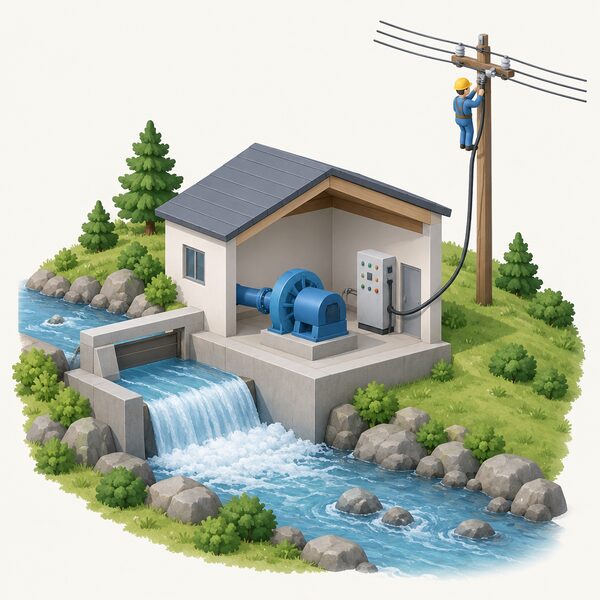
The electrical connection is a defined process with published timescales, which makes it the least uncertain stage of the whole project.
For small-scale generators in Northern Ireland, a connection offer is issued within 90 days of receipt of application, provided all necessary information has been received, and the applicant then has a further 90 days to accept the offer6. Fast-track applications elsewhere are planned for commissioning between 10 working days and three months from the date the application is submitted to the distribution network operator4.
Approval times vary by network and by the nature of the request. Some distribution network operator approvals can be granted in less than 24 hours, while others may require approval that can add a delay of up to 12 weeks20. The range is wide, and it depends on the network, the size of the generator and the state of the local network.
Commissioning itself is a formal step with a deadline attached. Confirmation of the commissioning of each power generating module must be made no later than 28 days after commissioning where commissioning tests and checks are not witnessed4. Test notices are also a formal requirement on publicly funded schemes: give not less than 24 hours notice before commencing tests21.
The connection arrangements for a hydro generator are covered in more detail on the G98 and G99 page, and the Northern Ireland position on grid connection.
What can make a project run over
Overruns in this sector are normal rather than exceptional, and the causes are documented.
The consent stage is the first. Planning determination takes up to 8 weeks for smaller applications and up to 13 weeks for larger ones5, and conservation area or listed building consent can take up to 12 weeks and may delay installation7. Any of these can slip.
Design and construction can slip too. A publicly funded retrofit programme notes that many construction programmes will see tenants living on what will be a construction site for up to two years in some cases8. That is a different programme, but it illustrates how far a physical installation can extend beyond its original estimate.
Where a scheme is grant funded, the funding rules themselves impose deadlines. Project completion extensions are fixed at an additional three months from the original deadline22. A household relying on grant support has a fixed window, and an extension is limited rather than open-ended.
Regulatory change is a further variable. Energy performance regulations must be laid at least 12 months before they take effect in specified areas or for specified types of building23, which means the rules a scheme is designed to can change during the build. On the larger infrastructure side, project differences, developer efficiency and policy changes are some factors that control the duration, and the secretary of state and the quality of the application affect the duration16.
The honest summary is that a micro hydro project has a short build and a long permission. The stages with published timescales, connection, metering, certification and commissioning, are the ones that behave predictably. The stages without them, consent, design and civil works, are the ones that decide when the scheme first generates.
Sources23 cited
- Hydroelectricity, Planning Portal, 2026
- FIT Guidance for Licensed Electricity Suppliers V17.1, Ofgem, 2024-09-06
- How much will my new supply cost?, Electricity North West, 2026-09-20
- Connecting generation to the electricity networks, Energy Networks Association, 2026-09-17
- Do I need planning permission to add air conditioning to my home?, Planning Portal, 2026-09-17
- What is the connection process for small scale generators, NIE Networks, 2026-09-19
- Warm Homes Local Grant 2025 to 2028, Birmingham City Council, 2026-09-20
- High-rise retrofit and upgrade programme phase 1, City of Edinburgh Council, 2023
- Hydroelectricity, Energy Saving Trust, 2025-11-06
- Find out if you need planning permission, Buckinghamshire Council, 2026-09-17
- Wind, nidirect, 2026-05-18
- Biomass fuelled appliances: planning permission, Planning Portal, 2026
- Permitted development rights for householders: technical guidance, Ministry of Housing, Communities and Local Government, 2026-09-17
- WHSHF wave 3 scheme guidance addendum, Department for Energy Security and Net Zero, 2026-06
- Consumer advice, NAPIT, 2026-09-17
- POST-PN-0736, Parliamentary Office of Science and Technology, 2025-01-06
- Energy meters, Energy Helpline, 2026-09-20
- Final decision: smart meter GSOPs, Ofgem, 2026-01-30
- Building regulations approval: how to apply, GOV.UK, 2026-09-17
- Three steps to unlocking heat pumps as an option to replace broken boilers, Nesta, 2026-07-27
- Barcud solar panel installation tender specification, Sell2Wales, 2026-06-15
- ECO4 guidance: supplier administration guidance, Ofgem, 2026-07-06
- Building Standards Technical Handbook Domestic (April 2026), Scottish Government, 2026-03
 Micro Hydro InstallationHow much water do you need, and how far does it have to fall, for a micro hydro system to be worth it?
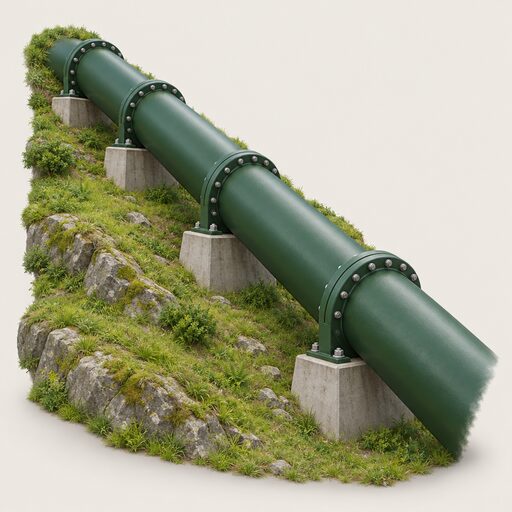 Micro Hydro CostHow much does a micro hydro scheme cost to build and run, and what makes one worth it?
 Abstraction Licences and PermitsTaking water from a stream to power a turbine needs permission, and where you live decides who grants it.
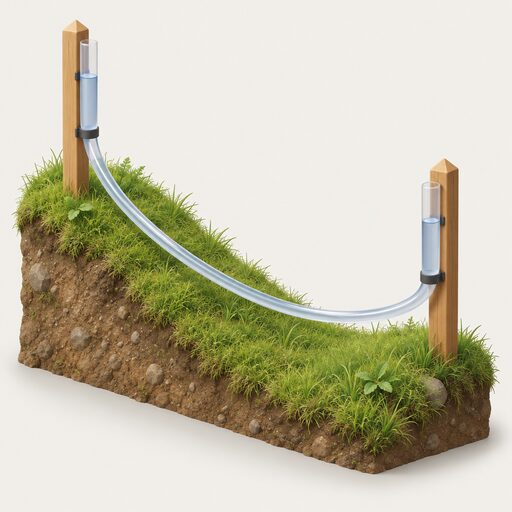 Micro Hydro Head and FlowHead is the drop from the top of your water supply to the bottom, and flow is how much water comes down.
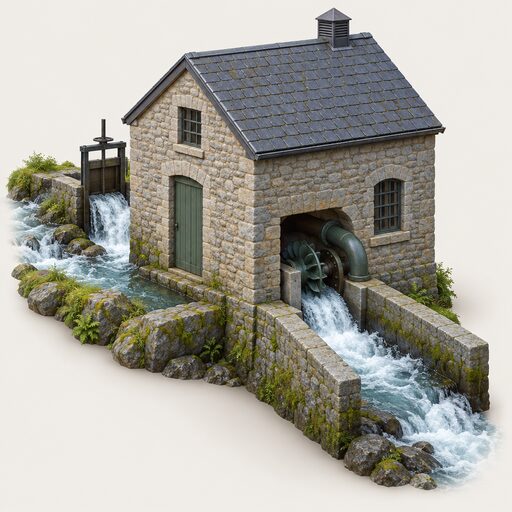 Micro Hydro Power for HomesA stream on your land that flows all year can make steady electricity, day and night, even when there is no sun or wind.
 Hydro Environmental RequirementsWhat does a micro hydro scheme need to do about fish, and who decides?