
In this guide
Toshiba is a name most UK households meet first on a wall-mounted air conditioning unit, not on a heating system. The company's domestic heating and cooling products are split air-to-air units, and the same hardware that cools a room in July can heat it in January: independent guidance states that these units can be configured for cooling as well as heating1. That places Toshiba in the air-to-air part of the market rather than in the air-to-water cylinder-and-radiator market that most UK heat pump policy is built around.
The distinction matters more than the badge. Air source heat pumps are the most common type of domestic heat pump in the UK and are suitable for most types of home2, and the most common type currently installed in UK properties is the air-to-water version3. Toshiba's household offer sits alongside that mainstream rather than inside it, which shapes everything from what it can replace to what it costs to run.
Toshiba's heating and cooling business is not independent. Trade reporting describes Toshiba as part of the Carrier family4, so warranty, parts and service run through a large international group rather than a British manufacturer. For a household weighing energy independence, that is the central trade-off: a Toshiba split unit gives direct control of a room's temperature and can cut gas use, but it keeps the home on electricity from a supplier, and its support chain runs through a corporate parent.
Toshiba heat pumps: who makes them and where they sit in the UK market
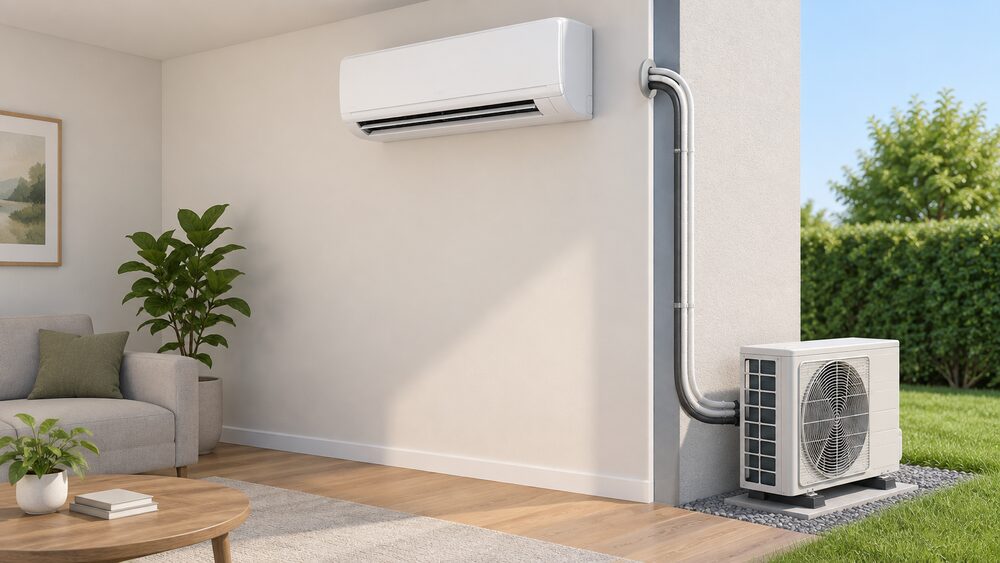
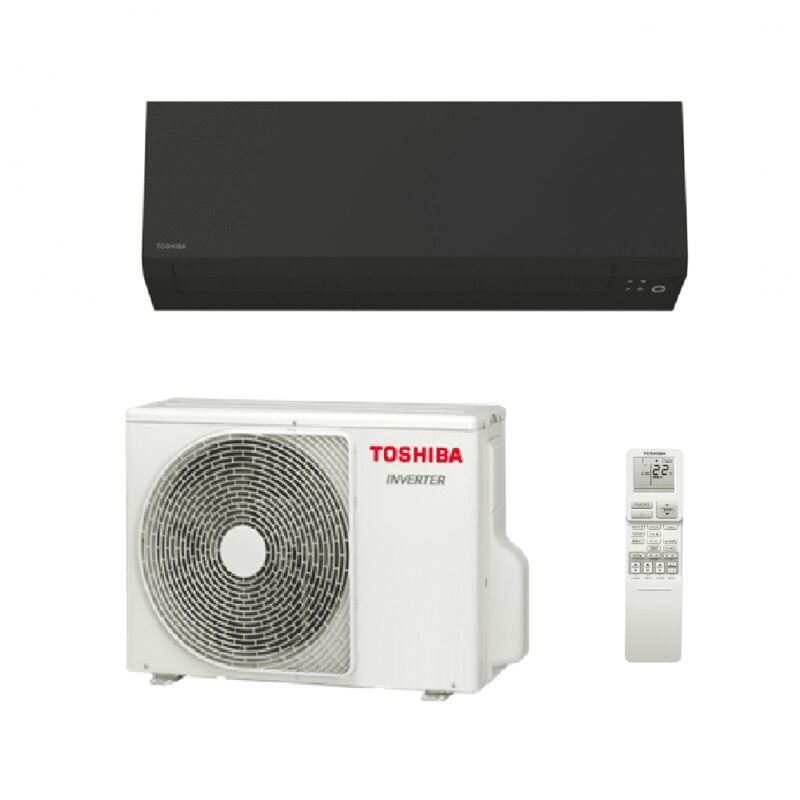
Toshiba's household heating products are air conditioning units used in reverse. That is not a marketing description: air-to-air heat pumps take heat from the outside air and are described in independent guidance as a low carbon heating system that improves a home's carbon footprint1. The same source notes that these units can be configured for cooling as well as heating, which is why the product is sold as air conditioning in one season and heating in another1.
The UK market they sit in is dominated by a different design. Air source heat pumps are the most common type of domestic heat pump in the UK and are suitable for most types of home2, and the most common type currently installed in UK properties is air-to-water3. Air source units are also described as the most common type of heat pump in the UK generally8, and as the most common heat pump for homes9. The practical difference is what the unit heats: air-to-water feeds radiators, underfloor loops and a hot water cylinder, while an air-to-air unit heats the air in the room it serves and does not produce domestic hot water.
Manufacturing is concentrated too. There are at least 33 manufacturers supplying air source heat pumps in the UK, with Mitsubishi Electric, Vaillant, Daikin and Samsung accounting for nearly two-thirds of total annual UK sales10. The main companies manufacturing air source heat pumps in the UK in 2024 were Mitsubishi Electric, Vaillant, Ideal and Octopus Energy, with a combined market share of 34%10. Of heat pumps sold in the UK, the UK manufactures around one third, with two thirds imported11. Toshiba is not named among the leading UK manufacturers in that data, so a Toshiba unit is best understood as an imported product supported through a UK distribution and installer network.
Ownership: part of the Carrier family, not independent
Toshiba's heating, cooling and air conditioning business sits inside the Carrier group. Trade reporting on the UK heating market describes Toshiba as part of the Carrier family4. That is a statement about corporate ownership, and it has practical consequences for a household.
The first is that the brand is not a small specialist that could disappear from the UK overnight. Carrier is a large international manufacturer with an established air conditioning business, and Toshiba's domestic products are sold through that structure. The second is that the warranty, the spare parts chain and the technical support route all run through the manufacturer and its UK operation, not through a national scheme or a government body. A household buying a Toshiba unit is entering a relationship with a corporate group, and the terms of that relationship are set by the group.
The third consequence is about the wider supply chain. Government support exists for installers and manufacturers to expand supply chains12, which reflects how young the UK heat pump supply chain still is. For an imported brand, that means the availability of a specific spare part or a trained engineer depends on the distributor network rather than on a domestic factory. It is worth asking an installer, before work starts, which parts are held in the UK and what the lead time is on a replacement outdoor unit.
The product range: what Toshiba offers for household heating and cooling
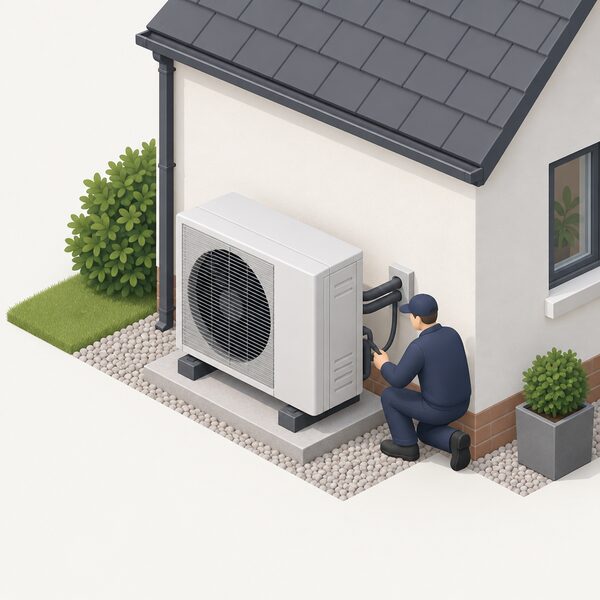
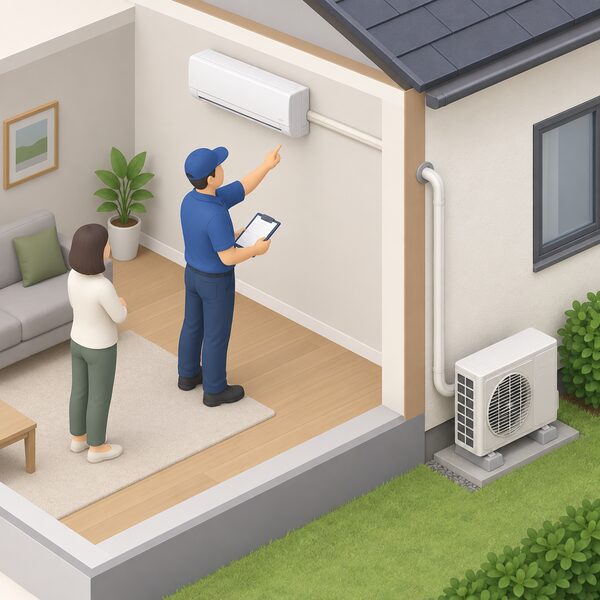
Toshiba's household offer is built on split air conditioning. A split system places a compressor unit outside and one or more heads inside, connected by refrigerant pipework. Run in heating mode, the same equipment is an air-to-air heat pump. Independent guidance confirms that air-to-air heat pumps can provide cooling as well, describing this as very useful in a heatwave5, and that the units can be configured for cooling as well as heating1.
The wider heat pump category is broader than that. A heat pump is a versatile system capable of providing heating, cooling and hot water for homes, commercial buildings and industrial applications13. Toshiba's domestic split products cover the first two of those three functions. They do not, as standard, produce hot water, which is the function that most distinguishes an air-to-water system and the reason air-to-water dominates UK installations3.
That has a direct bearing on what a Toshiba unit can do in a British home. It can heat and cool the rooms where heads are fitted. It cannot fill a hot water cylinder, feed a wet radiator circuit or supply a bathroom. Where a household wants to keep a boiler for hot water and radiators while adding room-level heating and cooling, the two can coexist: hybrid heat pumps can work with another heating system in a building, such as a gas boiler14. That arrangement is a hybrid, not a replacement.
Specifications and what to check before choosing a unit
The specification that matters most is not on the datasheet. Official guidance states that heat pumps should be selected to meet the full space heating requirement at the design condition chosen for the heat loss calculations15. In other words, the unit is sized against a calculated heat loss for the building, not against a rule of thumb about floor area.
Sizing errors cut both ways. Official guidance warns that an undersized unit may struggle to meet demand, while an oversized unit may cycle on and off often and lessen efficiency14. A unit that short-cycles also wears its compressor harder. For a split system, the calculation has to be done room by room, because each indoor head serves one space and the outdoor unit has to carry the combined load.
Certification is the second thing to check. Heat pumps providing water heating only are tested according to EN 16147:201716, which is the standard behind hot water heat pump performance claims. Air-to-air units are certified differently, and the KEYMARK Certification Scheme for Heat Pumps (2025) is one route: a certified air source unit carries a registration number, in one listed case 041-K112-0417. A household comparing quotes can ask which certification a proposed unit holds and what test basis the quoted performance figures rest on.
| What to check | Why it matters | Where the rule comes from |
|---|---|---|
| Heat loss calculation | Sets the required output at design condition | Official guidance15 |
| Unit sizing | Undersizing fails to meet demand; oversizing cycles and loses efficiency | Official guidance14 |
| Certification | Shows which test basis the performance figures use | KEYMARK scheme17 |
| Hot water provision | Split air-to-air units do not supply a cylinder | Independent guidance3 |
| Hybrid compatibility | A unit can run alongside an existing boiler | Official guidance14 |
Cost and installation: what a household should budget for
Published cost figures in the UK are for air-to-water systems, not for split air conditioning, and they should be read as context rather than as a quote for a Toshiba unit. Air-to-water heat pumps cost around £11,000 to install, with the Boiler Upgrade Scheme providing a grant of £7,5005. A parliamentary committee report recorded a wider range in the cost of installing a heat pump of between £8,000 and £15,000, depending on the work needed to the home18.
Independent modelling gives medians by house type: approximately £9,700 for flats, £12,000 for semi-detached and terraced houses, and £14,000 for detached houses19. Those figures are for wet systems with cylinders and radiator work, so they are not a guide to the price of a split air conditioning installation, which involves less building work but also delivers less.
There is no published Toshiba list price in the material available here, and no published installed price for a Toshiba split system. Prices for this kind of work are installer-quoted, and the quote depends on the number of indoor heads, the pipe runs, the electrical supply and the siting of the outdoor unit. Where a household is weighing a Toshiba split system against a full wet heat pump, the comparison is not like for like: one heats rooms, the other heats the whole house and its water. The cost of a wet system, its grant position and its running costs are set out in heat pump cost and heat pump grants.
What owning a Toshiba heat pump means for energy independence
A split air-to-air unit changes where a household's heat comes from, but only partly. It takes heat from the outside air rather than burning gas on site, and independent guidance states that in all cases, replacing an existing fossil fuel heating system with a heat pump will save carbon emissions, with the amount depending on the size of the home and the type of heating system being replaced7. Welsh official guidance puts the potential reduction in a heating carbon footprint at up to 70%20.
What remains is electricity. A Toshiba unit runs on mains power from a supplier, so the household swaps a gas dependence for an electrical one. That dependence can be softened: if a household already has solar panels, using the free energy they generate to power a heat pump can save more7. Insulation matters too, since topping up wall, floor and loft insulation before installing a heat pump helps reduce running costs7. Half of heat pump owners are not currently on a smart tariff21, which is a reminder that the tariff side of the equation is often left on the table.
The other dependence is corporate. Warranty, parts and service run through the Carrier-owned Toshiba organisation4, and the UK supply chain for heat pumps is still being built, with government support for installers and manufacturers to expand it12. A household that wants to understand the wider picture, including what full independence would require, can read heat pumps and energy independence.
Can a Toshiba heat pump replace my gas boiler?

For a wet system, the evidence is mixed and worth stating plainly. Official research found that those replacing previously functioning gas boilers typically expressed a preference for a new boiler over the heat pump22. That is a finding about household experience, not about the technology's capability, and it sits alongside independent guidance that low carbon heating like heat pumps can be a good option when replacing a current heating system9, and that a heat pump can be a good choice especially when replacing an older, G-rated gas boiler with a well-designed system7.
For a Toshiba split air-to-air unit specifically, the answer is narrower. It heats air in the rooms where heads are fitted and does not supply hot water or a wet radiator circuit, so it does not replace a boiler in the way an air-to-water system can. It can work alongside one: hybrid heat pumps can work with another heating system in a building, such as a gas boiler14. Households weighing the two routes can compare them in air-to-air vs air-to-water heat pumps and replacing a gas, oil or LPG boiler with a heat pump.
What size Toshiba heat pump do I need for my home?
Sizing starts with a heat loss calculation. Official guidance states that heat pumps should be selected to meet the full space heating requirement at the design condition chosen for the heat loss calculations15. The same guidance warns that an undersized unit may struggle to meet demand, while an oversized unit may cycle on and off often and lessen efficiency14.
For a split system the calculation is per room, because each indoor head serves one space. Compact heat pumps are specifically designed to heat small, well-insulated modern flats and homes2, which is the segment where a single-head split often fits best. Where a scheme is funding the work, sizing rules can be explicit: under the Warm Homes: Local Grant, the heat pump is sized to provide a minimum of 55% of the calculated heat load for retrofit and packaged hybrids23. That is a scheme condition rather than a general rule, but it shows how precisely sizing is now specified. More detail is in heat pump sizing.
Where to see the range: stand D520 at the exhibition

Seeing an installed system before buying is the most reliable way to judge noise, siting and how a split head looks in a room. The Heat Pump Ready Programme funded demonstration projects around the country, including Newcastle, Tyne and Wear, and Bridgend24. A household that wants to visit a working installation rather than a showroom unit can use the Visit a Heat Pump scheme and the wider Heat Pump Ready Programme pages.
Exhibitions are the other route, and stand D520 is where Toshiba's range can be seen in person. Trade shows are where manufacturers launch new residential products, and the pattern is well established: one supplier launched a new residential air source heat pump at InstallerSHOW 20264. For a household, the value of a stand visit is the chance to compare physical units side by side, ask about certification and confirm which parts are held in the UK.
Sources24 cited
- Air-to-air heat pumps, Energy Saving Trust, 2026-09-11
- Air source heat pumps, Energy Saving Trust, 2026-08-03
- How heat pumps work: a guide for homeowners, NICEIC, 2025-09-17
- Viessmann Climate Solutions to launch new residential air source heat pump at InstallerSHOW 2026, CIPHE, 2026-05-14
- Electric heating, Centre for Sustainable Energy, 2026-06
- DESNZ public attitudes tracker: heat and energy use in the home, Summer 2025, Department for Energy Security and Net Zero, 2025
- Is now a good time to get a heat pump, Energy Saving Trust, 2025-12-12
- In-depth guide to heat pumps, Energy Saving Trust, 2026-07-16
- Heating your home, Energy Saving Trust, 2026-05-19
- EINAS 2025: heat and buildings, Department for Energy Security and Net Zero, 2025
- Raising minimum standards for heat pumps: options assessment, Department for Energy Security and Net Zero, 2024-11-27
- Heat pumps research briefing, Parliamentary Office of Science and Technology, 2026-09-19
- Heat pumps, CIBSE, 2026-09-17
- Heat pumps, nidirect, 2025-02-24
- Approved Document L, Volume 1: Dwellings, Ministry of Housing, Communities and Local Government, 2026-09-17
- HEM TP 12: heat pump methodology, Department for Energy Security and Net Zero, 2026-01
- KEYMARK certificate 041-K112-04, KEYMARK Certification Scheme for Heat Pumps, 2025-12-22
- Heat pumps: beyond affordability, Public Accounts Committee, 2024-05-26
- How to make heat pumps more affordable: assumptions and methods, Nesta, 2024-06-13
- Your essential guide to heat pumps, Welsh Government, 2025-02-20
- Clean tech combo could help households beat rising energy bills, Energy Saving Trust, 2026-07-15
- Heat pump transition report, Department for Energy Security and Net Zero, 2026-05
- Warm Homes: Local Grant policy guidance, Department for Energy Security and Net Zero, 2026-07
- Heat Pump Ready Programme: successful projects, Department for Energy Security and Net Zero, 2026-05-28
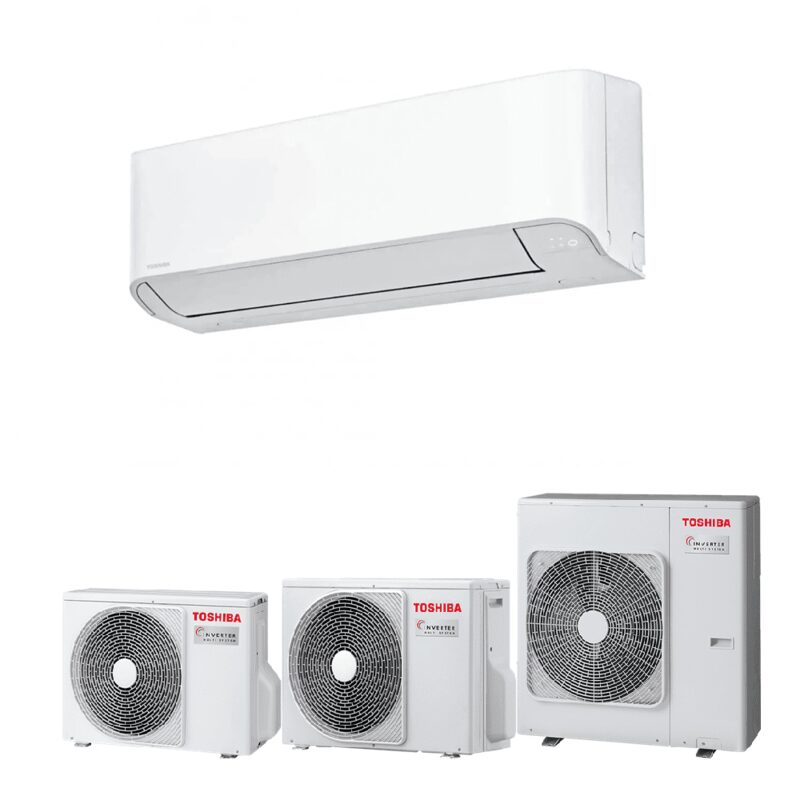
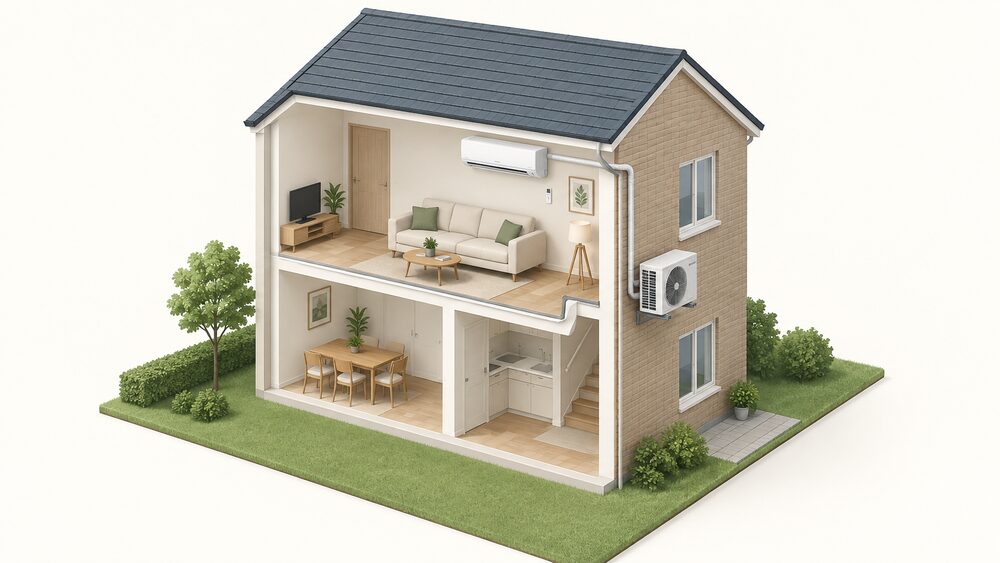 Toshiba air conditioning for homesToshiba air conditioning for homes comes in two main types: a single wall unit for one room, or a multi-split system that heats and cools several rooms from one outdoor box.