
In this guide
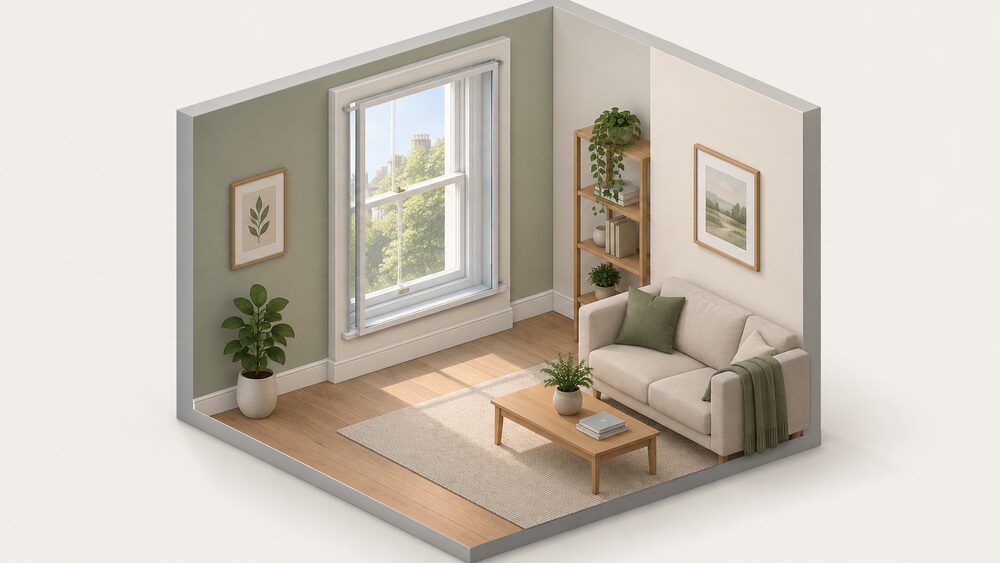
Selectaglaze is the best-known UK supplier of secondary glazing, the system that fits a second layer of glass inside an existing window rather than replacing it1. It is the name that comes up in searches for listed building glazing, and the reason is straightforward: secondary glazing is fitted on the inside of an existing window, so the original joinery, sash and external appearance stay untouched2.
The performance case rests on two things. A maker product page states that secondary glazing can reduce heat loss through an existing window by up to 65%, and that it can significantly reduce the amount of noise entering a building, more so than double or even triple glazing in most instances3. Independent guidance is more measured: secondary glazing is not as energy efficient as new double or triple glazing because the seals are not as airtight, and its thermal performance depends very much on the condition of the primary single glazed window on the building's exterior4.
For a household, the trade is clear. Secondary glazing keeps the original window, avoids the planning and consent questions that replacement glazing raises in a listed building or conservation area, and can be installed in a few hours. What it does not do is remove the dependence on the primary window, on the installer who surveyed and fitted it, or on the heating system behind it.
What Selectaglaze secondary glazing is and how it works
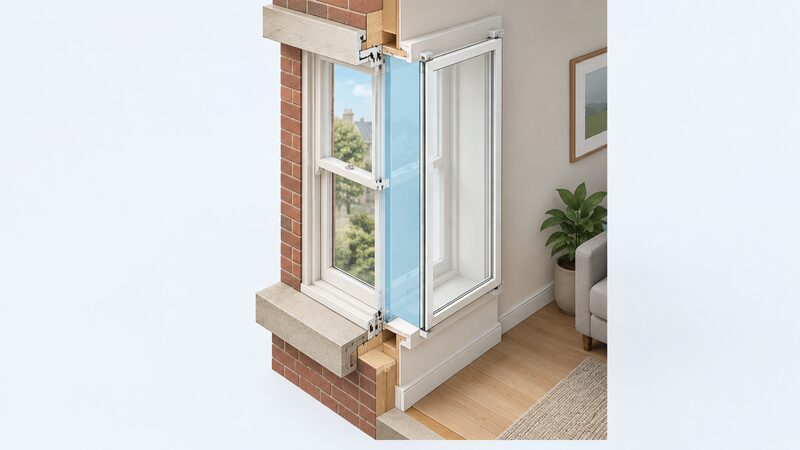
Secondary glazing involves fitting a second layer of glass inside an existing window1. It is not a replacement window and it is not a sealed unit: it is a separate, independently framed pane or panel mounted on the internal reveal, leaving the original window in place and operable behind it2.
The insulating effect comes from the trapped air layer between the primary window and the secondary pane. That is the same principle as a sealed double glazed unit, which traps air between two panes of glass to create an insulating barrier that reduces heat loss, noise and condensation9. The difference is that in secondary glazing the air gap is not factory-sealed, so its performance depends on how well the secondary frame is fitted and how airtight the primary window is.
Glass specification matters. In secondary glazing, hard coat Pilkington K Glass is used to reflect heat back into the home, the same low-emissivity effect used in sealed units4. That is a coating on the secondary pane, and it works on radiant heat rather than on draughts.
The system suits windows that cannot be replaced. Independent guidance notes that secondary glazing panels will improve old windows when it is not feasible to replace them, and that for some older houses secondary glazing might be a less costly option than replacement glazing for getting the required airtightness at window frames10. It is also recorded in the Standard Assessment Procedure conventions: secondary glazing with single glazing is recorded as secondary glazing, and secondary glazing with Age 2 double glazing is recorded as Age 3 double glazing12. That matters because it means the measure is recognised in the methodology behind an EPC, not treated as a cosmetic addition.
The range: horizontal sliders, vertical sliders, fixed panels and lift-outs
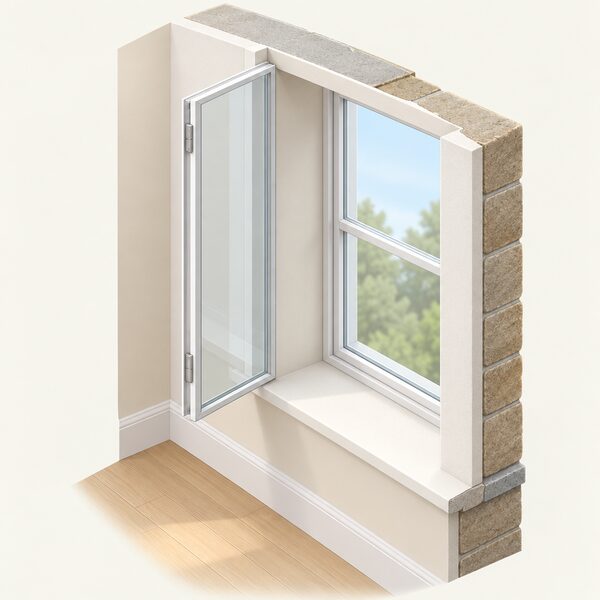
The product types available in secondary glazing consist of horizontal sliding windows, vertical sliding windows, hinged secondary glazing units, lift-out units, fixed secondary glazing and several more3. An independent listing of the range describes horizontal sliders, vertical sliders, top hung, side hung, double side hung, lift-outs, and removable fixed panels fitted onto the back of doors13.
The choice is driven by how the room is used and how the original window opens. Units can be fitted to be sealed, lift-out or openable, on either hinges or vertical or horizontal slider tracks, so the original windows can open as normal5. A sealed fixed panel gives the best airtightness and the simplest frame; a slider or lift-out gives access to the primary window for cleaning and lets the room be ventilated.
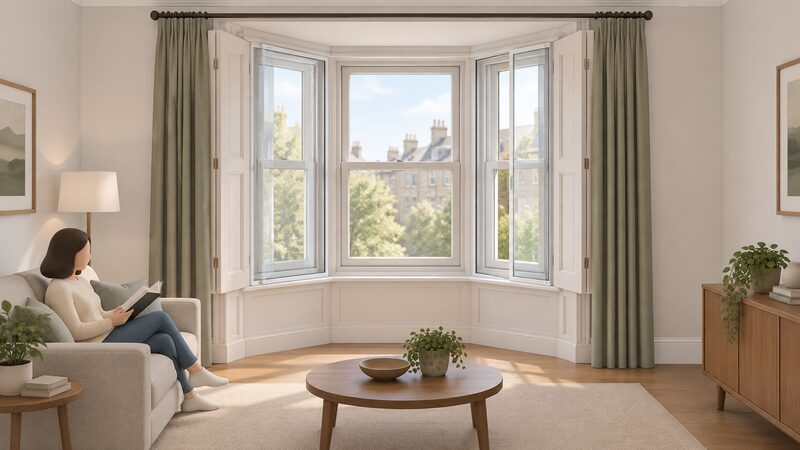
Secondary glazing can be installed on many types of windows, including casement, sash, bay, and tilt-and-turn windows3. Arched frames are also available for shaped openings3. For a bay window, the panels follow the angles of the bay, and each face is treated as a separate unit.
| Type | How it opens | Where it suits |
|---|---|---|
| Horizontal slider | Slides sideways on tracks | Sash and casement windows needing regular access |
| Vertical slider | Slides up and down | Sash windows, matching the original operation |
| Hinged | Opens on hinges | Windows needing full ventilation |
| Lift-out | Lifts out of the frame | Occasional access and cleaning |
| Fixed | Sealed, no opening | Noise and heat priority where the outer window is never opened |
| Removable fixed panel | Fitted onto the back of doors | Door glazing |
Noise reduction: how much quieter a room can become
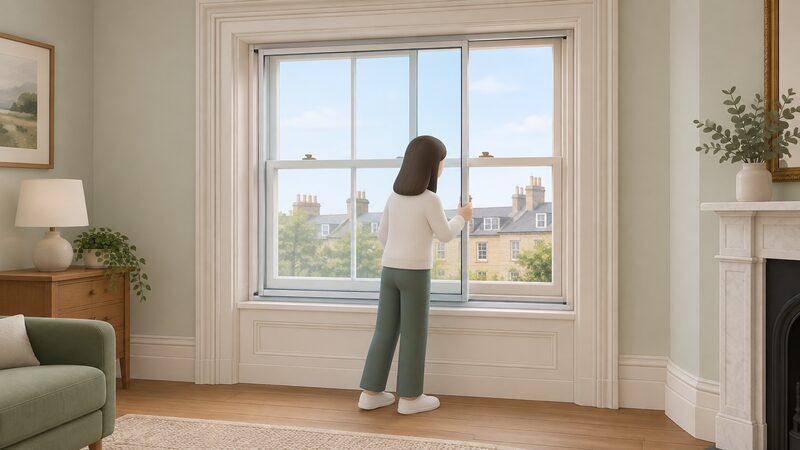
Noise is often the reason a household looks at secondary glazing at all, particularly on a main road or under a flight path. Maker guidance states that secondary glazing can significantly reduce the amount of noise that enters a building, even more so than double and even triple glazing in most instances3. That claim rests on the width of the air gap: a secondary pane mounted on the reveal creates a much deeper cavity than the sealed gap inside a double or triple glazed unit, and a deep, decoupled air gap is what attenuates sound. One maker puts the reduction at up to 80%1, and states that its secondary glazing can minimise sound from outside by up to 54dB2.
Independent guidance supports the general principle without repeating the comparison. Sealed double and triple glazing can be effective at reducing medium to high-frequency noise14. Replacing windows with double or triple glazing can reduce the passage of sound, and glass sealed units with enhanced acoustic options are available to reduce noise further15. Double glazing can also help to make a home quieter16.
The specification lever is the glass itself. Noise reduction can be further improved by installing special sound-reducing laminate glass13. Laminated glass uses a plastic interlayer that damps vibration across the pane, which is why it outperforms ordinary glass of the same thickness. The frame matters too: a slider with a poor seal will leak sound at the meeting stile, so the airtightness of the secondary unit is as important as the glass.
What a household should expect in practice is a substantial reduction in traffic and aircraft noise, with the result depending on the gap achieved, the glass specified, whether the primary window is draught-proofed, and whether ventilation is left open. A room with a permanently open trickle vent or an open chimney will not be quiet, whatever is fitted to the window.
Thermal performance: cutting heat loss through existing windows
The headline figure from the maker is a reduction in heat loss through an existing window of up to 65%3. Official Scottish guidance describes secondary glazing as an effective way to reduce heat loss without altering original windows, nor significantly reducing light levels or views17. For context, installing double glazing can cut heat loss through windows by half9, and about 10% of the heat loss from a typical house is through the windows18.
Those figures are not directly comparable, and the difference matters. The 65% is a reduction through the window itself, not a reduction in the whole house's heat loss. The 10% figure is the window's share of total heat loss in a typical house. A household should read the two together: windows are a modest slice of the total, so even a large improvement at the window produces a smaller change in the bill.
The independent caveat is the one to hold on to. Secondary glazing is not the best energy efficient glazing solution, because the seals are not as airtight as those on double glazing, and the thermal performance of secondary glazing is very much dependent on the condition of the prime single glazed window on a building's exterior4. A rattling sash with perished putty and a broken cord will drag the whole assembly down. Draught-proofing the primary window first is what makes the secondary pane perform.
Secondary glazing film offers the least thermal benefits of the options available and does not last long2. It is a stopgap, not a fabric measure.
Listed buildings and conservation areas: why secondary glazing is often the accepted route
Secondary glazing is a popular option for listed buildings because it is less invasive and can help to preserve the original features of the building3. It can be a non-intrusive way of insulating historic windows from the inside2. Where a property is in a conservation area, or listed Grade I or II, and cannot change its glazing without permission, secondary glazing offers a discreet alternative3.
The official position is conditional rather than automatic. Secondary glazing will be acceptable provided its framing is unobtrusive and it does not obscure internal features or interfere with the operation of shutters and windows7. That is the test a conservation officer applies, and it explains why a slim, colour-matched frame is more likely to be accepted than a bulky white one.
On permission, the picture differs by nation and by designation:
- Secondary glazing on sash windows requires no planning permission21.
- On unlisted buildings in conservation areas, this would not require permission if there is no material change in appearance7.
- Adding secondary glazing that does not involve the loss of original fabric can usually be covered by a Certificate of Lawfulness22.
- Listed Building Consent would also be required for the installation of replacement windows and any internal works such as the installation of secondary glazing23.
- Some secondary glazing options are not allowed in listed buildings, so check first5.
For houses, replacing windows with double glazing usually does not require planning permission provided the style and appearance are similar to the original24. In a conservation area or an Area of Outstanding Natural Beauty, permitted development rights are more restricted, and planning permission is not required for replacement windows only where they are similar in appearance to the existing24. Energy efficiency in these areas will primarily be promoted using benign, reversible measures such as draught exclusion and secondary glazing7, which is the clearest statement of why the internal route is favoured.

Matched to the window: frames, glass thickness and reveal depth
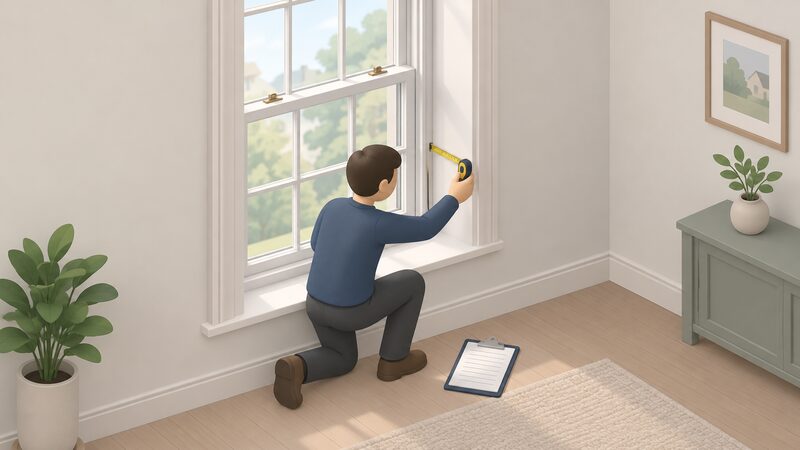
Permanent secondary glazing involves custom-built frames and glazing, and can be wooden or uPVC2. Because the frames are made to measure, the specification is set by the window in front of them: the reveal depth available, the shape of the opening, and how the primary window opens.
Reveal depth is the constraint that decides everything. A deep reveal can take a substantial frame with a wide air gap, which is better for both noise and heat. A shallow reveal limits the frame profile and the gap, and may rule out certain opening types. This is why a survey is not a formality: the measurement taken on site determines what can be built.
A documented retrofit project on an 18th century home shows what a matched specification looks like in practice. The glazing bars in the new frames were designed to line up with the originals, and the specification was softwood frames with draught-proofing around the openings, fitted with 24mm A-rated double-glazed units, spray-finished white on site25. That is a secondary window built as a proper joinery item, with the sightlines matched so the room still reads as it did.
Glass thickness and type follow the priority. A standard pane keeps cost down; a thicker or laminated pane improves acoustic performance; a low-emissivity coating such as Pilkington K Glass improves thermal performance by reflecting heat back into the room4. The frame material affects maintenance more than performance: timber can be repaired and repainted, uPVC needs less attention.
Survey, manufacture and installation: what the process involves
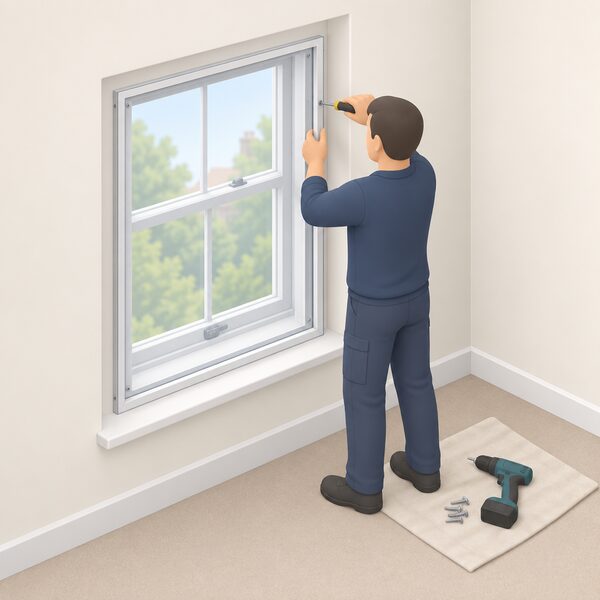
The process runs in three stages: a survey, manufacture of the bespoke frames, and a fitting visit. Maker guidance states that once a request is made, it is only a matter of a few weeks before the windows are fitted with secondary glazing, and that secondary glazing can be installed easily, often within just a few hours3.
Installation is a fixed operation rather than a building project. Semi-permanent secondary glazing is fixed by screwing into place or using a strong adhesive or sealant, and this type of glazing is not generally suitable for DIY5. That is the key distinction for a household weighing up self-installation: the temporary options are self-fit, the permanent ones are not.
The self-fit alternatives are well documented. Transparent film secondary glazing is installed using strips of double-sided sticky tape around the frame of the window and then shrunk with a hairdryer, and it is temporary, needing to be refitted every year5. Some systems use magnetic strips to attach the secondary glazing to the frame, others a Velcro-like material, and others clip-and-stick uPVC edging5. A 3mm sheet of acrylic of around 150 by 100cm costs upwards of £45 and is available from DIY stores5.
There is no central certification body for secondary glazing installations, unlike the FENSA and CERTASS routes that cover replacement windows2. That places more weight on checking the installer directly: references, insurance-backed guarantees, and a written specification that names the frame material, glass type and opening mechanism.
Costs, lead times and what ownership means for energy independence
There is no published Selectaglaze price list, so prices are installer-quoted after a survey. The independent figures that exist are indicative. Secondary glazing for a single window will cost upwards of £300 depending on the size and complexity of the window and the type of opening5. A separate guide puts secondary glazing at £300 to £500 per window21, and a third gives £300 to £500 per window for a permanent professional installation6. Temporary film costs £5 to £15 per window26, and enough film to cover a large bay window costs around £10 to £155.
Secondary glazing is generally more cost-effective and affordable than window replacement3. That is the commercial case, and it holds most strongly where replacement is not permitted at all.
On lead time, the maker's own guidance is a few weeks from request to fitting, with installation often within a few hours3. The variable is manufacture: bespoke frames with a non-standard shape, an arched head or a laminated glass specification take longer than a standard rectangular slider.
For energy independence, the honest position is that secondary glazing is a fabric measure, not a supply measure. It reduces the rate at which heat leaves the room, which lowers the demand the heating system has to meet, and it does so without touching the fuel source. The household remains connected to the gas grid or to an electricity supplier, and the measure changes the size of the bill rather than the source of the heat. Retrofit guidance places energy efficiency measures such as insulation and secondary glazing in the first stage of a whole-house plan, before work on the heating system itself27. That ordering is the point: reduce demand first, then size the supply.
The dependence that remains is on the primary window, on the installer, and on the heating system behind it. A secondary pane cannot compensate for a failed seal on the outer window, and it does not ventilate a room. Independent guidance on airtightness notes that at least one window per room should be left uninsulated or openable for ventilation28, and that building tight requires ventilating right29. Secondary glazing that seals a room completely, with no openable panel and no other ventilation, trades a heating saving for a condensation risk.
Sources29 cited
- Types of double glazing, Which?, 2026-09-16
- Windows and doors, Energy Saving Trust, 2026-05-20
- Secondary glazing vs window replacement, Granada Glazing, 2026-07-19
- All about secondary glazing, Glass and Glazing Federation, 2020-09-14
- Secondary glazing advice, Centre for Sustainable Energy, 2026-08
- DIY vs professional home insulation, Uswitch, 2025-11-07
- Improving energy saving and sustainability in conservation areas and listed buildings, Brighton and Hove City Council, 2026-09-17
- Grants and loans, Home Energy Scotland, 2026-09-17
- Glazing, Planning Portal, 2026
- Home energy saving tips, Centre for Alternative Technology, 2022-12-20
- Build tight, ventilate right, Centre for Alternative Technology, 2021-08-11
- SAP conventions v12, BRE Group, 2025-05-15
- What is secondary glazing?, Glass and Glazing Federation, 2023-12-22
- When to repair or replace your windows, Glass and Glazing Federation, 2023-12-22
- Energy suppliers performance: windows and doors, CERTASS, 2022-06-15
- FAQs for listed building owners and occupiers, Exeter City Council, 2026-09-17
- Guide to the conversion of traditional buildings, Scottish Government, 2026-08-10
- Energy saving tips for winter, Centre for Sustainable Energy, 2025-12-10
- FAQs for Green Homes Grant installers, REEC, 2020-11-26
- Windows knowledge hub, Glass and Glazing Federation, 2026-09-20
- How to make a Victorian house more energy efficient, Uswitch, 2025-09-25
- Making alterations to a listed building, Bristol City Council, 2026-09-17
- Planning frequently asked questions, London Borough of Hammersmith and Fulham, 2026-09-17
- Permitted development, Cotswold District Council, 2026-09-17
- Energy efficiency and comfort in an 18th century home, Low Carbon Hub, 2026-03-15
- Draught busting, Low Carbon Hub, 2026-08-05
- What is retrofit?, Centre for Sustainable Energy, 2024-07-04
- Preparing for winter, National Energy Action, 2025-10-14
- ECO4 new measures and products guidance, Ofgem, 2026-03-26