

In this answer
Short answer
A voltage problem is anything on the network that stops your supply behaving normally: lights that flicker, equipment that resets, or a supply that dips and returns. Electricity North West, the electricity network operator for the North West, is the body that fixes faults on its own cables, transformers and substations, and it takes reports on 105, free to call from a mobile or a landline, 24 hours a day1.
The distinction that matters is between the network and your own installation. Electricity North West is responsible for providing a safe supply of electricity up to its cut-out, the piece of equipment connecting the electricity meter to its system4. The meter is provided by your electricity supplier, and Electricity North West does not sell electricity or fit meters5. Faults beyond the cut-out, in the household wiring, are a matter for a qualified electrician.
What counts as a voltage problem, and who fixes it
Voltage problems show up in the home as flickering lights, which Electricity North West attributes to network instability or loose connections, and as equipment that misbehaves or resets without an obvious cause1. The underlying causes sit on the network: damaged cables, faulty transformers and substations, or other equipment failures can disrupt normal voltage levels, and planned maintenance or upgrades can temporarily affect voltage levels too1. Extreme weather, such as storms or high winds, can damage power lines and equipment, leading to voltage instability1.
Responsibility splits three ways. Electricity North West owns and maintains the cables, transformers and substations that make up the distribution network, and it is responsible for the safe supply up to the cut-out4. Your electricity supplier owns the meter and bills you; complaints about energy bills go to the supplier, not the distributor9. Anything inside the property, from the consumer unit onwards, belongs to the household.
Where a known voltage issue sits outside the stated limits, the correction deadline is within 6 months, subject to any agreement needed from landowners10. That is the standard a household can hold the network operator to once a problem has been identified and accepted. In Northern Ireland, NIE Networks states it will correct known voltage issues outside the stated limits within 6 months, subject to any agreement needed from landowners10.
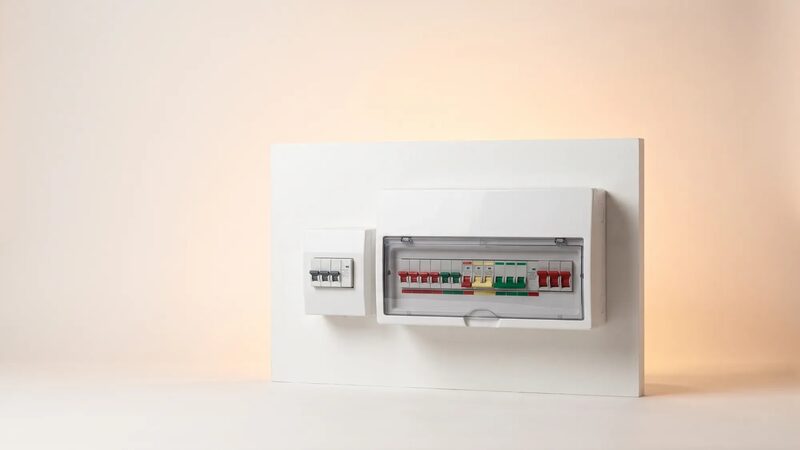
How to report: the 105 number, free to call, 24/7/365
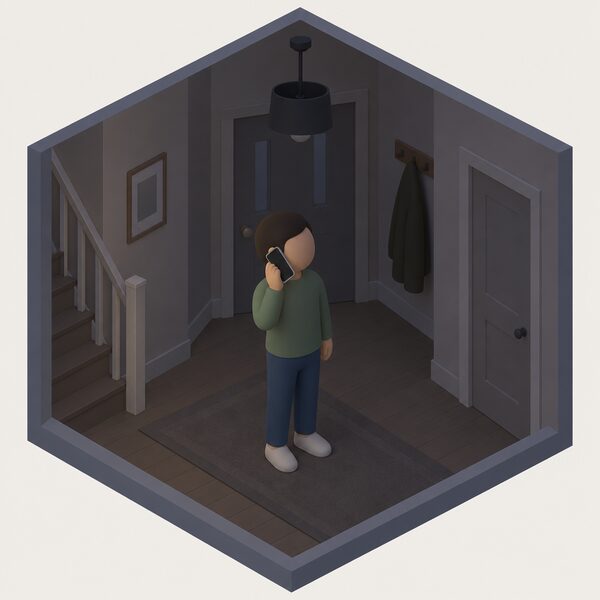
The primary route is 105. Electricity North West directs households to call 105 to report the emergency 24 hours a day, or to use 0800 195 4141 for non-emergencies1. The same 105 line is used for reporting a power cut or an electrical fault after flooding, so that the network operator can carry out a safety check11. It is also the number to use if your power goes off, and the number to call for an emergency disconnection12.
The 105 service is free. Electricity North West states it is free to call from a mobile or a landline, and that households needing to report a power cut or register for updates should contact it on 105 or report the cut online2. The independent consumer guidance from Smart Energy GB is the same: call 105 for free to report it or get updates3.
For hazards rather than interruptions, the emergency number is 105 or 0800 195 4141, option 1, for electrical hazards or incidents as well as power cuts12. Where there is a serious immediate risk, or someone requires medical help, the number is 999, 24 hours a day1.
Other ways to reach Electricity North West
Beyond the phone lines, Electricity North West takes enquiries by email at ElectricityNorthWestEnquiries@enwl.co.uk, or through the online enquiry form on its site1. It is also contactable on social media through its Facebook page (Electricity North West) and on X at @ElectricityNW, a handle it also uses for live flood updates14. Social media works for updates and general questions; it is not the channel for a hazard.
A separate welfare address, customerwelfareteam@enwl.co.uk, handles Extra Care and support matters15. For three phase supply or overhead cable connection enquiries, the number is 0800 988 1730, or an online application form13. Applications to move a supply can be made by phone, or by downloading the application form and returning it by post or email16. Disconnection applications go to disconnections@enwl.co.uk13.
Complaints follow a different path again. If the complaint is about an energy bill, Electricity North West directs it to the energy supplier9. Ofgem sets out the topics that belong with a supplier: late, incorrect or missing bills, back billing, being overcharged, a faulty meter, poor customer service, and refusing to refund credit from an account17. Where a complaint is about the network operator itself, Ofgem explains the route for complaining about a supplier or network operator, and the outcomes can include financial compensation, an apology, agreeing to fix the problem, a refund, or an affordable payment plan18.
Common causes of voltage problems on the network
Power cuts and voltage disturbances happen for a range of reasons. Electricity North West lists fallen trees, theft and vandalism, transient faults from broken cables, planned maintenance, fire or flood damage, animal interference, and accidental damage by contractors and customers20. Planned interruptions have their own causes: maintaining and improving the network, new connections to the network, and tree cutting and vegetation management21.
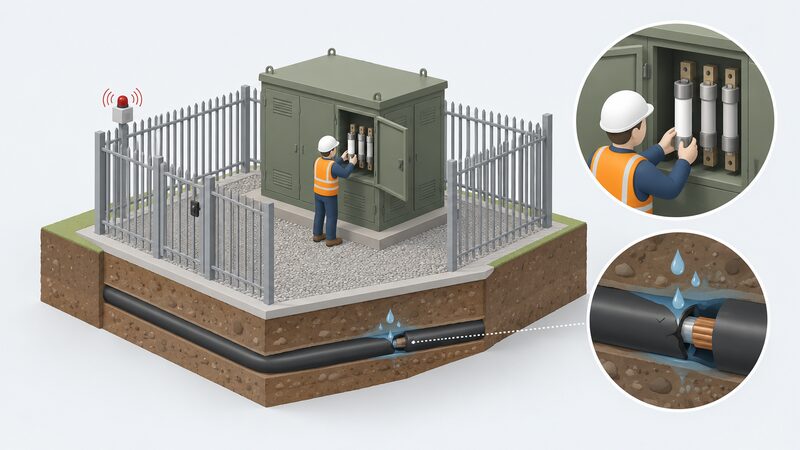
The transient fault is the one most often misread by households, because supply can return quickly and the cause is never seen. Electricity North West describes these faults as usually due to moisture entering small holes in a damaged mains cable underground, which can cause a fuse to blow at the substation22. The cable may be sound enough to carry load again once the fuse is replaced, which is why the same street can lose supply repeatedly before any excavation happens. The network operator secures and alarms all its substations to reduce cable theft risk, one of the deliberate causes behind repeat interruptions22.
Voltage fluctuation has its own vocabulary. Electricity North West describes "fault brewing" as an abnormal electrical current flow, essentially a fault within an electrical circuit, usually caused by a short circuit where a live wire touches a neutral or ground wire1. That is the condition that precedes many interruptions rather than the interruption itself.
Safety first: keeping your distance
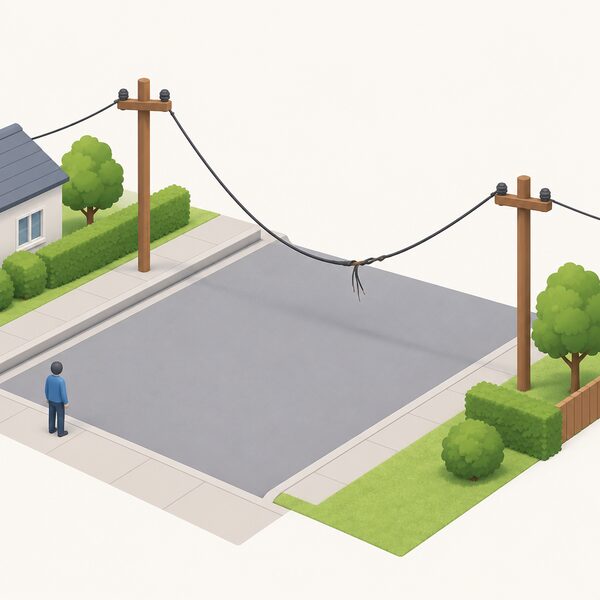
Electricity North West's standing instruction is to always keep a safe distance away from any electrical equipment and cables to avoid accidents, injuries, and even fatalities2. It states that safety is its number one priority today and every day23.
Where equipment looks unusual or tampered with, the instruction is not to touch it. The guidance on electricity theft is to not attempt to touch any of the equipment if you spot something unusual, and instead report it anonymously24. For a damaged power line or infrastructure, the public safety instruction is to keep as far away from the hazard as possible25. UK Power Networks puts a figure on that distance for damaged or low-hanging power lines and cables: stay at least 10 metres away from the equipment, and call 24 hours a day on 0800 31 63 105 or 10526.
After a flood, the advice changes shape. If your supply is still on, or has been underwater but is now back on, Electricity North West recommends contacting a qualified electrician11. A flood-damaged meter is a supplier matter: the meter is provided by the electricity supplier, and the household may need to contact them to fix it11.
What happens after you report
Once a fault is reported, the network operator works to restore supply and keeps the household informed. Electricity North West states that it will keep you updated throughout the power cut27. For customers who have experienced multiple power cuts, it publishes information on why they happen, how it aims to fix them, and on compensation28.
Compensation and reimbursement are separate things, and the boundary is worth knowing before a claim. Electricity North West states that it is unable to reimburse customers for food lost during a power cut7. For insurance claims, it can provide a letter confirming the outage7. In Northern Ireland, NIE Networks can send a letter confirming that a property was without power as a result of a storm, to support an insurance claim29.
Where a supply has been disconnected, the formal position in Northern Ireland is set out in legislation: the distributor must serve notice giving the reasons for the disconnection and, if applicable, details of required remedial measures as soon as reasonably practicable after the disconnection30. On the supplier side, Ofgem notes that all energy suppliers must follow the Erroneous Transfer Customer Charter, and that compensation may be available if a transfer happens in error31.
For a household, the practical sequence is: report on 105, register for updates, keep the reference, and ask for the confirmation letter if an insurer requires it. The network operator restores the supply; the supplier handles the meter and the bill; the household handles everything past the cut-out.
Sources31 cited
- Managing voltage changes in your property, Electricity North West, 2026-09-19
- The fault journey, Electricity North West, 2026-09-19
- Power cuts: what to do if your power goes out, Smart Energy GB, 2026-08-19
- Rising and lateral mains, Electricity North West, 2026-09-19
- Connections for 1 to 4 properties, Electricity North West, 2026-09-19
- Tips to prepare for a power cut, Electricity North West, 2026-09-19
- Be summer ready, Electricity North West, 2026-09-19
- G98 Single Premises, Energy Networks Association, 2026-09-17
- How to make a complaint, Electricity North West, 2026-09-19
- Overall standards, NIE Networks, 2026-09-20
- Flooding advice, Electricity North West, 2026-09-19
- Connections FAQs, Electricity North West, 2026-09-20
- Disconnect your supply, Electricity North West, 2026-09-19
- Checks for if you are without power, Electricity North West, 2026-09-19
- Extra support: safety, Electricity North West, 2026-09-20
- What to expect when moving your supply, Electricity North West, 2026-09-20
- Complain about your energy supplier, Ofgem, 2026
- Complain about your energy supplier or network operator, Ofgem, 2026
- Energy terms explained, Ofgem, 2026
- Why do we experience power cuts, Electricity North West, 2026-09-19
- Why do planned power cuts happen, Electricity North West, 2026-09-19
- Reasons for repeat or multiple power cuts, Electricity North West, 2026-09-19
- Safety awareness, Electricity North West, 2026-09-19
- Electricity theft, SSEN, 2026-09-19
- Storms and bad weather, Energy Networks Association, 2026-09-17
- Replace power cable or power line, UK Power Networks, 2026-09-17
- Temporary support, Electricity North West, 2026-09-20
- Multiple or repeat power cuts, Electricity North West, 2026-09-19
- How can I claim costs for loss or damage caused by Storm Eowyn, NIE Networks, 2026-09-20
- The Electricity (Standards of Performance) Regulations (Northern Ireland) 2012, regulation 27, legislation.gov.uk, 2026-09-17
- Smart meter info, Electricity North West, 2026-09-20
 Report a Faulty MeterWhat to do when a meter over-records, stops recording or produces impossible readings: the evidence to gather, how to raise it with the supplier, the 5 working day and 8 week deadlines, and how the Energy Ombudsman handles meter disputes.
 Complain About Energy SupplierThe order of a complaint: the supplier's own procedure, the eight-week point or deadlock, and referral to the Energy Ombudsman in Great Britain or the Consumer Council in Northern Ireland.
 Utility Regulator NIWho sets your energy prices in Northern Ireland and who can you complain to?
 EV Charge Point Faults and FixesDescribes the common failure patterns on domestic charge points: tripped protective devices, lost connectivity, stuck cables and locks, error indications and charging that stops early.
 The Full Installers GuideHow do you find an installer you can trust, and what should you check before signing anything?
 Who Owns Your Home Energy DataYour smart meter records how much gas and electricity you use, and that information belongs to you, not your supplier.