


In this guide
Certas Energy is the largest domestic heating oil distributor in the UK by its own description, part of DCC Energy, of DCC plc, and it runs the delivery, tank and servicing side of oil heating for homes that are not on the gas grid1. For a household, that means one company can supply the kerosene, sell you a replacement tank, service the boiler and take the tank away, which is convenient but also concentrates a lot of the relationship in one place.
The practical questions are about delivery: how much notice to give, what the driver needs to see, and what happens when the tanker cannot get to the tank. Certas Energy recommends ordering as early as October, and its drivers carry out a visual inspection of the tank when they refill for winter1. Tanks are not filled beyond their marked Safe Working Capacity, or 95% of capacity where no mark is shown3.
Who Certas Energy is and where it sits in the market
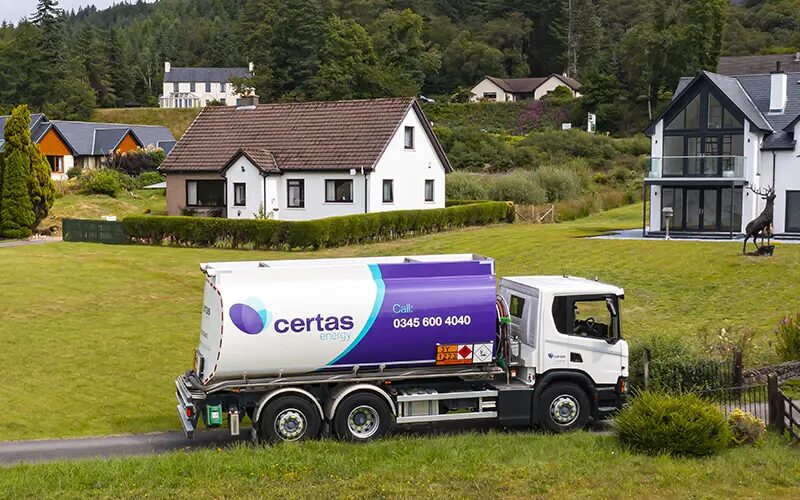
Certas Energy is part of DCC Energy, of DCC plc, and describes itself as the UK's number 1 heating oil supplier1. The scale figures it publishes are over 90 depots, 900 tankers and 2,300 employees nationwide, which is what allows a distributor to cover rural areas where the gas grid does not reach2. For an oil-heated home, that coverage is the main thing a supplier brings: a depot network close enough to deliver on a normal schedule rather than a long run from a regional terminal.
The group has been widening beyond liquid fuel. Freedom Heat Pumps became part of Certas Energy in 2022, which puts a heat pump distributor inside the same group as the oil business4. That matters to a household weighing what comes after oil, because the same company is positioned on both sides of the transition. The group also relaunched its FuelTapp digital fuel card in May 2025 and has run agricultural campaigns, including an eight-month partnership with farmer and influencer Olly Harrison launched in August 2025 and a follow-up campaign in September 2026, which shows where much of its commercial weight sits2.
For household energy independence, the position is mixed. Oil is bought in bulk and stored on your own property, so a full tank is fuel you control and a delivery schedule you can bring forward. What remains is dependence on a distributor, on a tanker reaching the property, and on the road network and depot that sit behind it. There is no pipe into the house and no standing charge in the way a gas connection carries one, but there is also no supplier of last resort in the sense that applies to gas and electricity. If a distributor stops serving an area, the household finds another distributor rather than being transferred automatically. The wider picture of how suppliers of different fuels compare is at LPG and heating oil suppliers.
What Certas Energy supplies: heating oil, tanks and services

The core product is kerosene for heating, and Certas Energy states that kerosene will only be supplied for heating purposes3. That is a restriction worth knowing: the same tanker does not exist to fill a tractor or a generator under a domestic account. Alongside the fuel, the company sells domestic tanks ranging from 1,000 litres to 2,700 litres, and offers a scheduled heating oil delivery service with a delivery tracker and confirmation before delivery1.
The service side covers boiler servicing and tank care, with separate contact numbers for each.
| What you need | Number | Source |
|---|---|---|
| General and emergency delivery enquiries | 0345 600 4040 | 1 |
| Tank care | 0345 600 3423 | 1 |
| London heating oil, local expert | 01845 525414 | 2 |
The company also states that, as a supplier of partially or fully rebated fuels, Certas Energy UK Limited is approved by HMRC as a registered dealer in controlled oil1.
What this means for independence is that a single account can cover fuel, tank and service, which reduces the number of companies a household deals with but increases reliance on one. A household that wants to keep options open can buy fuel from one distributor and have the boiler serviced by an independent OFTEC-registered engineer, and nothing in the published rules prevents that.
Ordering and delivery: what the driver needs, and when a delivery can be refused
Ordering oil is not like ordering electricity. The supplier needs information about the property before a tanker is sent, and the industry buying guide sets out what that includes:
- the distance of the tank from where the tanker parks
- any restriction on the size of tanker that can get access
- the location of the tank within the property
- whether the driver can access the tank without special conditions
- whether anyone will be there when the delivery is made
- the type of tank, its age and manufacturer, its size and the type of connections
- the height of the connection above ground, and the condition of the tank5
Certas Energy's own delivery rules are firm on several points. Drivers are not permitted to allow customers to assist with deliveries3. The company will not contract a third party to carry out a delivery on its behalf where a site is deemed unsafe3. Tanks will not be filled beyond their marked Safe Working Capacity, or 95% of the tank capacity if no Safe Working Capacity is marked3. And the company has a legal duty to report any improper use of fuel to the regulatory authority, and may refuse delivery if improper use is suspected3.
"Our drivers are not permitted to allow customers to assist with deliveries"
The practical effect is that access is the household's responsibility. Overgrown routes, a locked gate, a car parked where the tanker needs to stand, or a tank whose condition raises a question can all stop a delivery on the day. The winter checklist from UKIFDA advises checking for cracks, leaks or signs of rust and clearing overgrown areas to keep access routes safe for deliveries6. Certas Energy's drivers carry out a visual inspection of the tank when they refill for winter, so a tank that has deteriorated since the last fill can be flagged at the point of delivery1.
Paying for your oil: what the published material covers
Heating oil is bought rather than billed, and the material available here does not set out Certas Energy's payment plans, direct debit arrangements or quote process in detail. What is published is the scheduled delivery service with a delivery tracker and confirmation before delivery, which is the mechanism a household uses to know when the tanker is coming2. Beyond that, prices and payment terms are arranged with the company directly.
For households in difficulty, the wider protections that apply to gas and electricity do not map onto oil in the same way. All fuel suppliers of electricity and gas follow a code of practice meaning they will not cut off supply if a payment plan is agreed and kept to, and they should take ability to pay into account, with complaints going to the Utility Regulator if they do not7. That framework is written for gas and electricity supply, not for a delivered fuel. A household that cannot pay for a fill has no equivalent statutory protection in the material here, which is one of the sharper differences between oil and mains energy.
Where support does exist, it comes through the benefits system rather than the supplier. The Warm Home Discount is available to households receiving Pension Credit, among other qualifying benefits, in England and Wales8. Cold Weather Payments go to people claiming certain benefits where the average temperature in the area is recorded as, or forecast to be, zero degrees Celsius or below for seven consecutive days9. Neither is paid by the oil distributor.
Tanks from Certas Energy: sizes, brands and installation
Certas Energy sells domestic tanks from 1,000 litres to 2,700 litres1. That range covers the common domestic sizes, and the upper end suits a larger house or one that wants to buy in bulk ahead of winter. Planning rules in Wales set a maximum capacity of 3,500 litres for an installed fuel tank, so the largest tanks Certas Energy sells sit below that threshold10.
Installation and siting are governed by building regulations as well as planning. Requirement J7 of the building regulations guidance for Wales applies to fixed oil storage tanks with capacities of 3,500 litres or less located outside buildings and serving buildings used wholly or mainly as private dwellings, excluding buried systems. It requires that oil storage tanks and the pipes connecting them to combustion appliances be constructed and protected to reduce to a reasonable level the risk of oil escaping and causing pollution, and that they carry a durable notice on how to respond to an oil escape11.
"Oil storage tanks and the pipes connecting them to combustion appliances shall: (a) be so constructed and protected as to reduce to a reasonable level the risk of oil escaping and causing pollution"
Warranty terms for tanks sold by Certas Energy are not published in the material available here. What the general consumer position says is that a warranty claim needs details of what the problem is, and that a guarantee sits alongside your statutory rights rather than replacing them12. For a household, the practical point is to keep the installation paperwork and the tank's age and manufacturer details, because those are the first things asked for when a tank is inspected or a delivery is queried5.

Servicing and safety: OFTEC engineers, CO alarms and spill response
Certas Energy recommends an annual 12-month service and suggests booking between May and August, outside peak times, on the basis that an annual service is the best way to prevent problems with an oil heating system1. That timing is practical rather than technical: a boiler that fails in January is a problem, and an engineer booked in June is easier to find.
Oil heating work is carried out by OFTEC-registered technicians. OFTEC describes its consultancy services as including independent evaluation of existing liquid fuel heating and cooking installations, and tailored training packages for staff involved in inspections, enforcement, and liquid fuel heating installation and service work. Its past clients include the Health and Safety Executive, the Police, Local Authorities and the NHS13. That is the competence framework behind the engineers who service oil boilers, and it is separate from the gas registration scheme.
On spills, Certas Energy's rule is direct: detergents or a hosepipe should never be used to wash away spilt oil3. Washing oil away spreads it and can carry it into drains and watercourses rather than dealing with it. The company's legal duty to report improper use of fuel to the regulatory authority, and its ability to refuse delivery where improper use is suspected, sit alongside that3.
Owning an oil tank: inspection, replacement age and underground tanks
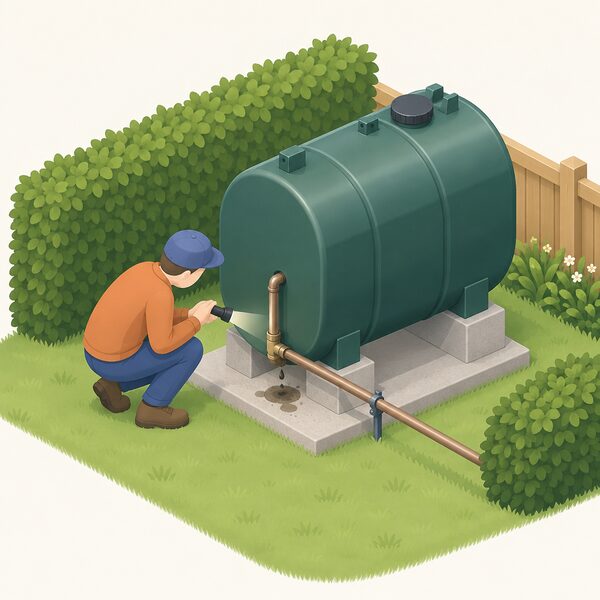
An oil tank is a piece of equipment with a service life, and the guidance is more specific than most households expect. Certas Energy advises that if a tank is over 10 years old, a new tank should be considered ahead of winter to avoid unexpected malfunction1. A household should treat the age of the tank as a prompt to have it inspected rather than as a fixed deadline.
Inspection is the more regular duty. Official guidance for Northern Ireland advises inspecting tanks, pipes and other equipment for leaks, damage and interference once a month, with any problems fixed promptly14. For underground tanks, the same guidance recommends leak testing at three to five years for underground tanks, and every year if the underground tank is more than 20 years old, with replacement considered at that point14. Certas Energy adds a specific condition for metal underground tanks: a metal underground tank must have had a satisfactory pressure test within the last three years3.
| Tank type | Inspection or test interval | Source |
|---|---|---|
| Any tank, pipes and equipment | Check for leaks, damage and interference once a month | 14 |
| Underground tank | Leak test every three to five years | 14 |
| Underground tank over 20 years old | Leak test every year, replacement considered | 14 |
| Metal underground tank | Satisfactory pressure test within the last three years | 3 |
| Any tank over 10 years old | Consider a new tank ahead of winter | 1 |
The independence point here is that an oil tank is an asset the household owns and maintains, unlike a gas meter or a heat network connection. That ownership brings control over when to buy and how much to store, and it brings the maintenance duty with it. A household that inspects monthly, services annually and replaces on condition rather than on a fixed date keeps the fuel supply in its own hands. The wider comparison with other off-grid fuels is at LPG and heating oil suppliers, and the general supplier landscape is at UK energy suppliers.
Sources14 cited
- How to prepare your oil heated home for winter, Certas Energy, 2026-09-18
- Heating oil in London, Certas Energy, 2025-09-21
- Health and safety for your home heating, Certas Energy, 2025-11-24
- Baxi and Freedom Heat Pumps partnership, CIPHE, 2022
- Heating oil buying guide, UKIFDA, 2026-02-18
- UKIFDA winter heating checklist 2025, UKIFDA, 2025-10
- Overdue utility bills, nidirect, 2026-09-17
- The Warm Home Discount Scheme: if you live in England and Wales, GOV.UK, 2026-09-17
- Keeping your home warm in winter, Met Office, 2026-09-20
- Planning permission: fuel tanks, Welsh Government, 2026-09-17
- Building regulations guidance, Part J: heat producing appliances, Welsh Government, 2026-09-17
- Claim using a warranty or guarantee, Citizens Advice, 2026-09-17
- Consultancy services, OFTEC, 2026-09-17
- Check your oil tank, nidirect, 2026-09-17