
In this guide
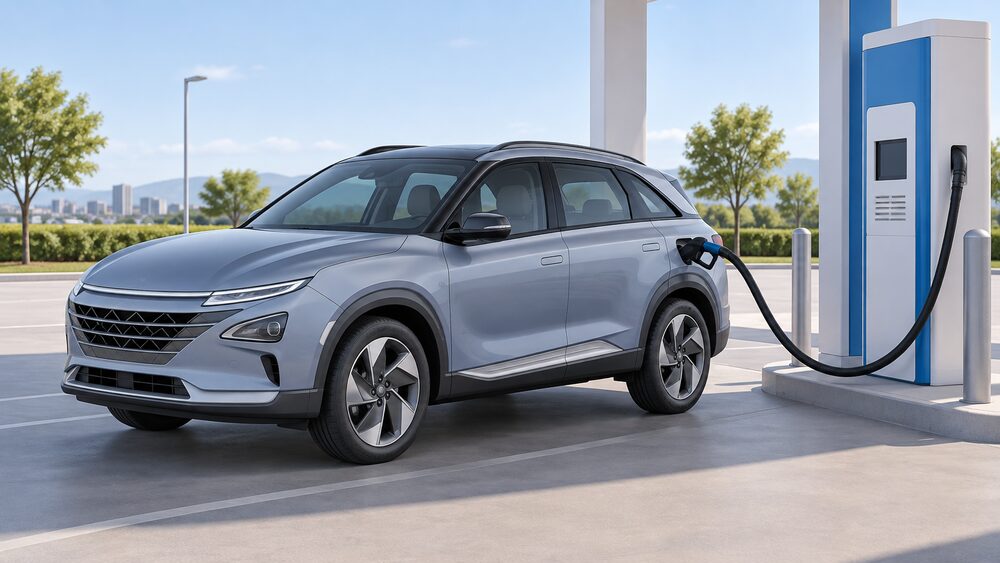
The Hyundai NEXO is a hydrogen fuel cell SUV: it carries a pressurised hydrogen tank and a fuel cell stack that turns that hydrogen into electricity on board, emitting water rather than exhaust gas. Hyundai's headline warranty position for the model is up to 10 years or 100,000 miles, which is longer than the market norm for electric vehicle batteries of around eight years or around 100,000 miles1.
The car is the flagship of Hyundai's hydrogen work rather than a volume UK product. Hyundai presented its hydrogen ecosystem vision for Europe at the World Hydrogen Summit in Rotterdam from 19 to 21 May 2026, and the NEXO sits at the centre of that story2. For a UK household the constraint is not the vehicle but the fuel: hydrogen for road use is dispensed from a small number of public sites, and there is no domestic refuelling route at all.
This page sets out what the NEXO is, how a fuel cell SUV differs from a battery electric car, what the warranty covers, and what owning one would mean for a household's energy independence. It does not recommend the car, or any alternative to it.
What the NEXO is: Hyundai's hydrogen fuel cell SUV
The NEXO is Hyundai's fuel cell electric vehicle, a family SUV in which the electricity that drives the motor is generated on board from hydrogen rather than drawn from a stored battery charge. The technology is not new to the company: Wales's energy use report records a two-seater hydrogen fuel cell car, the Rasa, as an earlier Hyundai fuel cell vehicle7. The NEXO is the production expression of that line of development.
Mechanically, a fuel cell car is an electric car with a different energy store. The motor is electric, the drive is electric, and the difference is that the electricity comes from a stack that combines hydrogen from a tank with oxygen from the air. That means the vehicle carries both a hydrogen tank and a buffer battery, and it means the refuelling act is a gas transfer rather than a charge.
Hyundai has continued to develop the model and to present it as part of a wider hydrogen business rather than as a standalone car. At the World Hydrogen Summit in Rotterdam in May 2026 the company set out a hydrogen ecosystem vision for Europe, with the NEXO as its consumer-facing product2. That framing matters for a household: the car is sold as one node in a hydrogen system that includes production, distribution and dispensing, and the car alone is not the system.
How a fuel cell SUV differs from a battery electric car
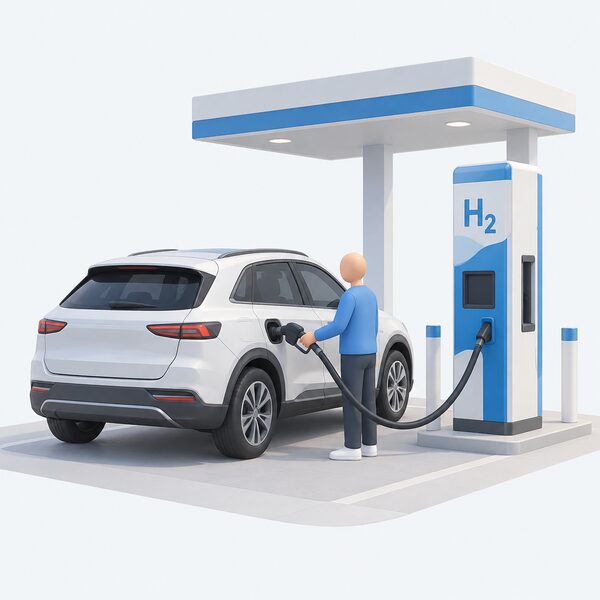
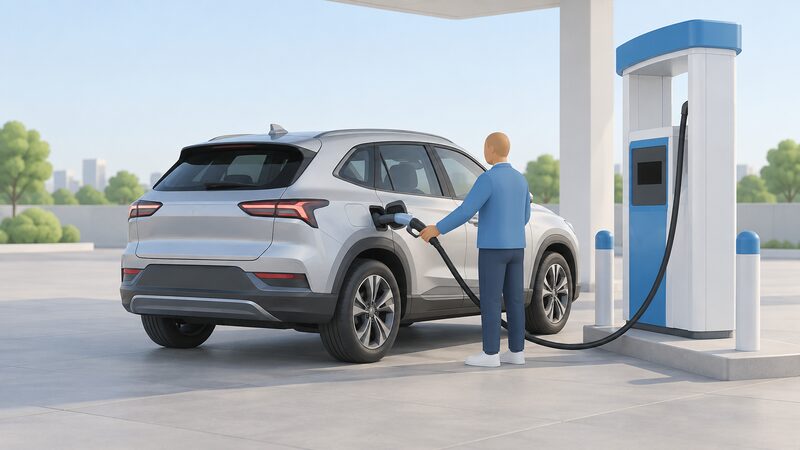
The practical difference between a fuel cell SUV and a battery electric car is where the energy is stored and how long it takes to put more in. A battery car stores electricity in a large traction battery and recharges it from the grid, at home or at a public charger. A fuel cell car stores hydrogen in a tank and generates electricity as it drives, so its "recharge" is a refill of gas.
That changes the charging arithmetic entirely. Battery electric charging times depend on the charger and the battery: rapid and ultra-rapid chargers take 20 to 60 minutes to charge EV batteries, while fast chargers usually take between four and eight hours4. At home, a 7kW charger generally takes between six and 12 hours to recharge a car from 20 to 80% or above5. A hydrogen refill is a matter of minutes, closer to a petrol stop.
The battery side of the comparison also carries costs that the fuel side does not. Electric vehicles typically have a higher upfront cost compared to internal combustion engine vehicles8, and battery condition is one of the factors that determines real-world range9. Running costs differ too: VAT on electricity for road use is generally charged at a much lower rate than for road fuel, at 5% versus 20%10. A fuel cell car buys speed of refuelling and pays for it in fuel availability.
| Fuel cell SUV (NEXO type) | Battery electric car | |
|---|---|---|
| Energy store | Hydrogen tank plus buffer battery | Traction battery |
| Refuelling or charging point | Public hydrogen dispenser | Home charger or public charge point |
| Time to refuel or recharge | Minutes at a dispenser | 20 to 60 minutes rapid, four to eight hours fast4 |
| Home refuelling | Not available3 | Six to 12 hours on 3 to 7kW for 20 to 80%5 |
| Road fuel VAT position | Not stated for hydrogen | 5% versus 20% for road fuel10 |
Range, refuelling and everyday use
Hydrogen refuelling is fast, and that is the whole of its everyday advantage. Where a battery car on a long journey plans around charge stops of 20 to 60 minutes on a rapid charger4, a fuel cell car plans around dispenser stops of a few minutes. For a household doing high mileages on routes that happen to pass hydrogen sites, that is a real difference in journey time.
The difficulty is the network. Hydrogen dispensing for road vehicles in the UK is concentrated at a small number of sites, and the pattern of availability has changed over time as individual stations have opened and closed. A car whose range is measured in hundreds of miles is only as useful as the distance between the places it can be filled, and that distance, not the vehicle's tank, is what shapes everyday use.
There is no domestic alternative. A fuel cell car cannot be refuelled at home, because the hydrogen is stored at high pressure and dispensed by equipment no household has. The nearest thing in UK tax and energy guidance is the natural gas homefill arrangement, where facilities enable the owner to use natural gas to refill the fuel tank overnight at home in a private garage3. That is a gas network arrangement, not a hydrogen one, and it does not apply to a fuel cell vehicle.
Warranty: up to 10 years or 100,000 miles
Hyundai's warranty position for the NEXO is the longest part of the proposition: up to 10 years or 100,000 miles1. The fuel cell stack and the high voltage battery are the two components whose replacement would otherwise dominate the cost of ownership, so the length of cover on them is the main financial protection a buyer gets.
It is worth setting that against the market. Battery warranties across electric vehicles tend to be set at around eight years or around 100,000 miles1. Hyundai's terms run beyond that on both counts. For a household weighing a fuel cell car against a battery car, the warranty is one of the few areas where the fuel cell proposition is straightforwardly stronger.
Other makers show how much these terms vary. Kia covers the high voltage lithium ion battery units in its electric, hybrid and plug-in hybrid vehicles for 7 years from initial registration or 150,000 km, whichever comes first, under a 7 year or 100,000 mile manufacturer's warranty11. Low voltage batteries in mild hybrids get a much shorter 2 years from initial registration regardless of mileage11. The pattern across the industry is that the traction battery gets long cover and the smaller batteries do not.
Warranty terms are conditional in ways that matter. Cover is tied to the vehicle's registration and service history rather than to a separate product registration, and the high voltage battery terms assume the car has been maintained to schedule. Anyone buying used should read the terms as they apply to that vehicle's age and mileage rather than to the headline figure.
Where hydrogen fits in Hyundai's wider electrified line-up
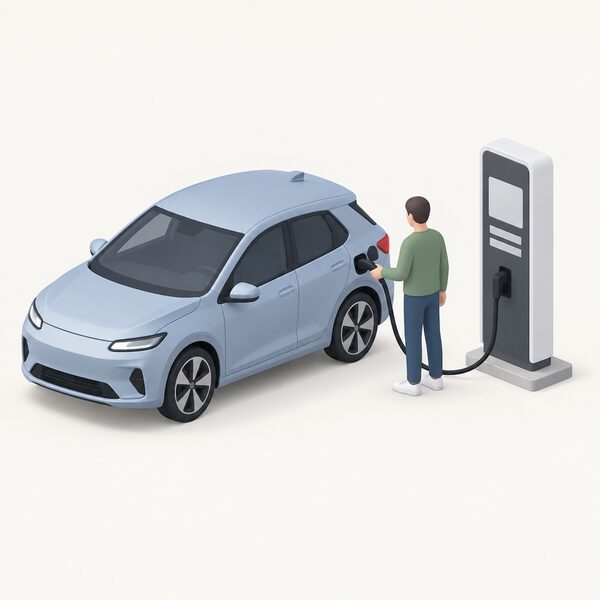
Hyundai sells a broad electrified range alongside the NEXO, and the two strands are funded and marketed differently. The battery electric models carry the volume: the IONIQ 5 and IONIQ 6 families, with the IONIQ 6 N taking the World Performance Car title at the 2026 World Car Awards in April 2026 and Best Electric Performance Car at the 2026 What Car? Electric Car Awards in September 20262. The IONIQ 9 line-up was expanded with a flagship variant in August 20262.
Hydrogen sits outside that volume business. Hyundai's hydrogen work is presented as an ecosystem play, covering production and distribution as well as vehicles, and the NEXO is its consumer product within it2. That is a different kind of proposition from a battery car: it depends on infrastructure that the manufacturer does not control, and on a fuel supply chain that has to exist before the car is useful.
The company's wider UK presence is in battery electric vehicles and in the charging arrangements around them. Hyundai Connected Mobility introduced a mobility bundle with the MOCEAN x IONITY offer on 31 March 2026, which is a charging arrangement for battery cars rather than anything a fuel cell driver can use2. For a household, the practical reading is that Hyundai's UK support, dealer training and service investment sit mainly with the battery range.
The hydrogen side of the business is real and continuing, but it is a long-horizon programme. Hyundai showcased its hydrogen ecosystem vision for Europe at the World Hydrogen Summit in Rotterdam from 19 to 21 May 2026, and the NEXO is the vehicle that vision is built around2. A household buying into it is buying into a programme rather than a mature market.
UK availability and the refuelling network problem
The NEXO has never been a volume UK model, and its availability has moved with the refuelling network rather than with demand. Hyundai's continued hydrogen investment and its European ecosystem presentation in May 2026 show the model is still in development, but UK order status is something to confirm with the manufacturer at the time of asking rather than to assume2.
The network is the binding constraint. Hydrogen dispensing for road vehicles requires high pressure production, storage and dispensing equipment at each site, and the UK has a small number of them. That is a different problem from electric charging, where the network is large and growing and where most charging happens at home. A fuel cell car has no home option, so every fill is a journey to a public site.
The comparison with battery electric infrastructure is stark. The UK's public charging picture includes rapid and ultra-rapid chargers taking 20 to 60 minutes and fast chargers taking four to eight hours4, and the connector standards in use shape which cars can use which points: the CHAdeMO connector, for instance, is limited in the UK to a few EV brands, mostly Japanese or Korean in origin12. Even a limited charging standard has far more sites behind it than hydrogen does.
Connected services: what works and what is still in beta
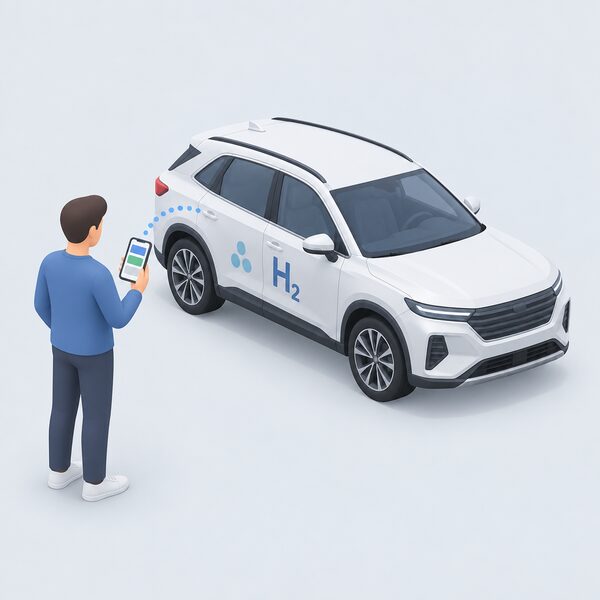
Hyundai's connected car features run through the manufacturer's app and servers, and the NEXO is marketed as a connected vehicle. That creates a dependence that a household should understand: remote functions, status checks and navigation services depend on a mobile data connection in the car and on Hyundai's back end, neither of which the owner controls.
The wider flexibility market shows how these arrangements are still maturing. NESO will connect the CrowdFlex AFM and EDM tools within a sandbox environment to live and near-real-time data sources by June 2027, and Gate 2 interconnector connection offers run to Q4 2026 in phase 213. These are grid and market systems rather than car apps, but they illustrate the same point: connected energy services are being built out, and the timelines are long.
For a driver, the practical position is that the car works without the app. Driving, refuelling and the basic vehicle functions do not depend on connectivity. What depends on it is the layer of convenience features, and those are the parts most likely to be slow, to drop out, or to change terms over the life of the vehicle.
There is also a data question. A connected car reports location, charge or fuel state and driving data to the manufacturer, and those arrangements are governed by the maker's terms rather than by the household. That is normal across the industry, but it is a dependence worth naming alongside the fuel one.
What owning a NEXO means for household energy independence
A fuel cell car does the opposite of what a home energy independence project is trying to achieve. It moves the household further from self-sufficiency, not closer: the fuel comes from an industrial supply chain, dispensed at a small number of public sites, with no domestic production route and no home refuelling. A battery electric car, by contrast, can be charged from a home supply, and where a household has solar panels the electricity can come from its own roof.
The hydrogen picture in the home is at an early stage in any case. Hydrogen boilers are not currently available in the UK, and hydrogen-ready boilers are not yet available either6. Ofgem's case study work on UK hydrogen heated homes describes the future scenario rather than a present option2. A household cannot currently run a home on hydrogen, so a hydrogen car cannot be part of a domestic hydrogen loop.
Where a household does want to generate and manage its own energy, the support structures differ across the UK. In Northern Ireland, NI Energy Advice offers independent and impartial energy advice to domestic householders, plus referrals to energy grants and other sources of help14. Work involving the electrical installation, such as installing EV chargers, solar panels or heat pumps, requires contact with NIE Networks, which offers a stay-on-site service and a two-visit service18. In Wales, net zero housing developments aim to create homes that produce as much energy as they consume19.
The honest summary for a household is this. A NEXO delivers fast refuelling and a long warranty, and it delivers them on a fuel network that is thin, public and outside the household's control. A battery electric car charged at home keeps more of the energy decision inside the house. Neither is a route to full independence, but they pull in opposite directions, and the fuel cell car pulls away from the home.
Sources19 cited
- What is the lifetime cost of an electric vehicle, Uswitch, 2024-11-26
- Case study: UK hydrogen heated homes of the future, Ofgem, 2021-07-29
- VAT fuel and power: VFUP2100, HM Revenue and Customs, 2026-09-17
- Electric vehicle charging, SMMT, 2025-06-25
- How long does it take to charge an electric car, Zapmap, 2026-04-15
- DESNZ public attitudes tracker: heat and energy use in the home, winter 2025, GOV.UK, 2026-03-12
- Energy use in Wales report, Welsh Government, 2022-06
- Electric vehicles for disabled drivers, Energy Saving Trust, 2026-04-23
- Electric vehicle battery basics, Energy Saving Trust, 2025-09-16
- Electric car tax, Zapmap, 2024-05-14
- Kia Niro, Kia UK, 2026-09-17
- Guide to electric vehicle infrastructure, BEAMA, 2024-09
- Clean Flexibility Roadmap: July 2026 update, GOV.UK, 2026-09-17
- Support to generate your own electricity, nidirect, 2025-09-22
- Insulation, nidirect, 2026-09-02
- Energy saving grants in your area, nidirect, 2026-09-17
- Ventilation systems, nidirect, 2026-09-17
- Safe isolation, NIE Networks, 2026-09-19
- UK's largest net zero housing development to be delivered in Wales, Welsh Government, 2025-10-02
 Hyundai Power Products generators in the UKHyundai Power Products sells petrol, diesel and inverter generators in the UK through retail channels, with no connection to Hyundai Motor Group.