
In this guide
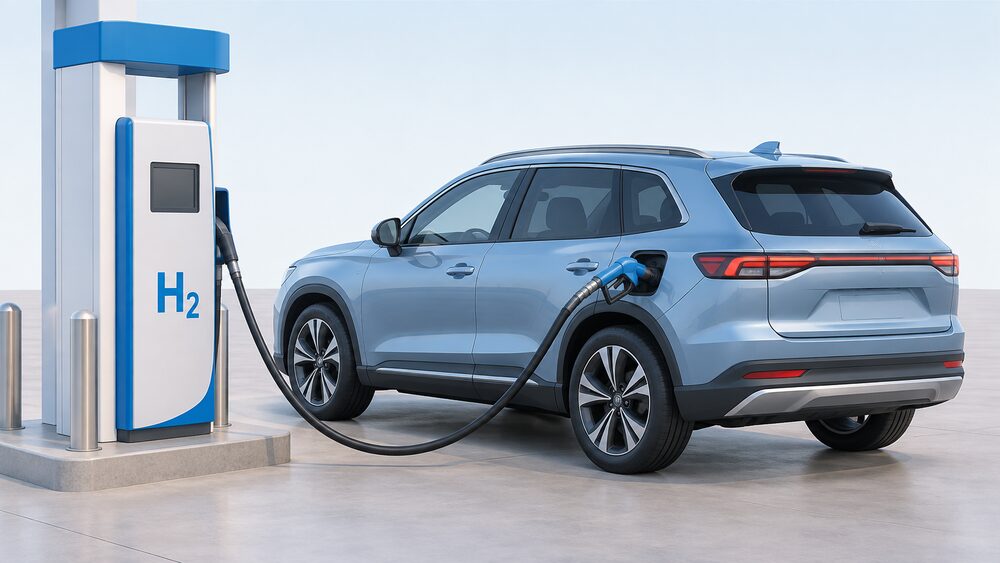
Hyundai is the maker UK householders can actually buy a hydrogen fuel cell car from. Its fuel cell line began with the ix35 Fuel Cell, the model that took the technology from concept to series production, and continued with the NEXO, listed in the UK with a 413 mile hydrogen range1. That range figure is the headline: a fuel cell car carries its energy as compressed hydrogen and converts it to electricity on board, so it refuels rather than charges.
The commercial reality is narrower than the engineering. Hyundai's UK sales strength sits in electrified models that plug in, not in hydrogen. The Tucson was the ninth best selling car in the UK in 2025 with 15,706 registrations, and 3,082 units in June 2026 alone2. Those are hybrid and petrol cars. Hydrogen remains a small, regionally constrained part of the range, tied to where refuelling exists.
For a household weighing energy independence, a hydrogen car is a different proposition from a battery electric one. It removes the long charging stop and the home charge point, and it substitutes a dependence on a hydrogen supplier and a sparse filling network. This page sets out what Hyundai offers, what the warranty covers, and where the limits sit.
Hyundai hydrogen cars: what the range covers today
Hyundai's hydrogen range in the UK is short. The NEXO is the current fuel cell SUV, and the ix35 Fuel Cell is the model that came before it. There is no broad line-up of hydrogen cars to choose between, and no hydrogen version of the volume sellers that carry Hyundai's UK registrations.
The contrast with the rest of the range is stark. Hyundai's UK sales are dominated by electrified and hybrid models: the Tucson recorded 15,706 registrations in 2025 and 3,082 in June 20262. The IONIQ 5, the maker's battery electric crossover, offers a choice of electric range from 238 to 315 miles across two battery sizes7. That is the car most UK buyers considering a Hyundai electric vehicle will actually be offered.
| Model | Drive | Published range | UK status |
|---|---|---|---|
| NEXO Premium SE | Hydrogen fuel cell | 413 miles1 | Sold in the UK, limited availability1 |
| ix35 Fuel Cell | Hydrogen fuel cell | Not stated in the figures | First mass-produced fuel cell model1 |
| IONIQ 5 | Battery electric | 238 to 315 miles, two battery sizes7 | Volume electric model7 |
| Tucson | Hybrid and petrol | Not stated in the figures | 15,706 registrations in 20252 |
Hydrogen sits outside that volume business. It is a technology Hyundai has committed to at manufacturer level, with a European ecosystem vision presented at the World Hydrogen Summit in Rotterdam from 19 to 21 May 20265. The gap between that vision and a forecourt near a UK household is the central fact of the category.
What this means for independence is mixed. A hydrogen car frees a household from the home charge point and from the electricity distribution network's evening peak. It replaces that with a dependence on a hydrogen supplier, a filling station network that is far thinner than the electric charging network, and a manufacturer's continued commitment to a low-volume product line.
NEXO: the hydrogen SUV in Hyundai's line-up
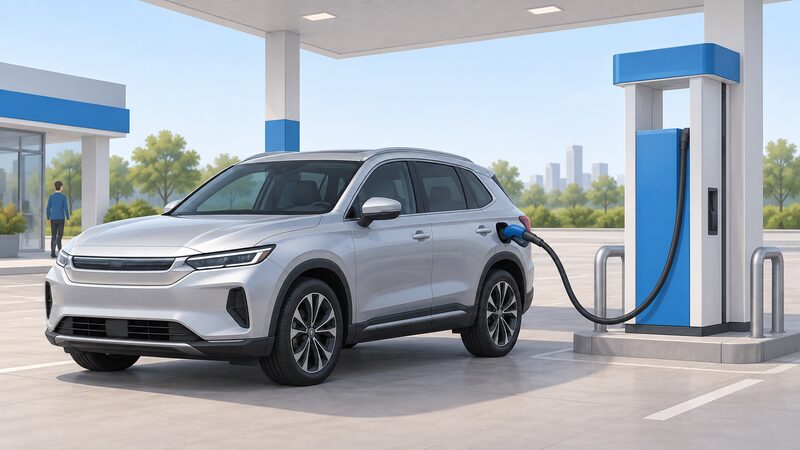
The NEXO is the model that defines Hyundai's hydrogen offer in the UK. The NEXO Premium SE Hydrogen Fuel Cell Electric vehicle is listed with a 413 mile range1. That figure is the practical argument for the technology: it exceeds what most battery electric cars deliver on a single charge, and it is delivered without a charging stop.
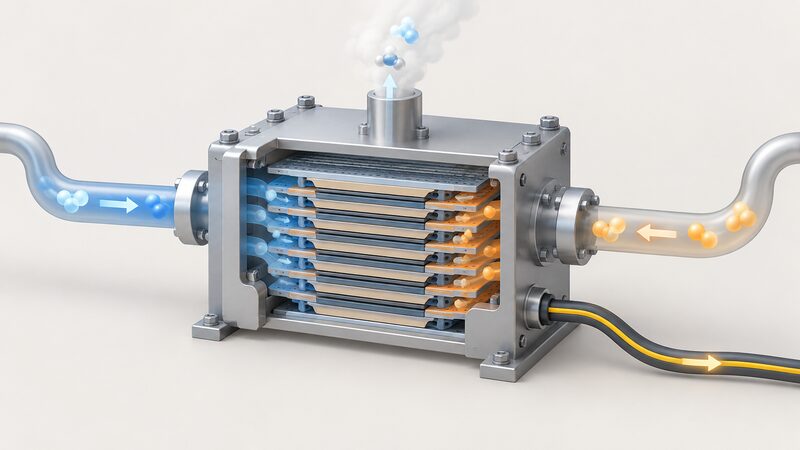
The engineering behind that range is a fuel cell stack that combines hydrogen from the tank with oxygen from the air to produce electricity, with water as the only exhaust output. The car carries a buffer battery to smooth power delivery and capture energy from braking. It is an electric car in how it drives; the difference is where the electricity comes from.
Hyundai has continued to develop the NEXO, and the all-new NEXO press material describes a connected and caring design direction, with driving performance and design covered in separate press kits5. The company's hydrogen work is not a single model but a system: vehicles, refuelling, and the production and distribution of hydrogen itself.
For a household, the NEXO's appeal is range and refuelling speed. Its constraint is that the 413 mile figure is only useful if there is a hydrogen pump within reach of the journeys the car is used for. That is a geographic question, not a technical one, and it is the reason hydrogen cars remain concentrated in specific regions.
First to mass-produce fuel cell vehicles: the ix35 Fuel Cell heritage
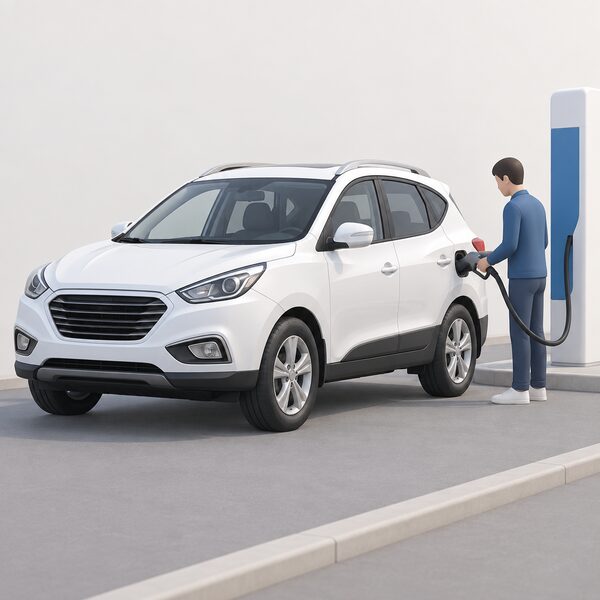
Hyundai's claim to the category rests on the ix35 Fuel Cell, the model that took fuel cell vehicles from prototype to series production. It established the company as a maker that would build hydrogen cars at volume rather than as one-off demonstrators, and it is the reason the NEXO had a production lineage to inherit.
That heritage matters for a household because it speaks to whether the technology will be supported. A maker that has built fuel cell cars across two generations has parts, service knowledge and a supply chain that a first-time entrant does not. It does not, however, guarantee that any individual older model remains economical to maintain, and the figures here do not set out a separate support programme for the ix35.
The wider UK context for hydrogen has moved in the opposite direction to the cars. Two hydrogen village trials were abandoned: Whitby, announced in July 2023 and originally planned for 2025, and Redcar, announced in December 2023 because of an unavailable hydrogen supply8. Those were heating trials rather than transport projects, but they show how often hydrogen timelines in the UK have slipped.
The policy backdrop for vehicles is firmer. The Zero Emission Vehicle mandate covers new cars and vans that emit zero greenhouse gas emissions at the exhaust, and hydrogen fuel cell vehicles qualify on that definition9. The phase-out of new petrol, diesel and hybrid cars and vans included hybrids for the first time in the 2023 consultation10, and the five-year stay of execution afforded to hybrid and plug-in hybrid vehicles has since been removed, meaning only fully zero emission vehicles continue11.
How a fuel cell car differs from a battery electric car
Both a fuel cell car and a battery electric car are driven by an electric motor. The difference is where the electricity is stored and how it gets there. A battery car stores energy in a large battery charged from the grid. A fuel cell car stores hydrogen in a tank and generates electricity on board as it is needed.
The environmental case for electric driving is well documented. A new electric car has just a third of the lifetime greenhouse gas emissions of an equivalent new petrol car, counting battery production and disposal12. Over its lifetime, an EV emits just one-third of the greenhouse gases of a petrol car4. A fuel cell car shares the zero tailpipe emissions property, but its lifetime footprint depends on how the hydrogen was produced, and the figures here do not give a comparable figure for hydrogen.
The refuelling comparison is where the two diverge most sharply. Battery electric rapid charging is fast but not instant: the Hyundai IONIQ 5 can add 60 miles of range with just five minutes of charging using a 250kW charger13. Hydrogen refuelling is closer to a petrol stop in duration, though no filling time is published in the figures available here.
There are also running cost differences documented for the electric side. EVs are generally cheaper to run than petrol or diesel cars14, and electric car charging attracts VAT at 5% versus 20% for road fuel15. Hybrid vehicles use an internal combustion engine to power a generator, which in turn charges the battery without plug-in capability16, a third architecture again. For a household, the fuel cell car's advantage is journey time on long routes; its disadvantage is that the fuel itself is scarce.
Hyundai's hydrogen ecosystem vision for Europe
Hyundai's hydrogen strategy is not limited to cars. At the World Hydrogen Summit in Rotterdam from 19 to 21 May 2026, the company presented a comprehensive hydrogen ecosystem vision for Europe5. The framing is deliberate: a vehicle is only useful if the fuel exists, so the maker's pitch covers production, distribution and end use together.
Hydrogen's wider uses are broad. It can be used for heat, power and even fuel for large vehicles like HGVs17. That last category is where hydrogen's transport case is strongest, because heavy vehicles need long range and fast refuelling in a way that cars do not. The UK zero emission commercial vehicle market has emerged with more than 40 models available for zero emission heavy goods vehicles18, a segment where hydrogen and battery electric compete directly.
The UK production target is the constraint. The government has committed to 10 GW of low carbon hydrogen production capacity by 20306. A separate consultation document gives 5GW of low carbon hydrogen production capacity by 203019. The two documents disagree on the figure.
For domestic heating, hydrogen is further behind. Hydrogen for heating is not commercially available yet, though a few trials of a blended approach have taken place20. Cadent states its network would look to move to 100% hydrogen by 2050, with production becoming greener over time17, and the company is backing the introduction of hydrogen as a low carbon alternative to natural gas for the future21. Blended hydrogen has been demonstrated as usable in industrial and commercial equipment22.
Warranty: up to 10 years or 100,000 miles
Hyundai's fuel cell and high voltage battery cover is quoted as up to 10 years or 100,000 miles. That is the headline term a buyer should check against the specific model and registration route, because warranty terms in this category vary by component and by how the car is bought.
The wider market context is useful for calibration. Manufacturers provide warranties on EV batteries lasting at least eight years or 100,000 miles4. Most electric car batteries are guaranteed by manufacturers to last for eight years or around 100,000 miles24. Hyundai's quoted term sits above that baseline, which is consistent with a maker positioning fuel cell durability as a selling point.
Component cover is not uniform. For low voltage batteries (48V and 12V) in mild-hybrid electric vehicles, one maker in the group covers a period of 2 years from initial registration regardless of mileage14. High voltage batteries in EV, HEV and PHEV models are covered for a period of 7 years from initial registration or 100,000 miles, whichever comes first14. Those are different products from a fuel cell car, but they show how warranty terms are tiered by component rather than applied as a single blanket.
| Cover | Term | Applies to |
|---|---|---|
| Fuel cell and high voltage battery | Up to 10 years or 100,000 miles4 | Hyundai fuel cell models |
| EV battery, market baseline | At least 8 years or 100,000 miles4 | Electric cars generally |
| High voltage battery | 7 years or 100,000 miles, whichever comes first14 | EV, HEV and PHEV models |
| Low voltage battery (48V and 12V) | 2 years from initial registration, regardless of mileage14 | Mild-hybrid electric vehicles |
For a household, the practical question is what happens at year nine. A warranty that runs to 10 years or 100,000 miles covers the expensive parts for a long period, but it depends on the maker continuing to support the model and on servicing being carried out to schedule. The figures here do not set out the servicing conditions attached to the fuel cell warranty.

Hydrogen and Hyundai's carbon neutrality target
Hyundai's hydrogen programme is presented as part of a decarbonisation story rather than a standalone product line. The European ecosystem vision shown at the World Hydrogen Summit in May 2026 frames hydrogen as one pillar of a broader transition5, alongside the company's battery electric models.
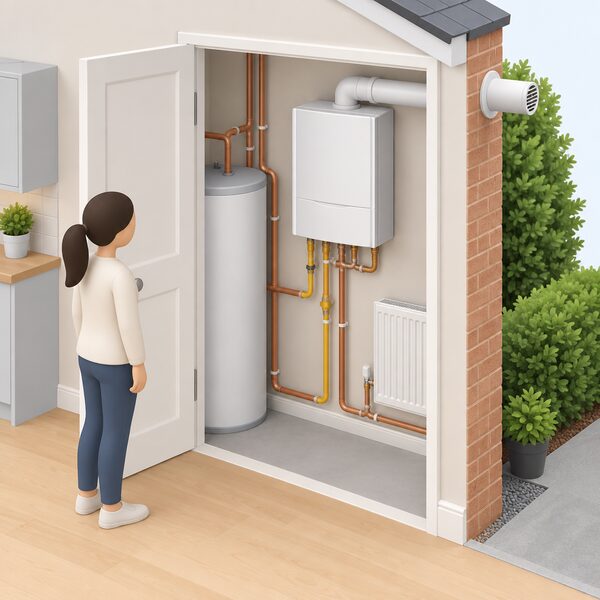
The UK policy environment sets the pace. The Zero Emission Vehicle mandate applies to new cars and vans that emit zero greenhouse gas emissions at the exhaust9, and hydrogen fuel cell vehicles meet that test. The Heat and Buildings Strategy set a target for all new heating systems installed in UK homes by 2035 to be low-carbon technologies or supporting new technologies like hydrogen-ready boilers25. Transport projections have long assumed that all new car sales from 2035 will likely have to be electric, or potentially hydrogen26.
Scotland has its own timeline. Legislation sets a heat decarbonisation target of the end of the year 204527. Scotland's heat strategy notes that increased availability of hydrogen for heat will have implications for the suitability of hybrid heat pump systems, which may be cost-effective solutions in conjunction with hydrogen, and that this will be kept under review28. Wales has run a smart living initiative reporting on low carbon technology adoption29.
The Hydrogen Innovation Initiative's mission is to accelerate the development of critical technologies and supply chains in the UK for the fast-growing hydrogen economy20. The UK Government is exploring the possibility of switching some homes from natural gas to hydrogen to help reach net zero carbon emissions30. For a household, the honest reading is that hydrogen's role in cars is settled at manufacturer level and unsettled at infrastructure level.
Where hydrogen fits alongside Hyundai's wider electrified line-up
Hyundai's UK range is overwhelmingly electrified in the plug-in sense. The IONIQ 5 offers a choice of electric range from 238 to 315 miles across two battery sizes7, and the IONIQ 6 N took the World Performance Car title at the 2026 World Car Awards and Best Electric Performance Car at the 2026 What Car? Electric Car Awards5. The IONIQ 9 line-up was expanded with a flagship variant in August 20265.
The volume end of the range is hybrid. The Tucson's 15,706 registrations in 2025 and 3,082 in June 2026 make it the model most UK buyers actually take home2. The SANTA FE won Best Large SUV at the inaugural RAC New Car Awards 20265. None of these are hydrogen cars.
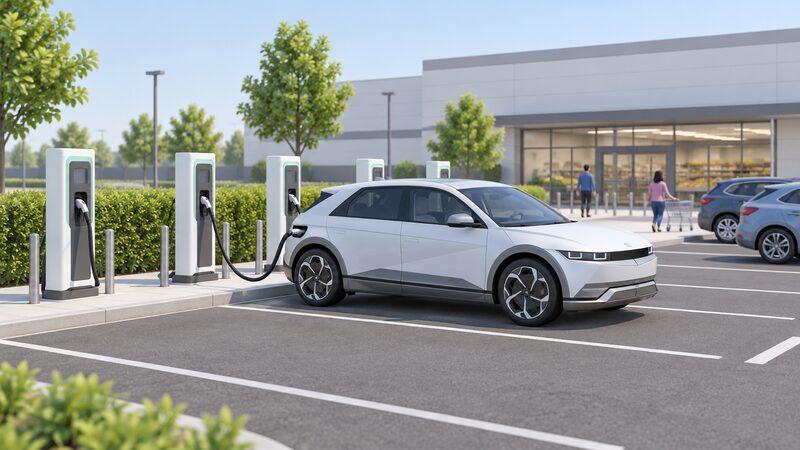
That is the shape of the choice for a household. A battery electric Hyundai can be charged at home, from a domestic supply, and the charging network is broad: charge points can be found at public car parks, on-street, coffee shops, supermarkets, hotels, workplaces and service stations31. A hydrogen Hyundai cannot be refuelled at home at all, and depends entirely on a public hydrogen supply.
The independence question therefore cuts differently for each. A battery electric car shifts energy demand to the home electricity supply, which a household can increasingly generate itself. A hydrogen car keeps the household dependent on a purchased fuel and a distribution network it has no control over. That is not an argument against the technology, which has real advantages in range and refuelling time, but it is the trade a buyer is making.
Sources31 cited
- Hyundai NEXO Premium SE Hydrogen Fuel Cell Electric vehicle 413 Miles, SMMT, 2020-09-03
- UK new car market breaches two million as almost one in four buyers go electric, SMMT, 2025-12-31
- EV market hits new high but target gap remains, SMMT, 2026-06
- EVs: the facts, SMMT, 2025-09-22
- The new Hyundai IONIQ 6, Hyundai, 2026-05-21
- Cutting the bills: UK clean power, Ember, 2023-10-18
- Hyundai IONIQ 5 model charging guide, Zapmap, 2026
- Government announces 5k grants for heat pumps, UK Parliament, 2024-05-26
- Zero Emission Vehicle mandate and CO2 emissions regulation, Welsh Government, 2023-03-30
- Ending the sale of new petrol, diesel and hybrid cars and vans consultation response, Energy Systems Catapult, 2023-07-03
- Low emission and clean air zones: all you need to know, Energy Saving Trust, 2025-09-22
- Electric cars, Home Energy Scotland, 2026-09-20
- Five electric vehicle innovations to watch in 2022, Energy Saving Trust, 2026-09-20
- Cost of ownership, Kia UK, 2026-09-17
- Electric car tax, Zapmap, 2024-05-14
- Electric vehicles, nidirect, 2026-09-17
- Future of gas, Cadent Gas, 2026-09-20
- Britain's decarbonisation decade takes EVs from niche to normal, SMMT, 2026
- UK Hydrogen Strategy, CIBSE, 2026-09-17
- Starting a hydrogen dialogue, Energy Systems Catapult, 2023-12-06
- Consumers feel powerless to reduce energy bills, Cadent Gas, 2023-02-20
- Hydrogen blending, Cadent Gas, 2026-09-20
- DESNZ public attitudes tracker: heat and energy use in the home, winter 2025, DESNZ, 2026-03-12
- Electric cars and energy bills, Uswitch, 2026-04-27
- Government announces 5k grants for heat pumps, Elmhurst Energy, 2021-10-19
- Low carbon heating is the biggest household challenge for net zero, Energy Systems Catapult, 2019-05-02
- Draft Buildings (Heating and Energy Performance) and Heat Networks (Scotland) Bill explanatory notes, Scottish Government, 2025-11-18
- Draft heat buildings strategy for Scotland, Scottish Government, 2021-02
- Smart living initiative annual report July 2019, Welsh Government, 2019-07
- Inclusive innovation: safeguarding the switch to domestic hydrogen, Energy Systems Catapult, 2022-08-02
- Electric vehicles for home charging, Electricity North West, 2026-09-19