
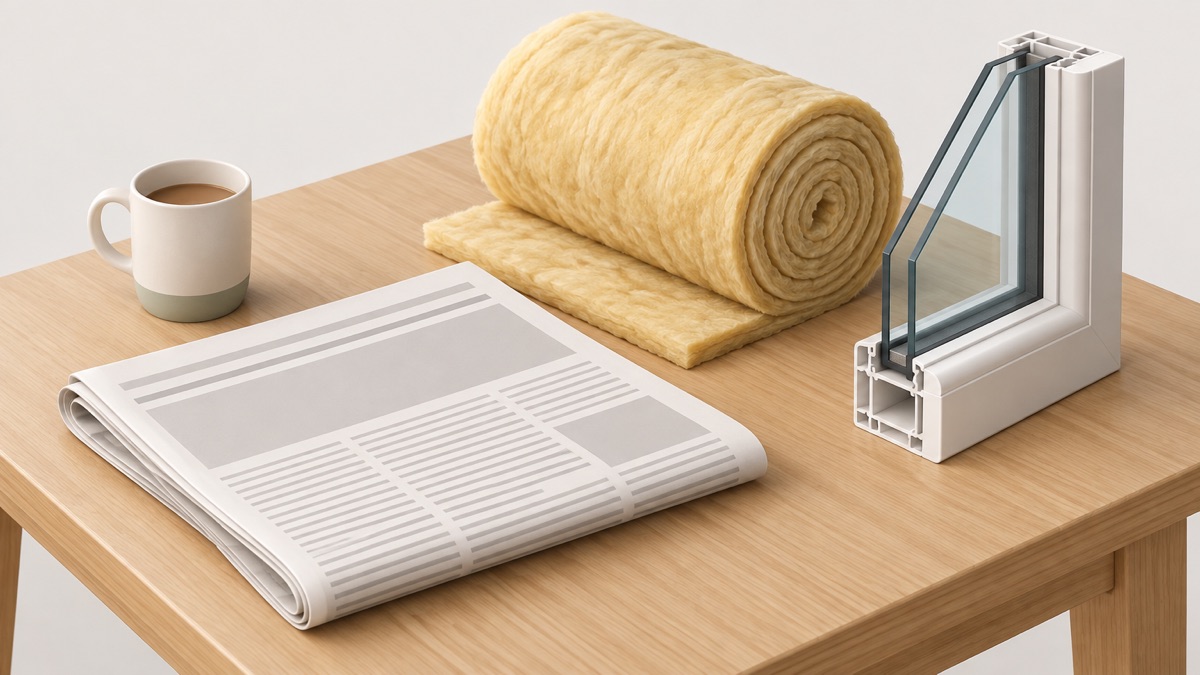
Citizens Advice published its "Home advantage" research on 20 June 2023, setting out the case for a retrofitting programme covering 13 million homes. The charity, which is one of the energy consumer bodies that advises households on energy matters, said 31 million people in Great Britain live in poorly insulated properties1.
The research found that 13 million of those inefficient homes have significant potential to upgrade to Energy Performance Certificate (EPC) C. Insulating them by 2030 would unlock almost £40 billion in cumulative economic and social benefits, according to the charity1.
The largest single figure is a saving of £24 billion on consumer energy bills by 2030, which Citizens Advice attributes to making homes more efficient to heat. It also states that upgrading homes would reduce strain on energy networks, unlocking further savings that it does not quantify in the published summary1.
On health, the research estimates that upgrading homes would prevent over 650,000 children developing asthma by 2030 and save the NHS £2 billion over the same period. It also states that improving inefficient homes would prevent 6,000 excess winter deaths every year, alongside what it describes as social benefits such as cleaner air due to lower emissions1.
The benefits are not spread evenly. Citizens Advice says the boost would be strongest for regions with the most inefficient homes, including £5 billion in benefits for the North West alone1.
"Citizens Advice is calling for a major retrofitting programme to upgrade 13 million inefficient homes by 2030 and unlock billions in benefits."
The research does not set out how such a programme would be funded, who would deliver it, or what it would cost. Those points have not been reported in the published material1.
Why it matters for households
The research frames insulation and glazing as the route to lower bills rather than as a matter of comfort alone. For a household in a poorly insulated property, the claim is that an upgrade to EPC C reduces the energy needed to keep the home warm, which is the part of a bill a household can control. The £24 billion figure is an aggregate across 13 million homes by 2030, not a per-household sum, and Citizens Advice does not break it down per property in the published summary1.
The health figures point to a second kind of cost. Cold-related illness, asthma and excess winter deaths are presented as consequences of the housing stock rather than of individual behaviour, with £2 billion of NHS spending attached to the same period1. For a household, that connects the condition of the building to pressures on public services as well as to the meter.
Energy independence at the household level, in this framing, comes from reducing the demand a home places on the grid and on the household budget. Citizens Advice states that upgrading homes would also reduce strain on energy networks, though it does not put a figure on that saving in the summary1.
What happens next
Citizens Advice is calling for a major retrofitting programme to upgrade 13 million inefficient homes by 20301. No delivery body, funding mechanism or timetable beyond the 2030 target is set out in the published material, and no government response to the research is reported in it1.
Sources1 cited
- Home advantage: Unlocking the benefits of energy efficiency - Citizens Advice, citizensadvice.org.uk